



"I'm so grateful I found Dr. Cook's work—she is the best of both worlds. I trust her and I don't even know her. Morally authentic and kind with really strong clinical chops. Thank you Dr. Alison for helping me to stay hopeful when I had almost given up."
"I can't say enough about this podcast and Dr. Alison. I have listened to every episode and can't wait for the next one. She has shed so much light onto my spiritual pain. . . I am learning how to heal and live the life God has planned for me."
"I started this podcast roughly a year ago from start to finish. I was struggling, had tried several other podcasts, several counselors, and I was just lost but really could not identify why. I started listening to this podcast in the mornings and my life has really changed. It gives me the tools in the morning to wake up my emotions and really dive into some topics that have made me more self aware without shame!"
"I have learned so many new perspectives and tools through this podcast!"
"There are so many takeaways that have changed my perspective, illuminated my circumstances, or simply encouraged me to tears. Thank you, Dr. Alison!"
“Dr. Alison’s compassion and understanding of psychology in tandem with Scripture is excellent and so very helpful. One episode is better than the next and I often listen more than once and share them!”
Choose a category to narrow your search

Episode Shownotes
Connection matters deeply — and yet for many of us, it’s never felt more confusing.
In this solo episode, Dr. Alison Cook explores a quiet tension many people are navigating right now: how to stay open and loving toward others without losing clarity, discernment, or yourself.
Many of us were taught that love means endless accommodation, that boundaries are unkind, or that distance equals failure. Others, weary of being hurt, find themselves pulling back — unsure how to stay connected without feeling drained or unsafe.
This episode sits right in the middle of that tension.
Rather than offering formulas or quick fixes, Dr. Alison invites listeners to slow down and notice what’s happening beneath the surface of relationships — especially the ones that feel confusing, heavy, or hard to interpret.
If you’ve found yourself asking:
- How do I stay loving without losing myself?
- How do I know when to lean in — and when to pause?
- What does wisdom look like in real, imperfect relationships?
This conversation creates space to reflect without pressure to decide everything right away.
Sometimes awareness is the first step toward freedom.
More Resources:
📥 Download 3 free chapters + guided journal of I Shouldn’t Feel This Way and the FRAME exercise here.
If you liked this episode, then you’ll love the following:
Episode 191: The 5 Most Important Things I've Learned About Faith, Attachment, & The Inner Life
Episode 179: Building Wise Trust - How to Protect Your Heart Without Closing it Off
📖 Find a full transcript and list of resources from this episode here
💬 Got a question? Call 307-429-2525 and leave a message for a future episode.
Don't forget to browse this week's sponsors, who makes it possible for me to bring you these resources for free + provide you with additional discounts!
- Quince - Refresh your wardrobe with my favorite, effortless, and sustainable capsule clothing essentials. Go to Quince.com/bestofyou for 365-day returns, plus free shipping on your order!
- Caraway - Save even more on non-toxic cookware and get an additional 10% off your order when you visit Carawayhome.com/BESTOFYOU or use code BESTOFYOU at checkout.
- AirDoctor - Eliminate 99.9% contaminants in your home with AirDoctor by visiting AirDoctorPro.com and use promo code BESTOFYOU to get UP TO $300 off today!
- Remi - Start sleeping better with a Remi nightguard and use code BESTOFYOU and get 50% off your purchase. Go to ShopRemi.com/BESTOFYOU and use code BESTOFYOU.
*Some of the links above are Amazon affiliate links. If you choose to purchase through them, I may earn a small commission at no extra cost to you.
While Dr. Cook is a counselor, the content of this podcast and any of the products provided by Dr. Cook are not specific counseling advice nor are they a substitute for individual counseling. The content and products provided on this podcast are for informational purposes only.
© 2025 Alison Cook. ALL RIGHTS RESERVED. Please do not copy or share the contents of this webpage or transcript without permission from the author.
TRANSCRIPT
We're living in a moment in a season where connection is deeply longed for and
needed and yet can be really confusing. We hear things about sort of setting
boundaries as cutting people off. There are divisions, there are polarizations, and so
often the quiet work of connectedness and what that really means can get lost.
Without discernment, connection can become unsafe. Without connection, discernment can
harden into isolation. A formed life, a deeply formed life emotionally and spiritually
always requires both. And that's what we're going to explore in today's episode.
Hey, everyone, and welcome back to this week's episode of The Best of You. I'm Dr.
Allison, and I'm so glad you're here with us this week. If you're new here, I'm so
glad you found your way. podcast is a space where we come together each week
faithfully for thoughtful conversations about inner formation, the slow,
often unseen work where emotional healing meets spiritual growth, right?
We bring together the emotional, the mental health, and the spiritual health in one
integrated place. We draw on attachment theory, parts work, scripture,
and lived experience to explore what it actually means to form a secure, the vibrant
inner life with God. This isn't a performative faith. This isn't a place for quick
fixes. This isn't a place where we spiritualize everything. This is a way of living
that is increasingly marked by safety, discernment, wisdom,
and grounded love, all the way from the inside out into our relationships with other
people. If you're joining us on YouTube, you might notice we're in a different space
today. I'm in Boston this week, where my family continues to spend a little bit of
our time each year. And it feels really fitting to be here in Boston as we talk
about place, presence, and connection. There's something grounding about New England
for my New England listeners, especially in the middle of winter. And it's not only
because of the Patriots, and that's my apologies to the rest of the country if
you're sick of the Patriots. But because of the way life settles in here,
even when it's cold outside, there's a rooted feeling here, a historical feeling
here. The trees are tall. The roots go deep. You have a sense of the history of
where we've come from in this place. And that's one of the reasons I love kind of
hunkering down here, even for a few weeks in the middle of winter. If you're
listening today, chances are you're someone who wants to grow. You want to heal.
You've been noticing some painful patterns. You want to love others, but not at the
cost of yourself any longer. You care deeply about relationships.
You want to stay open, loving, and faithful. And at the same time, you may be
realizing that being good or responsible or kind or the listening ear has sometimes
come with a quiet cost to your own clarity, peace, or sense of self. This podcast
exists for people who are asking these questions right now. Questions like, what does
wisdom? actually look like intense cultural moments? How do I stay connected to
myself without self -abandonment? How do I listen for God's voice, not just outside
of me, not just through other people, but within my own spirit? There's never been
a time where wisdom and discernment is more necessary when we're just flooded with
so much noise from all different kinds of people all around us, from social media,
from the news, from media, from our friends, from even people in our community.
Hopefully we're surrounded with wise voices with wisdom and discerning eyes and ears
but we also have to learn how to be discerning within our own selves Last month,
I spent some time talking with you about the deepest lessons I've learned about
formation and growth, what shapes us over time and how interchange really happens.
And moving forward, I want to be intentional about having some of these sort of
cornerstone conversations, these four core areas of growth we return to again and
again on the podcast because they show up in every season of the spiritual and
emotional life. As I've done this work and as I've been synthesizing so many ideas
these past few years on the podcast, I've identified four sort of cornerstone areas
that we do continue to return to time and again from different angles. These are
sort of the key areas of growth. First is safety and healing, where we learn to
feel anchored in our inner being. This is where we focus on nervous system repair,
trauma -informed healing, and the slow work of regulation, resilience, and integration.
Number two is connection and discernment. This is our topic today. we learn how to
stay open to others without losing ourselves. This is where we talk about relational
clarity, secure attachment, boundaries, mutuality, and repair when things rupture.
And then we get into hope, joy, and delight, rediscovering aliveness, not just
survival. This is where we practice what it means to thrive, not just survive.
We look for wonder, meaning, savoring, and the return of vitality,
beauty, and play. And then the last one is formation and growth. This is the slow,
often unseen daily work where we tend to our souls regularly because life is always
throwing things at us in the present moment every single day whether it's your kids
your spouse or friends something going on in the world around you right even after
we've healed there's still ongoing work of healing we've never fully arrived and so
this is where we name the patterns that have shaped us in the past and also are
aware of what's shaping us in the present so that we continue to move forward in
life with increasing clarity and wisdom and always grounded in a deeper and deeper
understanding and rest in God's love Over the coming months, I'm going to be sharing
a couple of longer solo episodes that take a deeper dive into one of these areas,
each one grounded in psychology, especially as it relates to attachment theory and
parts work and shaped by a spiritually formed imagination. And today we're going to
begin with connection and discernment, because this may be one of the most important
and most misunderstood skills of emotional and spiritual maturity. And we're living in
a moment in a season where connection is deeply longed for and needed and yet can
be really confusing. Many of us are aching for belonging, intimacy, and a sense of
meaningful community. And at the same time, there are so many mixed messages all
around us. We hear things about sort of setting boundaries as cutting people off.
There are divisions, there are polarizations, and so often the quiet work of
connectedness and what that really means can get lost. Many of you are recovering
from relationships that have left you feeling anxious, diminished, or quietly doubting
your own perceptions or your own sense of self. Some of you are carrying questions
like, why do I keep ending up in relationships that drain me? How do I stay open
to people? I want to be open to other people, but I'm afraid. I don't want to
lose myself again. I don't want to get hurt again. How do I know what's actually
safe or good or true? Because people are imperfect. I want to be gracious. And also
I want to know what actual safety really is. And at the heart of these questions
is attention where rare taught to hold. And that's connection and discernment.
It's two different things, connection and discernment. And this is an ongoing
practice. It's not one and done. It's not, this is a safe person. I never have to
think about them again, right? We know that's not true, especially in marriage,
especially with our kids, even in our closest relationships. Connection always comes
hand in hand with discernment. Even with the people we love most, it's never static.
We're always holding both. Without discernment, connection can become unsafe.
Without connection, discernment can harden into isolation. A formed life,
a deeply formed life, emotionally and spiritually, always requires both. And that's
what we're going to explore in today's episode. So why is discernment so hard for
so many of us? One of the reasons discernment is so difficult, number one, is that
it's rarely taught, right? We're rarely taught this skill of staying open, staying
discerning, this both and, right? We're taught to love others or we're taught to
protect yourself. We're never taught that the two often live side by side, right?
There's an art to this. Also, many of you listening are deeply relational,
deeply empathetic, caring, sincere people. And so you were taught, whether explicitly
or implicitly, to always give the benefit of the doubt,
endlessly, to always be patient, accommodating and understanding, to prioritize harmony
and service over clarity and wisdom. And this is not a bad thing,
right? I don't want you to change that aspect of who you are. I'm working on this
myself, right? I have to always hold both of these things in tension. We want to
be loving people. We want to be gracious. We want to be open to others. Many of
us learned that being loving meant tolerating discomfort or minimizing harm.
questioning someone's impact on our souls meant being critical or judgmental, that
setting limits meant being unkind. And if you grew up in environments where emotional
needs were dismissed or spiritualized or overridden, discernment may never have been
modeled for you, right? You didn't see a parent or an adult modeling wise
discernment, pulling back when there was harm or setting a boundary when it was
needed. We didn't see that happening, many of us in our homes, and so we just
didn't learn in our muscle memory what that looks like to be a kind person, to be
a loving person, and also to have wise, healthy boundaries around us. Add trauma to
the picture and discernment becomes even more complicated. Trauma can teach us to
confuse intensity with intimacy, familiarity with someone with safety,
chemistry. with trust right it can pull us toward what feels known rather than what
is actually good for us
Even after cleaning, my house still felt dusty and heavy, especially with our two
dogs. No matter how often I vacuumed or wiped things down, it felt like dust and
pet dander were always in the air, and I'd wake up feeling stuffy and irritated.
That's when I started using Air Doctor. I discovered it through research, and once I
turned it on, the difference was noticeable. The air feels cleaner and lighter, and
I've had fewer allergy -type symptoms. And I love the peace of mind, especially when
the air outside isn't great due to wildfire season. What sets Air Doctor apart is
its powerful three -stage filtration,
smaller than what typical air purifiers can remove. It helps capture airborne
contaminants you don't want to be breathing in, like dust, pollen, mold spores, pet
dander, wildfire smoke, bacteria, viruses, odors, smoke, ozone, and VOCs. It's also
whisper quiet, which matters to me, especially at night. The auto mode keeps the air
optimized 24 -7, and the filter change reminders me no guesswork. And it's not just
me. 98 % of Air Doctor customers say their home's air feels cleaner, safer, and
healthier. And over 93 % notice fewer allergies. Air Doctor also won Newsweek Reader's
Choice Award for Best Air Purifier. Head to airdoctorpro .com and use promo code
BESTOVU to get up to $300 off today. Air Doctor comes with a 30 -day money -back
guarantee plus a three -year warranty and $84 value free. Get this exclusive podcast
-only offer now at airdoctorpro .com, A -I -R -D -O -C -T -O -R -P -R -O .com using promo
code BESTOVU. If you've been listening for a while, you know I've been using Remy
Nightguards, and I'm genuinely grateful to have Remy in my room. I've always been
someone who clenches at night, especially during stressful seasons, and Remy has
helped me protect my teeth while I sleep. If you're part of the roughly 30 % of
Americans who grind or clench their teeth at night, your smile needs protection.
Remy's custom night guards are clinically tested and FDA cleared to help protect your
teeth from damage caused by grinding, reduce jaw tension and facial muscle strain,
and improve sleep quality. And you get the same professional quality and comfort as
a night guard from the dentist, but Remy costs about 80 % less and it's way more
convenient. Here's how it works. Remy sends an impression kit straight to your door.
You follow their step -by -step instructions to get your impression. Then Remy crafts
and ships your custom fit night guard and you just start wearing it at night to
protect your teeth. And in addition to my Remy night guards, I recently tried their
ultrasonic cleaner and I love it. It makes keeping my night guard clean unbelievably
easy. Start the new year right and use code best of you to get 50 % off your
purchase of a new night guard. That's 50 % off at shopremi .com slash best of you
with code best of you. Thank you Remy for sponsoring this. episode.
Think about someone you trust, a friend, a spouse, your own kids. You trust that
their intentions are good, but you don't turn your discernment off. You're still
noticing, paying attention, checking in. Discernment in a healthy relationship doesn't
sound like suspicion. It sounds like curiosity, like care. It sounds like I noticed
something seems off with you. You seem more weary or run down lately. You've felt a
little distant, so I just wanted to check in. That's not mistrust. That's pressure.
staying present to the ones you love. Discernment isn't about assuming the worst.
It's about staying connected to reality, inside yourself and between you and another
person. So one kind of discernment is just the everyday attentiveness inside a
relationship that's already safe, that we already trust, but it's what keeps that
relationship going. It's what keeps that relationship safe over time. Other times,
discernment is doing something a little bit different. Sometimes it's when you're not
sure when someone is. actually trustworthy, when the relationship feels confusing,
inconsistent, or even a little bit destabilizing. And this is where many of us get
stuck, especially those of us who are, again, empathetic and sincere. We want to
assume the best. We want to focus on intentions. We want to give one more chance.
But Jesus gives us a really practical way to discern trust in the big picture of
things. Jesus tells us that we recognize people not by their words, not by their
intentions, not by their spiritual language, but by their fruit, right? That's
important because Jesus doesn't say by how convincing they sound, by how sincere they
appear, by how charismatic or how popular they are. He says we'll know them by
their fruit. He says, look at what their life produces over time. And this is where
discernment often gets misunderstood. Fruit isn't about perfection. Everyone ruptures,
everyone misses the mark, everyone causes harm at times. The question isn't, do they
ever fail? The question is, what happens next? Healthy fruit includes the capacity
for rupture and repair, humility when confronted, accountability without collapse,
honesty. about limitations and growth over time. Discernment isn't about asking,
is this person flawless? Does this person always make me feel amazing? That's not
realistic. Discernment is asking what consistently grows in my life when I'm in
relationship with this other person. Do I feel clearer, more like the best version
of myself? Or do I feel more confused? Do I feel more grounded in general over
time? Or do I feel increasingly anxious? Do I feel more like myself? and wanting to
strive to be a better version of myself, or do I feel smaller or diminished? Fruit
shows up in ordinary moments, in the grocery store lines, in private conversations,
in how frustration or disappointment is handled, in whether repair is possible, or
whether you feel deceived or manipulated, right? Where you don't feel like someone's
being honest with you. Over time, do you feel safer, or do you... begin to doubt
yourself. This isn't a judgment on the other person. This is an observation about
impact on your own soul. And this is where Jesus steps in and invites us not to
condemn other people, but to tell the truth about patterns. What is the fruit that
this relationship bears in my life? It's primarily an account for my own soul. Am I
becoming more like the person I want to be here? Or am I becoming increasingly
anxious, diminished, stressed out, clinging, avoidant? Whatever the things are that you
notice, you notice that first and foremost within your own soul. Because again,
it might be a statement about the other person. But what you can notice for sure
when you're discerning is the fruit it's bearing within you. one of the reasons
discernment gets overridden is because we're taught to treat it as a purely cognitive
exercise we get in our heads about it right we override what our nervous systems
are telling us but discernment is embodied your nervous system is constantly tracking
safety predictability congruence character integrity long before your mind has language
for it your body is registering data this doesn't mean every uncomfortable sensation
is a red flag growth can be uncomfortable conflict, can be activating, repair,
takes effort. We have all of the data from our past that's influencing our nervous
systems perceived danger. Remember what I said at the beginning, our nervous systems
can sometimes register what is familiar as safe when what is familiar is actually
not healthy for us. It's just familiar. We recognize it from our past, right? So we
have to be careful when we're paying attention to the cues our body is giving us.
And again, we're always assessing what's happening in our own soul. We might always
say, even if we say, I don't think this other person is doing something wrong
necessarily, but what I know is it's activating my nervous system. And so I've got
to go on a journey to discern that, to figure that out. Why is that? How do I
match the facts of the situation, the data with what my nervous system is
registering? That's not getting up in my head about it. That's saying I'm aware of
two things simultaneously. My nervous system is activated here. That's just a fact.
anxious I feel disconnected I feel distant whatever the feeling is in the nervous
system I'm not sure yet what the facts and the data are that tell me what maybe
this person is actually being the best they can be they're not doing anything wrong
but however they are doesn't doesn't feel good to me and so I need to just pivot
and move in a different direction or maybe my nervous system is registering something
that's really unsafe maybe this person is really mistreating me and I need to Pay
attention to that because then I'm going to behave differently. And this is a lot
of what I was trying to teach you in my book, I Shouldn't Feel This Way, where we
have the name, frame, brave model. That framing model is that really important middle
step of discernment. It's saying I notice something. Naming is saying I notice
something in my nervous system. I'm naming it. And then you take that step of
framing to try to understand what are the facts? What's my past that might be?
influencing my present? What belongs to me? And what do I think belongs to this
other person? You do that framing step often inside your own soul before you even
take action with the other person. And that's that braving step, right? That's why
that framing step of the name, frame, brave model in I Shouldn't Feel This Way is
so important. It's the discernment step. It's the step we often want to skip over.
We want to get to the solution. We want to fix the problem. We want to have the
conversation. We want to set the boundary. taking time to go, what does this
actually mean? But that framing step means paying attention to the signals your
nervous system is giving you. Discernment is the capacity to stay present to what
consistently happens inside you around this other person without rushing to explain it
away, to act on it, to fix it, to solve it, to make a judgment, right? It's
staying present to what's confusing, what's unclear. That's actually what discernment
is. It sounds like I notice I feel uneasy. edge after spending time with them. I
notice I second guess myself more. I notice I feel smaller, quieter, less clear.
I wonder what that's about, right? That information is important and we need to
discern what's happening here. This is how growth happens is in this discernment
phase. And scripture never asks us to override those signals in the name of love.
Discernment isn't avoidance. It's also not rushing to fight, to fix, right? It's
grounded. awareness. It's staying present to what feels confusing,
and it's essential to maintaining healthy relationships over the long haul. One of
the hardest truths to accept is that discernment doesn't always lead to deeper
connection. It doesn't always lead to the nice bow -tied resolution that we long for.
Sometimes it leads to clarity, right? We get really clear that this person is really
trustworthy. I'm so glad I had this conversation with them. Sometimes it leads to
distance. Clarify that this isn't a relationship that's going to go deeper in a way
you maybe wished it would have. Sometimes it leads to grief. Like, oh my gosh,
this isn't what I thought it was. Right? And that's not punishment. That's not
rejection. That's not judgment. That's aligning your soul with the reality of what is
true. Distance isn't punishment. Boundaries aren't rejection. And stepping back isn't a
failure to love. Even Jesus didn't entrust himself to every single person. Jesus
showed healthy boundaries. He understood what he needed and he understood his mission
and his higher purpose. Discernment allows us to recognize when a relationship,
however meaningful to us, doesn't bear good fruit in its current form. And again,
that doesn't mean you're critical, judgmental, or unloving. It means you're honest. It
means you're wise. And that is the essential need for real love. You can love
someone and recognize this relationship isn't healthy in its current state because
you're loving that person enough to say, we need to shift. I need to shift. I need
to move in a different direction. And we'll see what happens. I'm not God. I can't
control the outcome. But what I can do is take steps to move toward good fruit,
health, wisdom in a loving way that honors the other person in the sense that it
also is an invitation for them to figure out where their soul needs to shift, where
their soul needs to grow. This is where maturity lives. Emotional maturity lives in
this tension between openness and clarity. Connection without discernment leads to self
-abandonment. Discernment without connection can lead to isolation and just no
relationships at all. A formed life, a deeply formed life holds both.
open and anchored, compassionate and truthful, present and boundaried. This is slow
work. This isn't quick fix, memeable, you know, shareable work. This is the slow day
-to -day work of learning to stay with yourself even as you stay present to other
people.
By February, a lot of New Year's resolutions have faded, but one thing I've actually
stuck with is cooking more meals at home. And honestly, using Caraway has made it
so much easier. When your cookware is beautiful, easy to clean, and doesn't stress
you out, you're way more likely to use it, and yes, actually do the dishes at
night. Winter can feel long, so I've been leaning into cozy cooking, simple roasted
vegetables, and easy one -pan meals. Caraway makes that kind of everyday cooking feel
enjoyable instead of like another chore. Their ceramic cookware has this naturally
slick surface, so I don't need much oil or butter, and cleanup is super cool. I
also really appreciate that their cookware is non -toxic. Their ceramic coating is
third -party tested and made without forever chemicals, which is so important to me
when I'm cooking daily meals for myself and my family. surprise that over 100 ,000
people have rated their Carraway Kitchen five stars. It's cookware that's clearly well
-loved. Carraway's cookware set is a favorite for a reason. It can save you up to
$190 versus buying the items individually. Plus, if you visit carrawayhome .com slash
best of you, you can take an additional 10 % off your next purchase. This deal is
exclusive for our listeners, so visit carrawayhome .com slash best of you or use code
best of you at checkout. Carraway, non -toxic kitchenware made modern.
As we close today, I want to offer you some words from the framing chapter, and I
shouldn't feel this way. I love this quote from the poet Rilke, who says, framing
is a time to be, quote unquote, patient toward all that is unsolved in your heart
and try to love the questions themselves. This place of discernment is a place where
you ask. questions. Sometimes questions you can't answer right away. It's a place
where you connect with the gentle whisper of God's spirit. And when you move into
the work of framing a challenging relationship or situation, you're trying to unearth
some of the following things. What is the actual problem here? It could be so many
different things. It could be that the other person is behaving in a toxic matter.
It could be that you're behaving in a toxic matter, right? It could be that your
own patterns are getting in the way. It could be that the dynamic between the two
of you is toxic, right? Where you're not bringing out the best of each other and
you need to disentangle that, which is actually going to be better for both of you,
right? So often, if you look on social media, it's sort of like they are the
problem or you know, often inside our own souls, we blame ourselves. I am the
problem. When a lot of times there's a dynamic at play that isn't quite healthy and
God is in the business of healing. He's in the business of getting in the weeds
and rooting out those things to bring health, right? So we want to be discerning
what is the actual problem here? What's my part in it? What is not my part in it?
What is absolutely not my part in it? What are the obstacles that are real? It
could be long distance. It could be. communication styles. It could be that the
other person is going through something in their lives and they just can't be
available in the way that I would like, right? We need to look at the realities
and the obstacles. What has to be faced that can't be changed, right?
What can't be changed? is what it is, as they say, what are the resources available
to me? This is all part of framing, right? It's all part of staying with the
questions themselves. And I give you an acronym, and I shouldn't feel this way,
that's called FRAME, right? Because this is the framing step. This is that... in
between where we've named something, something isn't working here. Something doesn't
feel right. My nervous system is stirred up in this relationship or in this specific
situation, right? Braving is that third step of I'm going to do something about it,
right? I'm either going to speak up, I'm going to set a boundary, I'm going to
initiate a conversation, I'm going to get out of the relationship. That's the
braving. We want to get there. But this framing step is all about this discernment
and it's so crucial. So here's the acronym. You can get it for free.
We'll link to the show notes how you can get this acronym for free. But it's
something you can work through in your time alone when you are reflecting, taking a
walk, when you take the music or the podcast out of your ear and you're kind of
paying attention, you're attuning to what's going on in your own soul prayerfully
with God's Spirit. The F in frame is facts. What are the different facts of the
situation to help you gain objectivity? And sometimes this is just so clarifying to
lay it out. What are the facts? You know, this person is working really hard right
now. A lot of pressure is being put on this person in other contexts so they can't
be available for me. Or this person lives far away and we just can't see each
other enough. And so that's... stress or pressure on the relationship. These are
examples of facts, right? That are just facts. They're just realities. The R is for
roots, right? What are the deeper things going on there? What are my own attachment
wounds from the past that might be coming into the present relationship? It doesn't
mean they're wrong. It's just helpful to name them. You know, I'm someone who, when
I don't hear back from someone over text for a couple of days, I... abandoned,
is a part of that from my own past, right? And I know this person, I know
sometimes they're just slow to respond, but that's hard for me, right? That's holding
two things together, right? I don't think this person is being a jerk, but that's
hard for me because this is something I've dealt with in the past. So how do I
hold those two things at once, right? So roots is what we bring in, right, from
our past that we need to be honest about and aware of. And then A in frame is an
audit, right? review strategies you've tried in the past when I feel this way,
right? Am I the one that always pursues, right? I always initiate the conversation
and how has that gone for me? Or am I the person that has always tended to avoid
and how has that gone for me, right? You're kind of auditing. What have I tried in
the past when I felt this way? What's worked and what? hasn't worked and again
you're just taking inventory inside your own soul this is all toward discernment and
then m are the messages what are the messages i'm telling myself this is crucial
because so often when we're in that confusing space of discernment we're guilt
tripping ourselves we're shaming ourselves what's wrong with me why can't i just
figure this out why can't i just leave why can't i just be braver or we're or why
can't i just not care right we're so often giving ourselves messages that don't
really help. And so when you look at your messages, just take a minute to notice
them. This is what I'm telling myself and see if you can get some space from those
messages. To just look at the facts of the situation. Shaming yourself, guilt
-tripping yourself, belittling yourself, criticizing yourself doesn't work. It doesn't
lead to healthy discernment. And then lastly, the E in frame is to expand.
Expand your understanding through research, through expert opinions, through listening
to this podcast, right? Or maybe bringing in a trusted friend to say, hey, here's
what's going on. I'm confused. Can you help me kind of... Get the big picture here.
You know, you know this other person. Again, you're not gossiping. You're not
venting. You're not triangulating. These are real trusted people when you pull them
in, right? Because you're saying, I hear the truths as I see them. Do you see them
similarly? Am I missing something, right? You're trying to expand your knowledge, not
to vent again, not to gossip, but to gain greater clarity, right?
That's the difference. You're trying to gain greater clarity so that you can see the
situation more clearly because we all have blind spots. We all have blind spots when
it comes to challenging relationships. And I just want to close with this story I
share and I shouldn't feel this way. And it's kind of a silly story, but it really
illustrates why this discernment is so important. Imagine you live in a house with
someone. It could be a roommate. It could be you're a newlywed. It could be even
one of your kids, right? You've got a roommate and you keep coming home day after
day after day after work or whatever. And you come in and the kitchen's a mess and
they've used all your stuff and they've been in your space and you're just... know,
you're just like, my nervous system is like, I can't do this. This isn't okay,
right? So right there, we could immediately place a judgment. What a jerk this other
person is, right? What a jerk, right? That could be an easy judgment to place. When
I look at that situation, what I've learned from years of hearing stories like this
is there's usually three things going on. One of three things. And we won't know
which one it is until we do this work of discernment, this work of framing, right?
Option one is it's two people who've never communicated. One person, this is how
they live. It doesn't bother them. You could be in their space. You could be trash
in their room. They wouldn't care. They don't know because you've never told them
you don't like this. This doesn't work. you so that's option one is you haven't
figured out how to say this isn't working for me I need to have a conversation
about this I need something to be different will you come alongside me that's option
one option two is you've tried repeatedly repeatedly repeatedly to say this isn't
working for me I can't do it this way and they're just overruling you. They don't
care. They might be giving you lip service, but they keep doing the behaviors. They
might even be gaslighting you. You're crazy. Why does this bother you? You're too
sensitive, right? That's toxic, right? That's toxic. But we don't know that until
we... Go deeper into framing. Option three is there's a variable that you don't have
control over, right? Maybe there's something going on with this other person in their
life where they really do mean well, but they're not keeping it together very well.
Maybe there's a diagnosis. Maybe it's a child who's going through a season where
they're just having a hard time holding it together, right? And so there's a third
path through that. There's a negotiation. that is needed that accounts for an outside
variable, right? They can't trash your stuff. They can't use your space. But maybe
they do need a space where they can be really messy, right, in this situation. And
so I talk about it and I shouldn't feel this way as often there's these three
options. One is I need to leave the situation because it's toxic. Two is I need to
fight for change because I haven't used my voice. I haven't spoken up. And I don't
think this person is a bad person, but I need to say, hey, this isn't working for
me. and see what happens. And then that third option that's trickier and more
complicated, but often the reality for some situations is I've got to figure out how
to suffer it wisely, meaning I can't get exactly what I need met here,
but I can put other kind of boundaries and other parameters in place that are
enough, where I can stay in relationship with this person, honoring what's hard for
them right now. And I can also equip myself in other ways so that I can stay
healthy in this moment. It's not ideal, but I can suffer it wisely, right?
Those are those three options. It is so crucial to work through this discernment.
So that we don't impose an option onto that situation that isn't the right fit.
So as we close today, I want to just ask you to sit with this challenging
situation that you might be experiencing in a relationship right now. You know, where
do you need to speak up? Where do you need to sit with something that's not quite
right, but you don't yet understand why, right? And you don't wanna jeopardize
something without fully understanding what's happening. And where do you need to
figure out the reality that this is the best it can be? And therefore I have to
work to support myself in other ways and reduce my expectations. of this person,
right? This is the heart of discernment where we stay connected to what we want and
also connected to reality. And here's the biggest thing. You don't have to decide
everything right away, right? A big part of discernment and connection is growing
that tolerance for that in -between place. Awareness is the beginning of freedom and
learning to sit with it even in the discomfort is what will eventually lead to far
wiser, braver decision -making. Today, may you grow in the wisdom to stay open to
others without losing yourself. May you learn to trust the patterns over time,
over words and promises. And may your relationships be shaped by honesty,
clarity, and love. And may you become increasingly rooted in what bears good fruit
over time. Thank you for joining me for this week's episode of The Best of You. It
would mean so much if you take a moment to subscribe. You can go to Apple,
Spotify, YouTube, or wherever you listen to or watch podcasts and click the plus or
follow button. That'll ensure you don't miss an episode and it helps get the word
out to others. While you're there, I'd love it if you leave a five -star review.
And be sure to join us each weekday for The Best of You Every Day, a brief daily
reflection to help you start your mornings with a steady dose of wisdom. Remember,
as you become the best of who you are, You honor God, you heal others, and you
stay true to your God -given self.

Have you ever left a conversation thinking, That’s not what I meant — and still felt the distance linger?
Do you ever wonder why relationships feel exhausting, confusing, or fragile… even when you genuinely care, pray, and try to do the right thing?
Dr. Alison Cook is joined by counselor and author Debra Fileta for a conversation that names a quiet tension many people live with but rarely articulate.
Sometimes the hardest part of relationships isn’t a lack of love — it’s the gap between what we intend and what others experience.
Together, Alison and Debra sit with questions many faithful, thoughtful people ask privately:
- Why do the same relational patterns keep repeating?
- Why does communication break down so quickly under stress?
- Why do good intentions sometimes land as hurt or distant?
- Why does love feel like it should be enough… but often isn’t?
Anchored in the wisdom of James 1 — quick to listen, slow to speak, slow to anger — this episode explores what often goes unnamed in conversations about faith and relationships, without offering formulas or quick fixes.
If you’ve ever thought, Why does this still feel so hard when I care so much? — this episode creates space to ask better questions, without pressure to already have the answers.
More Resources:
📥 Grab your 3 free Soul Mending resources here
📖 Pre-order Soul Care by Debra Fileta
If you liked this episode, then you’ll love the following:
Episode 179: Building Wise Trust—How to Protect Your Heart Without Closing It Off
Episode 86: Embracing Conflict—Why It's Essential & 4 Simple Ways to Tackle It
📖 Find a full transcript and list of resources from this episode here
💬 Got a question? Call 307-429-2525 and leave a message for a future episode.
Thanks to our Sponsors!
- Quince - Go to Quince.com/bestofyou for 365-day returns, plus free shipping on your order!
*Some of the links above are Amazon affiliate links. If you choose to purchase through them, I may earn a small commission at no extra cost to you.
While Dr. Cook is a counselor, the content of this podcast and any of the products provided by Dr. Cook are not specific counseling advice nor are they a substitute for individual counseling. The content and products provided on this podcast are for informational purposes only.
© 2025 Alison Cook. ALL RIGHTS RESERVED. Please do not copy or share the contents of this webpage or transcript without permission from the author.
TRANSCRIPT
It's not a lack of love yeah it's a lack of skill yes like this is a skill set
that you've never learned emotional connection emotional intelligence empathy body
language listening skills well here's where we do learn we learn by default and we
learn what's been modeled to us And oftentimes that's not very helpful or healthy.
And so they want to love their spouse. They want to love other people, but the
love that they have gets convoluted instead of conveyed.
Hey everyone, and welcome back to this week's episode of The Best of You. I'm Dr.
Allison, and today's episode is for anyone who has ever thought, I love God, I
genuinely love people, I have good intentions, so why do my relationships still feel
so hard? Or maybe you felt the gap between what you mean to say and how it
actually lands. Because what my guest today names so clearly is this.
Sometimes it's not a lack of love that hinders our relationships. It's a lack of
skill. And I want to anchor that idea in a short passage of scripture that's
deceptively simple, but incredibly practical for everyday relationships. James 1,
19 through 20 says, everyone should be quick to listen, slow to speak, and slow to
become angry because human anger doesn't produce the righteousness that God desires.
And I love how grounded this is. Not try harder to be a better person,
not just have more faith, right? Just be more spiritual. but it's a set of skills
we can actually practice. Being quick to listen. slow to speak, slow to anger.
And if you think about it, that is the heart of relational maturity. It's the
ability to stay present, stay curious, and regulate ourselves long enough to actually
connect, right? Being slow to speak, slow to anger, quick to listen.
The truth is many of us were never taught how to do these things. We were taught
how to be nice, which is not the same thing. is what we're saying here in James.
We were taught how to avoid conflict, also not the same thing, or we were taught
to keep the peace or to win an argument, on the other hand, right, to always go
in, right, for the kill or to shut down. and just step out of relationships
altogether. Debra is a licensed professional counselor, a speaker, and she's the
creator of the relationship resource, True Love Dates, many of you are familiar with.
She's also the host of Talk To Me, the Debra Foleda podcast and on -air counseling
style show. And her brand new book is called People Skills. Your relationships are
only as strong as your skills. And it offers 31 practical skills designed to
strengthen relationships and help you make every... interaction count. It's got some
skills, honestly, that you will be surprised by. You don't even realize these are
skills that we can kind of beat ourselves up for not having, but maybe we've just
never learned them. The book comes out in just 10 days and you can pre -order it
now. She's offering some free bonus gifts. When you pre -order, you can head to the
link in our show notes to grab that link where you can find those bonuses. You
will hear us talk about today why so many high -functioning, otherwise well -intended
people still struggle relationally how technology has quite...
our practice of real life connection and that gets at skills, right? We're not
practicing the skills. Why a meaningful apology is a skill and how repair after
rupture changes everything. We talk about how warmth is often communicated before we
ever say a word and one of Jesus' most underrated relational skill.
If you've been feeling discouraged in your relationships, or if you keep running into
the same conflicts, even with the people you love, this conversation will give you
both language and tools because faith shapes our hearts and skills helps us carry
that love into real life in practical ways. I am so excited to bring you my
conversation with Debra Faleta.
Debra, I'm so thrilled to get to have this conversation with you today on the
podcast. It's so good to be with you. I know. I feel like our paths have crossed
every so often at these events, and I always wish we had more time. Yeah, this
will be like our coffee date. Exactly. It's like coffee and a podcast. I would
love, just as we get started, I love the topic of this new book. You're such a
prolific writer, and you're just always creating such great content. This people
skills, such a great topic. I'll tell you a little bit about I've been thinking
about this idea of skill a lot lately. So I'll circle back to that. But I want to
know what prompted you to tackle this topic right now? What are you seeing in your
practice, in your life that is like this? This is a book that I want to tackle
right now. This is a topic. Yeah, I think a few things. First and foremost,
with my clients, I. hear a lot of people struggling with communication and conflict
and personality differences, whether it's marriage clients or individual clients,
there seems to be a lot of struggle with really good people.
Yeah. You know, like when you zoom out, they're very high functioning.
strong christians they're doing all the right things they're they're successful in so
many different areas of life but they're not successful in relationships and it just
doesn't make sense you know when when you when you look at it like what's going on
here and often these couples specifically or even these individuals are people who i
find to be full of good intention yeah and love they love each other they love
people But what it comes down to over and over again, and I found myself saying
this often to my clients, it's not a lack of love. Yeah. It's a lack of skill.
Yes. Like this is a skill set that you've never learned. Emotional connection,
emotional intelligence, empathy, body language, listening skills.
Some of this stuff has literally not been learned or maybe not been modeled to
them. And so they want to love their spouse. They want to love other people.
But the love that they have gets convoluted instead of conveyed. And I feel like as
Christians, that happens to us on a regular basis, too. It's like we have all this
love and we're supposed to love other people. But somehow that love isn't conveyed
the way we want it to. And we're not sure why. But when you zoom. out,
it really is a deficit in this skill set that we've never been taught. I love the
word. I had an expert on the podcast last month who is a psychiatrist at Harvard,
and I don't even know what his faith background is, but he has this line that
says, he says always, I'm not sure it's always, but even if I'm the one who's
frustrated, right, that if I can change my mindset to go, what if this isn't about
will, it's about skill. Wow. And it's kind of what you're saying. You're saying
sometimes the goodwill is there. Exactly. But it lands really off and it can create
a lot of problems when the skill isn't there. And I think that's really powerful
what you're tapping into. And how are we supposed to have the skill? I think it's
interesting because we think that just because we come to Jesus, just because we're
Christians, all of a sudden we're going to have all of these things and
relationships are going to be the way that they should be. But how come that
doesn't happen? to our cholesterol levels or our blood sugar like why do we assume
that with a snap of a finger we're going to have what we need without really
working for it and taking inventory and training in these areas and then add to
that we live in a culture today where our ability to train is getting less and
less. Like you don't even have to talk to a librarian to go in and get the
research that you need to find the books for a project. Like you just Google it.
You just ask chat GPT. You don't even have to go into a restaurant. You don't even
have to go into a grocery store. You just click a button and it gets delivered to
your front door. And usually I choose the option of leave it at my door so I
don't have to talk to anyone. No interaction. No interaction. So even this generation
is growing up with a lack of practice. They don't even have the opportunity to
practice the skill sets because we don't need to.
And I think it's really having an effect on everything and everyone.
So I want to get into, because you have something like 38...
31. 31 different skills. Skills in the book. I want to get into some of them. But
to piggyback on what you're saying, I've had conversations lately, and you and I
just are speaking the same language, right? This is our bread and butter. It's just
our jam of just these things don't happen magically just because you have faith,
just because you're a good person, just because you have the love, the fruit of the
spirit, wonderful qualities, but there's still a need for skill. And I love that
metaphor, that analogy to our cholesterol doesn't magically improve. because we have
goodwill. We have to work at it. I love that. I was having a conversation recently
with a friend about equipping young people to date. And again,
that's kind of in your arena with relational health of like, that's a skill. It's
hard. It's hard to learn how to ask somebody out. It's hard to learn how to say
no or yes. It's hard. It's really hard. And a lot of us didn't learn it.
So how do we teach our kids? that skill. And then to your point, technology is
making it less and less of something that we practice. I hadn't thought about that,
but that makes a ton of sense. Yeah. When you think about just some of the basic
things that keep a relationship thriving, communication, conversational skills,
there is a skill to having a conversation. There are levels of depth to a
conversation. There's a skill to receiving information and listening. And you may have
that skill and you may not have it. There's a skill to our body language. There's
a skill to empathy. There's a skill set to so many different things that,
you know, I listed out 31, but there's probably thousands that we could actually
think of. And I don't know about you. But I don't remember ever getting taught in
a class or in church or on a Sunday morning or sermon or Sunday school or even in
graduate school. Like maybe we got a little bit in graduate school because,
you know, there's certain classes that you have to take as far as like building
rapport with clients and whatnot. We get a glimpse of it in grad school. You don't
even get it in pre -marriage counseling. It's like, so where are we supposed to
learn? Well, here's where we do learn. We learn by default and we learn what's been
modeled to us. Yes. And oftentimes that's not very helpful or healthy.
A hundred percent. Because so often our parents also hadn't learned. Right. They just
figured out what worked, which may or may not actually. May or may not actually be
helpful. I think that is so true. Even when you were saying that, I thought, gosh.
the simple skill of having a conversation. The other thing that I think happens is
some people have a natural, just like any natural talent. Some people are really
naturally talented. They're fast runners. And so if you're not a fast runner, it's
like, well, I just don't have that. Or what's wrong with me? And it's the same
with the art of communication. You're right. Some people naturally have that. And so
I think even, especially in people of faith, I see a lot of that as well. For
folks for whom it doesn't come naturally, there's no shame to that. It's just a
skill. Exactly. You might have to work a little harder to learn, just like I have
to work a little harder to learn how to run or do something that isn't as natural
for me. Exactly. And even those of us who would say they have the natural skill.
I would say I grew up in a family culture with a lot of warmth and hospitality
and interaction. There's probably a part of that that's in my DNA. But just like
somebody who's a good runner, you still have to train to keep that skill sharp,
active to grow that skill, to make it even better, to use it for productive things.
You know, so even for those who do feel like, oh, it comes naturally to me. Well,
first of all, it doesn't all come naturally. Maybe some parts of it do. But there
are still parts of this skill set. that have to be learned, taught,
trained, and practiced in order for us to... Here's the thing.
What's the point? Why are we even doing this, right? Some would say, well, this is
good for you in business and leadership, and you'll have much more influence on
people, much more of an effect on people, much more success, power. That's great.
But really, my heart for this... is that we could convey God's love the way that
it was intended to be conveyed, that we wouldn't get in the way with all that God
has called us to do because of our lack of people skills, that we wouldn't get in
the way. And even when you think about things like church hurt, when you as a
counselor sit back and peel back the layers, you're like so much of this was just
a lack. of skill on one side or the other and misunderstandings and miscommunication
and not understanding our personal triggers. And it just gets murky.
So whether it's in marriage or ministry or in our everyday life, this is our
opportunity to convey God's love and not convolute it by our inability and our lack
of people skills. Yes. We're so quick to go to... And sometimes there is pathology,
right? Deep pathology. But we're so quick to jump to pathology when a good
percentage of it is we're just missing each other. So let's talk about these skills.
I want to get into some. We're not going to get into all 31, but some of these
essential ones. I picked a couple that I am really curious to talk about. But I
want to start by which ones were most surprising to you?
As you were writing about these, which ones were you like, oh, I needed to learn
that or I was surprised by how important that is or let's start there.
Yeah. Yeah. It's interesting because so many of them really do work together.
And I think you don't realize how important they are until you're looking at each
one in isolation. um something as simple as body language so simple so basic you
know one thing i asked on instagram is what makes the difference between someone who
comes across as a warm person and someone who comes across as a cold cooler
demeanored person like let's like we all could say we know what that feels like to
interact with someone Somebody who's like a little cooler versus somebody who's really
warm. Well, what makes the difference, right? Like how do you conceptualize that and
help people learn how to gauge their social temperature? And it was interesting just
kind of putting it out there for polls. You know, people, a lot of people said
your, your smile, the way that your eyes are, the way that you're looking,
you know, are your eyes wide open? Are they good eye contact? your arms and the
way that you express your mannerisms with your hands.
But so many people said smile, facial features, smile, facial features, the words
that people say, the tone. And it was just interesting to conceptualize that in a
chapter about your social temperature. What makes some people more warm and others a
little bit more cool and aloof? And they don't even know how they come across. I
think we talk about the idea of assessing your resting face.
And it's funny because, I mean, people don't necessarily realize that when they're
not being intentional, they can look mean. They can have a resting face that doesn't
look welcoming, doesn't look kind. They're not thinking about it. They've never even
put much thought into it. Even without saying a word,
you can come across a certain way without realizing it. So I think that chapter was
really interesting to write and just to see what different people thought warmth
looked like and felt like and how to start to convey that when we're around people.
That's so, and I'm laughing for two reasons. One, for the folks watching the video,
you and I both, we nod, we smile, right? whether it's therapist training you're
right right we both are are and you feel it you feel oh we're we're but those are
skills those are things you learn i wasn't born doing that you know yes and it and
we we project onto people if someone has a more standoffish oh they might not be
mean and that or they might be mean and it's just they don't learn to smile and
nod Yeah, they haven't learned to communicate with the entirety of who they are.
Yeah. You know, and I think it's really important for us to even just take even
just to have awareness. You know, part of this book helps us assess how we come
across. How do you come across when you walk in a room with people that you don't
know in one of the chapters about how you come across? I have you imagine. walking
into a room with 99 other strangers and everybody's dressed the same. So nobody's
dressed differently. Everybody's dressed in the same, we'll say white, white jumpsuit.
And you don't have a way to express yourself as far as like your hair,
your makeup, your clothing, and it's just you. How would you come across? What would
you be like in that room? Would you be the type of person who's trying to find
people and talk and joke and laugh? Would you be the type of person who's sitting
by yourself in the corner, you know, trying to be a wallflower. Hopefully nobody
notices me. What would be your internal thought process? You know,
I hope nobody notices me or I'm a gift to God's earth. And I hope everybody gets
a chance to talk to me. Like what's going on in your mind and what are you
exuding to the people around you and why? Like, let's even just start there.
You know, I'm curious to know what type of person you're like. If you walked into
a room with 99 other strangers, like what, what's your bet? And then I'll tell you
what I think mine is. Okay. I want to hear. Yeah. What's interesting. I'm listening
to you going because the more aware you become, then you can make a conscious
choice. Exactly. Exactly. Because I think Debra, and I wanted to touch on this
because you talk a little bit about people pleasing. I learned how to always be
smiling and, but. Before I understood that almost subconscious response,
I would feel overwhelmed by people. And so it's almost like I've had to teach
myself the skill, the opposite skill of, gosh, if I don't want a lot of attention
or if I would like to sit back, it's okay. And I can actually shift. Not to be
cold, but to not be as inviting with my face or with my body or with my arm
language, you know, with my hand motions. I can shift that. To preserve your energy.
To preserve my energy. That was like, when I learned that, I thought,
oh my goodness. So I do think my natural tendency, and I remember my dad teaching
us, you know, he said, when you're walking down the halls of high school, you know,
I was a little more shy, but just smile. smile at people and when you smile people
and and it just that so that's kind of what I was taught that's what I learned
and it's true that kind of way kind of just makes you appear like a warm and
friendly person and people respond to that and it's almost like I had to learn if
I didn't want to do that tell me a little bit about yeah I love that really
interesting I would say I'm the type of person who would take initiative I'd
probably walk in a room and want to meet a few people. And probably in my younger
years, I would be much more comfortable with meeting everybody. Now that I'm older,
and I have also learned to kind of invest my energy in certain places,
kind of exactly what you were saying. So in that setting, I would probably not want
to be the center of attention, but I would want to find a smaller group, find
something to connect with them on like what do we have in common yeah what do we
all have in common we don't know anything about each other try to find common
ground that would probably be the first thing is just to try to find common ground
and stick to a smaller group versus try to get to know everybody um and and that's
less draining for me as well like i i find for me One of the things that drains
me is having superficial conversations, like a whole lot of them. Maybe that's why I
love being a counselor. It's like you don't have to chit chat for very long in the
superficial and you can just go deep. But you can only go deep with so many people
before it's exhausting. So kind of limiting that to a smaller group. But it's
interesting to see. Like, why would I do that? What would I do and why would I do
that? And do I like that? Do I want to be that kind of person or not? Is that
helpful or does that hurt me or the group? And why?
You know, if you're one of those people that's more shy. Yeah. We unpack shyness a
lot in this book because. I think shyness is actually rooted in a lot of underlying
beliefs that we've never really faced. That maybe I'm not good enough or something's
wrong with me or I don't have anything to offer and everybody else has something
but I don't. Oftentimes with extreme shyness.
There's an insecurity attached to it that hasn't really been faced, an underlying
belief system that needs to be tweaked and has maybe been influenced by trauma.
And so we just say, well, that's my personality. I'm just a shy person, but really
not facing the underlying insecurities and unhealthy belief systems that keep you
stuck. So the more insight you have, exactly what you said earlier. the more we can
shift and do things differently. Well, and even with, I wonder what you think about
this. with shyness especially in like church culture which is so relational or even
in our extroverted culture also even that reframe of oh I I just I I maybe I'm
not the most gregarious person in the room but I like one -on -one my personality is
such that I prefer to go deep with one person once you know that about yourself
you reframe the there's something wrong with me to this is what I like yeah and
this is how I can use the skills To align in a large group to who I really am.
Exactly. This is what I have to offer. Yeah. You know, sometimes people don't
realize that they have something to offer. Yeah. When you walk in that room of 99
other people, you have something to offer. No matter who you are,
no matter what age you are, what culture, what race, what you look like, what your
gender is, you have something to offer those people. And I don't know that we
always believe that. And so we have this apprehension, these insecurities,
because we don't realize that we really do have something to offer. But when you
can really get to that belief, it changes everything with how that comes up to the
surface. I love that. I love that. I was going to ask you about, you have a
little bit on social anxiety, and that seems like a really valuable reframe to walk
into a room with if there's any anxiety there. I have something to offer. Yeah, I
found that so often with people who do have extreme social anxiety. And I talk in
that chapter about how for me, even public speaking used to feel like a huge ordeal
because my mindset was, what am I going to? What are they going to think of me?
Am I going to be able to keep them entertained? Are they going to like it? I was
so focused on what I was receiving from the audience, their approval, their
admiration, rather than what I was there to give. And when you're there to receive,
it's like you're going to be so anxious because your contentment is based on what
you receive or don't receive. But the moment that shifted for me was when I felt
like, you know, God literally spoke to me one day. This is not about what you are
receiving. This is only about what you're giving. You're going to offer something.
And I don't care about what I'm getting in return. So if it's boo.
that's fine. If it's applause, that's fine. I'm not there to receive it. I am there
to just give, to lay it down and then walk away. And that changes everything in
big ways and small, whether it's walking in a room, walking on a stage, walking
into a group of strangers, walking into the grocery store and interacting with the
cashier at Target or wherever you are. It's like, what do I have to offer in this
exchange? And to believe that you do have something to offer because God has given
you something to offer. It just it really does change how you go through life.
I love that. I love that. I would never have thought I see clips of you speaking
online and you look so self -possessed and so self -assured. So I appreciate.
it's just it's so interesting even just hearing you my own right this is also part
of our culture we see people especially online and they seem so and and just to
hear you say oh I had to work at that I'm like yeah it's just part of all of us
has to work at this it's so true like I said earlier we're not born knowing these
things. If anything, we're born with our trauma history. We're born with our wiring.
We're born with the things that we've seen modeled that maybe weren't so healthy.
And we have to like unpack that and start to do it differently. So,
but you know, it's amazing too. The other fun part about this project was, you
know, as you know, in the counseling world and the clinical world and psychology,
like we get to learn a lot of this really fun stuff, right? One of the chapters
about empathy was straight from one of the lessons I learned in graduate school.
And that was just really neat to see how these things that we've learned in our
education play out in everyday life. But the other cool thing was not just the
clinical piece, like it was the biblical stuff. It was really neat to see even just
through Bible verses and the way that Jesus interacted with people. how people skills
were highlighted in scripture. Yes. You know, and how a lack of them hurts you and
hurts others. And so when you really look at scripture through the lens of, okay,
what are some people skills I can pull from this? You learn a lot. And so it was
neat to just have that kind of scattered throughout the book as well. Give me, I
love an example. Give us an example of something that surprised you about the people
skills you saw in Jesus. I think my favorite one was how many questions he asked
versus direct answers. You know, over 300 questions.
He always posed open -ended, intentional questions. Like, I want to learn more.
You know, I want to get to the heart. Like his questions were just so good. And I
think, again, going back to conversationally. Oftentimes we get into an interaction
with someone and we're more focused on what we have to say or share than about
asking good questions and really getting to know the person in front of us. But to
think that if I were in a conversation with Jesus, he would probably have asked me
a lot of questions to draw. Like, who are you? I'm inviting you to share who you
are and to offer some of those things. And I think that is a gift that we really
can give to people is when we're one -on -one to just be able to look them in the
eye, to be able to block out the distractions. Sometimes it's like, well, what am I
going to say next? And we're not even thinking about what's being said in the
moment, but just to really be present and receive from them. And then intentionally
ask questions that show, I'm really interested in getting to know who you are. I
love that.
I want to ask you about, because you talk a little bit in the book about conflict.
Yeah. Because I think conflict resolution is a skill. And when you're talking about
marriage, families, relationships, especially in the church and faith communities that
a lot of us don't have, I certainly wasn't taught it. How do you talk about
navigating conflict in the book and learning?
We see it in Jesus too, right? It's not that there's never conflict, so it's
certainly not. So how do you think about that and teach people about that? Yeah.
Well, there's a couple of different chapters in here that I would say work around
this topic. And the first one would be the one that talks through different levels
of health in relationships, because I really think depending on the level of health
or lack thereof tells me how much I'm going to invest in conflict resolution,
right? So there's healthy relationships. There's difficult relationships there's the
next level which is like toxic relationships yeah and And so depending on the level
is going to depend on my investment. If this is a toxic relationship we're talking
about, there's going to be less investment in conflict resolution versus if it's
healthy to difficult, I'm going to invest more in conflict resolution. So that's just
the first thing I would say about it. It's good. And then secondly, one thing that
I found that was really interesting as I was writing is to identify, first of all,
which type of relationship it is. And then when it's a healthy to difficult
relationship. Conflict resolution is really interesting. And one thing that I think
I've learned about myself as well is that not all apologies are created equal.
And there's a whole chapter about apology because I think how someone apologizes
really matters. And I know that it's, I found that to be true in my own personal
life and even being married for almost 20 years. Finally, over all of these years,
mastering what a proper apology looks like and feels like for us and then teaching
our kids that. And I talk about how, you know, so many times my kids will do
something and they're trying to resolve conflict. They just hurt each other's
feelings. But the apology is so subpar. It's really like a sorry,
not sorry kind of apology. And you learn a lot from watching them try to apologize.
But then sometimes you see yourself in that. It's like sometimes we're not that good
at apologizing. And so in one of the chapters, I unpack conflict resolution in light
of... a substantial meaningful apology and how there's stages to that of taking
ownership of what you did yeah acknowledging how that might have made the other
person feel talking about what you're going to do differently next time not just oh
i'm so sorry let's move on but okay i see the problem i see what i did i see
how you feel and here's how i'm going to do it differently and then Will you
forgive me for that? Like the way that we repair after rupture makes such a
difference in being able to restore the relationship and move forward versus feeling
stuck. Yep. And so I think it's a big deal. I think it's a much bigger deal than
we make it. Yeah, that's huge. Yeah, there's a lot of that's a really healthy
there's a and I love that about the book, right? There's different components. First
of all, got to make sure you're trying to negotiate conflict with someone who can
do it with you. Right. Not someone where there's but then there's once you're in
that realm, there's still a lot of skill involved. Yeah. Yeah. And it's interesting
when you know, you you've probably see this and working with clients and they say,
Well, I did apologize well. Okay. So I'll say, well, tell me how you apologized.
I told her, I'm sorry you felt that way. You know, wait a second.
Let's back up. Is that actually a proper apology? And how do you seek out repair?
Totally. It's a skill set. And it's ongoing, right? I love what you said about
being married for a while. I noticed even recently, I'm quick to apologize in the
sense of there's a pleasing component to me. And you get to that in the book
where. I'll offer the quick, oh, I'm sorry. And sometimes it's meaningless, right?
I'm not actually, you know, it's just, I'm sorry to smooth things over and move on.
Yeah, yeah, yeah. So I have to own my part in, oh, that's also, right?
I kind of know how to put the right words on it, but am I really doing the self
-reflection to go, what's the deeper thing? What's the, and marriage really brings
that, you know, I think we could probably reread this book, you know. Every year,
you know, because the skills get deeper and deeper and deeper, right? They go
together with our character too, right? As our character forms. Yeah. And every
season does reveal. Like I always say God is taking us on a journey of revealing
what he wants to heal. Taking us deeper and deeper in our own personal healing.
Because that. overflows into all of our relationships and so many of these skills
end up being rooted in something deeper yes like where is that coming from let's
dig a little bit underneath the surface what are the belief systems that make you
act this way what are the feelings that have that that contribute to you responding
this way what are the deep -seated insecurities and fears what are the traumas what
are the woundings underneath the surface that make us respond this way or feel this
way about rejection, there's a whole chapter about rejection, and just all the
different things that people might think, well, this is just my personality. But is
it really? And in what factors here are things that you can grow,
learn, transform, heal and change? I love it. I want to just as we're winding down,
I want to ask you a question where we're coming up on Valentine's Day. And I'm
thinking of the listener who would love a relationship in which to practice these
skills, but has had a hard time with that, whether in love or friendship, right?
Who feels lonely or discouraged. What's a simple practice or a skill from the book
that they could start right now? Because again,
to your point, the goal is to be in loving,
you know, loving relationships with others. The goal, you know, for the skill isn't
just to gain success or what, you know, all these things, it's to be in embodied
loving relationships that God designed us to have. So what's one skill that you
think someone might be able to practice, even if they're feeling lonely or
discouraged? Yeah, I would say, especially if you're feeling lonely and discouraged,
because loneliness is a signal. You know,
it's a signal. It's your body's way of saying, I want connection.
Just like hunger is your body's way of saying, I need food. Loneliness is a signal
saying, I need connection. And so, especially if you're feeling lonely, the skill set
of intentionality, you know, who can I connect with in an intentional way?
Who can I text? Who can I FaceTime? Who can I? plan a coffee date with?
Who can I invite to my house for dinner? Who can I invite for a lunch date?
Who can I ask to mentor me? Who could I ask on a coffee date and maybe get to
know them a little bit better? Like, what does it look like for us when we're
lonely to respond to the loneliness with intentionality, to reach out my hand rather
than waiting for someone to reach out their hand to me? but to actually be the one
that reaches out my hand because I am feeling lonely. So I'm going to respond to
that in a healthy way. If we don't respond to loneliness in a healthy way, we will
ultimately end up having to feed it in unhealthy ways. We will be much more
susceptible. To toxic, convenient relationships that are not good for us. To
pornography. To alcohol. To just numbing our loneliness rather than saying,
you know what, I'm going to be intentional. What can I do to be intentional and
make a connection? Because my body is telling me that I was made for a connection.
I love that. I love thinking of intentionality as a skill. Yeah. And it absolutely
is. I love that. Look at your texts. Look at your text history. Do you text people
first and check on them? Or are you more of a responder? Like that's even one way
to know. Am I the type of person who normally I reach out to people? Hey, how are
you doing? I was just thinking of you. Hey, I was just praying for you. Hey,
here's a verse to encourage you. Hey, let's go out and grab lunch. Hey, let's get
something on the calendar. Or do you tend to just respond if you don't forget to
people, you know, because. I say people that lean more towards intentionality are the
ones that have more fulfilled, satisfied, content relationships. So just something to
think about even in our basic everyday interactions. Even I could imagine if it's
hard for you to, intentionality would also encompass showing up, kind of researching
your local groups, activities based, and showing up with intention at,
one that is, you might be inclined to bump into people with whom you have things
in common. Absolutely. You know, whether it's a meetup group or a singles group or
a women's group at church or, you know, a pickleball group, whatever it is, but
like, yeah, I'm going to be proactive and show up with intentionality. That's good.
Tell my listeners all the things you're doing. You've got a lot of different
resources for folks. So tell them where they can find you and the new book and all
the things. Yeah. Well, I typically hang out on Instagram. That's the one place
you'll find me answering DMs and just being present in community there.
Everywhere else is, you know. interns and staff and whatnot, but Instagram and my
handle is Deborah Faleta and my website is DeborahFaleta .com.
And there you'll find all the different books I've written. I actually released my
first children's book this past year as well. So that was really fun. You'll find
information about people skills and all the other books I have. And then you'll also
find a link to my podcast, which is called talk to me. It's on air counseling
style. conversations. And I have a team of faith forward counselors for anybody that
needs help in going a little bit deeper in the journey of healing as well. Yeah.
Can you just touch on that for a minute? It's really amazing what you've, is it
almost all local or is there some virtual component to that? Because that's probably
the number one question I field from folks is how do I find a faith forward
counselor? Yeah, it's all online. It's all via Zoom. And it's,
you know, Christian men and women who are trained, but primarily they are Holy
Spirit filled and faith forward and rooted in God's word. And they all have their
training, which really helps to kind of give them that foundation of how to really
help people. But we work with people of all in all different walks of life, whether
it be marriage. work or individual work, personal healing, um, help with trauma,
you know, all the different things that come up, um, where people just want to go
deeper with God on their journey of mental and emotional healing. And it's called
the Deborah Flay to counselors network. Great. And they can find that at the same
link at your website? Yep. DebraFaleta .com. I just love a kindred spirit.
It's so fun to be able to chat with somebody in this world as well. Because it's
not my day -to -day life. As far as my day -to -day conversations are either with
clients or friends or kids or people I'm speaking to. So I just love chatting with
you. Both you and I are so committed. And again, this is kind of a word I've been
thinking about, this idea of skill. So when I saw your book come through, I was
like, that's it. You know, the skills, which is really different. It's a different
category from often what we get, especially in the relational, emotional landscape.
And, you know, that was my story. I had a lot of Bible knowledge, a lot of
theology, and didn't have a lot of skill. And you need it. And so I think I
really appreciate just to the listener, you've got some amazing resources, and I'm
just grateful for all that you're putting into the world. Well, thank you. And thank
you for what you're doing in this space and just helping people heal. Here's to a
year of God taking us all deeper in our healing journey so that he can take us
wider and helping others heal. Beautiful. I love it. Thank you for joining me for
this week's episode of The Best of You. It would mean so much if you take a
moment to subscribe. You can go to Apple, Spotify, YouTube, or wherever you listen
to or watch podcasts and click the plus or follow button. That'll ensure you don't
miss an episode and it helps get the word out to others. While you're there, I'd
love it if you'd leave a five -star review. And be sure to join us each weekday
for The Best of You Every Day, a brief daily reflection to help you start your
mornings with a steady dose of wisdom. Remember, as you become the best of who you
are, You honor God, you heal others, and you stay true to your God -given self.

What does it mean to live out our calling in a world increasingly shaped by technology, efficiency, and automation?
In this episode, Dr. Alison explores the deeper meaning of vocation — not simply as a job or career path, but as the unique way each of us is meant to bring care, creativity, and connection into the world.
Joined by sociologist Dr. Allison Pugh, professor at Johns Hopkins University and author of The Last Human Job, they reflect on what Dr. Pugh calls “connective labor” — the deeply human work of seeing others and allowing ourselves to be seen.
This episode explores:
-Why the most important part of vocation has almost nothing to do with your resume
-The hidden kind of work you’re doing every day
-The small moment that can restore dignity in an instant (and why most of us miss it)
-The tradeoff nobody talks about: when “more efficient” becomes “less human”
-The uncomfortable question technology can’t answer for you — and why it matters right now
-The choice you still have (even in a system that feels unchangeable)
As workplaces change and technologies like AI reshape how we interact, this conversation offers a grounding reminder: while tools may deliver information, they can never replace mutual presence, empathy, and relational connection.
More Resources:
📥 Grab your 3 free Soul Mending resources here
📖 Read The Last Human Job by Dr. Allison Pugh
If you liked this episode, then you’ll love the following:
Episode 171: Why People Pleasing Actually Makes You Feel More Alone
Episode 178: How to Recognize Toxic Tactics and Stop Taking the Bait
📖 Find a full transcript and list of resources from this episode here
💬 Got a question? Call 307-429-2525 and leave a message for a future episode.
Thanks to our Sponsors!
- Quince - Go to Quince.com/bestofyou for 365-day returns, plus free shipping on your order!
*Some of the links above are Amazon affiliate links. If you choose to purchase through them, I may earn a small commission at no extra cost to you.
While Dr. Cook is a counselor, the content of this podcast and any of the products provided by Dr. Cook are not specific counseling advice nor are they a substitute for individual counseling. The content and products provided on this podcast are for informational purposes only.
© 2025 Alison Cook. ALL RIGHTS RESERVED. Please do not copy or share the contents of this webpage or transcript without permission from the author.
TRANSCRIPT
People cherish these connections or this capacity to be seen and to see others.
And in its absence, especially when it's being kind of limited by technology, people
really yearn for it and notice it. Will that be a moment where people go, no,
actually humanity and connection is what is valuable here. Seeing doesn't work if the
other person doesn't feel seen. While AI can make people feel seen because one side
of it is a machine, you can never have that mutuality.
Hey, everyone, and welcome back to this week's episode of The Best of You. I'm so
glad you're here today. We're talking about something that sits right at the
intersection of spirituality, psychology, and everyday life, our work life.
I like to think of it as vocation, that deep inner sense each of us carries that
our presence in this world matters, that God in his tenderness and creativity crafted
us not simply to do things, but to offer something uniquely ours to the people and
places around us. And right now with all of these new technologies,
there's a lot of uncertainty in the workforce. A lot of people have been laid off.
There's ways in which we're trying to figure out our relationship to work. Some of
us are working from home. We're no longer going to offices. The truth is, Nothing,
not any of this chaos around us can replace the human sense of calling,
the way we are designed to show up in meaningful ways contributing to the world
around us. When I use this word vocation, I'm not just talking about a job title
or a resume line. I'm talking about that deeper sense of calling, the way your life
becomes a channel of care, of creativity, of connection in the world.
For some people that calling shows up in a career. In my family, we have lots of
different conversations about vocation. My daughter is interested in medicine, right?
She's interested in what it means to use her gifts and her natural interests to
comfort and to heal. people who are sick. My son and husband are both in
technology, right? Their minds light up around solving problems and building systems,
and that's part of how they bring a contribution to the world around us. For me,
my vocation has looked like sitting with people in their pain and helping people
like you, my readers, and my listeners reconnect to themselves and to God through
the work of psychology and faith and spiritual formation, right? All of these are
jobs that pay the bills, and that's good. We need those things no matter what we're
doing. One of my favorite jobs of all time was when I waited tables. I loved the
work of waiting on people, not just because it was a job and a paycheck, but
because it was caring for people, right? So these aren't just jobs. They're not
just... paychecks. They're a deeper sense of purpose, of vocation,
of calling. This word vocation, again, is more than a job, a role, or a career
path. Vocation is the deep. inner sense of how your life is meant to contribute
goodness to the world. It transcends job titles, whether you're raising kids,
teaching, whether you're an accountant, whether you're working at the grocery store,
it's your unique way of participating in God's ongoing work of creating,
restoring, nurturing, building, comforting, and blessing. Location shows up in our
gifts and our strengths, and it also shows up in our longings. It shows up in what
energizes you about whatever the work is that you do in your given day. Not
everything will energize you throughout your day, but some things will. That's part
of your calling. It shows up in what you bring to others, what brings meaning, not
just productivity. It shows up in the specific ways God made your presence life
-giving, no matter. what you're doing it includes the work you're paid for and the
work you offer simply because you're you because you care because you're creative
because your presence your wisdom your problem solving your compassion matters to this
world. Vocation is how your life becomes a channel of God's creativity and love to
this world. And it's rooted in our sense of self. Vocation is the imprint of God
in you. Scripture says in Ephesians 2 .10, we are God's workmanship created in Christ
Jesus to do good works, which God prepared in advance for us to do. I love this
word workmanship. It means we are God's art crafted with intention created to offer
something from ourselves into the world around us, woven into that design as our
capacity for connection, for showing up in ways no one else can replicate. It's the
way God's love flows through you. And here's why this matters so much.
When we lose connection within our sense of calling, we become burnt out.
We fear loss. We start comparing ourselves to others. We lose that sense of
belonging, that larger sense of our connectedness to the world around us. We can
feel untethered, unmoored, like something inside of us isn't quite operating the way
that we were intended to operate in this world. Vocation,
calling, meaningful work isn't just what we do. It's part of who we are and who
God made us to be, which is why today's conversation felt so important, and I was
so grateful to have it. My guest, Dr. Allison Pugh, is a professor of sociology at
Johns Hopkins University, and she has spent years studying the work that only humans
can do, the work of attunement, of empathy. and connection her latest book is called
the last human job the work of connecting in a disconnected world.
It explores how we as humans are uniquely designed to carry this work of connection
in ways that no technology can ever replace. Her research is rich,
it's helpful and illuminating, and it shows that no matter what you're doing
throughout your day, whatever your work is, whatever pays the bills, whatever you've
given yourself to throughout the day -to -day course of your life, nothing can take
away what you uniquely have to offer to your kids, to your family,
to the community around you. And I cannot wait to share this conversation with you.
Please enjoy my conversation with Dr. Allison Pugh.
I'm just so grateful you're here. I really, gosh, this was such a fun episode to
research and just came across your work kind of accidentally. And one of the things
I just want to start off with that I really appreciated about your book,
The Last Human Job, is that it's not just theory. You shadow teachers,
physicians, therapists, spiritual directors, veterinarians, a lot of... listening to
this audience are many therapists listen, people in ministry, spiritual directors.
So lots of folks who I think can relate. Lots of people who are helping others,
right? And you're trying to understand what connection really is. So before we kind
of dive into the technology piece and all of it, what surprised you most as you
spent time inside these professions about... this idea of human attunement. You call
it attunement. We talk about that a lot in the therapy world. I just thought it
was so... that you were looking at that outside of the therapy room and in these
other realms. It really transcends so much of our work life. It really does.
I would say that there were a bunch of surprises, but one of them was how similar
people sounded about their work. across a lot of different occupations and so the
the beginning part of this research was really like a journey of discovery where i
was like this sounds just like the doctors this sounds just like the teachers like
interesting i um the similarities i just kept being struck by the similarities again
and again um and and that's not i mean it's not that i didn't take seriously the
very real differences between say a therapist and I don't know, a soccer coach,
you know, like there's a lot that's different. Yes. But the way they did their
work, especially around the imperative of seeing the other and having the other
person feel seen, that's shared across many very disparate occupations.
I just love that. I never... thought about that but it really is sort of the
essential ingredient no matter what you're doing i think about it when i'm getting
my hair cut right the person the artist who has a skill set i do not have there's
an attunement there there's a relational quality there that transcends so many
different types of occupations you use this beautiful phrase connective labor to
describe Again, this work that only humans can do. What do you mean by connective
labor and why is it so essential to our work life and really all of our lives,
all of our interactions? Yeah. So connective labor is just that, the labor of seeing
the other and having the other person feel seen. And I'm someone who likes to put
names on things, labels on things, because I think without that, we...
Like it's an attention drawing resource to give something a name.
If we don't have a name for it, we don't know what we're protecting or worried
about or what's being threatened or how, etc. And there's a lot of other words out
there like emotional labor, affective labor, emotional intelligence.
But for a variety of reasons, I felt like none of those captured this exactly.
Interesting. And what do you mean? Like what when you're naming it? I love that
you're putting a name on what you were seeing across all of these.
You know, another similar word is attunement. But connective labor is a little
different. So what what is the essence of the quality that you're naming?
What are we? looking for? We know it when we see it or feel it, but what is it
that you were observing? Well, what I think is slightly different from attunement is
it's a kind of, I would call it deep reciprocity. It's a mutual achievement.
And I really want to call attention to that because emotional labor,
emotional intelligence, et cetera, all those kind of live within the seer. And it's
really vital to understand that seeing doesn't work if the other person doesn't feel
seen. So it is a dance between two people and or more.
And that's vital for a lot of reasons.
We'll talk later, I'm sure, about, you know, kind of automation and AI. And while
AI can... people feel seen because one side of it is a machine. You can never have
that mutuality. Right. So let's talk about that mutuality.
So a teacher, a therapist, a spiritual director, a doctor,
I'm intrigued by what you're saying because I think what you're saying is it's not
just the person conveying information. It's the recipient receiving that so that it
becomes Both people are benefiting from that.
Also, the person presumably giving the information. Is that right? Yeah, there's so
much to say about what you just said. The first thing is I would distinguish really
strongly. I draw a bright line between kind of just delivering information and
connecting in this way. I think many... engineers,
administrators, people that don't quite understand this work think that the job of a
physician or a teacher is just to deliver information. And I've actually spoken to
professionals or practitioners who can get frustrated, like, why don't these people
just get the information I'm trying to pass to them that I know from my years of
training, etc. But more people that I spoke to, most of them understood that it's
so much more than that. It's actually the relationship that makes that information
come alive, that makes it stick, that makes it relevant and resonant,
that it allows someone to hear you. So yeah, I wanted to make a big distinction
between, you know, information delivery and the relationship. Yeah, I've heard you
talk about how even thinking about the physician, we go to our physician, presumably
to get help, to get a diagnosis, to get medicine, but really what's happening there
is the relationship. is forming. And I've heard you say something to the effect of,
you know, a physician may have some ideas about what I need to do to be healthier.
But if they just give me the information, I mean, some people will do it, you
know, in some circumstances, you will do it, but often you need. that connection and
then earlier you had mentioned that like these there are benefits and that the
benefits go both ways yeah that's the other thing that i want to kind of um
emphasize from what you said that absolutely and i feel like that was another you
know kind of surprising and to me very profound um revelation because we are used
to i think talking about like kind of the benefits of this work for the patient or
for the student you know like yes many many physicians told me for example um the
relationship is what motivates the patient to take care of their health or whatever
so they're all everyone's on board with motivation of the recipient.
And that's the primary benefit of this relationship. But actually,
you know, I did five years of research, all these interviews and observations. And I
found that actually, when we talk about motivation for a patient or a client,
there's also motivation or what we would call purpose for the worker,
the practitioner, the teacher, the physician and the therapist and you can actually
kind of trace uh these kind of two -way benefits um all the way throughout through
so if you think that like being seen a human being offers dignity. Well,
it also kind of generates dignity for the seer,
what we might call humanity. They kind of got in touch with their inner humanity.
So it kind of goes both ways. And we don't talk about that too much.
How does observing of that shape your own professional?
Mindset and understanding of your own work. Yeah. So for me, my connective labor,
you know, I'm as you can tell, I was like finding it everywhere. So all the
different ways that all the different moments that I experience it for sure in in
-depth interviewing, which is the way I do my research. So that's a very fundamental.
you know, kind of moment of connective labor, but also teaching even in a college
classroom. And then for sure, my PhD advising with kind of graduate students.
So that's a very intense one -on -one experience where I'm trying to kind of see
their truth to kind of elicit the research project that they want to do,
you know, that kind of thing. So it's changed. The research changed,
made me more aware of probably what I knew already.
I think the reason why I did this work is probably because I was seeing it in my
own, you know, kind of professional life already.
I could imagine, but it probably brought it to the surface because I thought about
that when I was researching is, you know, even the people with whom I work now,
even, you know, technically I have someone here to help me out with the technology.
There's connection. It's not just, and this is kind of takes me to the next part
of the conversation because on some level, and I love how the book ends very
hopefully, we're living in a world that is making it harder to do the human work,
right? Some folks might say we think about AI taking over jobs. We see layoffs.
And this way in which our work, whatever it may be, has been such a fundamental
part of our sense of purpose and how we contribute to the world and also how we
connect with others.
And I've been thinking about that because I am somebody who, and this isn't even
about AI, this is just about the pandemic, kind of went from, you know, working in
an office to working mostly from home. And suddenly I find myself like my husband
works from home and suddenly our relationship, we become off connection.
It's a different layer to our relationship, even though we don't work in the same
field, we're not in the same area, but we're suddenly each other's work colleagues.
Yeah. So we're going to find connections somehow right now. Or the folks who are
helping me with the technology that now makes it possible. There's suddenly connective
labor there, right? There's ways. So that's kind of the backdrop. I was thinking
about it as I thought to myself, no matter how much technology comes in, we're
going to have to find this connective tissue. How do you...
First of all, let's say the bad news. How do you see the world making it harder
for kind of this deeply human work where connection is sort of the primary
facilitator? And then I want to get to how can we continue to prioritize it
regardless of what's happening in our technological landscape? The bad news is we
are, you know, kind of making it harder. And there's many trends that are
contributing to that. And actually, I think that AI is actually just,
I would say, what do we call that? The leading edge of the spear or whatever. You
know, it's actually just an extension of trends that have been going on for decades
where we kind of try and capture. I would say organizations or institutions are
trying to capture connective labor to make it more predictable and reproducible and
measurable. You can almost see their frustration about how out of control these,
you know, kind of interpersonal feelings are. And can't we just kind of get a
handle on all that chaos? And so they've done a lot of scripting and they've done
a lot of data analytics, which I end up calling counting. So they're like kind of
dominated by, you know, trends of scripting and counting. And that's been happening,
you know, spreading out from, say, teaching, which has experienced it for decades.
Yeah, where you're teaching to test, teaching to metrics. Exactly. Yeah, exactly.
Yeah. And then there's like a kind of low wage retail, like maybe hairdressing
there, you know. increasingly being asked to you know finish up within 22 minutes
one of my interviewees told me exactly and it's actually breading out into,
you know, kind of high wage professionals, say physicians or, you know, and and
therapists are interesting because they've really been able to hold off a lot of
that. But I looked, I interviewed and observed therapists in,
you know, things like VA hospitals where they're. really being corralled and managed
into very tight time windows. And so that's very unlike the therapist who gets to
kind of see people for as long as they want and don't take insurance. And so
there's a very wide range of how much therapists are subject to this kind of
efficiency imperative, but it's really spreading across the economy.
And it's affecting um it's it's it's on some level quite antithetical to simply
seeing somebody and establishing those connections in all their fullness yeah and uh
you know you could say that ai is just the next step like if we're already trying
to kind of corral this then like why not make it more efficient and why not you
know that kind of thing That's a really good point. You think about customer service
over the last 20 years, where it's gone from someone really a thing,
you know, where you have an art to being service oriented. You know, I picture my
grandparents think, you know, how they thought of customer service, right? To where,
you know, when I grew up, you know, it's just, it doesn't feel human, even though
it is. There's sort of a script in it. and many buttons you have to push till you
even get too human to what you're saying you're right to now almost maybe i should
just talk to a robot because you know it might be right right so that's been
eroding for a long time i get what you're saying and that's a really good point
and so so how do we i guess there's a couple of questions how do we hang on to
ourselves through inevitable change how do we not you know i think there's that that
part of us that wants to just fight it you know um but it's coming it's already
here to your point to some degree we've already been muddling through reduced
connectivity a lot of us i think go to the the doctor and notice it you know it's
no longer a real conversational relationship it's sort of a bureaucratic list of
questions and nobody wants to step outside of the lines and It's not, you know,
so how do we, I'm not sure what my question is, I guess, how do we remember our
worth both? And I'm thinking both of the folks who are in the professions, right?
Those of us who are noticing we're not able to do what we wish we could do, but
also those of us on the other side of it, to your point, there's two sides of it.
It's not good for either person involved. How do we, what do we do?
I mean, I completely agree. And I also don't think it's good for like our
communities or our democracy. I think, you know, being seen across these different,
in these different, you know, kind of spaces, being seen by your barista, being seen
by your librarian, being seen by your hairdresser, like these are all different kind
of moments of connection that matter, especially like in a kind of cumulative way,
for sure. So yeah, I think it's vital. The only thing I would say, about your kind
of prefatory comments here. You made a comment about inevitable change.
And that's where I'm going to push back. And that's where I find the light at the
end of the tunnel. Because it's not inevitable. The inevitability of it is part of
the hype machine that's coming out of, you know. I don't know, those that are
purveying industrial logic, but certainly the AI companies in Silicon Valley.
But I was glad to write chapter eight,
which was all about places that are actually prioritizing connective labor right this
second. Like they're not needing a world revolution or, you know, the U .S.
to grow a welfare state where it doesn't have one, you know. Instead, it's like
right this second, they have some unique constellation of circumstances that enable
them to prioritize seeing and being seen.
And that's... I think that's, of course, on the administrators,
but it's also on workers, those that have choices,
to make choices based on rewarding organizations that take it seriously,
that take attention seriously. And then as consumers, as you said,
we're the patients, the clients, the students, and the consumers. We have some power
also in kind of choosing those kind of circumstances,
factors, organizations, practitioners that make the space for this.
And I think that will have an effect, that plus regulation and all sorts of
advocacy on a kind of much bigger macro level. Yeah. So I'd love I'd love what
you're saying. It's not inevitable. We have choice both as workers and consumers. And
I love that. I I even as a consumer, I was thinking about this customer service
thing because I noticed in myself getting tremendously inhuman and heated when you're
dealing with trying to call someone things like Verizon. Right. Yeah. Yeah. Yeah. And
and reminding. I mean, I had this experience very recently. I was like in the
Hyatt. I think I was in some mass chain. asking for an extended checkout,
a late checkout. And they had a fake AI, like an AI, but one that they were
disguising as a human. So she had, it was a she and she had like kind of, she
had, you could hear her breaths and she had pauses and um, and a kind of cute
style. And I was like, oh my God. And she was like, so you want an express
checkout? And I'm like, no, you know, it was very frustrating. So this,
I mean, this is a very real example of right hanging on to our humanity on the
consumer side, which because in the past I could say, let's say it's tense. This is
a human at the very least. And I'll say, I don't care if they're, you know, you're
a human. I'm sorry. I got frustrated. This is hard. And you can have, you can find
the human connection, no matter how much the institutional organization is trying to
bury it. But in that situation, right. Yeah. You're,
you know, it's tricky. It's tricky. Yeah. Yeah. Give me some examples.
Go ahead. And I'm curious about some examples that you found of where folks are
fighting this. But I'm curious. Yeah. Some of the examples, my favorite example was
a clinic, which was a little crazy in how much it
prioritized connected labor so that instead of the 20 minutes for an appointment,
people had essentially two hours for their first appointment.
And I think they had, maybe it went down to, I forget, an hour and 40 minutes or
something for the second, you know, like long time. And then they had the medical
assistant who they had kind of amped up to a bigger job go with patients.
accompany patients to specialists and it was just so profound and i had was talking
to these medical assistants saying like i wish my parents had this everyone deserves
this yes you know and it was so inspiring um so yeah that that's really great i
have to think that uh i'll say this maybe on my more pessimistic days I think that
that is not possible on a wide scale. And instead,
I think much more likely is the kind of deployment that we're seeing now.
So the example of the customer service bots or whatever is a great example where
they are deploying AI to handle the easy cases and then the complex cases go to a
human being and you and i and others know this that like if you're like getting
really frustrated just go agent agent agent and it will take you to a human being
yes and that is one version yeah of the future that we are all getting
It's it's it's something I think, again, both as participants, whatever, you know,
and then those of us. And my heart goes out to folks who, to your point, we want
to try to continue to provide a connection and a care.
But there are times when you can't and you need the work. And if someone's telling
you to read a script or keep it to 10 minutes, you know, just trying to find
your. Your humanity within that. Yeah.
Is going to be. I mean, I. Yeah, that's really true. And I've talked to people who
whose jobs have been. I mean, I would call that corroded.
Maybe other people might not agree, but. Yeah, like whose jobs have been.
organized in that fashion to me though when I talk to people about what people got
out of this job they talked about how meaningful it was and when they talked about
it when they were burnt out or drowning in it or overburdened or you know needing
the kind of escape that a 10 minute script would give them.
It was more about how they were working for a place that didn't allow them the
space to see someone else well. So I felt sympathy for them going,
you know, I'm burned out and I just need a break. And, you know, a little AI
would do me a great job, you know, do me a great favor. But at the same time,
I didn't want us to lose sight of the fact that If they were able to see the
other and have the time to do that, they would not be screaming for AI to help
them. Yes, that's right. The burnout, because to your point, there's a dignity on
the person who is doing the seeing. And when you deprive them of that, it's not
good for them either. right right and it leads to that burnout and that
demoralization um yeah yeah what do you see so i want us to kind of head back to
the beginning and be like let's solve that part instead of like saying here let's
get you a scribe or whatever yeah yes yes interesting well so let's get to so
suddenly i felt a spark of hope what is the hope in this this is kind of What
I'm wondering, if the human, our need for purpose, our desire for connection and
creativity will begin to, I love what you just said, oh, what I need to do is get
back to the connection. Yeah. And we'll find ways to do that. What do you see as
the hope? That is my hope.
It's my, I also have a fairly gloomy. version of it but maybe i'll just take you
down the really hopeful one first which is it is it does feel like you know people
cherish this um these connections or this capacity to feel to be seen and to see
others they they value it tremendously yeah and um and in its absence especially uh
when it's being kind of transformed or limited by technology,
people really yearn for it and notice it. So that's suggestive that maybe there
might be some pushback. There will definitely be a retrenchment at some point.
We're not always going to be like kind of hurtling towards embracing AI in every
single corner of our lives. It's just a little crazy moment that we're in right
now. So there will be retrenchment. And my question is, in that retrenchment moment,
if it comes in two, five or 10 years, will that be a moment where people go,
no, actually, humanity and connection is what is valuable here? Yes.
I mean, I hope that that's true. I know people feel that way. The question is
whether they will be able to express it and find it. Yeah. Yeah. Listening to you,
reading the book, that was my big takeaway is I want to be someone, whatever I'm
doing, that's trying to bring that in somehow. And you do. This is doing that.
Well, you know, I mean, we're in a screen. We're not in person. But I want, I
really, that's one thing I've really gotten from your work is this is the
irreplaceable thing is the connection. between us yes exactly right you can't replace
it and it means something and it matters we have to figure that out whatever that's
the thing we can hang on to whatever's happening we can't we can't control amazon
we can't control you know the powers that be we can't control everything but we can
control the moment we're in to some degree and until as you're saying i love what
you're saying you know the dust will settle somewhere um it will I mean, I have to
say that part of the fight here is a fight about evidence because you can't really
count this work very well. It's a very qualitative kind of experience.
And that kind of evidence is sometimes...
kind of disparaged as, oh, just testimonials or, oh, just stories. And people,
even kind of policymakers know that stories drive, you know,
emotion, but they really rely on, you know, randomized controlled trials and
statistical evidence to kind of make policy. So this is a really,
at its core, we have to be able to rally the troops.
the connective labor troops around asserting the importance of this kind of evidence
also. And that's why I wanted this to be about like maybe alternative means of
moving needles, like using art and using poetry and using novels and using,
you know, like just trying to kind of touch people in their hearts where they might
be able to hear these. and profundities that we all experience.
And we just know, I love what you're saying. And here you are at the middle of
Johns Hopkins, which is a very research scientifically driven institution.
I mean, of all of them, it's probably the most in some ways. Yeah.
Waving your flag for, you know, for connected labor, connective labor.
And I love it. I just, I think it's beautiful. I love what you're doing. I want
to encourage you. I came, you know, we were in Boston for just personally,
we were in Boston and then the pandemic allowed us to spend more time in the, I
grew up in a little town in Wyoming and it's allowed us to be here more because
honestly, there's, you know, there's more we can do remotely. But I will say being
in a smaller rural area and outside of sort of an academic world, the things you're
talking about are everywhere. Everywhere. and those connections.
And it's almost like it's such a healthy, right? Like my dignity in pouring this
cup of coffee for someone is so profound because I'm seeing them every day.
And I'm just like, that is, you know, it doesn't matter what my work is.
And I caught a little bit more of it. And I see you doing such a beautiful job
of through research, through trying to gather the evidence, through talking to people,
kind of wave that flag for this connective labor that brings us meaning in life and
in our work and no matter what we're doing. So I just want to encourage you. I
just thought it was beautiful and grateful that you are. part of bringing the
evidence, right? Bringing the data to say, no, no, this is it. Well, thank you.
Thank you so much. And I love hearing that about where you are, because I don't
spend that much time in more rural places. And so that's really terrific to hear.
You hear so much about kind of a, I don't know, alienation or loneliness.
And of course, you hear that about urban environments, but you also hear it about,
you know, rurality. So it's just really nice to hear that you're... a lot of
connection there yeah there's it yeah it's it's it's a very interesting that would
be it so as a sociologist i i would love for your analysis because i'm just
speaking purely anecdotally but there's a there is a quantifiable difference you know
just one little example when when we were gone for a long time in the suburbs of
boston And then we went back during the pandemic and people didn't know that we
were gone. Oh, no, really? Now, that might say something about us,
but it's a bedroom community. Folks live there and don't work there, right? That
wouldn't happen. You know, it's almost here. It's almost like, gosh, I wish I was a
little more anonymous. You know, people don't run around. But it's just anecdotally
and sociologically, you know, I love your, you know, that lens. It's like something
is going on here. That amidst the backdrop of this technology conversation is
interesting in how we're going to move forward as a people who live in need to be
connected to one another. Yes, exactly. And what you're describing is so interesting
because of the drawback or the costs of privacy,
you know, and like people want privacy. But also it makes us into these little
islands. And part of what's so important is to bridge those islands.
Yes. And to do so requires a little oomph to get over the inertia.
And some of that oomph is already provided in places where,
you know, you see each other every day. I have hope based on that because I just
think, oh, yeah, we will figure this out. But tell my listeners,
I love, I could keep going just back and forth because I just think it's such an
interesting, tell my listeners where they can find your book. We'll link to it, but
just give us the name of it and a little bit of what you hope folks will come
away from as they read it. It's such a beautiful piece of work. Oh, thank you.
Yeah, so. You can get The Last Human Job for sure at Princeton University Press.
You can get it on Amazon or wherever you buy your books. Yeah,
it's pretty widely. It's still, I think, pretty widely out there. And what do I
hope people get from it? I wrote this book to kind of highlight the...
profound and vital work that people do to connect to the other and I felt like
that work was invisible, kind of taken for granted, assumed if you were a woman,
ignored if you were a man and I wanted us to kind of put it under a microscope
and look at what makes it like what enables it and what makes it more what makes
it more difficult to do and and also the threats that were posed by automation and
ai so i want i was kind of someone one of my reviewers called it a love letter
to connecting and and that is true i love it it is definitely a love letter to
connecting i love it but it's also about um you know kind of This is something we
need to preserve and protect against these kind of urgent threats. I love it.
Thank you. Thanks for just sharing your wisdom and thanks for just shining that
light. I think it's beautiful and important and I'm grateful to have you here today.
Thank you. Thanks so much for having me. Thank you for joining me for this week's
episode of The Best of You. It would mean so much if you take a moment to
subscribe. You can go to Apple, Spotify, YouTube, or wherever you listen to or watch
podcasts and click the plus or follow button. That'll ensure you don't miss an
episode and it helps get the word out to others. While you're there, I'd love it
if you leave a five -star review. And be sure to join us each weekday for The Best
of You Every Day, a brief daily reflection to help you start your mornings with a
steady dose of wisdom. Remember, as you become the best of who you are, you honor
God, you heal others, and you stay true to your God -given self.
Episode Shownotes
How do you actually heal and change—not just cope or try harder?
In this solo episode, Dr. Alison reflects on five core insights about faith, attachment, and the inner life—not as a plan for self-improvement, but as wisdom for formation.
January often comes with pressure to reset, optimize, and fix ourselves. But many of us begin the year already tired — weary of striving, and hungry for something deeper.
This episode offers a different invitation.
Rather than asking what to change, Dr. Alison invites us to notice how we are already being formed — especially in moments of stress, fear, and uncertainty.
In this conversation, Dr. Alison explores:
- Why faith is not just what we believe
- The hidden way your nervous system influences your spiritual life
- What many “spiritual struggles” are really pointing to
- The missing ingredient most change efforts overlook
- Why striving for perfection keeps so many people stuck
Growth isn’t about eliminating fear or complexity. It’s learning where to return when fear inevitably shows up.
More Resources:
📥 Grab your 3 free Soul Mending resources here
If you liked this episode, then you’ll love the following:
Episode 122: Navigating Anxiety, Therapy, and Spiritual Formation—Balancing Mental, Emotional, & Spiritual Health with John Mark Comer
Episode 113: A New Vision of Human Flourishing—A Christian Approach to Mental Health with Duke University Psychiatrist & Theologian Warren Kinghorn
💬 Got a question? Call 307-429-2525 and leave a message for a future episode.
Thanks to our Sponsors!
- Quince - Go to Quince.com/bestofyou for 365-day returns, plus free shipping on your order!
- Aqua Tru - Join 98% of customers who have made their drinking water cleaner, safer, & healthier by visiting AquaTru.com and use promo code BESTOFYOU to get 20% off today!
- Caraway - Get 10% off your order when you visit Carawayhome.com/BESTOFYOU or use code BESTOFYOU at checkout.
*Some of the links above are Amazon affiliate links. If you choose to purchase through them, I may earn a small commission at no extra cost to you.
While Dr. Cook is a counselor, the content of this podcast and any of the products provided by Dr. Cook are not specific counseling advice nor are they a substitute for individual counseling. The content and products provided on this podcast are for informational purposes only.
© 2025 Alison Cook. ALL RIGHTS RESERVED. Please do not copy or share the contents of this webpage or transcript without permission from the author.
TRANSCRIPT
How do we become the kind of people who can live with steadiness, courage, and
love, especially in complex times? I want to reflect with you on five of the most
important things I've learned over the years about faith, attachment, and the inner
life, not as a to -do list, but as wisdom for us to live into.
Mature faith doesn't eliminate complexity. It learns how to hold it. Wholeness isn't
about never feeling afraid. It's about knowing where to return when fear inevitably
shows up.
Hey, everyone, and welcome back to this week's episode of The Best of You. If
you're new here, I'm so glad you've found us. This is a space for anyone who's
longing for a wiser way of being human, a place where we honor the complexity of
our real lives. We ground ourselves in modern science and in ancient wisdom and
where we're always asking a deeper question. What actually helps us live wisely from
the inside out? January is such a charged month. Everywhere you turn,
there's a sense that it's time to reset, to optimize, to finally become the version
of yourself you were meant to be new goals, new habits, new resolve. Meanwhile,
there's so much going on in the world around us. And if you're honest, you may be
starting this year already feeling tired or behind. Tired of self -improvement,
tired of trying to fix things, maybe tired of carrying that sense that you just
can't catch up. Or maybe you feel a different kind of weariness, not with goals,
but with spiritual answers that sound okay on the surface, but don't actually meet
you in your lived experience. You believe, you care for others. Your faith is real
and still your nervous system. It's on edge. Your inner life feels crowded or
disconnected. Your prayers sometimes feel more like effort than rest. Underneath all
of this, I hear a hunger in so many conversations. How do I live more fruitfully
from the inside out? How do I become steady, more anchored? Not by trying harder,
but by becoming more rooted. That's the question I want to sit with today.
This episode isn't about advice. It's not about how we fix ourselves. It's not about
setting the right intentions for the new year. It's about how we orient our inner
lives. Because before we ask what we're doing this new year we need to ask
today nothing to try to get right just notice what resonates notice what softens
inside notice what feels like an exhale because formation doesn't happen through
pressure it happens through presence before we get started I want to take a moment
to reintroduce myself especially if you're new here or maybe you've been listening
for a while and just want to know more about my background why I do this I'm a
therapist, but more technically I'm a psychologist of religion. And what that means
is that I study the psychology of how we are formed, not just emotionally and
mentally, but spiritually. I'm interested in how our inner lives take shape over
time, how our early relationships shape the way we experience ourselves, others,
and God, and how faith lives not just in what we say we believe, but in how safe
and secure we feel when life gets hard. My work lives at the intersection of three
things. Attachment, how we learn closeness and safety and trust, the inner life,
the parts of us that hold fear, longing, wisdom, and protection, and faith,
not as performance, but as relationship and meaning making. I'm less interested in
behavior modification and
quietly beneath the surface. And over the years, I've noticed that many people bounce
between a few familiar options when they're struggling. None of these are bad, but
sometimes we turn to therapy that focuses primarily on symptom management.
How do I get rid of the anxiety? How do I find a script, right, to set boundaries
in this relationship? Sometimes it's devotional content that inspires us,
but doesn't always help us integrate what we're feeling or the inspiration with our
bodies and our relationships and our real lives. And sometimes we turn to willpower.
We try harder. We try to be more disciplined. We try to fix ourselves through sheer
determination. Each of those has a place. I believe firmly in all of them on some
level. Don't get me wrong, but none of them on their own really get at this deeper
question. How do we become?
white knuckling growth. It's a wiser way of becoming even more human.
This means we pay attention to the nervous system, our attachment patterns, to the
inner parts of us that learned how to survive long before we had words for faith
or relationship or psychology or theology, right? These inner movements of our souls.
Your thoughts, your emotions, the movements of your nervous system, your inner world.
One of the things I've learned is that people don't usually struggle because we
don't care enough, believe enough, or try hard enough. We struggle because we haven't
been taught how to return, how to come back again and again to safety,
to love, to God when fear takes over. And that's...
to them by what we believe. Most of us assume that our beliefs are what shape us,
and there's some truth in that. Our thoughts and beliefs do matter. But when I
really started to pay attention to myself and to what I saw happening in others, I
realize there's so often a disconnect between our heads and our hearts, between what
we think or believe to be true and how we actually live. Something else was doing
the heavier lifting. What actually forms us is what we returned
or urgency or self -criticism or striving. I need to do better,
be better, try harder. And here's the thing. Your nervous system doesn't distinguish
between what you believe in theory and what you practice in moments of threat. So
even if you believe God is loving, in that moment of stress, if you return again
and again to pressure, criticism, performance, or panic, those returns are what are
becoming your functional theology. Faith I've learned isn't just belief.
It's a pattern of return. We are forming ourselves every single day.
So the question for our purposes here isn't what do you believe. It's where do you
go when things get hard? That realization alone can change everything.
Number two, Our deepest spiritual struggles are often rooted in attachment wounds,
not failures of faith. For years, I watched people label their spiritual pain in
harsh ways. I did it to myself. We call it rebellion. We call it weakness. We call
it doubt or fear that needs correcting. But when we slow down, when we listen more
carefully, what emerges isn't defiance. It's longing. longing for safety,
for closeness, for...
felt fragile, if love once felt conditional, if attention had to be earned,
those patterns don't just disappear over time, over the process of becoming an adult,
right? They follow us deeply within our souls, which means healing doesn't come from
trying harder to believe the right things or using willpower to muscle through.
Healing comes through restored connection, through restored attachment, learning slowly
what it feels like to be met in our pain and in our fear rather than managed.
This brings me to something many people resist at first. Number three,
your inner world isn't a problem to solve. It's a sacred place to tend.
Your inner world, the emotions, reactions, protectors, and the longings inside you,
these aren't obstacles to your growth. This is the very place where formation
happens. So many people treat their inner life, like a house with rooms, they don't
want to enter. There's rooms labeled anger, envy, grief, fear, need.
These are blocked off and locked up tight, right? We don't want to look into them.
But nothing inside you is there by accident. Every reaction carries information.
Every protective pattern once served a purpose. Every longing points towards something
sacred or beautiful. When we approach these rooms of the soul with curiosity rather
than judgment, something incredible happens. What once felt like chaos becomes an
opportunity for communication and clarity. What once felt like shame becomes an
invitation. The goal isn't to eliminate these rooms in your soul. You might think of
them as parts of yourself. It's to connect to these places with a listening posture,
to seek understanding with compassion so they no longer have to shout so loud.
This kind of soul tending isn't self -absorption. It's stewardship, because tending our
inner life is one of the most important spiritual acts we can practice. Number four,
God heals us not primarily through correction, but through presence. One of the most
transformative shifts I've experienced and witnessed in others is this. Lasting change
doesn't happen when people finally get the logic right. It happens when they
fears fear. Think about it. When you're overwhelmed, what actually helps you?
Is it being told to calm down? You get the logic of that. Or is it being met by
someone who stays with you? Spiritual growth accelerates when God is experienced not
as a constant evaluator, but as a secure base, someone you can return to,
someone who holds you steady while you find your footing again. Correction, of
course, has its place, but presence is what makes correction bearable and healing
possible. And finally, this may be the most important thing I've learned.
Number five, wholeness, not perfection, is the goal of a mature spiritual life.
Mature fate doesn't eliminate complexity. It learns how to hold it. Wholeness isn't
about never feeling afraid. It's about knowing where to return when fear inevitably
shows up. A whole person will feel anxiety and still choose love.
They'll set boundaries with others without losing compassion. They'll live with
questions without losing strong, solid ground. This is what it means to live from a
secure inner center, not a life without struggle, but a life anchored enough to move
through struggle with integrity. This kind of soul knows deep down where home is.
And that kind of life isn't achieved through fixing yourself. It's formed through
faithful returns each and every day. So as we move into this new year,
I want to offer a different way of orienting ourselves, not a set of goals, but a
way of walking together. If you've resonated with anything in this episode, it's
probably because something in you already knows that growth doesn't happen through
pressure. It happens through practice. Small returns, repeated over time.
That's the spirit of what we're building here. This year we'll be exploring themes
like inner formation, how change actually takes root beneath the surface, secure
attachment, learning what safety and love and trust feel like in real time.
We'll talk about boundaries, not as walls, but a sacred ground from which to thrive
and how to live wisely and faithfully in a complicated, often anxious world.
And that's why I'm so excited about this new rhythm. We're already already practicing
together the daily podcast that we just started this year. It's about daily practice,
daily returns. Short reflections, anchored in scripture, a pause to anchor us each
day. This isn't a place to go deep into self -help, but to help us return to what
steadies us each day again and again. And then the Thursday episodes Like this one
are where we go deeper. We slow down and we explore one idea more fully.
We connect the dots between psychology, faith, and lived experience. We'll have
experts come on in their respective fields to help guide us through different
processes of healing and growth and transformation. These episodes are meant to be
companions, not content to keep up with, but places to come back to because this
isn't a program to complete. This isn't a challenge to conquer, right? This is a
way of how we can live and grow together. So as this year begins,
I hope you'll release the urgency to reinvent yourself, to improve,
and to instead notice where you're already forming, where you're already returning.
What is already steadying you, what has already started to deplete you,
and what always, without fail, invites you home back to safety,
back to love, back to security deep within. That awareness alone is a powerful place
to start. As we close, I want to leave you with something simple. The reality is
formation takes time. Love grows slowly and the parts of you that learn to survive
don't need to be rushed into healing. It's actually counterproductive. And we have
this quote in boundaries for your soul that I love, especially when I'm talking to
people who are in a hurry. It's like I want to feel better. I want to get there
faster. And the reality is this process, this way that we've been talking about.
This is a slower way to get to where you want to be faster, right? You're not
working against yourself. You're working with yourself when you slow down enough to
listen to your inner life. If all you do in the coming weeks is begin to notice
where you return when you're stressed, what steadies you when you feel afraid,
what voice you trust when you feel unsure, whether it's inside of you or from
someone else, That's more than enough. You don't need to fix yourself before you're
worthy of rest, and you don't need to resolve every question before you're allowed
to take a breath. Just stay curious. Stay attuned to the movements within your soul.
And when things feel heavy, as they will, take a deep breath and let God's presence
do the quiet work. It already knows how to do. I'm so grateful that you're here,
and I can't wait to walk through this year together. Thank you for joining.
day for the best of you every day, a brief daily reflection to help you start your
mornings with a steady dose of wisdom. Remember, as you become the best of who you
are, you honor God, you heal others, and you stay true to your God -given self.
Episode Notes
What if healing doesn’t start with managing your emotions—but with understanding how your brain responds to fear, grief, and hope?
In this episode, Dr. Alison sits down with neurosurgeon, author, and Iraq War veteran Dr. Lee Warren to explore trauma, loss, faith, and the brain’s God-given capacity to change.
After unimaginable loss, Dr. Warren shares how “self-brain surgery”—learning to notice and interrupt destructive thought patterns—helped him restore hope and agency without bypassing grief.
This conversation will help you understand:
—Why most of our thoughts are repetitive, negative, and often untrue
—How trauma wires automatic thoughts—and how those patterns can change
—How faith and neuroscience meet in practical ways
—The difference between the mind and the brain, and why that distinction matters for healing
This episode offers hope without shortcuts. It honors the reality of suffering while reminding us that our past does not get the final word — not neurologically, not emotionally, and not spiritually.
More Resources:
📖 Preorder Dr. Lee Warren’s Latest Book, The Life Changing Art of Self-Brain Surgery
Listen to the Dr. Lee Warren Podcast here.
📥 Grab your 3 free Soul Mending resources here
If you liked this episode, then you’ll love the following:
Episode 186: Stuck in Overthinking? A Simple Practice to Interrupt Stress, Overwhelm, and Habit Loops
Episode 170: The Truth About Venting, Numbing, and Finding Real Relief - Science-Backed Tools to Actually Restore Your Brain and Body
📖 Find a full transcript and list of resources from this episode here
💬 Got a question? Call 307-429-2525 and leave a message for a future episode.
Thanks to our Sponsors!
- Quince - Go to Quince.com/bestofyou for 365-day returns, plus free shipping on your order!
- Remi - Start the New Year right with a Remi nightguard and use code BESTOFYOU and get 50% off your purchase. Go to ShopRemi.com/BESTOFYOU and use code BESTOFYOU.
- AirDoctor - Eliminate 99.9% contaminants in your home with AirDoctor by visiting AirDoctorPro.com and use promo code BESTOFYOU to get UP TO $300 off today!
- MOSH - Save 20% shipping plus FREE shipping on the Best sellers Trial Pack or the plant-based trial pack when you visit MoshLife.com/BESTOFYOU.
*Some of the links above are Amazon affiliate links. If you choose to purchase through them, I may earn a small commission at no extra cost to you.
While Dr. Cook is a counselor, the content of this podcast and any of the products provided by Dr. Cook are not specific counseling advice nor are they a substitute for individual counseling. The content and products provided on this podcast are for informational purposes only.
© 2025 Alison Cook. ALL RIGHTS RESERVED. Please do not copy or share the contents of this webpage or transcript without permission from the author.
TRANSCRIPT
Hey everyone and welcome back to this week's episode of The Best of You. This week
marks the very first full week of something new we're doing here, the best of you
every day. And if you've been listening along, you know that each weekday we've been
slowing down together, anchoring ourselves in scripture and letting it orient how we
live and move through the day. I've needed these morning devotions.
They have helped me so much. I've wanted something like this for a long time,
right? To really let scripture anchor my day, which I've done a lot of in the
past, but also bringing that psychology lens because there is so much good psychology
in scripture. And it's been amazing for me and I hope it's also been helpful for
you. Here's the thing, Thursdays don't change, right? These are still our space, our
day to go deeper together, to stay with the harder questions to explore what it
looks like to live out this kind of wisdom in the midst of our suffering, of our
grief, of real complexity, of relationships, right? We're going to bring in experts
continually on Thursday as well as sometimes I'll do solo episodes going deeper into
how we grow, how we heal, how we apply all of this wisdom to our actual lives.
And today's conversation does exactly that. My guest today is Dr.
Lee Warren. Dr. Warren is an award -winning author, a practicing neurosurgeon, and an
Iraq war veteran. He's amazing. He's just a delightful human being,
and I've loved getting to know him this past year. Outside of the operating room,
his writing and teaching explore the powerful intersection of neuroscience and faith,
offering a vision for real embodied transformation. He's the host of the Dr.
Lee Warren podcast, which I've gotten to be a guest on. He also writes the self
-brain surgery letter on Substack, where his work consistently helps people understand
how the way we think shapes the way we live and how renewal is not just spiritual,
but deeply neurological as well. Lee's story
his scientific expertise and his faith into an integrated, honest reflection on
suffering, healing, and hope. He's got a brand new book coming out in just a few
weeks. It's called The Life Changing Art of Self Brain Surgery, which is available
now for pre -order. And if you pre -order the book, Leah is offering some truly
incredible bonus gifts as a thank you. So these are resources you don't want to
miss out on. And we'll link to that pre -order information in the show notes so you
can learn more about how to get them. If you've been joining me each morning for
Dr. Lee Warren.
I'm so thrilled to just get this chance to, you know, I've gotten to know your
work a little bit through your books and through conversations on a conversation on
your podcast. But I would love to start,
Lee, on kind of some really tough parts of your own life that has led you to this
work, especially this latest book. And to introduce you a little bit in your story
to my audience, you surfed in Iraq. How long ago was that,
Lee? I was in Iraq in 2005. Okay. So 20 years ago.
And pretty intensely, you were a surgeon. And when we talk about PTSD,
this is sort of the old school definition of PTSD.
trauma, loss, grief. Before we dive into the incredible wisdom that you've gained and
that you have for us, take us back a little bit in time. What were you sitting
with in those days? What would we have seen in your heart,
in your faith, in your thinking back then? Well, I think it was a little bit of a
staged evolution, Alice.
of my house and never talked about it and just kind of came home from the war
went to a divorce got out eight weeks after I was in Iraq I was operating in
private practice in Alabama like out of the military and operating and so I stuffed
all that in there and then went on with my life and and try to just work work
through it right because that's what I thought you're supposed to do just work hard
God'll reward you and Then met Lisa, remarried, blended our families,
did all that stuff, started a private practice. My life seemed to be going better.
Everything felt pretty happy. And then in 2013, our son Mitchell, who was 19, was
stabbed to death. And so right when I thought I had finally sort of gotten back to
where, you know, I liked God and he liked me again, I lost my son.
And basically At that point, it felt like I didn't understand what was true anymore.
Because all the things I thought had been true, that if I worked hard enough, it
would work out. And God would, you know, forgive me and I would be okay as long
as I did all the right stuff. All of a sudden, nothing felt true anymore. And it
didn't feel like it was possible for me to believe the things that I had previously
previously believed. And so that's where I was, I think, after that event happened.
It's such a vivid metaphor in a way of literally putting all of your war stuff in
the garage. Yeah. Just tucking it away, figuring if you just got back on the
treadmill, you could earn God's favor in a sense. Yeah. So when you go through this
moment, it sounds like after the loss of your son, it obviously, in and of itself,
a tremendous grief.
I felt like it was back on track. But I hadn't really, I think, figured out the
path to how your life can feel right and be right. I just figured out an operating
system, sort of how to make it work. And so I think when I lost Mitch, really all
the wheels fell off of every coping mechanism I had, everything that I thought was
true. And I think I just had sort of bandaged it up enough to make it work,
but after midstead, it didn't work anymore. Nothing did. What were some of the
thoughts or, you know, can you give us a sense of what happened in your body,
in your mind, in those moments of despair, spiritually, mentally, emotionally,
physically? Interesting that you say body. I mean, we both work around people that
have heard enough to No.
of shingles on my right shoulder blade, which I had never had. And we know now
that shingles is stress -related sometimes. And now, so here 12 years later, like any
time I'm thinking about Mitch or I'm having a reminiscent kind of movement, my right
shoulder blade hurts. And it comes back, that sort of post -herpetic neurologist call
it, that pain syndrome, really does come out in your body. And so I grinded all my
molars in half. I broke a bunch of teeth from grinding my teeth at night. And so
all that stuff was happening.
think that I had ever really thought that God,
let me rephrase that. I think the normal question that everybody has when they go
through something hard, where is God in this? Is there really a God and this does
God love me? I had all those normal questions too, even though I would have said
before that I didn't believe that God allows bad things to happen to us because
he's punishing us in some way. I wouldn't have believed that. But then all of a
sudden, I was feeling it again, and I did believe it. Yeah. Does that make sense?
Totally. So what I thought I believed didn't turn out to be what I really believed.
The older I get, the more intentional I'm becoming about how I live and eat. That
old saying, you are what you eat, feels especially true right now, and I'm always
looking for an on -the -go protein snack that actually satisfies me and supports the
way I want to live. That's where Mosh bars come in. Mosh, featured on Oprah's
Favorite Things, was founded by Maria Shri.
you won't find in any other bar. Mosh is the first and only food brand boosted
with cognizant, a premium nutropic that supplies the brain with a patented form of
cytokoline. And they actually taste great. I love Mosh bars. All the flavors. I get
their variety pack, and I love how easy they are to grab between meetings or after
a workout. They taste amazing. If you want to find ways to give back to others and
fuel your body and your brain, Mosh bars are the perfect choice for you. Head to
dot com slash best of you to save 20 % off plus free shipping on the bestsellers
trial pack or the new plant -based trial pack. That's 20 % off plus free shipping on
either the bestsellers trial pack or the plant -based trial pack at mosh -h -l -i -fee
.com slash best of view. Thank you, Mosh, for sponsoring this episode. I didn't
realize how much I was clenching my teeth at night until I started waking up with
a sore jaw and tension in my face. I wasn't stressed consciously, but my body was
clearly holding on to something while I slept. That's why this year I decided to
protect my teeth while I sleep, and I'm using Remy. If you're part of the 30 % of
Americans who grind or clench their teeth, your smile needs protection too. Remi's
custom nightguards are clinically tested and FDA cleared to protect your teeth from
grinding, help reduce jaw tension and facial muscle strain and support better sleep.
What I love is that you get the same professional quality and comfort you'd get
from a dentist without the hassle. Remy costs about 80 % less and you don't have to
leave your house. Here's how it works.
Thanks to Remy for sponsoring this episode.
Yeah, so this is where your expertise as a neuroscientist is fascinating to me. It
reminds me, Lee, we talked on your podcast after I had a stroke in those moments
when it was happening, my thought life surprised me because I went to things I
don't actually believe. To your point, I thought, is God smiting me?
Yep. And if you were to take me on a...
That's right. And this gets out what you tease apart as the difference between the
mind and the brain, I think. Yeah, that's right. So I want to get into that,
into the meat of this, because I think this is your ability to reflect on that as
a neuroscient, you know, as a literal brain surgeon is so amazing to us. But before
we get there, just how, what was the first flicker of hope? because I could
imagine, given everything,
model so it's not sustaining this trauma i could imagine somebody losing their faith
you know just this is the moment some what how did you have a flicker of hope
that your brain could be rewired and and they're in your so could your faith you
know this is one of those um there's a verse in psalm 34 that says sub 34 18
that says god is close to the hearted. Yes. And this is one of those places where
that promise turned out to be true. And it's interesting that he showed up,
God, showed up in a way that I as a neuroscientist could understand him that he
was showing up. And I'll tell you that story. So we worked, Lisa, my wife, ran our
practice at the time. And our office was at the Auburn University campus in Alabama
in a building where they do functional brain MRI research and so there's this fancy
research machine that they had where you could image what happens in your brain when
you think certain thoughts right and so after Mitch died a few weeks later we had
to go back to work and we ran our own practice and had a bunch of employees and
it was just time we had to go back to work and a few days after that there was
a meeting that was on my schedule where we had to go down and watch some of this
research happening that put research subjects in the scanner and they were asking
them questions through headphones and telling them to think different thoughts than
they had been thinking before. And so here I am in my hopeless, bereaved state, not
wanting to be back at work, but I had to. You know, it's financial obligations and
whatnot. You've got to go back to work at some point. So I'm in this building with
my wife standing next to me. We're watching this research play out and I'm sitting
there with all my thoughts about I'm never going to feel better than I feel right
now. And, you know, what kind of dad loses a child and all those things
be anxious, be grateful instead. Like when you think different thoughts, your body
and your life will do different things. And for me, in that state of being a brief
father, that felt like hope to me. And the reason it felt like hope was because my
traditional neuroscience training, and yours too probably, was that you are the
product of your brain activity, that you get your brain from your genes and your
traumas and your parents and your past history. And that when your brain doesn't
work right, you don't work.
And that started this process of me investigating things on the science side that I
believed that were now being proven to be maybe not accurate, things that I believed
on the spiritual side that may have been altered because I wasn't thinking about
them correctly. And then looking at what God actually said and trying to find
promises that seemed to be true now. And that started feeling like hope. And every
day when I started pursuing that path, I found that science and faith began to
align themselves and that neuroscience actually was pointing to.
so much of that is arriving like you're saying at a more robust, integrated
understanding of the science and what scripture is teaching us. That's beautiful.
Yeah. There are several 10 commandments in the book. This is because it reminds me
of what you're getting at. And they're very powerful, even to just read them in the
table of contents. I thought these are really powerful. I must relentlessly refused
to participate.
Well, I think it goes back to that idea that I said before that most of us have
accepted this idea, at least on some level, that our lives are formed out of the
way that our brains work, right? Yeah. And so the research is pretty clear now if
you actually look at 21st century neuroscience, especially imaging research, and see
what we're actually learning about the fact that you can control what your brain
does by changing what you think about. Yeah. And then there's all this research
recently, especially Daniel Lehman and Jeffrey Schwartz, and a bunch of people have
done this good research that shows that about 80 % of the things that we think on
a given day aren't true. Yeah. Just these negative thoughts that pop into your head.
And about 90 % of our thoughts are repeats of the same thoughts that we thought the
day before. And so, and not only thoughts, but about 80 % of the things that we
feel turn out to be not accurate to anything that's really happening in the world
around us. And most people don't know, as you and I, I'm sure you've told your
listeners all the time, the human brain can't discern between something that's
actually happening and something that you're just imagining or thinking about or
worrying about. And so that means that most of the things that we think and feel,
in a culture that says we're supposed to trust them and follow our heart and live
your truth and all these things, most of the things that we think and feel actually
aren't true. Yeah. And all of them.
turned out to be the case and it hurt my relationship or it caused this problem in
my life so then if you can see that you've done that before then you can get some
data that says hey when i think and feel something i ought to develop some sort of
process to discern whether that thought and feeling is true before i react to it
yeah that would help me and so that idea that relentlessly refuse to participate in
your own demise is this idea don't commit malpractice against yourself like it's
harmful to you when you react to thinking and feeling that's not true because it
creates trouble for you that you have to then unwind and deal with instead of just
dealing with the thought and feeling before you reacted to them right it's so
powerful the way you really break that down because there's two things going on
there's my initial reaction and then there's a you use that word discernment and
then there's my ability to discern to step into a different part of my brain and
actually evaluate the truth of that and it's so simple but of course it's true if
I think about my thoughts you know for those of us who have a harsh inner critic
I talk a lot about you know a lot of my you know my internal thoughts are oh I'm
so stupid I'm such a moron you know that's a big one for me which which isn't
true, but it is, you know, so it affects the way we think negative thoughts about
ourselves. It affects the way that we think, make assumptions about other people. So
it, so, so break this down because you really are saying that this brain surgery,
this is the self brain surgery that we have to do on herself and you're saying
it's this isn't a metaphor this is actually a mechanism for personal change so take
us into that how do we actually do this with ourselves right this happened this
insight happened shortly after that day in the MRI scanner like it dawned me one
day I think it was the Holy Spirit that said okay if we're not actually just the
product of our brain activity and if we, in fact, can influence our brain activity
by changing what we think about, then that's essentially exactly what I do when I
go to the operating room and take out a brain tumor or drain a hemorrhage in the
brain, treat some stroke. I'm intentionally changing the structure of my patient's
brain for the purpose of improving their life in some way or maybe saving their
life. That's surgery. And we know now that in real time when you change from one
thought to another, your brain, my friend Daniel Lehman says your brain is always
and synaptic connections in your brain. They're real. They're literally real. They're
literal. That's why I say it's not a metaphor. When I say you deciding to operate
this process, what we call it neuroplasticity, by the way, the neuroscientist,
neuroplasticity is this fact that the brain is not stuck in a particular way of
being, but it literally changes its own structure all the time. Every day, all the
time your brain is changing. It's never the same brain two days in a row. The
problem is, going back to what
If we're not aware that we have agency in that process, Allison, we begin to
believe this is just how I am. Yes. And the other thing that's interesting is the
brain is running constantly this thing. I call it consent to automate. Your brain
does this thing where it says something to you that you hear in your head in the
form of a thought that you think is a real thought. Your brain is basically saying,
hey, the last time you felt this or thought this, we did this in response to that.
Is that what you want us to do this time?
to be inherent characteristics of who you are. And we start to identify with that
type of thinking and feeling and behaving in our lives instead of recognizing that
it's just habits that we formed because of this automation process, right? And so
then the big, the big to -da moment for me was when I realized that humans are the
only things that God made that have this stagnate, you know, this idea to think
about what we're thinking about instead of just thinking those thoughts or reacting
to them. Yes. Humans are the only ones that have that ability. And we're the only
ones that have the second gift of what we call selective attention. Like you can
literally decide, I don't want to pay attention to this show I'm watching. I want
to scroll on my phone instead. You can literally decide that. I don't want to think
about losing my son right now. I want to think about this brain surgery that I'm
performing So I don't kill my patient. And you can decide I'm going to divert my
mental resources to this other thing. And so if you can understand that you have
agency to make that choice, to think about what you're thinking about and to think
about one thing and not another thing, then you are leveraging neuroplasticity to
direct those structural changes in ways that can start to help you and not to hurt
you. And so the big insight moment for me was that this process is always
happening, whether you decide to control it or not. and because it's all
tomorrow than you did yesterday because you don't have to leave it doesn't have to
be the way it's always been because you can direct that in real time and your
brain will respond every brain is designed to respond in this way
winter is peak cold and flu season and we're all breathing the same or circulated
air january is all about healthier habits better sleep clearer focus more energy but
none of that works if your environment isn't supporting you we're indoor for months
so what's circulating in your home matters more than ever in winter windows stay
shut
including allergens, mold spores, viruses, smoke, chemical gases, and pet dander. Its
filter captures particles 100 times smaller than standard HEPA, which is why it was
named Best Air Purifier by Newsweek. If you're starting January feeling sluggish or
stuffy, don't overlook your air. Head to Airdopterpro .com and use code Best of You
to get up to $300 off. Includes a 30 -day money -back guarantee and a three -year
warranty. That's $84 in value free. start winter breathing cleaner healthier air with
air doctor that's a i r d o c t o r p r
of the listener who's been through a lot of trauma or whose brain,
because of stuff in childhood, has formed around these neural pathways that are self
-defeating or that are shaming or that are doubting God,
right? And I don't want to minimize how challenging that can be.
When those pathways have formed the grooves, it can be,
it takes some effort to exercise the agency we have. Could you walk us through how
you applied that in your own life? Well, I think the first thing I would say, just
as an aside, is as a neurosurgeon, I am not an expert at cardiology or
endocrinology or lots of other areas of medicine. So when I have a patient that has
a problem in an area in which I'm not an expert, I consult with an expert in that
field. So I call a cardiologist if my patient has a heart problem because I want
to make sure my patient is getting everything they need. So if you're going to say
that I want to become a self -brain surgeon, I want to take care of myself in this
way, just recognize that there are some times when you're not equipped or educated
in certain areas and you need some outside help. And that's where I think therapy,
psychiatry, medical professionals, health care sacrifice.
happening there is what you're describing where you have an expert help you relay
those pathways. Is that accurate to say? Yeah. Okay. That's right. Just to say that
you're not responsible for doing this all by yourself. Yes. You can build a team of
people to help you. Yes. Because I don't want people to say, oh, there's, he's
saying that I'm just supposed to, you know, gut it out and do it all myself.
That's not at all what I'm saying. Yep. And I didn't do that. So good. I had
this, this experience.
After we lost Mitch, we had another child at home still. She was a junior in high
school at the time. And after she graduated, it became just about impossible to be
in the house anymore that we had raised Mitch in. It was so hard. I'd go down to
his room. And I remember, Alice, in this moment, I used to go down to Mitch's room
and go into his closet because I could smell him on his clothes. And I remember
the day that I couldn't smell him on his clothes anymore because he'd been gone so
long. And it was just devastating, right? So it just got to be where being in the
house was really hard. And we ended up deciding to take a job in Wyoming. And we
moved from Alabama to Wyoming thinking, you know, we'd get a fresh start and all
that stuff that people think. We don't think about the fact that he just follows
you to Wyoming. So he goes with you. But shortly after I got to Wyoming, I ended
up on the board of directors of this hospital. and we had a meeting one day.
because it had hurt his business and she was very patient with him and she let him
rant and rave and finally she said look what is it that you want me to do for
you how can I help you move past this and let's find a way to work together and
he said well I want you to not buy this hospital I want you to undo the business
deal and unwind it because it's hurting me and she said well you can't have that
but I can do something else for you if you can find something else that would make
you happy and something happened inside me when I said I
have Mitch back. And so let's make both of those things be true. And that was one
of the first times that I talked to a friend of mine who was a chaplain and he
said that. Like two things can be true at the same time. Like you can be
devastated and lost and have grief that'll never go away. And you can also find
purpose and meaning and hope again. And that's really when I, one of the things
that made me start writing again at that time was to think that I can't
necessarily, I can't
that maybe they can't articulate because they didn't get to go down to that MRI
scanner and watch that happen. Yeah. Right? So for me, that was one of those
moments of, I've got to find some things that I can use to to latch onto as
hopeful and start to move forward. And God gave me that insight in that meeting
that day when there are some things that we think we have to have and we can't
have them. And so once you realize you can't have that, then what is it that you
can have that will start to make things work for you? So I started using the
neuroscience to teach me things that were true and that I could latch onto and use
and leverage, and that started making me be able to move forward. It really is.
Whatever is good, whatever is beautiful, whatever is true, think on that. It really
is. That's incredibly powerful. How does this self -brain surgery affect us
spiritually? And for those who part of their journey is disappointment with God or a
feeling of distance from God, how can this help us spiritually and maybe even share
how it helped you? Yeah. So the first thing is If you understand that we're talking
about principles of how the human brain works. Yes. And that the mind and the brain
are not the same thing. But even if you think they are, it's been proven with good
neuroscience, Andrew Newberg's books, and all these people who aren't really spiritual
can show that spiritual practices make the brain behave and work better, more
resilient and all those things. So even if you're not sure what you believe or you
don't believe anything or you're pretty mad at God and you're not sure that he's
going to be willing to help you, you can leverage the fact that the brain is
designed to get better in response to better thinking. And you can say, well, I
want to be more hopeful. I want to recover from this trauma. I want to find some
things that do work for me. You can use this process of, okay, I'm going to think
different thoughts than I thought yesterday that will produce structural changes in my
brain and my brain will work differently than it did yesterday. and that will prove
to be helpful to me, and I'll start to be moving forward. And then I would just
say, if you find that the principle works and that the prescription that scripture
wrote for how humans can flourish, take your thoughts captive, be transformed and
don't conform, all those things. Ephesians 423 talks about, or 417 through 23 talks
about the difference between people who are lost in their bad thinking. He calls it
futility of their thinking and people who have renewed minds and how the difference
is. And so if you can just say, okay, even if I don't really think God likes me
or maybe he's not real, I can let this scripture stand on its own and say, if I
follow this prescription, the neuroscience backs it up and I actually feel better
when I do these things. And so then I would just invite you to say, I start doing
these practices of taking my thoughts captive and start to apply these prescriptions
and the Ten Commandments and all the things I gave you in the book. And it starts
working and you start feeling more hopeful and you start finding yourself more
resilient and a little bit more peaceful. Then maybe say, wait a minute, if God's
words turn out to be true and this starts to actually work for me, then maybe my
perception and my thoughts and my feelings about him weren't actually accurate. Yeah.
And maybe I should investigate that. Yeah. And then it starts to turn out that the
promises that he made turn out to be true. Yeah. Then maybe I just need to
reevaluate my feelings since I know most of them are accurate. Yeah, I love that.
It reminds me in psychology, we talk about top -down approaches and bottom -up
approaches. So the top -down approach would be to try to get the feeling good again
about God. But the bottom up is just practice it and see if you if you arrive at
the reality of God's goodness from that bottom up. Right. You talk about Lee that
this kind of, and I agree with you, when this psychology and neuroscience and
theology and physics all come together, there's something really seismic,
right? We're not compartmentalizing anymore. And that's the sense when I listen to
you, this becomes spiritual. And sometimes we think of, well, there's my spiritual
practices over here and then there's my mental health habits over here. And that's
part of this bifurcation you were talking about. You know, I was raised in that
medical model, right? Of like the psyche is no longer the soul. It's the mind.
You know, it's over here. And then my spiritual practices are over here. And what
you're describing is that all of this is coming together. Can you break that down a
little bit like what does that collision look like in someone where all of those
things begin to work together? Yeah, I think if you just are a curious person and
you start looking at how things seem to be working, we look at the last 75 years
of biology, for example, since Washington and Crick gave us the structure of DNA.
It's become harder and harder and harder for evolutionary biologists to believe that
it was all some sort of an accident, that it could have, that protein structure and
all the different things that happened could have turned out to have happened
randomly, right? Harder and harder over time to believe that there wasn't design
behind that. Cosmology, since they discovered the Big Bang that the universe actually
did have a beginning. Physicists and cosmologists are having a very hard time
explaining away the needs.
the research start to show you don't actually get happier. You get more trouble. You
have more unwanted pregnancies, more divorces, more STDs, all that stuff. And maybe
people are happier when they're in committed long -term relationships, right? So you
see, okay, now psychology is saying that this prescription turns out to be better a
certain way, right? Then so if you just start being curious about that and say, why
would it be that everything that The spiritual side said all along is seeming to be
borne out on the scientific hard and soft sciences over time. Then you start saying,
well, there's this great synthesis happening. And when I operate my mind according
to, when I operate my life, rather, according to principles that are scientifically
valid, hold up according to good psychological principles, and seem to line up with
spiritual directives that have been prescribed for thousands of years, and my life
gets better, maybe that's because it's all true. And so for me, it was just this
big moment where I said, wait a minute, everything I've believed and practiced
scientifically was sort of skewed because I thought this materialist, I was trained
in this materialist worldview where you're just the sum of your parts, but I never
really believed that. So I had this cognitive dissonance spiritually and
scientifically, and now I'm seeing, wait, the science is now showing us that
materialism is probably not the right path. Yes. Because you can see in an MRI
scanner that mind is in charge of brain. Yeah. And so that's for me that just sort
of meshed it all up and it finally closed the gap that was still there between
what I thought I had to believe and teach as a scientist and what I knew, what I
was believing and hoping to be true spiritually. And now it's just all this
incredible unity that everything, it's this cool verse in Ecclesiastes 311 that says,
God said eternity in the human.
something out, there's going to be another layer underneath it. And that's what
science has now discovered. Yes. Molecular biology discovers the unit protein and they
discover there's 25 molecules that make up that. It's amazing. And now we've got 25
more things to study. Quantum physics is doing that. We think we've understood the
three elemental particles in the universe and now we know that all of them have
elemental particles that make them up. And now there's something like, what, 25
particles or something that they understand? So every time we think we understand
something, God says, hang on a second. Yeah, exactly. Let me show you something
cool, right? So for me, it's just that don't be discouraged by things that you
thought were going to work that didn't turn out to work. Yeah. Be curious and let
God show you over time that he's got more to the story that even if you think
that there's no hope for you that you've found the last medicine to try or the
last therapy to try or the last thing, just hang in there because something's going
to happen and God's going to show you that he does still have a good plan for
you. I love that. I just love that. There's such a humility in it, really, of
there's a humility. And even when I think to the self -brain surgery, like, just in
recognizing my own reactions, my own thoughts, like there's such a humility to go
hold them loosely, be discerning, look for the truth in all things.
And the truth really does set us free. Just as we close, for the person listening
who is carrying something.
for folks who really feel like they've tried everything and really feel like what
they're carrying is too big. I think the last thing I can say is that you need to
just believe with all your heart that nothing that you go through or experience has
inherent power to determine what your future is because it turns out it doesn't,
it's not about at all what happened in the past it's about what happens next
because your brain can change structurally in response to every new thought that
means that how things have been for you do not have to be how things are for you
in the future and so that means get help if you need it read one of allison's
books listen to a podcast find a pastor find a therapist find somebody to help you
reframe the the thing that you've been carrying i love how gabermate said it um
it's not Yeah.
to define you. Yeah. You can change that with your very next thought. That's
incredible.
The life -changing art of self -brain surgery. It's a beautiful book, Lee,
and I just, hard -earned wisdom. Tell everyone where they can find it and where they
can find more information about you and your work. I know you're doing a lot of
different things to serve people. Yeah, so my website is Dr. Lee Warren .com.
Just all one word, d .R .leeworn .com.
leave a five -star review. And be sure to join us each weekday for the best of you
every day, a brief daily reflection to help you start your mornings with a steady
dose of wisdom. Remember, as you become the best of who you are, you honor God,
you heal others, and you stay true to your God -given self.
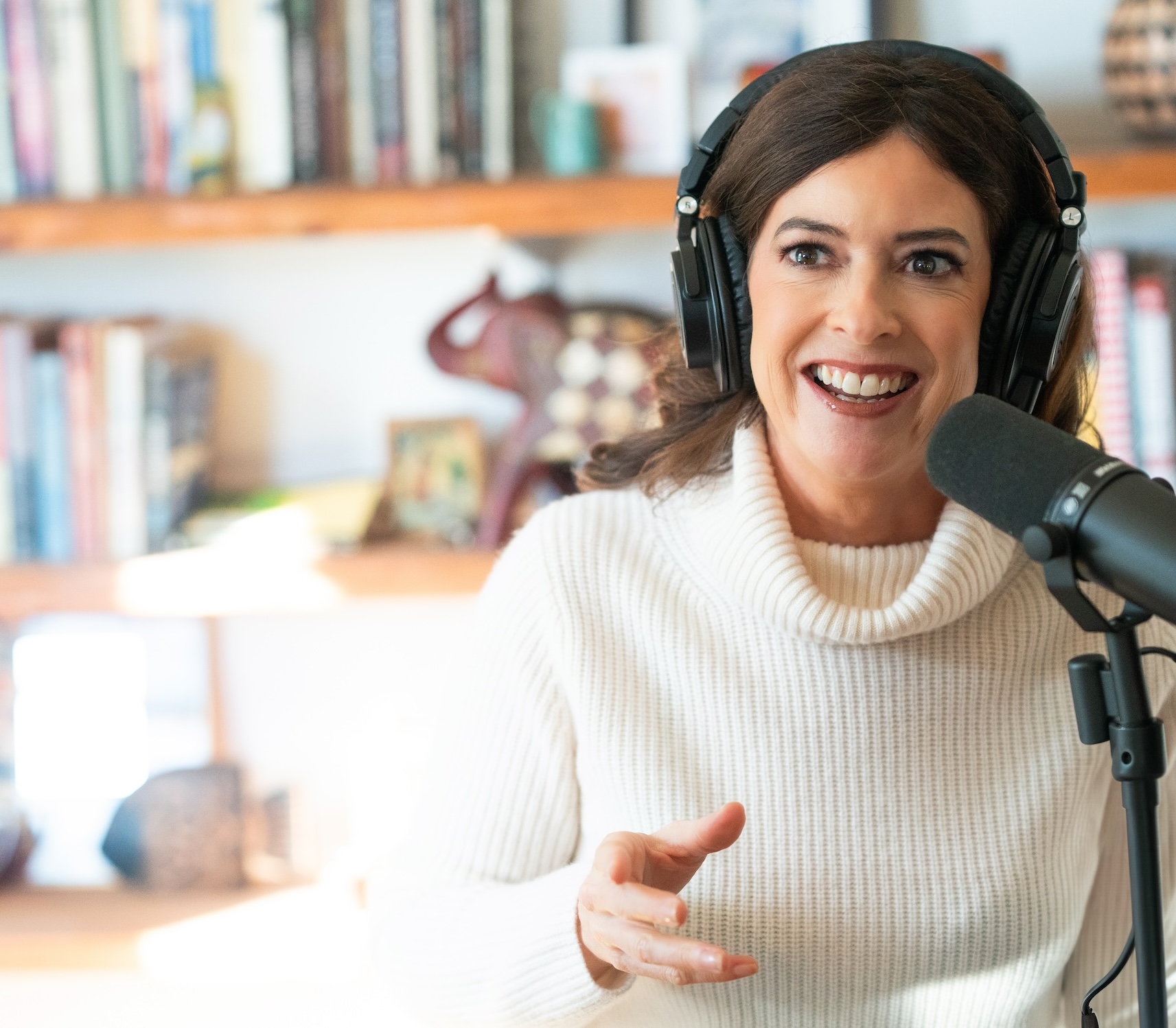
January has a way of pulling us straight into the how.
How will I fix what feels off?
How will I be more disciplined?
How will I finally get it right?
But what if there’s a deeper—and more grounding—place to begin?
Dr. Alison opens the year by inviting you to start somewhere different. Instead of beginning with self-improvement or striving, Scripture starts with meaning, presence, and relationship.
In this episode, you’ll learn:
-Why losing sight of the why fuels anxiety, striving, and burnout
-How meaning and grounding are closer than you think
-What “the light shines in the darkness” really means
-How orienting your life around love changes everything
Plus, you’ll hear a special announcement about something new coming to The Best of You—a daily way to stay anchored in Scripture and wisdom as you move through your day.
For additional resources and the full episode transcript, visit the podcast episode page here
If you loved this episode, check out:
Episode 122: Navigating Anxiety, Therapy, and Spiritual Formation with John Mark Comer
Episode 113: A New Vision Of Human Flourishing with Dr. Warren Kinghorn
Get I Shouldn’t Feel This Way for just $2.99.
Grab your 3 free Boundaries For Your Soul resources here
Download Alison’s free printable boundaries guide when you sign up for her weekly email.
Got a question? Call 307-429-2525 and leave a message for a future episode.
Thanks to our Sponsors!
Go to Quince.com/bestofyou for 365-day returns, plus free shipping on your order!
*Some of the links above are Amazon affiliate links. If you choose to purchase through them, I may earn a small commission at no extra cost to you.
While Dr. Cook is a counselor, the content of this podcast and any of the products provided by Dr. Cook are not specific counseling advice nor are they a substitute for individual counseling. The content and products provided on this podcast are for informational purposes only.
© 2025 Alison Cook. ALL RIGHTS RESERVED. Please do not copy or share the contents of this webpage or transcript without permission from the author.
Transcript
January 1st tends to invite reflection about who we are, about where we're headed,
and how we want to live. It is so easy to lose focus to get pulled in too many
directions when what we need more than ever is to stay grounded in the wisdom of
Scripture and in God's steady presence with us. Today, I have a big announcement.
Starting this year, 26, here at The best of you we're adding something new it's
called the best of you every day hey
everyone and happy new year I'm so glad you're here with me on January 1st this
very first day of the new year there's something about this day that carries so
much meaning, a fresh start, a turning of the page. Even if you're not, someone who
makes resolutions, January 1st tends to invite reflection about who we are,
about where we're headed, and how we want to live. And today, I have a big
announcement. Starting this year, 2026, here at The Best of You, we're adding
something new. It's called The Best of You Every Day. Every single weekday,
I'll be here with you for about 10 minutes. Think of it as a short daily
devotional. We'll read scripture and then I'll reflect on that scripture, especially
through the lens of psychology. What makes this a little different is the lens we'll
be using. Each day we'll be grounding ourselves in scripture, paying particular
attention to what scripture teaches us about being wise humans,
about growing stronger hearts, more discerning minds, in a more grounded spirit.
There's never been a time when we've needed that kind of wisdom more. And scripture
tells us to be innocent as doves and shrewd as serpents. And that feels especially
relevant right now in my life. And I'm guessing also in years.
There's so much happening Thank you.
focus to get pulled in too many directions when what we need more than ever is to
stay grounded in the wisdom of scripture and in God's steady presence with us.
It's with us every single day. And sometimes we forget, right?
I forget. I'm guessing you forget. And that's what I want this space to be,
a place where we ground ourselves daily in real wisdom and in God's anchoring
presence. So each day we'll look at a scripture through the lens of psychology,
paying attention to how it speaks into things like fear, desire, control,
rest, love, shame, anger, courage, relationships,
and trust. You could say that each day we're learning how scripture invites us to
become eyeser humans, innocent as a dove and shrewd as a serpent,
walking always in partnership with God's spirit. This daily podcast doesn't replace
our regular Thursday Best of You episodes. Think of this as your daily anchor.
Here's how it works. Every weekday, one day through Friday, you'll receive a short
episode about 10 minutes where we simply open up scripture and let it orient us for
the day ahead. You'll want to be sure you're subscribed to the best of you because
it will show up at the top of your feed each morning. We're not going to have ads
on the daily podcast, no extra fluff, just a daily place to anchor our hearts and
souls together, looking at scripture through the lens of psychology. And then on
Thursdays, we'll still meet here for our regular long form, The Best of You podcast,
where we'll have extended teaching, guest experts, and deeper dives into the topics
that matter most to your emotional, relational, and spiritual health. So the best of
you every day will drop on Monday, Tuesday, Wednesday, and Friday. Short 10 minutes
anchoring for the day. And on Thursdays, we'll continue with our regular weekly show.
This daily practice actually comes out of a longing in my own soul.
I've been looking for years really for
understand how the human mind and emotions work. Scripture helps us understand why
our lives matter, what we're living toward and who we're becoming. On Thursdays,
in our longer, best of you episodes, we'll continue to focus on the how, how we
meant, how we heal, how we grow, how we relate, and how we care for our inner
lives and our relationships. On the other days, we're going to return to the why.
Why this work matters, why love is worth orienting our lives around and who is the
one we partner with every single day, right? This isn't self -improvement.
This is a deeper current of connecting to God's love at work in our lives every
single day. In every single moment, in every single one of our relationships.
This daily space is where those two things meet. The how, how we change, how we
heal, how we grow, how we learn skills, and the why. Why does it matter? And it
matters because of God himself and the son he sent to be with us every single
moment of our lives. So today, on January first, I thought there was no better
place to begin than the opening lines of the gospel of John.
So today I want to give you a little preview of what the best of you every day
is going to be like. We'll get started with today's scripture. John 1, 1 through 5.
In the beginning was the word. And the word was with God and the word was God.
He was with God in the beginning. through him all things were made without him
nothing was made that has been made in him was life and that life was the light
of all mankind the light shines in the darkness and the darkness has not overcome
it man that is such a powerful word to start off our new year in the beginning On
day one, the word was with God and the word was God.
Right there, we see the powerful anchoring force of all of our lives,
right? Jesus was with God in the beginning. We are built on that relationship,
the relationship between God, the Father, God, the Son, and God, the Holy Spirit
that has been since the beginning of time and the word was god jesus also is god
think about it when john opens this powerful gospel he doesn't begin with advice
it's not about self -help he doesn't begin with instruction or even a story he
begins with meaning in the beginning was the word and the word was with god and
the word was God. That phrase in the beginning is intentional.
John is taking us all the way back before our plans, before our effort, before
resolution, before anything messy started, before our current situations even existed.
He's taking us out of ourselves and into the bigger picture, the foundation. And
what does he place at the center? Not chaos, not striving,
not uncertainty, but relationship. The word was with God and the word was God.
In other words, before there was anything to fix or prove or manage, there was
connection. And that matters as we begin a new year. So often January invites us to
start with the how. How will I finally lose weight? How will I be more disciplined?
How will I fix what feels off? But scripture starts us somewhere deeper.
Before we ask how, John invites us to remember why. Why do we have hope?
Why does love even matter? Why does presence always come before productivity?
And John goes on, all things came into being through him. What has come into being
in him was life And the life was the light of all people. Notice what he doesn't
say. He doesn't say life comes from our effort or from our achievements or from
getting it right all the time. Life comes from being connected to the source of
life. From a psychological perspective, this is profoundly grounding.
We don't flourish from our own efforts, right? from our own striving we flourish
when we're oriented around meaning connection and love capital l love himself when we
lose sight of the why we easily become anxious driven or overwhelmed even good
worthy goals start to feel heavy when they're disconnected from purpose john's opening
reminds is that at the center of reality is not a task, but a presence.
And then he says this, the light shines in the darkness.
And the darkness did not overcome it, not will not, did not,
which means that whatever this year holds, whatever uncertainty, whatever loss,
whatever fears, whatever change, whatever hope, the deeper current has already been
named. Light is not fragile. Love is not an afterthought.
Meaning is not something we have to manufacture. As you begin this new year,
the invitation is not to have everything figured out, right? It's not to have the
perfect goals or your own self -effort. It's to begin oriented to what's true,
to let your days be shaped not only by what you need to do, but by what is
already true, that your life is held, that love always proceeds,
effort that God's presence is already at work before you even try, before you even
decide, before you even move. That's the way we return to every single day.
That's the why. And we highlighted here on this first day of the new year. The
word was with God and the word was God and the light outshone the darkness.
Not only then, but today and every single day this year. So as we close this time
together, may you begin this day and this year rooted in God's love. May you live
from love today rather than striving, and may the light that was present in the
beginning guide you on this day. Thank you for joining me for this episode of The
Best of You. Be sure to check out the show notes for any resources and links
mentioned in the show. You can find those on my website at Dr. Allison Cook .com.
That's Alison with one l .cook .com.

If gratitude and grief seem to arrive hand in hand this season or hope feels costly, like putting your armor down in the middle of a battle… Nothing is wrong with you. Your brain is doing exactly what it was designed to do.
In this episode, Dr. Alison Cook sits down with researcher, author, trauma educator, and joy scholar Dr. Mary Catherine McDonald, (MC) to explore the often misunderstood relationship between trauma and joy.
Drawing from neuroscience, trauma research, and lived experience, Dr MaryCatherine explains why joy can feel threatening after loss or prolonged stress, and how joy isn’t something we force, but something we practice in small, embodied ways.
Together, they unpack:
- Why trauma responses are strength responses, not weaknesses
- The “joy thieves” that quietly steal our capacity for delight (hypervigilance, guilt, fear of loss, shame)
- Why joy and grief are not opposites, and often show up together
- How tiny, 10–20 second moments of joy can gently retrain the nervous system
- What neuroscientists call the hope circuit, and how activating it turns off the fear circuit
This conversation is both tender and practical, especially for anyone navigating holidays, anniversaries, or seasons where pain and beauty coexist.
Joy, as Dr MaryCatherine reminds us, isn’t the absence of suffering.
It’s a posture of healing.
A way of saying trauma doesn’t get the final word.
📖 Dr MaryCatherine's book, The Joy Reset: Six Ways Trauma Steals Happiness and How to Win it Back
📖 This Christmas, gift a loved one (or yourself!) Dr Alison’s latest book, The Best of You!
📥 Grab your 3 free Boundaries For Your Soul resources here
📥 Download Alison’s free printable with the five boundary tools when you sign up for her weekly email.
📖 Find a full transcript and list of resources from this episode here
💬 Got a question? Call 307-429-2525 and leave a message for a future episode.
Thanks to our Sponsors!
- Go to Quince.com/bestofyou for 365-day returns, plus free shipping on your order!
- If you’re looking for a Bible that helps you live the Word, not just read it, then grab this beautiful one I’m currently using at NIVapplicationbible.com.
- Give online therapy, brought to you by betterhelp.com/BESTOFYOU and get on your way to being your best self.
- Give your loved ones a unique keepsake you’ll all cherish for years, visit StoryWorth.com/BESTOFYOU to save $10 on your order.
- Give the gift of every day luxury and make every moment comfortable. Head to Cozyearth.com and use my code BESTOFYOU for up to 20% off.
- Go to AquaTru.com now for 20% off (your purifier) using promo code BESTOFYOU
*Some of the links above are Amazon affiliate links. If you choose to purchase through them, I may earn a small commission at no extra cost to you.
While Dr. Cook is a counselor, the content of this podcast and any of the products provided by Dr. Cook are not specific counseling advice nor are they a substitute for individual counseling. The content and products provided on this podcast are for informational purposes only.
© 2025 Alison Cook. ALL RIGHTS RESERVED. Please do not copy or share the contents of this webpage or transcript without permission from the author.
TRANSCRIPT
Hey everyone, and Welcome back to this week’s episode of The Best of You podcast.
Today we’re diving into a topic that feels especially timely as we move toward the holiday season — how we can reconnect with joy, and hope even in a world that feels heavy or uncertain. If you've ever found
yourself wondering, how do I keep showing up when life has been hard? How do I not lose myself to stress, grief, or that lingering sense of exhaustion? This episode has something for you. It's incredible.
I loved this conversation with Dr. Mary Catherine McDonald. She goes by MC. She's a researcher, an author, an educator and life coach,
and she focuses on trauma, grief, and healing, but also on joy. I love that juxtaposition, and it's so rich in our episode today. You might know her from her previous books, Unbroken. The trauma response is never wrong and other things you need to know to take back your life. And her brand new book release, this one came out this spring. She talks about it a lot in the episode today. It's called the joy reset six ways trauma steals happiness and how to win it back in the joy reset
MC explores how joy isn't just a fleeting feeling it's a radical act of healing she talks about how trauma can change the brain what she calls the joy thieves that keep us stuck things like hypervigilance fear of loss guilt and shame and how to reactivate what neuroscientists call the hope circuit. So this is super practical.
It's also spiritual because we want to experience joy and hope, especially at the holiday season. But we also want to be realistic about what's hard. So today we're going to talk about what that hope circuit is, why it matters, and how we can train our brains and our hearts to visit it more often. Because When we do, we start to find those glimmers of hope and joy even in the mess, even in the heart. And you'll hear MC talk about a really painful experience she had at the holidays and how she found joy even in the midst of it. And that's
what I want for each one of you. And for me too, this holiday season, it won't be perfect. It will be messy. But how can we find and orient ourselves to also find the joy and the goodness and the hope this holiday season. As you'll hear MC explain, joy isn't the absence of pain. It's a posture of healing, a way of saying that trauma doesn't get the final word. I cannot wait for you to hear this conversation. It's thoughtful, grounded in science, and full of practical ways to bring a little more joy into your day -to -day life.
Please enjoy my conversation with Dr. Mary Macdonald
Dr. Alison Cook (00:03.056)
Well, MC, I am so thrilled to have you here with me. I am just obsessed with this new book, even the title itself. It's called The Joy Reset, Six Ways Trauma Steals Happiness and How to Win It Back. It's such a great title, this sort of back and forth between joy and trauma. And I love that that's what you're doing and taking all your research and trauma and kind of teaching us how to refine joy. And I wanted to have you on, especially right now with the holidays.
We're smack in the middle of the holidays. As you know, as I know from my years of working in clinical practice for my own life, this is a season where we see that juxtaposition, right? We're supposed to be feeling joy. And yet for so many of us, the holidays are complicated.
MC (00:32.43)
Yeah.
MC (00:50.127)
yeah. Force.
Dr. Alison Cook (00:51.56)
And right. so, and then we can feel the guilt about the fact that they feel complicated. We have to bump up into family members that are harder. We have grief memories or, you know, so many different things that can rob our joy. So I'd love to start our conversation today, kind of with a big picture framing of how you see trauma and how it steals our happiness. And then move into how we can find more joy, real authentic joy.
MC (00:55.438)
Thank you.
MC (01:12.375)
Mm-hmm.
Yeah.
Dr. Alison Cook (01:20.779)
even when we're dealing with trauma.
MC (01:23.286)
Yes, first of all, thank you so much for having me. I am so excited to be here and talk to you about this and especially during the season, which for me is one of the hardest seasons of the year. And I've learned how to take back joy during the holidays. So think if it's okay, actually, I want to start there because...
Dr. Alison Cook (01:39.375)
Yeah.
MC (01:41.826)
And then we can go into sort of how we define trauma and why trauma takes away joy and how to deal with it. when I was 24, my father died really suddenly on Christmas Day. And so the holidays are obviously incredibly, I mean just...
shattered in that moment, right? And he was the person in the family who was sort of like Father Christmas, you know? He loved Christmas and loved to celebrate with all of us. so that moment was such a huge reckoning for a bunch of reasons. One, being raised Catholic, you know, I thought, OK, here's the miracle, right? He's not doing well. He's in the hospital. This is really scary, but it's Christmas Eve.
and here will be the miracle and then the miracle doesn't come and then
here's where the joy comes in. We were at the funeral, which was of course just a couple days after Christmas, since he died on Christmas. And so the church was still decorated for the holidays. And the church was so packed that we couldn't see to the front of the church as we were walking up the aisle. And I think I was just looking down because I was trying to steady myself, you know? And when we got to the altar, we were met with these ginormous plastic
full-size lawn animals on the front of the altar because the church had decided to kind of go in a different direction. Usually they had this very sort of discrete small glass nativity scene sort of off to the left of the altar, but this was this huge, garish, kind of hilarious scene. And the thing that made it even funnier was that...
MC (03:28.942)
my dad thought that animatronic animals were the funniest thing in the world. So he would have been the first person to absolutely have to leave church from laughing. And I remember just kind of collapsing into the joy of that moment and the mercy of that laughter because it came at such a brutal moment and it was like a deep breath, you know?
Dr. Alison Cook (03:33.2)
MC (03:51.36)
And so there's kind of one example of a million that I have of where you are in the deepest, darkest moment of your life and then joy shows up. And like almost knocks you over. It can be jarring because you're like, no, no, I'm doing the grief thing right now. I'm doing the sad thing. Like why is this joy coming up and interrupting my serious moment?
Dr. Alison Cook (04:01.082)
Yeah, wow.
MC (04:16.81)
But if we can learn to recognize that and see it, the beauty of what that joy does in the moment is that it sustains us through those things. And so to begin kind of talking about joy and trauma, we have to sort of first take apart the wall between them. I think we pretend like they don't coexist and they're standing right next to each other. And there's a reason for that, you know?
Dr. Alison Cook (04:43.972)
That is so powerful. Thank you for sharing that. It perfectly frames this conversation because what you just said, taking down the wall between them. I just literally wanna throw out all my notes and just dive into that, right? Because this is also my experience that when we have this sort of bifurcation of, like you said, I'm doing my grief work now.
MC (04:47.062)
of course.
MC (04:57.174)
Yeah, let's do it.
Dr. Alison Cook (05:08.644)
And then joy surprises us. It strikes me that the muscle we need to develop has far more to do with flexibility, that you could be open to that moment. It says something to me about your own sort of inner system, that you could be open to it. You didn't miss it. And it strikes me that's part of the goal, right? I mean, that was such a powerful, it's not just that it happened, it's that you could be open to it.
MC (05:17.506)
Yes.
MC (05:25.249)
Mm-hmm.
Great.
MC (05:36.034)
Great.
Dr. Alison Cook (05:36.4)
and allow it to come in. So what's happening there? How does that occur? How can we begin to address that wall that we create, that sort of false binary internally?
MC (05:43.436)
Mm-hmm.
MC (05:48.888)
Yeah.
I mean, think the first thing is to say, our emotions are not, you know, just like us, they contain multitudes and they're not these neat little tidy categories that fit into these tiny boxes and never meet each other. I think actually the movies Inside Out have done a really good job of showing us how emotions are mixed. You know, most emotions aren't like primary colors. You think about things like bittersweetness, right? That's literally too
Dr. Alison Cook (06:10.49)
Yeah.
MC (06:19.696)
emotions at once. And then I think the other thing that really gets in the way is that we shame ourselves for our emotions. Instead of seeing them as biological events that exist for a reason, just like every other biological event, we say, oh my god, I'm feeling joy in this moment where I'm supposed to be feeling grief. Now I need to go into guilt. And this is where we get into what I call in the Joy Reset the Joy Thieves, because there are these thieves that show up. when I think when joy comes in, in a moment,
Dr. Alison Cook (06:31.461)
Yeah.
MC (06:49.856)
where it's unexpected, it's there to help us sustain ourselves. But then these trauma responses come in and steal it away because joy can be jarring to a nervous system that's not ready for it. So I think the first step is saying, okay, emotions are valid and real. They're not primary colors. They can be very mixed and confusing. And when I encounter one, I'm going to try as best as I can, no matter how inconvenient that emotion.
Dr. Alison Cook (07:02.32)
Wow.
MC (07:19.596)
is to turn to it and try to welcome it in.
Dr. Alison Cook (07:22.96)
So let's talk about these joy thieves. I think that's a really interesting way to put it. And you talk about these thieves of joy in the context of these nervous system responses that we might think of as trauma responses. They're neurobiological. There's no shame in them, right? And I think that, again, I was talking to you a little bit before we started. A lot of myself and my
MC (07:28.097)
Yeah.
Dr. Alison Cook (07:50.883)
audience and maybe you, you know, from your background come from, think well intended, but sometimes spiritually bypassing faith settings where it's like, choose joy, right? As if it's something we, it's almost like a moral imperative. And yet our bodies are saying, I'm in fight or flight right now, or I'm anxious, or this person that I have to spend this time with is really hard for me, or, you know, something really painful.
just happened. And so we don't want to shame ourselves to your point about what we're feeling and the different emotions. And simultaneously, we don't want to lose that access to joy. So let's talk about how you see those joy thieves, not from a shaming perspective, but I love how you're just naming it. This is what it is. This is what's happening.
MC (08:20.898)
Great. Great.
MC (08:38.894)
Yeah.
MC (08:43.15)
Yeah, and I just wrote down shame versus bypassing because I think those are two sort of sides of the same coin where we can either put ourselves into shame or we can sort of try to bypass the emotion and for this kind of greater purpose of like, well, but you have to welcome and enjoy, but you can't be feeling, you know, this is God's purpose. So how can you be feeling sad? The truth is that there, yeah, we can come back to that.
Dr. Alison Cook (08:48.176)
Hmm.
Dr. Alison Cook (08:54.757)
Yes!
Dr. Alison Cook (09:03.342)
Yes.
MC (09:09.162)
When it comes to the Joy Thieves, so the book that I wrote before the Joy Reset is called Unbroken, the trauma response is never wrong, and the whole purpose of it is to figure out how to recontextualize trauma.
without shame. So neurobiologically, if we look at the trauma response, fight, flight, freeze, fawn, all of these responses that we talk about, they are there to help us survive. They are literally strength responses. And yet culturally, we look at them as a sign of brokenness or weakness. And that's now that we know so much more about the brain than we did 150 years ago, we can see that they are literally strength responses. So the goal of that book was to try to kind of update
definition of trauma. Trauma is a strength response. That doesn't mean it doesn't cause pain, right? When we get stuck in a trauma response in moments when we are not being, you know, we're not actually in danger, that can be really disruptive for your life.
One of the things that I was seeing when I was doing research and working, starting kind of in 2020, I reached for positive psychology because I felt really under-resourced. I've been working with clients since 2011, but in 2020, I just started to feel like none of the tools were enough. And I was like, okay, what do we have from positive psychology? How can this help get us back to baseline? And one of the cool things is that a lot of the positive psychology hypotheses from the 60s and 70s have been sort
strengthened by the neuroscience. So we know that making a gratitude list or leaning into joy is something that's going to be profoundly regulating for your nervous system. And so I was seeing all these clients and I had these groups at the time and I was like let's use positive psychology we just need to get back to joy. And what I found was that the majority of my clients were incredibly resistant.
MC (11:04.71)
And as I'm sure you know, like resistance is a message too. Resistance tells us something. And so instead of turning away from it and being like, you know, what's wrong with this person? It's like, wait, hold on. What's in the resistance? What am I missing? And the thing that I found was that...
When we have a hypervigilant nervous system or when we have a nervous system that is conditioned by trauma or chronic stress or fear, joy, asking that nervous system to stop and embrace joy is like asking you to put your armor down in the middle of a battle.
Dr. Alison Cook (11:42.254)
Yes, yes.
MC (11:43.905)
And your nervous system is going to say, no, I'm not going to do that. That's not for me. Right. And I'm doing it and that's what's keeping us alive. And that's right. Right. So then it's like a build and how do you build a bridge from that trauma response back to joy? And again, going back to this idea of like first being aware of it, it's, you know, what are the joy thieves in the way? Is it hypervigilance that has got you scanning, waiting for the next threat so that when something good happens, you immediately dismiss it? Because
Dr. Alison Cook (11:47.012)
Yes, I have a job to do. Yeah.
Yeah. Yes.
MC (12:13.908)
it's getting in the way of your scanning. Is it emotional numbing where you had to numb your emotions in order to survive because you were feeling so much intense fear and anxiety and sadness that you ended up kind of flatlining all of your emotions so that joy comes in and you can cognitively understand that good things are happening but you can't feel into it. So on and on which kind of thief is in the room and then how can we outsmart it and bring us back to joy and actually get that benefit to your nervous system.
that Joy is offering.
Dr. Alison Cook (12:47.392)
That's so good. That really clicks in for me when you're saying that because I feel, I will feel it in myself. If I'm really worried about something or there's some sort of, you know, it's like, I can't just, it's like trying to shift into a different lane too quickly to jump to joy. And so we're pausing long enough to go this hypervigilance, this scanning for the other shoe to drop, this numbing that I'm kind of defaulting to.
MC (13:02.412)
Right. Right.
Dr. Alison Cook (13:16.696)
It's there for a reason. I love how you talk about it. It's actually a strength response, not a weakness. It's how I learned to survive. And so from there, so we need some intermediary steps, it strikes me. So let's say, we're going into the holidays and we're noticing, right? The scanning or the hypervigilance or the numbing or whatever, the withdrawal, the avoidance, whatever.
MC (13:31.074)
Yeah.
MC (13:35.874)
Yep. Yep.
Dr. Alison Cook (13:45.317)
the thing may be and some part of us is like, wish I could just enjoy the holidays to some degree. What is the intermediate? What are some of the steps that we can take to put our neurobiology in the position to receive the moment that you so beautifully set up for us at the top of this episode where it might be unexpected. It's
MC (13:51.522)
Yep. All right.
Yeah.
MC (14:02.798)
Yeah.
Dr. Alison Cook (14:12.046)
the least place we would expect it, but we've done the work to till the soil to where when that person that drives us crazy does something at family dinner that suddenly we're laughing at the absurdity of it as a, right, we can find, what can we do to kind of put ourselves in the position for that?
MC (14:16.334)
and
MC (14:22.028)
Right.
MC (14:30.796)
Yeah. So the good news with all of this is that there are practices you can start to use like right this second. And I'll give you a couple of really simple ones because...
Dr. Alison Cook (14:37.765)
Yeah.
MC (14:40.878)
You said a minute ago, it's almost like a muscle, right? This ability to recognize joy and welcome it in is a muscle and it's one that, especially if you've been dealing with trauma or chronic stress, you're not used to exercising. So of course it's not robust and strong, and that's totally fine. It's important to kind of recognize where you're at and then figure out, do I instill some sort of counter practices that welcome joy in with
Dr. Alison Cook (14:44.559)
Yeah.
MC (15:10.832)
activating my nervous system and bringing just snapping me right back to hypervigilance because I think that's the risk and I think you just said it so perfectly when you were like okay I'm gonna set up this huge pressure for myself how do I enjoy holidays right knowing that I'm stressed out and you're introducing more stress into that situation yeah yeah yeah
Dr. Alison Cook (15:24.952)
Yeah. Yes!
Dr. Alison Cook (15:31.428)
Yes, exactly. That we put this pressure on that just almost backfires and increases the, so we're kind of trying to take baby steps here. I love this. Like baby steps to putting ourselves in the path of a little bit of joy, right? And that's a beautiful lofty goal.
MC (15:42.318)
Yes.
MC (15:48.781)
Yep, yep, and a tiny.
bit of joy. this is the book was originally called Tiny Little Joys because this is a practice that came out of 2020 and all of my research around joy, which was really designed from, I don't know if I'm sure you're familiar with Peter Levine's ideas of pendulation and titration where you understand that like, if you want to process trauma, you need to kind of swing into it, let yourself feel it a little bit and then bring yourself back to baseline. And I think we're very used to that framing like, okay, I'm going to go into my trigger
Dr. Alison Cook (15:56.848)
Hmm.
Dr. Alison Cook (16:07.791)
Yeah
MC (16:23.108)
then I'm going to come back out into safety. We have to do the same thing with joy if we're understanding that joy is also activating to the nervous system. so tiny little joys is a practice where you literally take 10 to 20 seconds to scan your environment for something that gives you a very small
little burst of joy. So for example, I have a nail polish on my desk that my sister gave to me last Christmas that I love. And so as I was talking to you right then, I just noticed that. And then can I lean into the joy of having that object? And can I think about my sister and the fact that she sent me something for Christmas last year and what that means and all this stuff just for 20 seconds and then go back to whatever I was doing? If that was stressing out about Thanksgiving dinner, if that was worrying about seating charts,
or my uncle who's going to say something dumb and make everybody mad, then so be it. But you've given yourself now a 20 second nervous system reset. And the amazing thing is that that's not just a thought experiment. What that does is it lets your body kind of dampen the stress response because when you imprint 20 seconds of joy, you're releasing a bunch of chemicals and stress responses in your brain that counter fear and counter
stress.
Dr. Alison Cook (17:43.035)
So, okay, so let me, that was just so well stated. it's all, think what I'm hearing you say, let me just make sure I'm getting it for all of us listening, that just as we have to, in a way, learn our triggers, learn what they feel like, learn to be with them. And there's so much therapy speak about, right, feel your emotions, you know, and the negative emotions, right? And I'm part of that and I get that and I needed to learn that, right? I was a great sort of.
MC (17:50.53)
Yes. I said a lot.
Dr. Alison Cook (18:11.342)
spiritual bypasser, I was a great sort of emotional bypasser. So, and, but just as much as we need to do that, be aware of our triggers, be aware of where we're gonna feel activated and be able to lean into that and also flow out of that. It sounds like you're saying we also have to learn our joy triggers, for lack of a better word. Find them, feel them, notice them, seek them out so that that part of us is primed.
MC (18:30.828)
Yep, yep, yep, exactly. Right, right, right.
MC (18:41.504)
Yes, exactly.
Dr. Alison Cook (18:42.586)
That's so interesting.
MC (18:44.142)
And then in a moment of stress or when you're having a tough day or whatever, you will find yourself automatically going to the place of joy instead of the place of fear because your body learns to kind of look for that, that counter to the stress that you're dealing with. I made the sort of hilarious decision January 1st of 2025 on Instagram live, on Instagram, that I was gonna do tiny little joys every single day. And you know, it's hilarious because
you don't know what the year is gonna present you and you're gonna do this, make a video every single day, that's absurd. And 2025 served up like one of the hardest years to date. And the cool thing about that though is that I've been able to see in real time and show people in real time how anchoring that is to be able to like hold yourself to that practice and then see what sort of benefits you can reap, you know?
Dr. Alison Cook (19:24.688)
Wow.
Dr. Alison Cook (19:32.442)
Wow.
Dr. Alison Cook (19:41.561)
I want to see that. That's cool. That's really beautiful. I want to switch gears just a little bit to a related topic that you talk about and also related to this time of year, which is the hope circuit, right? Hope. How do we rewire our brains for the hope circuit? First of all, how is that different? How is hope different from joy? And is it a similar process?
MC (19:43.468)
Yeah.
MC (19:48.877)
Yes.
MC (19:54.861)
Yes.
MC (20:02.552)
Yeah.
MC (20:07.416)
That's great question. I think if you want to think of, I'm going with this metaphor of like primary colors versus mixed colors. I don't know why I'm not an artist, but it's just what's here. If you think about like hope and joy and imagination as different colors on the same palette, then I think that's a helpful framing. So joy and hope and gratitude and kindness and imagination, all are emotions and entryways into
that has been termed the hope circuit in the brain. Which is just a series of brain areas that wire together and fire up when you're experience, when you're making a gratitude list from a really like present place or when you're practicing tiny little joys or when you're doing something called absurd hope, which I can explain in a second. All of those things activate the hope circuit. The cool thing about the hope circuit is that it turns off the fear circuit.
So when you think about like sort of electrical circuits in your brain, you can think about your brain almost like it's an old house. And in an old house, you may have had this experience. If you're running the air conditioner, you can't turn the microwave on or you'll blow a fuse. That's just because these circuits are counterposed. They can't be on at the same time. Our brains are the same. We don't have endless energy and electric ability in our brains. We have limitations. And so when you're in fear,
about this a couple of minutes ago, you can't access joy. When you're in the fear circuit, that part of your brain kind of goes dark because all of your resources are needed to handle whatever the stressor or threat that you're dealing with is. And we all know that and that's very, like we've had that experience. the smoke alarm is going off in your house, you can't do like complex math and balance your checkbook because you're too in the fear. The cool thing is that in like
2015 neuroscientists discovered that it also goes the other way. So if the hope circuit is online by a practice of joy or hope or kindness or gratitude, then the fear circuit can't be online either. And so we can leverage that by then making ourselves, like holding ourselves accountable. Do I have a couple of exercises every day where I'm intentionally going in and turning on the hope circuit? Because if I can do that for five minutes or 20 seconds, that's five whole minutes.
MC (22:36.976)
that the fear circuit is offline. And that makes changes in your entire body because the fear circuit releases stress hormones and the hope circuit releases hormones and chemicals that counter stress.
Dr. Alison Cook (22:48.746)
my gosh, that's unbelievable. Yeah, that's amazing. It's just amazing to me how the brain is wired. And I guess what comes to mind is, gosh, we've spent, I feel like, so much time kind of shaming ourselves for not feeling these emotions as if they're magic. But we can sort of unlock.
MC (22:51.182)
Isn't that cool?
MC (22:57.165)
I know.
MC (23:12.472)
Right.
MC (23:16.022)
Yes.
Dr. Alison Cook (23:16.816)
We now understand it a little bit more now we can again put ourselves on the pathway toward a meaningful rich experience of hope that's amazing
MC (23:22.35)
Yeah.
Yeah. Yeah, yeah. And I think hope is another one of these things where it gets very bypassy, right? We tell people in the deepest, darkest moments of, we can't give up hope. Actually, you can. And you will. right? And the cool thing is that hope and joy actually don't need you to believe in them for them to exist. And they will come and find you, even when you don't want them to, you know?
Dr. Alison Cook (23:33.998)
Yes, 100%.
Dr. Alison Cook (23:39.544)
Hmm. Yes!
Dr. Alison Cook (23:52.741)
That's incredible. And to me, that's where the psychology meets the spirituality, right? We're putting ourselves in the path for these incredible, real realities to find us through the miracle of the way our brain is designed. I mean, that's just incredible. I wanna ask you, MC, if you're okay with this, since you so just beautifully shared with us your experience.
MC (23:56.738)
Yes, totally.
Right.
MC (24:06.55)
Yes, exactly.
MC (24:10.702)
Right. Yeah.
MC (24:16.215)
Yeah.
Dr. Alison Cook (24:22.34)
do you going into the holiday season, going into Christmas, knowing you have, I would imagine, this twofold experience of hope and excitement and joy or wanting to have that and also knowing you're going to have some grief?
MC (24:30.477)
Yeah.
MC (24:41.23)
Yep. For sure.
Dr. Alison Cook (24:44.112)
come up, knowing that all of that is part of the beautiful multicolor, all can coexist. How do you set yourself up for both holidays?
MC (24:51.35)
Yep.
MC (24:57.494)
Yeah, that's a great question.
I want to start by saying that I very much subscribe to sort of like a toolbox method of coping rather than a singular tool because I know there are going to be moments where I feel anxiety. There's going to be moments where I feel grief. There's going to be moments where I feel sort of desperation or loneliness or isolation. And each of these moments is going to require a different tool. And I think so going in, it's like, okay, what let's get the toolbox
Dr. Alison Cook (25:27.568)
Mm-hmm.
MC (25:31.706)
ready, not just the one singular tool.
Dr. Alison Cook (25:34.341)
Before you go into the toolbox, which I love, what you just said is a big part of it. I'm going into it knowing I'm going to feel all these different things. I mean, right there, it's like, this is baseline. I'm going to have moments that are going to be hard. I'm going to have moments that are going to feel rich. And even that right there, that posture, I think is a huge reset for so many of us. Again, it's not putting that pressure of, need to have a joyful season. It's like, it's going to be complicated.
MC (25:41.398)
Yeah, yes, right. Yeah.
MC (25:48.643)
Yep.
MC (25:52.835)
Mm-hmm.
MC (25:57.123)
Yeah.
Right. Yeah, it's going to have all the right. Yeah.
Dr. Alison Cook (26:04.336)
So I love that. Yeah. Okay, great. And so then how, kind of tools help you and that do you recommend to help you through each of those?
MC (26:13.634)
So the Tiny Little Joys, I would highly recommend. think that's a great anchor and can join us on Instagram if you are so called or you can do it yourself. You can do it with a group. I've had people do it with their kids at dinner every night or in the car when you're commuting. But that's an anchoring practice. also love, there's a practice called absurd hope where you kind of go into the hope circuit and flip it on. But instead of trying to hope for your own future, which can sometimes be complicated, you hope for a future
Dr. Alison Cook (26:17.583)
Yeah.
MC (26:43.618)
that you know is ridiculous and will not happen. So I use the example of I'm going to be a cartoon elephant, ballerina, who lives in Paris and eats baguettes all day long. And then spend five minutes, you can sort of...
tack this onto a habit that you already do like brushing your teeth or showering and imagine that future that you know is absurd in the most vivid detail possible. So what are your shoes going to look like as a cartoon ballerina in Paris? What kind of friends are you going to have? What's your apartment going to be like? What kind of animation are we talking? Is this Pixar? Is this anime? Is this something else, right? Like because when you get into the hope circuit and can activate it and turn it on for any extended period of time,
you are shutting down the fear circuit and that's going to change what's happening in your biology. And I think sometimes when we're in really difficult seasons, we fixate on what's happening, of course we do, right in the here and now. I'm worried about Thanksgiving and who's going to come and whether they're going to be angry and what the conversation is going to be like and are we going to talk about politics and what then? And instead of that, if you could take yourself out of that negative loop for five minutes every single day, you will see that you have more resilience.
and then loading up on tools to deal with whatever you know is coming. So think about last Christmas. What did you really struggle with? Was it anxiety? Okay, what helps you with anxiety? Having tactile fidgets around or a playlist that's really calming, taking cold showers? Like what are your tools to deal with these core emotions that are gonna come up and then make a list of them and put it somewhere you can see it, whether that's in your phone or on your
Dr. Alison Cook (28:09.082)
Yeah.
MC (28:28.528)
refrigerator or your bathroom mirror so that you're cued to do the things when you're in the overwhelm. Because the other issue with overwhelm is that it disconnects you from the part of your brain that remembers the list. And so that's, think, why we get stuck in these things where I'm like, I know I'm supposed to do X, Y, or Z, but I really struggle remembering.
Dr. Alison Cook (28:34.084)
Yeah.
Dr. Alison Cook (28:45.529)
Yeah.
Dr. Alison Cook (28:48.878)
love that. You've mentioned the word imagination and it strikes me that in the hope circuitry and in the exercise you just shared about, it sparks imagination. I've found imagination to be such a powerful tool. can, in my life, I'm not sure about my listeners or you all, just be a candid, it can turn into fantasy, which...
MC (29:00.705)
Yeah.
MC (29:14.157)
Mm.
Dr. Alison Cook (29:15.226)
can take me out of, can be a little bit of a spiritual bypass, but at its best, imagination has been a very powerful tool. I guess what I think about is even from, I think about Viktor Frankl's Man Search for Meaning where he used, he imagined his loved ones and he imagined the love and that helped him through just impossible.
MC (29:19.436)
Yep.
MC (29:36.28)
Yeah.
MC (29:41.016)
Yep. Great.
Dr. Alison Cook (29:42.765)
circumstances. So from something like that, I know I've done that in my own life when I felt really isolated or alone, will think, I will imagine the people who I love surrounding me, you What are your thoughts on imagination and how that, I know for me that can be a built-in tool. Like you're saying, I kind of want to remind myself, I want to put it as a sticky note on the mirror.
MC (30:06.796)
Yeah.
Dr. Alison Cook (30:09.52)
because if I'm alone or I don't have immediate access to something, thoughts on that and its relationship to joy and hope.
MC (30:13.707)
and
MC (30:18.924)
Yeah, and I mean, think it's part of what your question is, like, how do we make sure we're not maladaptive daydreaming? that? Yeah. Yeah. Yes.
Dr. Alison Cook (30:24.952)
Yeah, yes, yes, yes, not escapism, but helpful.
MC (30:30.004)
Right. So I mean, I think there is, there are some subtle differences between these kinds of imaginations, right? I actually get this question a lot because I think people are really wary of imagination. And I think that's super fascinating, right? Like it's like, where's this going to take me? Where are we going? There's something about it that's a little bit scary because it's unknown and we know that it's made up. And so what does that mean about this life we're living? And I point this out because I just think this is another one
Dr. Alison Cook (30:57.829)
Yeah.
MC (30:59.918)
of these places where you can see the sort of tension between trauma and joy if we want to put them under sort of umbrella, you know, names. It's like, yeah.
Dr. Alison Cook (31:11.652)
Yeah, for sure. Because fantasy or escape hatches that we build in our mind can be a way to survive a traumatic event. And again, to your point, it's an incredibly brilliant, strong way. How do we bring that back into a healthy thing in the moment? Yeah.
MC (31:18.606)
Totally. Right, right.
MC (31:25.292)
Great.
MC (31:31.779)
And I think, so one thing that differentiates between the kind of maladaptive daydreaming or escapism and true imagination is that maladaptive daydreaming has an ache to it that imagination replaces with silliness.
Dr. Alison Cook (31:50.768)
Yeah.
MC (31:51.437)
Right? So if I'm thinking about being a ballerina, even as a human being and not a cartoon elephant in Paris, there's a real silliness to that because I'm a clumsy person. Yeah. And there may be like a shadow of an ache of like, maybe I do want to take dance classes and that's maybe something to actually do. But when you get into the space of maladaptive daydreaming, there's part of that, the way that I understand it, that is about sort of, it's like giving you access to the pain of the fact that you don't have
Dr. Alison Cook (31:59.161)
Yeah, platefulness. Yeah.
MC (32:21.41)
that life. Does that make sense?
Dr. Alison Cook (32:22.352)
Yeah, sure. Yes. Yeah, that makes a lot of sense. Yeah. And go ahead.
MC (32:26.446)
So, and that is run. No, you go.
Dr. Alison Cook (32:32.206)
Well, no, that ache is a good word because then there's a longing that we actually want to pay attention to. And what is that about versus the joy and delight that comes from imaginative play that we all had a taste of when we were kids, right? That's what kids do, right? And so that makes sense to me that when there's that ache in it or a sorrow in it, that might be when to look at it go, is there something there underneath that that I actually want in my real life?
MC (32:37.73)
Right, totally. Right. Yeah.
MC (32:49.262)
Right.
MC (32:59.04)
Right. Right, right, right.
Dr. Alison Cook (33:02.744)
or need.
MC (33:02.86)
And then turn to that, yeah. And maybe you do this practice every day in the shower and you're like, okay, I'm imagining a different scene every day, but like there's a theme and what's the theme? Okay, I need to think about that. But I think when it comes to escapism, I don't think we're really at risk until we're abandoning our own lives. So the practice that I'm talking about is that you take five minutes or 15 minutes and you're enhancing your day. You're not escaping from a task
Dr. Alison Cook (33:10.947)
Yes.
Dr. Alison Cook (33:29.348)
Yeah. Yes.
MC (33:32.824)
or your real relationship or a feeling that's over here that you don't want to feel.
Dr. Alison Cook (33:36.933)
Yes, I love it. You're exercising that muscle. You're being intentional about exercising the hope. I love that. feel like you need to, this is unsolicited, but speaking of the holiday seasons, we've covered hope and joy. Now we need to have you back on and we'll talk about peace. Right? Because all of these beautiful, you know, I think about the holiday, all the songs we sing, know, hope, joy and peace.
MC (33:41.218)
Yeah.
MC (33:55.052)
There we go, yeah.
MC (34:02.925)
Right.
Dr. Alison Cook (34:04.484)
They are available to us. And I love that you are not minimizing the pain and the trauma. You're teaching us how to work with our design.
MC (34:06.392)
Yep.
MC (34:12.611)
Yeah.
Yes, yeah, yeah, yeah. And I think, you know, there's, I'm huge on exercises. There's exercises at the end of every chapter in the Joy Reset, but also just knowing this framework. What exercises can you think of for yourself, right? How is your life structured and situated? And how can you adapt these exercises so that they really work for you, you know?
Dr. Alison Cook (34:30.384)
Yeah. Yeah.
MC (34:39.222)
And to your point about music, think music is incredibly powerful. And so that can be another tool, right? If you have 15 minutes, do you have a playlist that really lets you feel inspired or lets you feel a bunch of sadness? And then you turn the playlist off and go make dinner, you know, like, yeah.
Dr. Alison Cook (34:42.938)
Yeah. Yes. Yep.
Dr. Alison Cook (34:53.623)
Yes!
Dr. Alison Cook (34:57.518)
that's good. Yeah, that gives you that outlet and you're doing it intentionally. You're giving yourself that sad song or that that joyful song. Yeah, I love it. And see, I'm gonna go check out your I love the the joy challenge. I think that's really beautiful. Tell my listeners where they can find you and your work and these resources are just so helpful.
MC (35:02.349)
Yeah.
Yeah. Yeah.
MC (35:16.877)
Yes.
MC (35:21.006)
thank you. I am on TikTok and Instagram at the same handle, just mc.phd. And then my website is just alchemycoaching.life.
Dr. Alison Cook (35:32.484)
Beautiful, so you provide coaching services as well.
MC (35:35.672)
Yes, yep, I do curriculum and I work with corporations and groups and individuals and all sorts of stuff. yeah.
Dr. Alison Cook (35:40.528)
Amazing. Okay, we will link to everything in the show notes. Thank you for sharing your time and your wisdom with us today.
MC (35:48.856)
Thank you so much for having me. This was lovely.

If the holidays bring up a lot for you, old roles, old emotions, or the pressure to keep everyone happy, you’re not alone. Christmas has a way of activating the patterns and survival strategies that once helped you feel safe, pleasing, perfecting, over-functioning, or shutting down.
In this episode, Dr. Alison Cook shares how these patterns show up in her own life, why they resurface, and how you can gently find your way back to peace. You’ll learn:
- the three types of needs that get tangled inside
- why holiday dynamics awaken old wounds and responses
- a simple way to return to the place of peace at your center
- how to redefine “success” this holiday season
This Christmas, gift a loved one (or yourself!) Dr Alison’s latest book, The Best of You!
📥 Grab your 3 free Boundaries For Your Soul resources here
📥 Download Alison’s free printable with the five boundary tools when you sign up for her weekly email.
If you liked this episode, you’ll love:
Episode 131: Navigating Holiday Emotions
Episode 135: Tackling Holiday People Pleasing
📖 Find a full transcript and list of resources from this episode here
💬 Got a question? Call 307-429-2525 and leave a message for a future episode.
Thanks to our Sponsors!
- Go to Quince.com/bestofyou for 365-day returns, plus free shipping on your order!
- If you’re looking for a Bible that helps you live the Word, not just read it, then grab this beautiful one I’m currently using at NIVapplicationbible.com.
- Head to AirDoctorPro.com and use promo code BESTOFYOU to get UP TO $300 off today!
- Give online therapy, brought to you by betterhelp.com/BESTOFYOU and get on your way to being your best self.
- Give your loved ones a unique keepsake you’ll all cherish for years, visit StoryWorth.com/BESTOFYOU to save $10 on your order.
- Go to shopremi.com/BESTOFYOU and use code BESTOFYOU at checkout for 55% off a new night guard plus a FREE foam gift that whitens your teeth and cleans your nightguard.
*Some of the links above are Amazon affiliate links. If you choose to purchase through them, I may earn a small commission at no extra cost to you.
While Dr. Cook is a counselor, the content of this podcast and any of the products provided by Dr. Cook are not specific counseling advice nor are they a substitute for individual counseling. The content and products provided on this podcast are for informational purposes only.
© 2025 Alison Cook. ALL RIGHTS RESERVED. Please do not copy or share the contents of this webpage or transcript without permission from the author.
Please hear me say this clearly. Nothing is wrong with you. Truly, this time of
year simply shines a brighter light on the inner world you carry every day.
You don't need a long quiet time or a perfectly structured ritual or long hours to
come back to center. Most days, all you need is two minutes. This is one of the
most beautiful truths of the spiritual life of Christmas. God doesn't meet us in the
performance of the season, not in the perfect gathering, or the perfectly managed
emotions, or the beautiful candlelit room. God meets us in the center of the storm
within ourselves, in the place inside where you can finally exhale and simply draw
near to God.
This show is sponsored by BetterHelp. The holidays are full of traditions, some we
love, and some we quietly outgrow. Lately, I've been thinking about the ones I love
and the ones I might want to rewrite, small things like creating a new ritual with
my family or choosing one moment each day just to do something sacred for my own
soul. And honestly, therapy has become part of that for me. It's a way to make
sure I'm taking care of myself during a season that is so often joyful, but can
also be stressful, chaotic, and even lonely. If you're thinking about starting
therapy, consider better help. That's better help, H -E -L -P. Their therapists are
fully licensed in the U .S. and follow a strict code of ethics. They make getting
started simple. You fill out a short questionnaire, which helps match you with
someone who fits your needs. And if the match isn't right, you can switch anytime.
With over 30 ,000 therapists and more than 5 million people serve the platform as an
average rating of 4 .9 out of 5 from over 1 .7 million session reviews.
This December, start a new tradition by taking care of you. Our listeners get 10 %
off at betterhelp .com slash best of you. That's betterhelp .com slash best of you.
Hey, everyone. And welcome back to this week's episode of The Best of You. We are
quickly approaching Christmas. And I know so many of you, if you're anything like
me, are feeling the swirl of this season. The beauty, the charm. Yes,
but also the pressure, the weight sometimes of expectations and the emotional
complexity that tends to rise to the surface in December. This is the time of year
when we're told to slow down and savor the moment, and yet for so many of us,
our hearts feel anything but settled. Maybe you're feeling polled between family needs
or old dynamics that still tug at you the moment you walk through a familiar
doorway. Maybe you're carrying the invisible labor of making things feel magical for
everybody else, or you might be navigating loneliness, grief, or the quiet ache of
feeling misunderstood. And then there's the internal pressure,
that little voice that says you should be more present, more grateful, more joyful,
it's more spiritual. It can be a lot. And our hearts can end up feeling stretched
thin and pulled in every direction at once. Today,
I want to offer you something gentle. A simple, grounded practice that you can
return to any time you feel the swirl inside you start to rise, a way of gathering
all those scattered pieces of your heart and soul, and returning to a deeper
presence within, the presence of love that is with you even here.
As we settle in, I want to name something I see so often this time of year.
In my clients, in my listeners, and also, most definitely also in myself. It's what
I call the intertangle. You know that feeling when everything inside you starts
firing at once? Overwhelm creeps in. Your mind starts spinning. Your body feels
tight. And suddenly, the simplest things, a comment from a family member, a change
in plans, a moment of silence feels strangely amplified. For many of us,
Christmas doesn't just bring external busyness. It also stirs up the deeper layers of
our inner world. Old wounds can resurface moments when you felt left out,
unseen, responsible for holding everyone else together from long ago, long before the
current moment. Memories you didn't even know were still tucked inside you can
suddenly feel close to the surface and the different parts of your soul, they start
working in overtime. Maybe your inner pleaser jumps to attention.
Just keep everybody happy. Don't rock the boat. Or your inner perfectionist begins
tightening up the reins. Make it special. Don't miss a detail. It's all on you to
make it perfect for everyone. Maybe there's a lonely one inside of you who feels
the quiet ache of not being truly known, even when you're surrounded by people you
love, or a tired one who has simply carried too much for too long and feels like
she's running on fumes. These different parts of your soul aren't problems.
They're ancient feelings. Often they go all the way back to survival strategies you
learned in childhood long ago that come to the surface in seasons of stress and
also seasons of joy and overwhelm like Christmas. These parts of you are trying to
help you feel safe, loved and connected. And the holidays have a way of lighting
them up because this season is so rooted in memory, in nostalgia, in expectation,
in longing. So if you're feeling that intertangle rise, if you're exhausted, stretched
thin or suddenly emotional, please hear me say this clearly. Nothing is wrong with
you. Truly, this time of years simply shines a brighter light on the inner world
you carry every day. It brings these inner parts of your soul to the surface.
It awakens old patterns that once kept you safe. It highlights the places inside you
that still long for tenderness, for reassurance, for rest.
The good news is those different activation points, those little flares inside become
invitations. Not to shame yourself, but to pay attention and to meet your own soul
with compassion to return gently to God's loving presence.
We'll move toward that together in just a moment, but first I want to anchor us in
a spiritual reframe. As we notice this intertangle at Christmas,
I want to bring us back to a grounding truth, one that has anchored people of
faith for thousands of years. It's the invitation from Psalm 4610. I love this
Psalm. Be still and know that I am God.
Be still and know that I am God.
Most of us hear those words and immediately think of kind of an external stillness,
quiet rooms, candles, soft music, a pause from the noise, something that feels out
of reach for many of us in a busy season. And while those things can help the
stillness, scripture speaks of is something so much deeper.
It's within our bodies. It's within our souls. It's a whole body stillness that
starts within. Stillness is not passivity.
It's not shutting down. It's not pretending. Everything is fine. Stillness is inner
spaciousness. It's the gentle, courageous act of turning inward,
of noticing what's swirling inside and making room for God to meet you there.
This is one of the most beautiful truths of the spiritual life of Christmas. God
doesn't meet us in the performance of this season, not in the perfect gathering or
the perfectly managed emotions or the beautiful candlelit room, although those things
are beautiful. It's not in trying to hold everyone else together, right? God meets
us in the center of the storm within ourselves, in the quiet core beneath all the
pressures in the place inside where you can finally exhale and simply draw near to
God. When scripture says be still, it's not commanding you to shut down your
emotions or silence the ache inside. It's inviting you to return to the truth deep
within that God is already here. God is already with you. God is already beside
you, ahead of you, before you, and within you through the power of his spirit. God
comes to the middle of the storm. So this is where we're headed.
We're going to practice what it means to come home to that inner place of love.
The place where your scattered parts of your soul can gather, where they can get
bandaged up and healed and touched by love itself,
where God holds you steady, where you remember that you are not alone in this
season or in any season. It's just a breath away. There's nothing you have to
force. There's nothing you have to make happen. We're simply making space for God to
meet us right where we are.
Americans spend an average of 90 % of their time indoors, but did you know indoor
air can be up to 100 times more polluted than outdoor air? Breathe Easy with Air
Doctor, the award -winning air purifier that eliminates 99 .99 % of dangerous
contaminants like allergens, viruses, smoke, gases, mold spores, and more. Air Doctor
was voted Best Air Purifier by Newsweek, so it's no surprise that 98 % of Air
Doctor customers agree their homes, air feels cleaner, safer, and healthier with Air
Doctor. It makes a great gift. I'm not kidding, I have one, and I love it. Unlike
other purifiers, Air Doctor captures invisible particles 100 times smaller than
standard HEPA filters. Head to Airdopterpro .com and use promo code best of you to
get up to $300 off today. Air Doctor comes with a 30 -day money -back guarantee plus
a three -year warranty, an $84 value, free. Get this exclusive podcast only offer now
at air doctor pro .com. A -I -R -D -O -C -T -O -R -P -R -O -D -O -P -R -O -D -C -R -O -com.
Use promo code, Best of You.
Before we move into the practice itself, I want to show you a simple visual that
captures what so many of us feel during December. I found this so helpful. I call
it the three circles of presence. If you're watching on video, I'm going to hold up
a whiteboard showing you what I'm describing, but if you're listening, you can just
picture three overlapping circles, like a Venn diagram. And circle one up here at
the top is the circle of what others want from me. And you could even make a list
if you draw your own, all the things you feel like others want or need from you.
Circle two becomes what I expect of myself, right? These are those inner pressures,
our inner expectations. You can make a list of those, the different ways we put
pressure on ourselves. And then circle three down here at the bottom is what my
soul actually needs for me, right? What my soul actually needs.
And then right here at the center, I'll take a little sharpy here and color this
in. Where they overlap is what I call this place of peace.
I'm going to write that here. This is the place of peace at the center.
Now, I want to walk you through what tends to happen during the holidays. Most of
us spend a lot of time right here in circle one, right? This is what others want
for me, right? The invitations, the expectations, the family dynamics, the emotional
and we want to have expectations of ourselves, this isn't all bad, but it's the
pressure you tend to put on your own shoulders, to be cheerful, to be happy, to be
present, to make it meaningful, to not disappoint anyone. This is where your inner
achiever, your inner perfectionist, or definitely your inner critic tends to take
over, right? If you don't hold this in balance, insisting you hold everything
together. But Rarely, so rarely, do we pause long enough to notice Circle 3?
And this is what my soul actually needs, right? This is the longing beneath these
other outer expectations, outer and inner expectations. It's the place inside where
parts of you feel tender, parts of you carry grief from the past or from the
present, where parts of you might be lonely or exhausted or overwhelmed or maybe
want to sense your own sense of wonder in this season, right? You have your own
memories you're tapping into, right? So this is often the part of us. We're not
connecting to enough. And here's the thing. Peace, again, is found in the overlap.
It's not in abandoning people, right, or dropping every responsibility. That wouldn't
make us who we are. We're not that kind of person. We do care about other people.
We do care about our own standards. But when we gently step back and also bring
into focus what our soul needs, what my soul actually needs from me,
from others, from the season, from God, right? What my soul actually also needs,
right? This isn't also
conversation right your spiritual life lives in that center space this is the space
where we have to get still for just a moment not to ignore the needs of other
people around us not to ignore the expectations we put on ourselves but to connect
to the deeper longings in our own souls right This is where God meets us at the
center of who we are. As you look at this visual or maybe draw it out for
yourself, I want to imagine yourself slowly, stepping out of the outer swirl of
Circle 1 for just a moment today while we're together and out of the inner pressure
of Circle 2 and join me for just a moment in Circle 3,
where you connect to your own deeper longings this season.
We're going to take just a few moments to move into an inner check -in together.
If you're able, if you're not driving a car, you can close your eyes. Let your
shoulders drop for just a moment. Maybe unclench your hands close your eyes and take
a slow breath in and a long steady exhale out and just right now while you're
listening ask yourself this question who's present in me most right now
Just notice which part of you comes forward.
You might notice the pleaser, working hard to keep everyone happy.
Maybe it's the perfectionist, tightening her grip.
Maybe it's a lonely one feeling a quiet ache beneath the surface or the tired one
who's carried too much for too long.
Just notice which part of you comes to the surface and
then gently ask whoever shows up, what are you afraid of right now?
Listen for even the faintest whisper.
Maybe she's afraid of disappointing someone. Maybe she fears being left out or
misunderstood.
Maybe she fears being alone or feeling invisible.
Maybe she's terrified of letting something drop.
Whatever comes, simply honor it.
Now, as this part of you,
what do you need?
It's not what you should need, not what others need.
But what does this part of you need from you in this moment?
Maybe it's just a deep breath.
Maybe it's a boundary. She's aching for you to set. Maybe it's a moment of
stillness each day for just a few minutes like this.
Maybe it's reassurance that you see her, that you're with her.
Maybe it's to be minded she doesn't have to carry the weight on her shoulders
and now picture god turning toward this part of you with warmth not critiquing not
correcting simply turning toward this part of your soul With compassion,
imagine God bending low,
meeting this young version of you at eye level,
calling her by name and saying, I see you, you are precious to me.
You don't have to hold this alone.
let this part of you rest for a moment in that presence
this is the beginning of returning to that center of peace,
not by forcing yourself to be calm, but by tending to what is true and real inside
of you and allowing love to meet you there.
Take one more deep breath, and when you're ready,
we'll gently move forward together.
I want to share a little story from my own life here because this intertangle we're
talking about is something I know really well. When my kids were younger, especially
in those early years, I would make myself absolutely crazy over the holidays.
And I didn't know then that it was younger parts of me stirring up, but I can see
it so clearly now. I wanted to knock it out of the park for everybody else. I
wanted to create magic and memories to please every member of the family to fill
everyone with delight. This well -intentioned part of me just took it as her job to
be the Christmas fairy, you know, just sprinkling magic Christmas everywhere. And
underneath, all of that effort was this deep pressure inside myself. This belief that
if I could just get it right, everyone would feel loved and I would finally feel
at peace. But the truth was I was completely disconnected from my own needs.
This pleaser part of me was really young. She had needs that I wasn't aware of,
but she was running the show and my achiever part was right there with her task
list and her clipboard, you know, gift after gift after gift, just redoing and
overdoing and doing more and just running on empty. And deep inside,
there was a part of me who longed for rest and for connection. And I didn't
realize then that that part of me could never get those needs met through all that
effort out here. That that part of me needed God's love and needed me too,
right? That part of me also needed love this Christmas season.
You know, the holidays bring a lot of beauty, but also a little tension. Last week,
I woke up at 3 a .m. With my jaw so tight, it felt like I'd been chewing through
a to -do list in my sleep. I thought, oh, this is exactly what my dentist warned
me about. actually why I use Remy night guards, because apparently I'm not alone.
Nearly 30 % of adults clench or grind their teeth at night. And Remy's custom night
guards are clinically tested to protect your teeth from grinding, help relieve jaw
tension, and even improve sleep quality. And here's what I love. You get the same
professional quality and comfort you would from a dentist made guard, but at a
fraction of the cost, about 80 % less, and without having to schedule a single
appointment. Plus, you can use your HSA or FSA benefits at checkout. Here's how
simple it was for me. Remy shipped an impression kit right to my door. I followed
their step -by -step guide to get a perfect mold, sent it back, and a short time
later, my custom fit night guard arrived, super comfortable, and now I can finally
rest without worrying about my jaw taking the brunt of the stress. And for the
holiday season, Remy is gifting customers their two -and -one phone. It both cleans
your nightguard and whitens your teeth, completely free when you order a nightguard
between now and December 24th. Just go to shopremi .com slash best of you and use
code best of you to get 55 % off your new nightguard plus the free foam gift.
That's shop remi remi .com slash best of you code best of you.
Thank you remi for sponsoring this episode.
And here's what would inevitably happen by the time Christmas finally arrived or
maybe the day after, I would be exhausted, bone tired, run down,
and in some cases I'd get irritable or I'd completely shut down, right? I'd poured
everything out and there was nothing left and that didn't serve anyone. It didn't
serve my family. That's not what they wanted. It was an exhausted parent running
around and it certainly didn't serve me. Over time, year after year,
I had to learn how to find this place of peace we've been talking about, that
place in the center of the three circles. It included what others need, a desire to
please others at the holidays. That's a beautiful gift, right? When it's held in
balance with my own self -expectations, my own capacity, and also when held in
balance with what my soul actually needs underneath at all.
The shifts started small. I still remember the year it began to click for me. It
happened with gift buying. I realized one December that by the time I got to the
fifth or sixth present for the kids, those extra gifts weren't adding any real joy.
They weren't improving anything for anyone. They were coming from my pressure, not
their delight. My family, my kids were just as happy, maybe even happier with the
first one or two thoughtful gifts. Right? It seemed silly, but it was a huge moment
of reckoning. Like, I can just stop at a point. It was the part of me that was
overreaching that didn't need to do that. It wasn't pleasing anyone, least of all
myself. So I experimented with something new the next year. I stopped.
I set a boundary with a part of me who kept pushing for just one more. I thanked
her for wanting to create meaningful memories and then I gently told her, we're
good. We've done enough. Let's rest. And you know what happened?
Everyone was still happy. The joy was still there Christmas morning. And for the
first time in years, I had a little gas left in the tank. I was present. And that
small shift opened up a door for me. Over the next few years, I started applying
the same mindset to other places to my schedule, saying no to things that looked
lovely, but would ultimately drain me. I said no to some of my own expectations,
letting go of the image of the perfect Christmas, which, spoiler alert, when you let
go of that, you tend to find it in unexpected places. And to my inner soul,
listening for what each part of me needed instead of letting them run on autopilot.
And slowly, steadily, I began to discover that inner place of peace,
not by doing more, not by performing harder, but by coming home to what my soul
actually needs. And I share that story because I want you to know you are not
alone in this. This work takes time. It's a practice and every small step toward
that inner place of peace matters. It matters for you.
It matters for the people you love. And it's the place where God loves to meet us,
which is after all the whole point of Christmas, right? It's God coming into the
mess and meeting us right where we are. So as you hear my story and engage with
your own soul, I want to turn this toward your life, toward the real moments you're
walking through this December, right, as we head into Christmas. Because here's the
truth. You don't need a long, quiet time or a perfectly structured ritual or long
hours to come back to center. Most days, all you need is two minutes of awareness.
I call this the two -minute return to center. It's based in mindfulness, which is
based on the episode I did with Dr. Judd Brewer in last week's episode. So if you
want the deep dive, go back and listen to that conversation. It was such a powerful
conversation. But this is the simple three -step version. It's simple. It's repeatable
and it breaks the cycle of overwhelm right in the moment. You can practice this
every day or any time you feel overwhelmed, chaotic, or just notice one of those
parts of you that we tapped into earlier today. Here's how it works. Step one,
you just pause. Take a deep breath. If it helps place a hand on your heart or
your stomach, just enough to signal to your soul. I'm here.
I'm listening. Right? It's that simple. Step two, name the part of you that you
notice. I see a part of me that's worried, that's bracing,
that's lonely, that's overfunctioning, that's tired.
Whatever rises, name it. Naming brings compassion and differentiation into the room.
You're becoming mindful of what's happening in your own soul. You're getting into
that third circle, right? That third circle of what my soul actually needs.
And then step three, I want you to bless this part of you. Offer a simple
kindness. It makes sense that you're here. I get it.
You've worked hard. You're not alone. God is here,
too. As part of step three, you might invite God into this place in your soul.
God, meet me right here. Not to fix, not to change,
but just to be with. Right. This is the opposite of inner pressure. It's inner
welcome. Right. It's welcoming Christ right there into that place in your own soul.
Just those three steps. Pause. Take a breath. Place a hand somewhere over where you
sense that inner voice, right? Name what you notice.
Give it a name. And then three, welcome with a blessing. I bless you, tiredness.
It's understandable that you're here. You're welcome at the table of my soul. I
bless you, you inner overworker. Right. I get your good intentions.
Right. You're welcome at the table. I don't want you to take over, but you get a
place in my soul. And then as you take that breath, right, as you take that pause,
you might just check in with yourself. What's one thing I need today? Maybe it's
just a deep breath. Maybe it's to untense my shoulders. Maybe it's to take a short
walk, right? It doesn't have to be fancy or a lot, but you're just trying to
interrupt that loop in your soul. This simple practice can shift the entire tone of
your day. It brings you out of autopilot, out of old patterns, out of those loops,
and back into a grounded presence where God meets you, right in the middle of what
you're feeling. Here's what I want you to remember. Peace this season will not look
like perfection. It will look like presence, small,
grounded moments. It might look like saying a gentle no to something that stretches
you too thin, like leaving a gathering just a few minutes early without guilt,
like taking three slow breaths before responding,
like stepping into a bathroom or a hallway for just a few minutes to re -center and
listen to your own soul. It might mean letting go of the idea of perfection or
perfect memories and instead looking for what is because what is is is good and
beautiful. It might mean allowing a place for grief or loneliness to sit at the
table of your soul. It might mean honoring your limits without apologizing,
offering compassion to yourself, to others, instead of performance.
Peace is so much less like those flawless holiday photos. It's more like a steady
inner exhale. It's the quiet confidence that you don't have to run ragged to be
loved.
finds you. You are not alone. I promise you there is a place inside of you where
God is already waiting to greet you to welcome every single part of your soul with
love. Thank you for joining me for this episode of The Best of You Be sure to
check out the show notes for any resources and links mentioned in the show. You can
find those on my website at dr. Allison cook .com. That's Allison with one L .cook
.com. Before you forget, I hope you'll follow the show now so that you don't miss
an episode. And I'd love it if you'd go ahead and leave a review. It helps so
much to get the word out. I look forward to seeing you back here next Thursday.
And remember, as you become the best of who you are, you honor God, you heal
others, and you stay true to your God -given self.

If discomfort sends you into overthinking, numbing, or trying to fix what you can’t control…
If certain habits feel automatic no matter how much you try to change them…
You’re not alone—and your brain is more trainable than you think.
In this episode, Dr. Alison Cook sits down with Dr. Jud Brewer—psychiatrist, neuroscientist, and New York Times best-selling author who specializes in habit change and mindfulness.
They unpack why we get stuck in these loops and a simple practice to steady your soul.
Instead of relying on willpower or self-judgment, this conversation invites you to:
- Notice your inner patterns with kindness
- Differentiate discomfort from distress
- Understand the habit loops that drive anxiety, worry, or doom-scrolling
- Apply the #1 tool to help you create real, lasting change
- Deepen your connection to God
This episode is a grounding companion for anyone navigating stress, emotional triggers, or the pull toward old coping strategies—especially in seasons that stir up more than we expect.
📥 Grab your 3 free Boundaries For Your Soul resources here
📥 Download Alison’s free printable with the five boundary tools when you sign up for her weekly email.
If you liked this episode, you’ll love:
Episode 75: Your Secret Weapon Against Stress and Anxiety
Episode 112: Navigating Anxiety
📖 Find a full transcript and list of resources from this episode here
💬 Got a question? Call 307-429-2525 and leave a message for a future episode.
Thanks to our Sponsors!
- Go to Quince.com/bestofyou for 365-day returns, plus free shipping on your order!
- If you’re looking for a Bible that helps you live the Word, not just read it, then grab this beautiful one I’m currently using at NIVapplicationbible.com.
- Check out cozyearth.com and use code BESTOFYOU to get up to 40% off.
- Give online therapy a try at betterhelp.com/BESTOFYOU and get on your way to being your best self.
*Some of the links above are Amazon affiliate links. If you choose to purchase through them, I may earn a small commission at no extra cost to you.
While Dr. Cook is a counselor, the content of this podcast and any of the products provided by Dr. Cook are not specific counseling advice nor are they a substitute for individual counseling. The content and products provided on this podcast are for informational purposes only.
© 2025 Alison Cook. ALL RIGHTS RESERVED. Please do not copy or share the contents of this webpage or transcript without permission from the author.
Transcript
Anxiety is probably an evolutionary bottleneck in this respect because it pulls
together fear and planning. The more we worry, the less we're actually able to plan.
We can get stuck in these habit loops of distraction where we're not learning to be
with our unpleasant experiences. And if we're constantly running away from it, we're
not going to know how to deal with things that are uncomfortable in the future.
When we get out of our own way, when it's not about us, when it's about something
much bigger than us, suddenly we've got all the strength in the world.
This show is sponsored by BetterHelp. The holidays are full of traditions, some we
love and some we quietly outgrow. Lately I've been thinking about the ones I love
and the ones I might want to rewrite small things like creating a new ritual with
my family or choosing one moment each day just to do something sacred for my own
soul and honestly therapy has become part of that for me. It's a way to make sure
I'm taking care of myself during a season that is so often joyful but can also be
stressful, chaotic and even lonely. If you're thinking about starting therapy, Consider
Better Help. That's Better Help, H -E -L -P. Their therapists are fully licensed in
the U .S. and follow a strict code of ethics. They make getting started simple. You
fill out a short questionnaire, which helps match you with someone who fits your
needs. And if the match isn't right, you can switch anytime. With over 30 ,000
therapists and more than 5 million people serve, the platform as an average rating
of 4 .9 out of 5 from over 1 .7 million session reviews. This December,
start a new tradition by taking care of you. Our listeners get 10 % off at
betterhelp .com slash best of you. That's better help .com slash best of you.
Hey everyone and welcome back to this week's episode of the best of you. As we are
heading into this Christmas season, so many of us brace ourselves, not just for the
busyness, but also for the emotional undercurrents that show up around family,
expectations, the pressure to feel joy when maybe we're not feeling so joyful,
and not to mention the constant stream of hard news in the world. It's a time when
our nervous systems can run hot, our minds can spin fast, and those familiar
triggers can flare. And in those moments, we often reach for whatever helps us cope.
It could be doom scrolling, stress eating, that extra glass of wine, small attempts
to soothe the nervous system that's overwhelmed and searching for steady ground. And
today we're talking about something that I love. It's just such a life -changing
topic, a lifeline for so many of us navigating these kinds of moments. It's
mindfulness. Research consistently shows that mindfulness can reduce anxiety,
improve emotional regulation and interrupt those unhealthy habit loops by strengthening
your capacity for awareness and self -control. This is a powerful, powerful tool.
But before we get started, I want to name something up front, especially for those
of you who've been tuning into the podcast these past few years. For some of us,
the word mindfulness can carry some baggage. For some of you, it might feel too
self -focused or too secular or even at odds with Christian prayer.
And we touch on this at the end of the episode in a beautiful way. But I know
that for some of you, it can bring up images of emptying your mind or practices
you've been told to avoid. And I want to begin this episode by reframing what
mindfulness actually is and what it isn't because it's so much more compatible with
Christian prayer and forms of spiritual practices than many people realize.
Mindfulness at its core is simply the practice of paying attention. Attention without
judgment, presence, without striving, awareness, without shame.
That sounds a whole lot like what this journey of learning to walk with Jesus is
all about. In the Christian tradition, prayer has always been about turning our
attention, our awareness toward God, being fully present to the one who is already
present with us. And while mindfulness doesn't require a spiritual framework,
Christians absolutely can and do practice mindfulness in a way that enhances our
spiritual lives. In fact, countless believers throughout history of practice forms of
mindful attention through silence and solitude, through breath prayer,
through reflection and contemplative prayer. Where prayer tends to connect us to God,
mindfulness helps us notice what's happening inside of us so we can bring that
experience into an awareness of God. It helps us slow down enough to notice,
where is my body tense? What emotion is surfacing? Which part of me feels threatened
or overwhelmed? What is this moment stirring up inside of me?
This awareness doesn't replace prayer, but it allows us to invite more of God's
presence to be with us in whatever we're experiencing.
It allows us to experience more of God's presence with us. And here's why today's
conversation matters. We are living in a time of constant triggers, anxiety,
overconsumption, stress eating, doomscrolling, numbing behaviors, emotional spirals. The
brain falls into habit loops when we're overwhelmed. And for many of us, those loops
are rooted in fear, stress or trying to self -soothe the best way we know how.
Mindfulness helps us interrupt those loops. It gives us tools to notice what's
happening in real time instead of getting swept away by old patterns. It helps us
learn to respond rather than react. And that's something every one of us needs right
now. And that brings me to today's guest. Dr. Judd Brewer is one of the leading
voices and
love about Dr. Judd's work is that he makes something as profound as mindfulness
incredibly practical. He breaks it down and helps us understanding what's happening in
the brain when we get hooked, whether it's by anxiety or doom scrolling or social
media or people pleasing, and he teaches us how small moments of awareness can
actually help us change those habits. So today, we're going to explore what
mindfulness actually is, how it helps us approach these triggers, especially during
stressful seasons and why our brains get stuck in habit loops and how curiosity and
small shifts in attention can help us create lasting change. And lastly,
we'll talk about how mindfulness can expand our practices of prayer, helping us to
gain access to an even deeper sense of God's loving, powerful presence right in the
middle of our struggles. This is such a rich and beautiful and encouraging
conversation and I am thrilled to bring you my conversation with Dr. Judd Brewer.
Judd, I'm thrilled to have you on the podcast today. I'm just such a big fan of
your work and all that you're doing to help us understand mindfulness. Can you help
us understand first off, right? You're at the start what it is and maybe what it
isn't. Yes. So let's start with what it isn't. It isn't a judgmental stance on
life. You know, so it's really, there are two main components, awareness and
curiosity. And I would also add that with the curiosity, there's an attitude of
kindness. So this kind curiosity, if we could put it that way, that helps us meet
whatever we're being aware of in a different way than what we often habitually do,
which is judging our experience, whether it's judging ourselves, judging others,
judging the world. And so does it not only apply to awareness of myself?
Can we also apply mindfulness to our awareness of others? Absolutely. Oh,
interesting.
Gotcha. So it's different from maybe a sort of focus only on the inner life,
although that's part of it. It's not, so for example, meditation, right, where you're
trying to um that yeah flesh that out a little bit because i think that's a
misconception even i have absolutely well often you know meditation is seen as you
know the proverbial navel gazing or however you know however it's seen but really
it's about bringing awareness and seeing relationality so seeing our relationship with
ourselves which is internal but also seeing our relationship with others and with the
world, which is external. And I would even go as far as saying that's an artificial
distinction between internal and external. It's really about being aware of everything
in an ongoing flow. And it's, you know, to say internal and external,
it can be helpful to make distinctions at times and it can also develop official
dichotomies that can get in the way. Can you give me an example of even in a
moment like right now?
I'm aware we had some technology difficulties hopping on right.
And I've learned over time to be present to what's happening and what's real Versus
flipping into self -shame or self -judgment. Can you give me,
is there a form of mindfulness that speaks to even a moment like that,
a moment right now where I have some inner noise and there's a way I can be kind
toward what I'm noticing versus judging what I'm noticing. Yeah, absolutely.
So let's say that something isn't going as planned. Yeah, yeah, exactly.
And when something isn't going as planned, we can get in the habit of judging
ourselves. We can get in the habit of judging some piece of technological equipment.
We can get in the habit of judging other people. We can bring awareness in and see
how we are kind of going down those spirals of the judgment,
internal, external, whatever, equipment. And we can also, so it helps us be able to
recognize that. And then also helps us be able to kind of meet that with this
curious awareness. So for example, you know, if something isn't working, like a
technological glitch in a podcast, we can We can go, oh, crap.
And when we do that, our mind, you know, whether it's judging ourselves,
judging the experience, judging whatever, that kind of closes us down and puts us in
this kind of constricted, contracted, frustrated mindset, which ironically makes it
harder to step back and problem solve, you know. And so there we bring flip that
oh no or oh crap to oh okay this you know this piece of technology isn't working
what um how you know and it opens us to be able to see all the possibilities much
more readily than if we were just locked into you know that you know must be that
or must be that that's really that's really at the heart of it is to is to bring
this playful curiosity even when things aren't going.
how society is collectively getting trained to use their phones.
Cornell West describes it as these weapons of mass distraction, right? And so all
over the place, whether it's my students at Brown University or people on the
streets or people in restaurants or just all over the place. People are just
constantly, you know, they're captured, their attention is captured by their phones.
And what I'm seeing is that when something unpleasant is happening, so somebody has,
it could be as simple as boredom, that I, you know, student might have some boredom
or a patient might feel anxious. And then this phone promises a distraction that
makes that, you know, they can temporarily distract them from that unpleasant
sensation or the emotion or the thought and we can get stuck in these habit loops
of distraction where we're not learning to be with our unpleasant experiences so
there you know there can be something that's uncomfortable and if we're constantly
running away from it we're not going to know how to deal with things that are
uncomfortable in the future. If we can't deal with them now, even if it's boredom
as a very minor example. So here, you know, I'm not seeing people learning to lean
into difficulty. I'm seeing more and more that people are being trained to go,
you know, be distracted by this shiny object, whether it's cute pictures of puppies
on Instagram or whatever.
When December hits and the pace finally slows, the moment I look forward to most is
just cozying up and being present. And it always makes me think who on my list
needs a gift that helps them relax and unwind? A spouse, your parents, your best
friend, or honestly, maybe you. Cozy Earth gifts feel less like products and more
like an experience. Their bamboo sheets made from viscos from bamboo have become a
staple in our home. They're unbelievably soft. They keep you cozy without overheating
and they help you sleep several degrees cooler, which is perfect on winter nights.
And their bubble cuddle blanket is the ultimate holiday gift. It has this beautiful
textured bubble design with an ultra soft feel. It's the blanket. Everyone in my
house fights for. Perfect for movie nights, quiet mornings are just adding a little
luxury to any room. And cozy earth makes it risk free. You get a hundred night
sleep trial and a 10 -year warranty. Once you feel this level of comfort, you'll
understand why. Give the gift of everyday luxury this holiday season. Head to
cozyearth .com and use my code best of you for up to 40 % off. Just be sure to
place your order by December 12th for guaranteed Christmas delivery. Listening after
the 12th, my code still works your round for 20 % off. And if you get a post
-purchous survey, be sure to mention you heard about Cozy Earth right here.
So how does that work? We're going into the holidays.
How does that work in a social gathering
where you're going to be, let's say, for example, at a family dinner or tough stuff
in the news,
a tough topic comes up. Or I guess these are two different things, but, you know,
even, you know, just news headlines themselves, right? How do we learn to stay
mindful, stay present without just going into sort of that distract,
avoidant, or fight, you know, even a fight -flight response, right? Because it strikes
me that what you're describing is the opposite of a fight -flight response. It's
staying present. Yes, it is the, well, yeah, I would say it's the opposite. It's
hard to say because fight -flight is really so instinctual.
This is, it's a different time scale. Interesting. So it's important just to be able
to distinguish those. So, you know, we're going to, if we put our hand on a hot
stove, we're going to, we're going to move that the way before the signal even
reaches our brain, right? It just is arcs through our spinal cord. Yep. And when
somebody has, you know, a fight, flight response, they're going to be reacting faster
than conscious awareness because we don't have time to sit back and process. You
know, you have, you got to move literally. And after that,
you know, in the after effect of that, we can learn. and that's really where
mindfulness comes in where we can start to first recognize how we are habitually
reacting in life so let's use the holidays just you know something might feel
uncomfortable and if our automatic reaction has been to you know turn away from the
discomfort one of my students I was just a couple of days ago in a seminar that
it
this is the first level of where awareness can be helpful. And I'm going to use
the word curiosity here because mindfulness is a concept. Let's just get right at
the, you know, so that people aren't confused or misinterpret at concept. Let's just
get right at the raw material here. So the raw material is curiosity.
And so if we can notice that we are habitually reacting and we have a habit loop
around turning away from discomfort, right? Because we don't know how to deal with
distress, right? This is where the distress comes in when we can't handle discomfort.
There's an eye in there, if that makes sense. Yeah. So it helps us recognize these
habit loops and then helps us be able to
that you know versus the experience so for example i work a lot with patients with
anxiety and i've had one person come in and say i feel like anxiety is deeply
etched in my bones that's how identified she was with her anxiety and so the idea
here is to see that i'm a person who has feelings thoughts sensations of anxiety
and just to be able to make that differentiation helped her distinguish between
discomfort I have discomfort versus distress where I am distressed the difference
between have and I am. Yeah, I am experiencing anxiety is different than I am an
anxious person or so this is where and I don't want to take a rabbit trail here,
but I do want to run this past you because my listeners are very familiar with
parts work because my background is in IFS.
And it strikes me from what you're saying. There's some overlaps because IFS is
teaching us to get curious about, for example, that anxiety as a part of me versus
as something I'm overtaken by. So there is some overlaps with mindfulness.
Maybe even you might say IFS is a specific form of it. I'm not sure. They're not
the same. But that's some overlap that I'm hearing there. Does that? Absolutely.
Right. So for example, somebody could bring awareness in to recognize that part of
that. Yeah. Yeah. Yeah, which allows me then to tolerate the presence of it without
being overtaken by it. I'm curious, I want to touch on a lot of your work is
focused on addiction. Is that, is that right? Addiction and anxiety. Yeah.
And what have you learned about, you talk about habits, right? What have you learned
about these behaviors and why we get so hooked in the first place?
Because it strikes me that the instinctive response is the, you know, kind of the
first response. And then it's almost like you said, the mindfulness comes after when
we can come back to. So why do we get so hooked in the first place? Yes.
It's a great question. And it really boils down to these very strong evolutionary
learning processes that were set up or evolved to help us find food and remember
where it is and also avoid danger. So, for example, you know,
B .F. Skinner became known in the 50s for this concept of operating conditioning or
positive and negative reinforcement. And if you think about those processes, they're
very basic where, you know, three elements are necessary and sufficient, where,
let's think of our ancient ancestors, you know, they see food in the woods or in
the savannah. That's the trigger. The behavior is that they eat the food. And then
from a neuroscience standpoint, there's a reward, meaning that there's a dopamine
spritz in their brain. And I want to be very clear about this because reward can
be interpreted different ways. So to the brain, there are these reward circuits,
meaning the dopamine fires as a way to help somebody learn. So they're truly,
these reward circuits are set up to help us form memories. So we remember where the
food is, so we can go and get it again. We also remember where the danger is so
we can avoid it in the future. And those are the two flavors of reinforcement
learning. Positive reinforcement. Go do that again. negative reinforces.
be erroneous that this is where there's this is where there's a dopamine hit of
reward. So go back to it. Yes. Yes. And in fact, it's not something that is
genuinely giving me true relief. Is that right? Is that right? And yes,
absolutely. So let's take two examples. One is if you look at food and another
example is experience. So in modern day, we've had both food and experience be
really designed to be hyper -palatable, meaning, you know, we hear all this stuff
about hyper -processed food, which is hardly food anymore. The hyper -processed thing
that has calories that gets us addicted, that's really how these things became hyper
processed is because they get us hooked to eating them more. And the same is true
for social media, even news feeds now. They've been hyper processed to be hyper
palatable and also addictive. So there are a number of, we don't have to go into
all of the, there are a myriad different ways in which those, their elements brought
together to make them more and more addictive. But But that's, you know, a very
common example. And now I'll bring something more nuanced, which I never learned in
medical school or residency, but was probably the most important thing that I missed,
which was, or that none of us were taught, is that even experiences like anxiety
can be driven in that same reinforcement process. And Thomas Borkevaca psychologist
wrote in a two -page very humble paper back in the 1980s suggested,
he suggested that anxiety could be driven through negative reinforcement. And this got
buried in the Prozac lead because Prozac came out and everybody thought, oh, great.
You know, depression and anxiety solved with one pill. Yeah. Turned out not to be
the case. No. Not even close. And so his suggestion was that the feeling of anxiety
triggers the
that, it gives us a feeling of control. Yes. And I'll add one more,
which is that if people worry all the time and they solve a problem,
they're very likely to associate those two because they're worrying all the time.
And so they make this false association that worrying equals problem solving, but
it's that correlation that does not equal causation problem there where they're
correlated but not causal and the way I start you know exploring that with my
patients is to say well have you ever solved a problem when you weren't worrying
yes do you solve more problems when you're not worrying yes so yeah but it's just
when somebody has for example as somebody has generalized anxiety disorder and they're
worrying literally all the time the likelihood that they're going to be worrying when
they solve a problem is pretty high. Sure. It makes perfect sense.
So how do we knowing in some ways I don't want to, I don't want to say
negatively, but we're sort of working against to some degree these ways in which
we've been conditioned for a variety of reasons. So how do we begin to change those
pathways and how is mindfulness a part of that? Yes. That's the million dollar
question. That's the million dollar question. And it's not just a pill. And we've
learned so many things about, you know, and I think to some degree, these are
skills we have to learn, right? There's no, there's no easy button for it.
And also some of these things work. Right. Yeah. So let's use the example of
anxiety because that's what we've, my lab's been studying the most recently, but
we've done studies where this applies to smoking. We got five times the quit rates
of gold standard treatment for smoking, for example. So just showing that this
applies to other things. We, if you look at anxiety, there is,
and you look at any habit, these habits form through this process of reinforcement
learning that you and I have been speaking about. And there's actually a very simple
formula that was developed back in the 1970s by these two researchers last names
were Raskorla and Wagner. And this Raskorla Wagner formula is still in play today.
My lab still uses it. And the idea is that once we set up a habit,
by definition, it is something that we do automatically. And I just want to be
clear that most habits are actually helpful. So this isn't to demonize habits, you
know, imagine, imagine trying to live your life having to relearn everything you've
learned in your life every day. You know, we'd be exhausted before breakfast, you
know, we'd have to relearn how to walk, put our clothes on, make breakfast, and all
that stuff. So most habits are really helpful. So this is a good survival mechanism,
yet some of them get in the way. Anxiety is probably an evolutionary bottleneck in
this respect because it pulls together fear and planning.
So fear in the present moment is helpful, right? Because it helps us learn. And
planning in the present moment is also helpful planning for the future. But you
can't be afraid of the future in the sense that when we worry about the future,
we don't have control over it right now. So it actually, the research is pretty
clear on this. The more we worry, the less we're actually able to plan and,
you know, problem solve for the future. So it's this evolutionary bottleneck that
comes in. So going back to your question of how do we, how does mindfulness come
in here, if you look at that equation, for any habit to change, you have to bring
awareness back in to update the reward value. And the reason for that is, if
something's rewarding, we're going to do it again. Right. And if something's not
rewarding, it opens up that space for change. Let's use an everyday example. Let's
say that I have a certain reward value in my mind for mango habanero truffles,
which is true. Okay. My mother -in I love it. Yeah, these great mango habanernera
truffles at the holidays from the Seattle area, and they are delicious. Let's say a
new chaklariti opens up in my neighborhood, and I go in and I eat,
they have mango habinerd truffles. And I'm like, great, let me try one of those. If
I eat one, and it's just like mind -blowingly good, I get what's called a positive
prediction error, meaning that that was better than expected. I had a certain
expectation that it probably wasn't going to be as good as the ones that I get at
Christmas. And it was better than expected. So I get this dopamine spritz in my
brain and I learn this is a good chocolate. Go back and eat and get chocolates
there again. On the other hand, if they taste like cardboard, I get what's called a
negative prediction error, which said, where my brain's like, yeah, not as good as
expected. I also get a dopamine spritz and I learn don't go back there again.
Notice how there's learning on both sides. Yeah. And critical for learning, one
ingredient awareness. I have to pay attention. If I'm on the phone and I eat one
of those and, you know, my wife says, hey, how is the chocolate or G? I'm like, I
don't know. I just I don't remember what it tasted like. So I haven't changed that
reward value or that expectation when I haven't paid attention. So that's where this
comes in. And I want to highlight something. Notice how willpower has nothing to do
with this. Yeah. Nothing is critical because everybody, you know, if somebody's trying
to stop overeating, if somebody's trying to stop worrying. You know, there's, I don't
know if you ever saw this Bob Newhart skit from the 70s called Stop It. It's
amazing. It's hilarious. We'll post it. It's an amazing clip. It's incredible. But
back in the 70s, he was highlighting the problematic nature where there's all this
emphasis on cognitive therapies, like they were going to solve all our ills, just
like present. And the idea is we can't think our way out of a paper bag. And if
you look at it now from a neuroscience perspective, nobody knew this in the 70s.
Neuroscience was a very young field back then. If you look at it from a
neuroscience standpoint, this isn't about thinking. In fact, the parts of our brain
that are associated with cognitive control and willpower, you know, willpower is more
myth than muscle, but those go offline when we get stressed at or anxious. So at
best, we don't have access to these resources. At worst,
they're more myth than muscle. So wherever somebody is on that spectrum, you know,
that's not, that's not what I would go to to help somebody work with anxiety as an
example. That is so helpful. And I think what you're saying there, dovetails,
again, it's different, but what I found so powerful coming out of being trained in
more of a CBT area when I discovered IFS. Because I was like, oh, this actually
helps me. Yeah. And, and, um, interesting, Interesting, isn't it? Because I can think
about the, I know the logic. The logic is, you know, but that doesn't help me in
the moment. Right. And if you look at it, our feeling body is much stronger than
our thinking brain. Yeah. So logic is helpful to, you know, solve a logic problem.
Yeah. But logic doesn't solve emotional issues, right? And Reward value gets set up
as a feeling. It doesn't get set up as a logic problem. If it did,
all my patients would have quit smoking the first time I told them to stop smoking.
A hundred percent. I know I shouldn't smoke, right? How often have we? So just a
quick example. Let me see if I'm hearing you correctly, practically. I had never
been on TikTok. I discovered it. And it's like crack. I've never seen anything like
it. And I've noticed, and is this kind of what we're saying, I don't go, but I've
noticed, I'm like, some part of me, but despite all logic, if I'm stressed out to
click on that app feels like relief. And so I can't talk myself out of that with
logic. But what I might do, and I'm wondering if this is, is become aware.
What is going on in that moment that I want to push, click on that app? There's
something pulling me and it almost always is my own distress,
wanting a relief. I am getting a hit of dopamine. That's not untrue.
I'm curious if I'm saying this correctly. I don't have to talk myself out of that
by saying, no, this is bad for No, no, no, it, in some way there is a hit of
dopamine I'm getting, but if I can become aware, it allows me to make a different
choice and bring more of my,
finish that for me. What is, I'm aware that that's working, but I'm not sure why.
Ish. Yes. So here, and I diagram this, we did a series of studies a couple of
years ago now. We published these.
example, that we're worrying. And often people don't think of worrying as a behavior,
but it's a behavior, right? It says mental behavior. Some people are so habituated
to worrying. They don't even notice that they're doing it just because it's
automatic. It's a habit. So the first step is being able to recognize that we're
worrying. The second step is to leverage this reinforcement learning process that you
and I've been talking about by asking a simple question, which is, what am I
getting from this? So if we take this to your TikTok example, right, where TikTok
is the algorithm is dialed in so much that it is like the most, it's,
it's a more safely guarded secret than like the Colonel Sanders secret recipe for
KFC. You know, it's like this is this is buried in the vaults of wherever because
they did such a good job of algorithmically addicting people. And there was even one
of the ongoing lawsuits against TikTok where the, I think it was the Attorney
General of Kentucky, their documents were accidentally unredactable,
like where they could redact the redaction. And I think it was NPR that broke the
story where they found that the people are saying, you know, we can dial in, we
know exactly how long it takes to addict somebody. And it's like as few as 30
videos. It's a very short period of time where they're that good at that. So it's
not about telling ourselves, oh, TikTok's addictive, because we know it is. It's
about asking ourselves this simple question. What do I get from going on TikTok? And
that then gets to this piece where I think of this is we can develop these
disenchantment databases where if we're enchanted with something,
we're going to keep doing it, right? Because the reward value is high enough that
we keep doing it. If we become disenchanted, it's much easier to say, you know, why
would I do that? It's just, I'm just not into that anymore. And that's where asking
that question brings online or curiosity. We can go, oh, what am I getting from
this? Right. And It's not that TikTok is inherently bad, you know, like there are
plenty of entertaining short videos that whatever, I don't really, you know, whatever
people get, you know, are into in TikTok, there are lots of different things.
They'll, they'll get on TikTok. But if we find that we're spending every, you know,
two hours a day or five hours or eight hours a day scrolling on TikTok, or we're
turning to that as our distress tolerance, you know,
or avoidance mechanism. It's not a distress tolerance mechanism. Then it falls more
into the unhelpful spectrum. And so if we ask, what am I getting from this? And we
feel into our direct experience and we see, oh, you know, every now and then a few
TikTok videos, fine. But if I'm, if this is my ruling my life now, not so good.
And we become disenchanted with that. I think I call this the pleasure plateau. We
do the same thing with eating. We can do the same thing with all sorts of
behaviors. Yes. So we can find where it's fine and we can find where we're going
off that cliff of overindulgence. And then we can, the third step, just to finish
this quickly, the third step is to find what I call the bigger, better offer. And
this is where simply stepping out of doing the thing is better than being sucked
into it right so if we find that you know scrolling on instagram a couple of times
a day when we just need a mental reset is fine but when we find that we're going
to scroll on instagram instead of confronting our partner because we're you know
there's we're going to have to have a tough conversation not so fine right and we
can so we can start to dial in and see kind of get control back over where we
might be pulled to do something to distract ourselves and come back into reality and
learn to lean into discomfort. This is where discomfort does not need to become
distress. It can simply be discomfort because we learn, oh, you know,
curiosity is a superpower for this. I'll just mention one other thing, just applying
this, for example, to worrying. When we feel anxious, that feeling of anxiety could
lead us to worry, oh, no, what's going to happen? It could lead us to distract
ourselves by going on TikTok. Or we could learn to lean into curiosity and flip
that, oh, no, to oh. So let me ask you, which one feels better?
Oh, no or oh? Oh, this is interesting. I wonder what's happening here. Yes.
So powerful. So you're leveraging that same reinforcement learning mechanism.
You're leveraging it against itself. And that's where we're getting huge changes in
anxiety, for example. It's so powerful. You work with yourself. I really want to ask
you this. And if a lot of,
that is a huge bucket. So a lot of my listeners come from faith backgrounds.
And I am curious about how, and I know you've done a little study on this, I
think, how spiritual practices like prayer can function as a form of mindfulness.
Just from my own experience, what I find is some of what we're talking about can
apply in the sense of if I'm going to prayer as a sort of cognitive way to try
to pull myself up out of what I'm feeling, versus if I'm sort of going to prayer
as a way of inviting God to attune with me to what is. They function very
differently. Can you, are you comfortable speaking to that? Oh, absolutely. I'm trying
to get at in a very short amount of time. Well, I think you articulated it
beautifully. One example of this is centering prayer, which is a specific practice
that uses prayer to help people center. That's why it's called centering prayer,
but also be present. And so what it can do is help people really dial into this
strength of presence. Yeah. And that strength of presence, Talk about distress
tolerance. Yes. You know, when somebody knows that God has their back,
who needs to run away from anything? Yes.
And it's in, God has your back in it. Yes, in it. Not necessarily as an example.
Let me help you cover your eyes so you don't see it. Yes. Yes. Oh, that's such a
helpful centering prayer. That's a great connection there. I love that. And so that
is a form of bringing mindfulness into a spiritual practice. Yes. Yeah. And if you
look at many, I haven't studied every spiritual tradition out there, but if you look
at many religions, many spiritual traditions, they're going to use different language
for this experience. Yeah. Of being present, right? I love the phrase,
dying to the small self so God can,
world.
I love that. I love that. Can you let us know, let my listeners know where to
find out more about your work? I know you've written a couple of books. You've got
a lot of resources. Where can people find more information? I want to find all the
information myself. Sure. I run a program called Going Beyond Anxiety that actually
teaches these skills that we've been talking about in terms of helping people relate
to anxiety differently. I also have a website so that that's just going beyondanxiety
.com and I also have a website just Dr. Judd .com that has a lot of free resources
and also has my books on it like unwinding anxiety is most relevant to this
conversation but also wrote a book called The Hunger Habit if people struggle
struggle with eating, you know, emotional eating and that's That's just DRJUD .com,
Dr. Judd .com. Awesome. Yeah. Also write a substack, Judd Brewer dot substack.
That you can find me there. All right. We will link to all of that. I'm so
grateful for your time. I love this topic and I'm just so grateful for your work
in this space and all you're doing to bring these resources to people. So thank
you. Yeah. My pleasure. Thank you for joining me for this episode of the best of
you. Be sure to check out the show notes for any resources and links mentioned in
the show. You can find those on my website at Dr. Allison Cook .com. That's Allison
with one L .cook .com. Before you forget, I hope you'll follow the show now so that
you don't miss an episode. And I love it if you'd go ahead and leave a review. It
helps so much to get the word out. I look forward to seeing you back here next
Thursday. And remember, as you become the best of who you are, you honor God,
you heal others, and you stay true to your God -given self.


Stay connected all week long
The Best of You Every Day offers short, daily reflections on Scripture through the lens of emotional health—helping you stay steady, connected, and rooted in love.
