



"I'm so grateful I found Dr. Cook's work—she is the best of both worlds. I trust her and I don't even know her. Morally authentic and kind with really strong clinical chops. Thank you Dr. Alison for helping me to stay hopeful when I had almost given up."
"I can't say enough about this podcast and Dr. Alison. I have listened to every episode and can't wait for the next one. She has shed so much light onto my spiritual pain. . . I am learning how to heal and live the life God has planned for me."
"I started this podcast roughly a year ago from start to finish. I was struggling, had tried several other podcasts, several counselors, and I was just lost but really could not identify why. I started listening to this podcast in the mornings and my life has really changed. It gives me the tools in the morning to wake up my emotions and really dive into some topics that have made me more self aware without shame!"
"I have learned so many new perspectives and tools through this podcast!"
"There are so many takeaways that have changed my perspective, illuminated my circumstances, or simply encouraged me to tears. Thank you, Dr. Alison!"
“Dr. Alison’s compassion and understanding of psychology in tandem with Scripture is excellent and so very helpful. One episode is better than the next and I often listen more than once and share them!”

Choose a category to narrow your search

Episode Show Notes
What if the health of your relationship is shaping more of your life than you realize?
We spend so much time focusing on our individual growth—our healing, our self-awareness, our inner work. But at some point, that work has to find its way into our closest relationships.
And that’s where things often get complicated.
In this episode, Dr. Alison is joined by Dr. James Cordova to explore what it actually looks like to build and sustain healthy, connected relationships over time—and why it’s so much harder than we expect.
Because the truth is, relationships aren’t neutral.
They’re either strengthening and supporting your overall well-being…
or quietly eroding it.
If you’ve ever felt close to someone you love… and also strangely disconnected, this conversation will help you understand why.
You’ll explore:
- Why relationships are more foundational to your health than you might think
- What actually happens as intimacy shifts over time—and why it’s not a sign something is wrong
- The “porcupine dilemma” and why closeness and hurt often go hand in hand
- How small, everyday moments either build or erode connection
- What it means to respond to bids for connection—and why they matter more than you realize
- How mindfulness and presence shape the quality of your relationships
- What to do when you feel stuck, disconnected, or like you’re the only one trying
This conversation offers a compassionate and practical reframe:
Healthy relationships aren’t about avoiding conflict or getting it right all the time.
They’re about learning how to stay present, stay curious, and stay connected—even when it’s hard.
More Resources:
Connect further with @dralisoncook on Instagram
Read Dr. James Cordova’s book: The Mindful Path to Intimacy: Cultivating a Deeper Connectin With Your Partner
Check out Dr. James Cordova’s book: The Mindful Path to Intimacy: Cultivating a Deeper Connection With Your Partner
Get a relationship check-up at https://arammu.com/
Want to go deeper? Join 80,000+ soul menders in our email community and receive weekly reflections and gentle practices here.
Want to hear more like this? Start here:
Episode 115: 4 Ways to Transform Your Relationship—Expert Tips to Heal Pain Points and Deepen Intimacy
Episode 148: Dan Allendar on Healing, Intimacy, and Hard Fights
Episode 137: The Mindful Marriage with Ron and Nan Deal
📖 Find a full transcript and list of resources from this episode here
Don't forget to browse this week's sponsors, who make it possible for me to bring you these resources for free + provide you with additional discounts!
- Quince - How you dress affects your mood and you can trust that Quince has you covered in every day sustainable wardrobe staples. Go to Quince.com/bestofyou for 365-day returns, plus free shipping on your order!
- AirDoctor - Did you know the quality of oxygen you breathe affects your brain which in turn your thoughts? Eliminate 99.9% contaminants in your home with AirDoctor by visiting AirDoctorPro.com and use promo code BESTOFYOU to get UP TO $300 off today!
*Some of the links above are Amazon affiliate links. If you choose to purchase through them, I may earn a small commission at no extra cost to you.
While Dr. Cook is a counselor, the content of this podcast and any of the products provided by Dr. Cook are not specific counseling advice nor are they a substitute for individual counseling. The content and products provided on this podcast are for informational purposes only.
TRANSCRIPT
The quality of your relationship is either helping, it's either the rising tide that raises all
health boats, or it's hurting. It is never neutral. At the heart of mindfulness.
is this idea that attention is the most basic form of love. And whatever we're paying attention to
is the thing that we are nurturing. You're busy doing your thing and I walk in and I'm like, hey, I
was thinking about this thing. That's a bid. Hey, let's be here together in this moment. And when
you can show up in that moment with me, then that waters those seeds of connection.
The challenge is that if most of the time when I show up in bid, you either ignore me or you get
mad at me because I'm interrupting you, then I stop doing it.
Hey everyone, and welcome back to this week's Deep Dive episode of The Best of You. I am so glad
you're here today because this is a conversation I am so excited to share with you. I hope you'll
send it to your spouse, text it to someone you love, listen to it together on a drive. Because what
we're talking about today isn't just for you, it's for both of you. We spend so much energy and
time working on ourselves, our own healing, our growth, our inner life. And this is all good and
important and necessary. But at some point, all of this inner work has to find its way into our
closest relationships. And this is exactly where today's conversation is going. My guest is Dr.
James Cordova. He's a clinical psychologist and professor of psychology at Clark University,
where he directs the Center for Couples and Family Research. For decades, James has dedicated his
work to one of the most important and most neglected areas of human health, the health of our
intimate relationships. And what he's discovered and what I think will genuinely shift something in
you, I know it has for me, is that the quality of our relationships is never...
neutral. It's either the rising tide, as James says, that lifts every other area of our lives,
or it is quietly pulling asunder. There is rarely an in-between. I hear from so many of you about
how to apply this work into your most intimate relationships. And James is the author of a
fantastic book. It's called The Mindful Path to Intimacy. How to stay connected through the
challenges of life. It's a really practical book that brings together mindfulness and relationship
science in a way that is accessible to all of us, to anyone who is trying to love someone well over
the long haul. And here's what I love about the way James thinks. He doesn't believe that
struggling in your relationship means something is wrong with you or your partner. He believes,
and I think he'll convince you of this today, that intimate relationships are inherently,
unavoidably challenging. That we are all... every single one of us, what he calls porcupines.
I related to this so much when he shared this. We are soft and warm and desperately wanting
connection, but we are also covered in quills that we mostly don't mean to use,
but often do. And so the question isn't whether we'll hurt each other. We will.
The question is whether we have the skills, the awareness, and the support to stay close to each
other anyway. We talked today about what healthy relationships actually look like,
why mindfulness is one of the most powerful tools we have for intimacy. We talk about the small
everyday moments that can either build or erode our connection over time and what to do when we're
stuck, when the DIY approach just isn't enough and we need a little outside support. This is one of
those conversations that I found myself nodding along to from start to finish. It just struck as so
profoundly wise about the reality. of the both and of relational intimacy. We need it.
It's how God designed us. It's beautiful. And it's also incredibly challenging.
So I hope you'll listen in and grab your person if that would be helpful to you, or at least plan
to pass this one along. Please enjoy my conversation with Dr. James Cordova.
James, I'm so thrilled to... this conversation, so many of the questions I get from listeners are
around relationships. And as we were talking before we started recording, a lot of my audience has
a built-in understanding of the value of marriage, of being partnered,
of loyalty, and yet intimacy. And connectedness is in many ways a much different thing.
From your perspective, what is a healthy relationship?
Why are relationships so important and what are they forming in us over time?
Ah, such a good question. You know, part of what we are really focused on in the work that I do is
the significant. impact that our relationships have,
not just on our day-to-day happiness and general sort of psychological well-being,
but the important impact, the measurable impact that the quality of our relationships have on our
physical health, on all the dimensions of our mental health, on the outcomes for our children.
You know, we tend to Even when we really value it, we tend to think about relationships in terms of
it's almost like they're the icing on the cake. Right. Like if you've got a satisfying,
happy making, intimate relationship, like that's the cherry on top. Yeah. But it's not necessarily
like we don't tend to think about it as a significant part of our overall health system.
We don't treat it like we treat with the same. with the same seriousness in some ways that we treat
our physical health, even our dental health, right? And so one of the things that I really am
intent on emphasizing in my work is the quality of your relationship is either helping,
it's either the rising tide that raises all health boats, or it's hurting. It is never neutral.
Oh, that is so good. That dental analogy, immediately, I just thought,
right. And we regularly check in on our dental health and maintain it and take for granted when our
teeth are working well. But man, when they're not, it's painful. Right, right. Exactly.
In the state of what I'm now calling relationship health care, the state of relationship health
care at the moment is either do it yourself. DIY or emergency medicine,
you know, where like it's couples therapy after a relationship,
a marriage has been suffering for years or, you know, good luck out there,
you know, do your best on your own. And, and what we are, what we're discovering is that,
and what we all sort of know from our own experience, right. Is that intimate relationship that.
close emotional mental physical proximity is by its nature extraordinarily challenging and and so
to go to the dental analogy again like if taking care of our dental health was entirely up to us
and the only access we had to dentists was after our teeth had been hurt for a while you know we
wouldn't have so many teeth yes uh and and leaving our relationship health entirely in that diy
column i think is a significant part of why the the you know for decades now regardless of what
we've done and tried the divorce rate hovers around 50%.
Yep. Because we don't have a way of thinking about relationship healthcare as something that we can
seek skilled professional help on.
in that sort of regular proactive way that we do with our physical health and our dental health and
honestly nowadays even with our mental health yes that is such a revel i love that relational
health care and i'm hearing a couple things in what you're saying one we need these intimate
relationships they're not fringe they're not side notes they're foundational i think i hear you
saying just as our physical health is but we have no skills no training and no mechanism to
maintain them because they are complicated I heard you say they are inherently challenging. It's
really interesting. The skills,
the attitudes, the ways of being in the world that are really beneficial to long-term relationship
health, we don't come by them naturally. Yeah. Right?
Interesting. And we don't learn them in school, for sure. Right.
And so we're all just sort of entering into this really complex human experience.
You know, with whatever we learned on the street corner, you know, like just just doing our best.
Right. So it's a little bit like having never, you know, lifted the hood of a car before.
Yeah. We're just like, I can probably figure this out.
That is, and then I want to take us to the beginning. And also, so often we're doing this when
we're still pretty young and hardly formed ourselves, right? So I'm thinking of folks I know and
all the weddings I was in at 25, 26, 27. I didn't get married till later.
And in some ways, I've thought about that as a huge advantage in the sense of just knowing myself a
little better and my husband knowing himself a little better. But that's not always the case. But
especially if we add him. You're young. You fall in love. You don't even know yourself very well
yet. And then you've entered into this bond with this other person. So talk to us a little bit
about that lifespan. You know, if we're thinking about intimacy, when we first connect, it can feel
effortless. It can feel like, oh, I can handle this car. You know, this is easy.
It's easy to drive. It's fun. There's no issues. It's brand new. You know, we don't have any miles
on it. So it's driving great, you know. Three thousand miles. They're amazing.
So so what's happening in that phase? Why is it important and what inevitably shifts?
I think, you know, the way that I think about long term intimate relationships is that that sense
of deep connection, that sense of warmth and and and love and affection and acceptance and and.
just comfort, you know, is rooted in our shared vulnerability and how we care for each other,
you know, how we care for each other's vulnerability. We are, by our nature, vulnerable.
And in an intimate relationship, you know, you're the person that I'm most vulnerable to.
And so when we first form our relationships, you know, we are putting our best foot forward.
Yeah. Right. We are on our best behavior. Right. And oftentimes in those first few moments
together, those first few meetings, what we're experiencing is somebody who seems to like us.
Yeah. Somebody who's into us just for who we are. Yeah. Right.
That first blush in the relationship feels like, oh, I think I finally maybe found somebody who's
going to like me just the way that I am. And there's an incredible, we call it intimate safety.
There's an incredible blossoming of this sense of opening, right? That,
oh, I can be myself. Yes. This person thinks I'm funny. They think I'm good looking.
They want to hang out with me. Yeah. Right. And that is such a heady and intoxicating moment for
both people to just fall into that experience of feeling treasured just for who they are.
And then because vulnerability never becomes invulnerability,
it starts to get complicated relatively quickly. Interesting. The metaphor that I've been loving
recently in this spot is called the porcupine's dilemma. And the story of the porcupine's dilemma
is like, we're all porcupines. You're a porcupine. I'm a porcupine. Our partners are porcupines.
Everybody out there that is a human being is a porcupine. Which is this really interesting animal,
right? We're mammals. We got this nice soft sort of fuzzy underbelly. You know,
we like to be close. You know, we need to be physically close to each other. And we're covered in
quilts. Yes! Oh, that's so good! Right?
So when you get close enough to feel the warmth.
You're also inside of quills distance by necessity. And so we are going to both experience all the
warm fuzzies of being close. And we're both going to quill each other, mostly by accident,
on a relatively regular basis. That is the dilemma, right?
Because by our nature, when we're hurt, right? Like if I catch a quill...
if and mostly like it's almost always true, like you didn't mean it. Right. But whatever,
you were in a grumpy mood or I was in a grumpy mood or or, you know,
I'm tired, I'm hangry. Right. Whatever it is, you know, like like you accidentally catch a quill.
Our natural reaction comes out of our ancient past. Right. Like like we we were,
you know, when we're hurt, we respond with either fight or flight. Yeah. And and that was,
you know, in our in our in our history as a species. Right.
That was in the service of not getting eaten by bears. Yes. Yes.
Very functional. So, yeah, very functional out in the world of lions and tigers and bears and
enemies and, you know, disaster. But it, you know. It's so not functional.
It's like anti-functional in an intimate relationship, right? If you quill me and I respond with
fight and quill you back, now we're both hurt, right? And now both of us feel a little less safe
being our vulnerable, authentic selves with each other. If you quill me and I flight,
right? Like I pull back into stone cold silence. Right. Or I like, you know, turn my back on you or
just get, you know, just get quiet, you know, and withdraw. Then then, you know,
in a way it's its own quill. Right. So now, you know, now I'm turning away and and and missing that
connection and that warmth. And and again, neither one of us are are feeling.
as safe or as connected with that vulnerability. And my worry is that like,
I'm going to go back to the analogy, like if we aren't going to the dentist on a relatively regular
basis to get the plaque that grows up that we can't get at with a DIY approach removed,
then you're going to have trouble. You're just going to lose teeth.
And most people, most of us, I would say it's quite common,
extraordinarily common, that we respond to the dilemma of being porcupines by pulling just outside
of Quill's distance. So that we're close, but we're not too close.
Right. Like I'm trying to live with you. I'm trying to raise children with you. I'm trying to pay
bills with you. I'm trying to have a life with you. But I'm trying to also not get hurt by you and
not hurt you. And I've just just by living sort of discovered that I have to maintain a certain
amount of distance from you in order to do that. And so we're in these long term family loving
relationships, but we're lonely. Because we haven't been, we haven't acquired the skills to stay
inside of Quill's distance, to even move inside of Quill's distance on a regular basis,
right? We're trying to keep ourselves and each other safe by staying in this place that feels safe
-ish, but kind of cold.
Even after cleaning, my house still felt dusty and heavy, especially with our two dogs. No matter
how often I vacuumed or wiped things down, it felt like dust and pet dander were always in the air,
and I'd wake up feeling stuffy and irritated. That's when I started using Air Doctor. I discovered
it through research, and once I turned it on, the difference was noticeable. The air feels cleaner
and lighter, and I've had fewer allergy-type symptoms. And I love the peace of mind, especially
when the air outside isn't great due to wildfire season. What sets Air Doctor apart is its powerful
three-stage filtration,
smaller than what typical air purifiers can remove. It helps capture airborne contaminants you
don't want to be breathing in, like dust, pollen, mold spores, pet dander, wildfire smoke,
bacteria, viruses, odors, smoke, ozone, and VOCs. It's also whisper quiet, which matters to me,
especially at night. The auto mode keeps the air optimized 24-7, and the filter change reminders
me no guesswork. And it's not just me. 98% of Air Doctor customers say their home's air feels
cleaner, safer, and healthier. And over 93% notice fewer allergy symptoms. Air Doctor also won
Newsweek Reader's Choice Award for Best Air Purifier. Head to airdoctorpro.com and use promo code
BESTOVU to get up to $300 off today. Air Doctor comes with a 30-day money-back guarantee plus a
three-year warranty and $84 value free. Get this exclusive podcast-only offer now at airdoctorpro
.com, A-I-R-D-O-C-T-O-R-P-R-O.com using promo code BESTOVU.
Wow, that is such a powerful way to understand sort of that ongoing challenge of living with
another porcupine. I think that is such a valuable metaphor. It's just we I am one and you are one.
And this is just our reality. How do we navigate it? So this brings me to your work in particular
focuses on mindfulness.
which is something we often think of as an individual practice. We had on the podcast for my
listeners, you'll remember Jud Brewer, who is an expert on mindfulness out of Brown University, our
neighbor down the road, who kind of talked about it from a, you know, more of that traditional
sense of being in the moment, paying attention. How do you see it as one of the essential tools of
relational intimacy?
The the at the heart of mindfulness is this idea that attention is the most basic form of love.
Attention is the most basic form of love. And whatever we're paying attention to is the thing that
we are nurturing. Yes. And and for most of us, we are.
Let's say they're plants that we're watering, seeds that we're watering. And for most of us, most
of the time, the seeds that we're watering with our loving attention are seeds of like anxiety
about the future or regrets about the past, right?
Or just, you know, worries, fears, resentments that we're carrying,
right? And what we are missing. is the opportunity to really nurture and be nurtured by the
vividness of our life in the present moment, right? By the gift that is what is here right now.
Wow. That, you know, one of the ways that I've begun to think about this is I'm always struck by
this. quote from Meister Eckhart, who is this Christian mystic.
He says, if the only prayer you say in your entire life is thank you, that will be sufficient.
Like that will suffice, right? And the thank you for what is arising and being created in the
moment is what we are cultivating with the practice of really just...
very deliberately anchoring our attention, practicing bringing this loving attention to the present
moment. And that's obviously inclusive of these ought to be treasured moments between ourselves and
others. Interesting. And so... talk about these small,
everyday interactions. Is that kind of what you're getting at? So when I was listening, I was
thinking about if I'm kind of stressed out about something or worried in the future,
I'm not present. So I am stressed out, but I'm not really present to,
oh, I'm tired right now or I'm stressed right now. I if if say my spouse comes in and interrupts me
and I'm frantic and I'm in that kind of adrenalized like I got to just get things done because I
got too much going on and I'm worried I might kind of snap at him for not understanding hey don't
interrupt me right now which is a porcupine quill versus and so it seems as if mindfulness both is
is it's a two-part process it's I have to be present enough to go I'm anxious so then if he comes
into my space my my attentiveness both to my own self a lot of what we talk about my backgrounds in
parts work so if i'm attentive so for my listeners right this is where the parts work comes into
the intimacy right if i'm attentive and can be present to i'm anxious in this moment if my spouse
comes in i can receive that as i can then be present to him And maybe even invite him into that
with me. I'm anxious. Thank you for I'm kind of just thinking, like,
how does this it's like when I'm in when I'm all tied up inside, often that's when I quill,
basically, is what I'm trying to say. Exactly. Regardless of what my spouse does, it might be he's
trying to do something nice. It might just be that he needs something. Right. And mindfulness
enters into that as I'm both present to myself and present to something that he's trying to offer
in that moment.
Am I kind of making sense of that? Exactly. And this is the most powerful gift that we can give to
ourselves and each other is our presence. Yeah. And what you're highlighting is that we're often
not present. You know, we're often so caught up in what's going on inside our own experience,
inside our own mind. And again, that's often about things that aren't actually happening right now.
Things that aren't actually fully present, right? And the way that we nurture our connection is
with that presence and that attentiveness, that loving attentiveness to each other.
So you probably... heard about and even talked about on on your podcast about this idea of
responding to bids yes right yes i love the bids which is which is that's what it is you know like
when when you know in the moment you know like you're busy like you're saying you're busy doing
your thing and i walk in and i'm like hey i was thinking about this thing and that's a bid for like
hey let's be here together in this moment And when you can show up in that moment with me,
then that waters those seeds of connection. And that's that's essential for the long term health of
our relationship. The challenge is that, like, if most of the time when I show up in bid.
you either ignore me or you get mad at me because I'm interrupting you, then I stop doing it,
right? I start to go do something else with my time because it's a quill, right? Like, oh, that
sort of stung. And so I'm going to do a little bit of a flight thing by moving away. And that can
calcify, right? So that I just don't bid. And I'm not even maybe even consciously aware that I'm
not doing it anymore. You know, it's just that something has grown up in that space between us.
And now it's like plaque, right? That we're not really able to remove ourselves sometimes.
That's so good. And that bid could be tiny. It could be as simple as your spouse or your
significant person entering the room and asking something insignificant.
But I love how you say that. That is a bid for attentiveness and inviting you into that present
moment. So I'm sure you get this question all the time.
Sure.
I have to ask because I can hear in my listener, I sometimes get, this is the email I get. I'm
trying to work through my own kind of quilling, my own triggers.
But maybe my partner isn't either also doing that,
right? Maybe they're not as aware. They're not as able to connect.
Which is, you know, how do we what do we do when that feels like there's a mismatch in my growth in
trying to be more present and trying to notice those bids? But then my partner maybe just takes
that noticing and runs with it and doesn't also offer me the same in return. I'm not sure if I'm
asking that well. Sure. Yeah, yeah, yeah. And it's such a common.
It's such a common experience that we have, right? Like, I feel like I'm trying, you know,
I'm giving attention, I'm giving generosity, I'm giving love, I'm giving kindness.
And I feel like I'm trying, right? And my partner's not responding in the way that I wish they
would.
You know, the place that I sort of always want us to start is in recognizing that you know,
we're all kind of doing our best here, right? You know, that we can,
you know, the answer is a kind of like love them anyway, right?
And, you know, for me, one of the things that's often true that I attend to when I'm working with
couples is that partner that's a little bit quieter, that partner that's a little more turned away,
that partner that has in some ways, just fewer relationship skills,
fewer relationship behaviors, like that, that came to them relatively naturally,
right? Like a lot of us are actually, you know, like vulnerability is vulnerable for all of us,
but a lot of us are especially punished for doing the things that reveal ourselves as vulnerable
for doing the things that are, um, connecting and risky in a relationship and and it can seem on
the on the surface of it like a hardness or a coldness but it's actually a protective layer and if
we can uh like see through that protective layer to to touch what's on the other side to really
treat that person as though we know that they're vulnerable, we know that they are suffering,
we know that they need love and care, we make it safe for them to express their authentic selves
with us, then that will grow. So let me give you an example.
It is not uncommon for me when I'm working with a couple, you know, they'll come in and and,
you know, the wife will often be like, OK, so let me tell you what's going on. You know, these are
our problems X, Y and Z. And these are the ways in which, you know, like he's misbehaving and I
wish that he would be better. And then I turn to him and say, so tell me a little bit from your
perspective about, you know, what's bringing you to couples therapy. And he'll say, well, I guess
mostly just what she said. Yeah. Yeah. Right. Like, like, I guess I'm just here to get yelled at by
the principal. Right. And, and when I can respond with empathy for what it's like to like,
I mean, I can imagine that it's challenging to feel like. I'm doing my best in this relationship.
She seems really unhappy. I'm not sure what I can do to make her happy.
I feel like I'm a good husband and I know she's asking something of me,
but I can't quite seem to make her happy. And I just feel like I love her and I want to feel
connected to her, but I feel stuck. And like, I just wish I was receiving more.
affection and affirmation and admiration and i just don't know how to get back there does that seem
like part of what you're experiencing and then you know this sort of like emergence of yes that's
exactly what it's like and i said well tell me a little bit more about that and then he goes on for
minutes and then to have the wife toward towards him and turn towards me and say that's the most
he's said in the last 17 years that we've been married right and it's like it's not magic it's
empathy it's caring it's compassion right you know it's not well i'm upset with you and so i'm just
going to try to get something soft out of you by quilling you right it's you get to be you like
tell me what it's like to be you let me be curious about you and not meet that with argument,
but meet that with, I get it. And when we feel like, oh,
it's safe for me to be angry, right? It's safe for me to feel resentment. It's safe for me to feel
like it's not fair. And that still gets met with like care.
Then we really open up.
Yeah, it's so good. We don't create softness through quilling. Right.
Even though it makes sense. Because I want something, so I'm trying to get it. Yeah, exactly.
And I think it goes both ways because I can imagine in that same moment, then the other spouse
could be heard in, I just feel like I'm carrying. We talk about the mental load with women.
I just feel like I'm carrying so much. And it's not even that I...
i just need someone to see that you know it's oftentimes then you can see that kind of come out
it's like i don't mean to come at you with it but and and i think this is where james i'm curious
your thoughts on this where we we we can't want our and i and i want to be clear i guess that we're
not talking here about extremes of pathology where there's no no narcissism where there's abuse you
know this is not what we're talking about we're talking in the realm of two people who are doing
their best is that fair to say yeah yeah absolutely so it within that it's often not that i so
often i'll speak for myself i want something from my spouse that in fact what i really want is just
that primal attachment i want to be seen i want to be heard i want to be and and i get that we're
different people and yeah when my better self comes on i'm like i'm so glad because we have
different skill sets right i sure i am so grateful i did not marry another therapist right that is
a good thing there are things he offers me that i do not so just in my own case and and so there
are things that i I think all of us, whatever our dynamic is, there are different skill sets and
different strengths. And when we get overwhelmed, it's like, I just want something I don't even
know what. And that's kind of why we're quilling. Yep. And I kind of hear you saying the whole
trick is to get underneath that and just see each other for how we each are in that moment.
Right, right. And to stay, to be able to breathe. into it to breathe through it to stay present
even when it's hard when it's uncomfortable when the when the thing that you're telling me i don't
really like the thing that you're sharing with me i wish you weren't sharing this with me right
yeah right but i'm gonna stay and that's one of the key for me that's one of the key gifts of a
contemplative practice that's one of the key gifts of of mindfulness contemplative prayer however
we practice Being fully present in the moment, regardless of what's going on with us,
because it helps to create this this resilience, this this this sort of like courage or,
you know, benefit that I know I can feel these feelings.
I can feel uncomfortable. I can feel upset. Like I can feel the quill and not respond with
reactivity, not respond with fighting, not responding with flight. But I can just feel it.
I can host it with grace. And that doesn't come to us naturally.
That capacity to be present with. discomfort without becoming destructively reactive takes practice
it and it takes that kind of i can just be here with it practice wow and and we don't give
ourselves a lot of opportunity to do that to just like you know sometimes in my own practice the
most the most like productive uh practices that I've had have been just when I'm sitting down with
like, this sucks and I'm just going to sit here and be with it. Wow.
And after a few minutes of just allowing it to feel the way that it feels, something softens,
something opens up and a greater, it's a greater kind of like kind maturity that I think takes
root. Wow. Yeah, this is where the parts framework is really helpful to me. It's like a part of me
is like, I don't need to hear this story again. But another part of me can come online and say,
but I love this person and I'm going to stay present. Right. And when you said take a breath,
right, that's that's the it's the both things can be true. And I can I can honor both.
I don't have to both can be true in this moment and I can be present in a different way.
Yeah. Yeah, exactly. Exactly. And that and that is that is the allowing.
I love that. It's the allowing for more than one thing is happening. Yeah. Yeah. Right. Like like
something's going on between us that feels a little hard. Yeah. And and there's a part of me that
wants to fight back. There's a part of me that wants to defend myself. There's a part of me that
wants to shut down and run away. All of that gets to just be there. Yeah.
simultaneously, I know that the best thing I can do for myself and for my partner is to stay kindly
present and to just offer my attention and my sort of compassionate curiosity.
What I often, the mantra that I often teach to my couples is just tell me more.
So so this thing happened at work. Tell me more. There's this thing that you're doing that's
driving me crazy. Tell me more. Right. You know, like, oh, there's this thing about you that I love
you that I love about you. Tell me more. Right. Like, just tell me more about what it's like to be
you. And when we feel like somebody cares to know, that's the greatest gift.
Not fix, not not make better. Just be with. Yeah.
Yeah. One, I feel like we might need to have a part two because I want to honor your time because
I'm going to throw out a question here at the end that really is a toll episode. So what about when
I love this and I know for my own work that this is truly does lead to to change and growth.
It's not you're not saying and I want the listener to hear this. This isn't saying just just.
deny your own needs or just take care of this other person. It's much deeper than that.
It's deeply formational. And you're great with metaphors, but in my mind,
it sort of creates an environment where this other person may also feel that shift.
And we just know that quilling doesn't create change. So trying curiosity,
trying presence. And then that does lead me to
What if there still is that rupture? What if that other person, there does need to be a change.
There comes a point where I do need to say, hey, you're not listening to me. Or I'm still feeling
like this thing you're doing. And I know this is a different skill, is my guess. Sure.
But can you touch on those moments when we do need to have a confrontation or we do have a rupture
and we need to address it?
You know, again, there's these two there's these two domains. One is how much of this can I do
myself? How much how much is it? How much of this can I address in that DIY way?
Yeah. And and sometimes we can. Right. With the right attitude,
with enough, you know, grace and forbearance and and forgiveness and,
you know. relationship mindedness right we can we can call out to our partner and invite them you
know from the place of our own yearning right it's not like you're doing it's not like you're being
bad you're not a bad person I'm yearning for something and I'm inviting you to like care about that
and I know that you're yearning yearning for something for me and I want you to tell me what that
is so that I can care about that as well that that we can practice in our relationships and then
there's this other domain which is like nobody can be their own dentist Right. You know, sometimes
it's and I would say for all of us, there are going to be those moments when we just need a little
help from somebody who's spent their lives specializing in helping couples move past places of
stuckness in a relationship. Right. And with, you know, you know, my whole career has been trying
to find ways to lower the shame, the embarrassment, the expense.
the time commitment, all of the barriers to just like get, even if it's just little bits of
professional care on a relatively regular basis, right? Because we can't, we,
I mean, again, just look at the divorce rates. We clearly can't do it all on our own. That's just
the divorce rate. And then the percentage of couples that are unhappily married,
but still together is also like. We say like at any one point in time,
20% of all marriages are significantly distressed. So one in five, like that's an epidemic.
And, you know, even. So for example, the thing that I specialize in,
which are these regular relationship checkups, even just one session, one or two sessions is often
for couples. That's all we needed. We just needed somebody to help massage out this one stuck spot
for us. You know, not everybody needs sessions and sessions and sessions and sessions of couples
therapy. Some people do, but most of us just need somebody who's got an outside perspective and who
specializes in working with couples to spend an hour with us. That is profound.
I really appreciate your sharing this hard-earned wisdom with my community because I do think it
can feel so overwhelming. And I, again, just going back to the car, you know,
sometimes you need an oil change. Sometimes you need to take out the transmission, but both require
a little maintenance. And I just, I really appreciate,
I think it's, I just kind of, Clinician to clinician, I almost only work with individuals because I
think couples work is challenging because of everything you're saying. Most of us providers are
scared to death of couples therapy. Yes. And I really respect and I'm grateful for,
it's so important as to your point, this is a huge, we are not created and designed to be alone.
Right. We are, there's something inherently. beautiful about intimacy and togetherness and in all
of God's creatures. It's really fascinating. So tell my listeners where they can find more about
your work, your book, and what you provide. Absolutely. So the easiest place to get a hold of me
and the folks that I work with is at our website, which is aramu.com,
A-R-A-M-M-U.com. Aramu is... As far as we can tell from our Google searches,
ancient Sumerian for love. And Aramu is a spot that we are,
that's where it's a relationship healthcare clinic. And it's also a spot where we train providers
to both provide regular relationship checkups and do couples therapy.
So we train providers and we provide. relationship health care to couples. That's amazing.
Well, we will link to all of that in the show notes. So grateful for your time and your wisdom and
just sending, you know, so much, so many blessings to you and your important work. Really grateful.
Thank you so much, Allison. I really appreciate it. Yeah. Thank you for joining me for this week's
episode of The Best of You. It would mean so much if you take a moment to subscribe. You can go to
Apple, Spotify, YouTube, or wherever you listen to or watch podcasts and click the plus or follow
button. That'll ensure you don't miss an episode and it helps get the word out to others. While
you're there, I'd love it if you leave a five-star review. And be sure to join us each weekday for
the best of you every day, a brief daily reflection to help you start your mornings with a steady
dose of wisdom. Remember, as you become the best of who you are, you honor God, you heal others,
and you stay true to your God-given self.

Episode Show Notes
What if love doesn’t wait until you’re ready… but meets you right in the middle of the mess?
This week, as part of the Holy Week series on The Best of You Every Day, Dr. Alison offers a deeper dive into one of the most intimate and unsettling moments in the story of Jesus—the night before everything changes.
At the table, surrounded by people who will betray, deny, and abandon him, Jesus doesn’t withdraw. He doesn’t wait for clarity or understanding. He offers himself anyway.
If you’ve ever struggled to receive love… especially after being hurt, this episode will help you understand why.
Let’s explore:
- Why does love sometimes feel hard to receive when you need it most?
- Why do you find yourself pulling back, shutting down, or questioning love?
- What’s the difference between protecting yourself… and closing yourself off?
- Why doesn’t healing always feel comfortable in the moment?
- What does it actually look like to take one small step toward receiving love?
This conversation offers a gentle, faith-rooted invitation to slow down this Holy Week—to sit in the tension, the confusion, and the not-yet—and to begin receiving love right where you are, even if it feels unfamiliar, imperfect, or hard to trust.
More Resources:
Connect further with @dralisoncook on Instagram
Want to go deeper? Join 80,000+ soul menders in our email community and receive weekly reflections and gentle practices here.
📖 Find a full transcript and list of resources from this episode here
Don't forget to browse this week's sponsors, who make it possible for me to bring you these resources for free + provide you with additional discounts!
- Quince - How you dress affects your mood and you can trust that Quince has you covered in every day sustainable wardrobe staples. Go to Quince.com/bestofyou for 365-day returns, plus free shipping on your order!
- Remi - Start sleeping better with a Remi nightguard and use code BESTOFYOU and get 50% off your purchase. Go to ShopRemi.com/BESTOFYOU and use code BESTOFYOU.
- AirDoctor - Did you know the quality of oxygen you breathe affects your brain which in turn your thoughts? Eliminate 99.9% contaminants in your home with AirDoctor by visiting AirDoctorPro.com and use promo code BESTOFYOU to get UP TO $300 off today!
*Some of the links above are Amazon affiliate links. If you choose to purchase through them, I may earn a small commission at no extra cost to you.
While Dr. Cook is a counselor, the content of this podcast and any of the products provided by Dr. Cook are not specific counseling advice nor are they a substitute for individual counseling. The content and products provided on this podcast are for informational purposes only.
TRANSCRIPT
When you're sitting there after heartbreak, after the end of a marriage, after the loss of a hope,
the loss of a dream, what are you really believing about yourself in that moment? Heartbreak has a
way of revealing the toughest, nastiest things that we think about ourselves. And until we can tap
into that and confront that and begin to work on changing that, as soon as we become aware of
things, that's the only place we can start to kind of dust them off and begin to work with them.
Hey everyone, and welcome back to this week's episode of The Best of You Podcast. I'm so glad
you're here with me for today's deep dive conversation. This is for anyone who's ever known the
ache of heartbreak, rejection, or disappointment, and especially for those of us who know what it
is to take these experiences deeply into our bodies and our stories. I want to begin today with
this simple, beautiful reminder from Psalm 34, 18, the Lord. is near to the brokenhearted and saves
the crushed in spirit. I love this verse because it doesn't rush us past pain.
It doesn't minimize heartbreak or ask us to tidy it up too quickly. It simply reminds us that when
our hearts are broken, when we feel crushed in spirit, God comes near.
Maybe you've had a relationship end and found yourself not only grieving the loss, but also
wrestling with that deeper question underneath it all. What does this say about me? Maybe you've
been betrayed, overlooked, misunderstood, or left holding a pain that seems to reach far beyond the
moment itself. And maybe if you're honest, you've found yourself carrying not just the sadness,
but even shame. Maybe self-blame. confusion, that sense that something painful out there has
somehow turned inward on yourself. If that resonates, I think today's episode is going to meet you
in a really powerful way. My guest today is Dr. Pisa Mahdi, and this conversation was so rich
because she brings both her incredible professional wisdom and a deeply personal honesty to the
subject of healing. Dr. Pisa Mahdi is a psychology professor, speaker, coach,
and mental health expert. She's the author of numerous books, including her brand new book.
It's called The Wholehearted Way, Finding Peace After Life's Heartbreaks, Disappointments,
and Rejections. And it is exactly that kind of book, one that helps us understand why rejection
cuts so deep, how old wounds can shape the stories we tell ourselves, and how healing begins not by
pretending the pain isn't right. but by letting it reveal what's been living underneath the surface
all along. What I really appreciate about Dr. Peace is that she writes and speaks from that rare
place where clinical insight, faith, and her lived experience all meet. She understands that
heartbreak is never just about what happened right now. It's also about where heartbreak has
touched us in the past. The beliefs it exposes, the old wounds it often awakens.
The parts of us that begin to wonder, am I too much? Am I not enough? Am I somehow the reason this
happened? And in today's conversation, that's where we're headed. We're going to talk about
rejection wounds, shame, self-blame, nervous system responses, and the way heartbreak can
sometimes become an opening into deeper healing all the way back to the past. We also talk about
faith, what happens when pain doesn't just shake your trust in other people, but begins to shake
your trust in God. And Dr. Peace offers such a grounded, compassionate vision of healing.
She's so real. I loved this conversation. She doesn't give us a neat and tidy formula or a forced
kind of happy ending, but she wants us to learn to hold the truth of our pain alongside the
possibility and the hope of peace and healing and even more goodness. I know so many of you will
feel seen by this conversation as I did. So whether you are in the middle of a heartbreak of your
own, whether you're trying to make sense of an old wound that still gets touched, or whether you're
simply longing for a more compassionate and whole way of walking through disappointment, I'm so
glad you are here with me today. Please enjoy my conversation with Dr.
Peace Amadi.
Well, I'm thrilled you're here. And I would love for you to open this conversation in the way that
you open this beautiful new book, The Wholehearted Way. I love the title, by the way. I want to get
into how you landed on that. We have so many overlaps in our interests, and you're just bringing
such a beautiful lens to this conversation. You start the book with a pretty vulnerable story about
sitting on a plane after experiencing betrayal. Would you tell us about that moment?
Kind of what... were feeling in your body, what was going on in your mind, how you were kind of
sitting with that in that moment as it was happening? Yeah. Going back to that place in my body,
I was feeling shame. I was feeling shame in my body. I was feeling panic.
I was feeling immense fear about...
it meant that the person I thought I would be spending the rest of my life with,
that was no longer the case. I was feeling self-blame because the type of relationship we had,
it was two things. He was really good at making everything.
feel like my fault, every problem in our relationship. you know, be my fault.
And because I already had, and I'm sure we can talk about this more, a rejection wound,
it was easy to just accept all of that. Accept that there was something about me that made you
betray me. And this happening at, you know, what I say,
a big age. I was in my 30s. It just felt like this was the end of my...
story it was my fault and this was the end this was the end what i wanted love which is you know so
fundamental right all we want is love um it wasn't gonna happen this was done this was it it was my
fault um And so on that plane, and I share the story that I had just come off of delivering mental
health goods. I was a keynote speaker for this conference and helping people through their story.
And literally at that conference learned that he had been unfaithful and was on my way home.
And yeah, that's panic, fear, shame, blame.
And I love it. So first of all, you are a psychologist. You're an expert. Well, yeah,
by training, but a psychology professor by work. Yeah. Yes. Right. So this is your field,
right? And I love this because I feel the same. Like, this does not make us immune from,
in many ways, the illogic of shame. Because, P.S., I just, I listen to this. I'm like, you were
betrayed by someone. He was unfaithful. And in that moment, what your body,
I think the first word you said was shame. This must be my fault. I mean,
isn't that amazing? We it doesn't matter what we know. It's what if anything,
and I don't know if you experienced this, if anything, if anything, it can sometimes feel like
even. an additional level of shame because it's like us as the professional how did we get here how
did we get to the point where all this knowledge we don't prevent these situations yeah that's a
good point so it almost adds an extra I should have seen this I should have seen this coming yeah
so I want to flip into your expert hat here for a moment.
Why does rejection so quickly turn into shame and self blame? You talked about your own rejection
wounds. I want to use your own story, use your expertise. I'd love to kind of unpack that. What is
it about rejection or betrayal, which is a form of, you know, extreme form of rejection?
Why does it so quickly turn inward? Yeah. So I'll say two things to that.
Well, first, I mean, we are meant. We are designed to be accepted,
to be loved, and to be embraced. Those are our fundamental needs, as you know. So rejection is
going to be painful for us because we're not supposed to experience that in a way.
We're not designed, we're not built for that in a way. But as someone who has a rejection wound,
I talk about how that's always going to add an additional layer of pain because we're already so
sensitive to it. Does that make sense? Yeah. So tell me a little bit about what you mean by
rejection wound. Yeah. So rejection wound is a kind of origin wound.
kind of like our our first experience of pain it is it was a time as you already know like but you
know for the listeners it's a time in our life where we are being imprinted with a global
experience this is what the world means this is how i like to explain orange orange and wound as
well it's an imprint It tells us about the world in one incident. And early in my life,
I experienced several rejections that made me see the world as the world rejects me and I am
rejectable. So every experience that I go through that could be ambiguous,
that somebody else could look at it differently. I, because of my rejection wound, I,
because I've been imprinted with this kind of global, interpretation of what life is and what that
means for me, I'm going to interpret everything as my fault because I am rejectable.
Interesting. So that makes sense. So you answered the question, why does it hurt? There's two
things. The first is it hurts all of us. It's universal. We're not designed for rupture,
for rejection, for betrayal. But when there's that extra layer of an imprint,
I love that word, where you've Your body has learned to see through that lens of I am fundamentally
rejectable. There's that extra layer of this is my fault. This has to be about me.
And when did you first become aware of that? Because I think if you're not aware of that,
you might believe the lie. Like for you, the moment in the plane is you then can notice that,
do the work of. anchoring yourself to reality but when was there a moment when you began to realize
oh my gosh I have this lens through which I see things yeah for sure you know it's funny that I
think I first started realizing that I was reading things in a different way when I would share
stories and not this particular story of the betrayal with the guy but I would share other
situations and how I felt and apparently by what I would say,
like, oh, I'm so stupid. I'm, you know, if this is, I should have done this better or whatever the
case may be, whoever I'd be talking to would be like, whoa, whoa, whoa.
That's, that's a little, that's a little strong piece. Like I wouldn't have necessarily thought
about it that way. Yeah. Yeah. That hurts, but I don't like your. going really hard on yourself and
you're making yourself the the entire center and the entire core of this problem and so hearing
that feedback i'd be like oh i maybe i am thinking about this in a way that i don't have to and
then it was further confirmed in therapy when i started my work years ago you know my therapist was
actually the one to start giving me um some additional terms in what I'd learned in school,
like rejection sensitivity. That's like a newer term, rejection sensitivity, a global sense of
rejection. And I was like, oh, yeah. But it was first in conversation with friends,
comparing experiences or hearing them say, whoa, girl, calm down.
And it was just a normal way to talk about myself and a normal way to think about. myself. This is
I'm rejectable. Yeah. This is this is my script. This is my play.
Yeah, this is about me. I want to kind of touch on this rejection sensitivity.
I only recently became aware of that term in the therapeutic space. And it was interesting.
Because I noticed, you know, we've talked about highly sensitive, the highly sensitive person,
that's kind of the language I've, which is different. They're two different things. But I as I've
thought about that lens and I'm curious it tell me a little bit what you mean by it but it's kind
of helped because it's like I'll see other people even to this day able to take a rejection or take
an insult or take a criticism and just kind of they don't like it but they kind of just either clap
back easily or move on and that has never been me. I take it in.
Is that kind of like, tell me a little bit about what does rejection sensitivity mean?
And it sounds like there's some sense of it's of nature and nurture. There's some sense of it
that's part of predisposition and wiring and then probably paired with some painful experiences.
Some experiences. Yeah, absolutely. Yeah. So that wounding is about. Interpreting rejection where
there may be room for another explanation. I think that was one big revelation for me where,
you know, even in ambiguous situations, even in situations where another interpretation of why
things happened, like in my case, he's a narcissist, you know, where another interpretation could
work. My immediate. you know, interpretation was, it's me.
I'm, I'm rejectable. I'm rejectable. There's something wrong with me or, um, it pains it.
The pain is, as you just said, not something you can easily bounce back from.
It is something that sits with you, stays with you weeks, months, years. It starts to write your
story. When you're experiencing rejection like that, you're talking about something a little deeper
than the, you know, my feelings are a little bit hurt, but it's okay.
I'm going to keep it pushing and go to the next one. There's some of us who, because of our wiring,
like you said, and because of our wounding, wiring and wounding. are going to respond a little bit
differently it's going to be a little bit more elevated a little bit more heightened and of course
that doesn't you know we all have our stuff but for those of us who have that little origin that
little wounding rejection takes kind of an additional toll on us
Lately, I've been thinking about how the small things we live with every day really do affect how
we feel. The older I get, the more I notice that comfort matters, not to be extravagant, but in
that grounded everyday way that helps you feel more like yourself. And that's what I appreciate
about Cozy Earth. It can be something as simple as a pair of socks that feels soft, breathable, and
fits just right as you move through your day, or a comforter at night that helps your body settle
in and rest deeply. I've really come to value these little details, the little things that make
home feel calm. Bedtime feel more restorative and daily life a little bit more cared for. With Cozy
Earth, everything feels thoughtfully made and you can tell they've paid attention to comfort in a
real, lasting way. And they offer a 10-year warranty and 100-night sleep trial, which I always
think says a lot about a company's confidence in what they make. Discover how care in every detail
transforms simple routines into moments of true comfort and ease. Head to CozyEarth.com and use my
code BESTOVU for up to 20% off. And if you get a post-purchase survey, be sure to mention you
heard about Cozy Earth. right here. Experience the craft behind the comfort and make every day feel
intentional.
It makes so much sense and I so appreciate your being willing to talk about it and anchor this
wholehearted way because it gives hope, I think, to know, oh, it's not just me.
It's not just me. I'm not the only one. You know, when I was like, gosh, I... Even to this day,
I've thought, why am I so sensitive? That kind of thing. Why was this so hard for me? And then you
start to realize, no, no, there's a lot of us out there for whom this is just very real.
And it is true for everybody, but a subset for whom there's an even greater.
And my guess is that there's a. I always think with any of these kind of sensitivities,
there's a strength on the other side. I don't think it's an accident that you're in a healing
profession with a lot of empathy. I think those two things sometimes go on the same two sides of
the same coin.
Absolutely. Yeah. The sensitivity we have for other people, the almost kind of superpower I feel
like we have in reading other people's. pain. I think it's kind of this, that's,
you know, my, my therapist would always say, you know, there's, there's, there's the gift of it.
And, you know, I don't want to call it a curse, but there's the gift. And then there's the, there's
the burden, you know, if you will. Yeah. And, The feedback I also get from friends and family and
loved ones and people in my care is just, I can get to their pain and feel their pain quicker than
anybody else in their life.
I do think that's connected. I think there's a sensitivity there. a reader there we have of our
world and of our loved ones that, you know, they depend on.
But, you know, when we're going through our stuff, it's hard. It sucks. And it can feel
embarrassing, even though it's human, you know. But yeah, absolutely.
So this leads me to then for someone listening, if we keep returning to relationships or
environments where we feel unseen or kind of almost heightened that it's almost like we're trying
to get that healed. What longing might be driving that pattern?
Because I can see how, again, when there's that old wound,
as you say, that rejection wound, there's often that subconscious drive to get it healed.
And maybe that even is drawn toward people who replay the pattern. Yeah. Oh,
absolutely. I believe in that. I believe that we are unconsciously drawn to the very things that
hurt us because unconsciously we're seeking another way to get it repaired.
Or even if it's starting to... to repair then it's almost like we need to continue testing it like
let me just make sure i am truly accepted let me just make sure i am truly okay let me just make
sure i i am you know beloved and it's not that easy to just fall away from me because i feel like i
have done a lot of work in my life personally and that there's been a lot of repair but i find in
relationships and especially in you know my most intimate relationships that there's a part of me
that still wants to test that like let me just you know let me just make sure that we're still good
here and I'm I've I have seen patterns of being drawn to people who have temperaments or
characteristics that make it easier for me to want to test that.
And, you know, at some point I want to sit down with God and be like, why did you like, why is it,
why did you do that? Like, why is it this way? But I can tell you for sure that I've consistently
seen that pattern in myself and in the various ways that I've worked that we at least unconsciously
are seeking for a chance to continue to fix and to continue to find assurance in,
in, in those same ways around the theme of rejected. Are we truly accepted? Are we truly lovable?
Can people stick? I think that's like another word that I've sat with.
Can you stick to me? Or is there something I can do, you know, unintentionally to make you leave
me? So it's, yeah, I've seen that pattern.
I've seen that pattern in myself. You know, in the book and in my work, I talk about the things we
can do when we are. kind of in that cycle, but it is something to continually be aware about and
something that I personally have to be intentional about and sort of suss out when I feel myself
feeling that shame and panic and fear again. Yeah, it's a cue. And you talk about one of the things
you say is that heartbreak can become an opening. So the pain of that actually becomes your
invitation. And I want to get into that, the healing part of it. Before we go there,
I have a question I like to ask other people in this field. Because I think when people reach out
for help, when they start to recognize something's off here, I'm feeling more shame than I want to
feel, or I'm blaming myself for something that's not my fault, or I can't get out of a pattern,
they reach for support. And you've talked a little bit about what was helpful with your friends
kind of naming. I think you're taking on too much here or your therapist helping you name things.
I also kind of like to flesh out, did you, were there things that weren't helpful? Because I also
think it's helpful sometimes to name, like these were the kind of messages that weren't. helpful to
me for example one you know that i've talked about a little bit is you know pray it away you know
like just just pray more and that that can be so self-defeating because it's like well it's a
nervous system issue that is going to take And many moments of practicing,
just to your point, practicing a new way, it won't magically go away necessarily. And so that can
feel so self-defeating if someone says, just pray it away, because then when it doesn't go away,
it's like, am I a failure of faith now too? So that's one example. I was just curious if,
and if you don't have any, if there's, but if... there was advice that wasn't helpful or hasn't
been helpful or wouldn't be helpful, just to alert the listener if they're hearing that, it's okay
to go, oh, that's not going to take me where I am. to go here yeah oh absolutely so anything in the
name of like well just just get over it just you know just shrug it off just dust it off like it's
it's not that deep it's not that serious like anything that was said that sort of um made it how do
i say this made it that wasn't congruent to what it felt like to me wasn't helpful. So if I'm
telling you, this is breaking my heart. If I'm telling you, I don't know my way out of this thing.
I don't want to show up again. I don't want to continue. And I don't know why. And you're telling
me something that feels incongruent to how deep and serious it feels. That wasn't helpful.
It was helpful to hear. That's a different response that I that I,
you know, like if a friend was saying, wow, I wouldn't have arrived there. That was helpful because
it showed me there was something to look at, but it wasn't helpful to be invalidated.
Because when you talk about nervous system, we don't just flip a switch and have our body respond
in a different way. You know, I love that. That's such an important I want to.
double click there for a second because that's a nuanced difference where a friend who says just
that's stupid you're fine get over it versus a friend who says that's interesting it maybe if you
know I don't know that I would respond that way or it does feel like you're being a little hard on
yourself right there that's a nuanced difference that really matters we it's not that we have to
validate everything that our friends tell us or that we feel like I know I've come to a point in my
life, even again, I'm, you know, I'm an empty nest, you know. like old, you know, but it's like,
oh my, and I just, I, to the, to the point we were talking at the top of the episode about humor.
And I was talking about the, how you can get to a point of being able to laugh at yourself. I'm at
a point now where I can kind of go, oh golly, I am just ridiculous. Like I can't even like fire a
repairman who has botched a job because I don't want to hurt his feelings, you know, like, and it's
that, that sensitivity. I'm so sensitive to that. I don't want to impose that on anybody else. And
I'm to the point where it hasn't totally changed. But I can kind of laugh at myself a little bit,
right? Because it's just a part of me. But that's different. So I'm not validating. I'm not
acknowledging that it's not kind of an extreme response.
But I'm also accepting it, I guess. So I love how you're saying that. There's a nuanced middle
ground there that we can hold ourselves and our friends with. Absolutely. Yeah, there's noticing.
And a word that I've been loving, witnessing. There's been noticing and there's witnessing.
And then there's judging. And as my friend, I want you to notice.
I want you to witness. I want you to tell me, you know, what... looks different and you know
because you because you want me to understand myself better but I don't need your judgment and I
don't need your invalidation and I certainly don't need help feeling ashamed so you know I'm gonna
pick and choose who can notice and who can witness and who can gently hold up a mirror so that I
can understand myself and find greater fulfillment in my relationships and I'm gonna step out of a
relationship with you if I'm gonna be feeling judged and invalidated and you giving me more reason
to feel embarrassed and humiliated for literally how I'm wired, wired and wounded.
In the past, I haven't loved cooking. I'm not a gourmet cook by any stretch, but I do want to care
well for my family, my body, and my space. And I've realized that having the right tools in the
kitchen makes it so much easier. That's what I've loved about Caraway. Their cookware makes
everyday cooking feel simpler and more enjoyable. The ceramic surface is naturally slick, so I
don't need much oil or butter, and cleanup is so easy. I also love some of the thoughtful details,
like their butcher blocks, which are made of thick. premium wooden surfaces, and their glass lids
made with premium tempered glass so you can keep an eye on what you're cooking without constantly
lifting the lid. I also really appreciate that Caraway is third-party tested and made with high
standards. The older I get, the more I pay attention to what I'm using every single day in my home,
especially in the kitchen. It's one of those shifts that makes daily life feel more intentional
without making it more complicated. Caraway's cookware set is a favorite for a reason. It can save
you up to $230 versus buying the items individually. Plus, if you visit Caraway....com slash best
of you you can take an additional 10% off your next purchase this deal is exclusive for our
listeners so visit carawayhome.com slash best of you or use code best of you at checkout caraway
non-toxic kitchenware made modern i
love that i love that that's that's really um really wise i think when we think about who we're
going to walk with and who we're going to let into these tender places so i want to i want to shift
to Kind of we've been circling around it, how we heal and holding intention,
the wiring and the wounded. This isn't going to happen magically healing. What does healing look
like to you? How do you see the goal here? And I know it kind of gets to, I think,
the title of your book, but how do you see the goal here? Yeah, so I've defined wholeheartedness.
I've chosen wholeheartedness as a word. to define a process.
I call, or I define wholeheartedness as an integrative approach to healing.
And, you know, the whole book is about like the different pillars or the different aspects of what
this healing looks like. And kind of similar to, you know, I had mentioned before,
I think this was offline, that I really loved one of your recent episodes about humor being a sign
of healing, being a sign that you're healing, you know, I would say peace,
a sense of peace is a sign that you've been healing.
And so this whole book, wholeheartedness sort of break down and unpack some of the most helpful
aspects of this healing process that ultimately can lead us.
to peace not everything being fixed you know not everything being perfect again but having peace
even while we're kind of moving through the various kind of heartbreaks that life gives us i one of
the stories that i go back to is that relationship i thought i was gonna spend my life with this
guy you know but men certainly are the only people who break our heart right
Friends can, siblings can, parents can, your country can,
all of that. So wholeheartedness is what I call an integrative approach to healing that can lead us
to peace. And it begins with trying to get us to hold,
when we go through something, the opposing realities of our lives.
So in this situation, with this relationship I'm talking about, there was the reality that I was
completely heartbroken and I felt like my love story was over, that this was it.
This was the end. I was saying goodbye to a relationship and it hurt.
And pain has to run its course. But when I say embracing opposing realities in our lives,
there's that truth. I'm heartbroken. I don't see a future. I don't see another way. I don't see the
end. I'm saying goodbye to this relationship, but I'm also... saying hello to a new relationship
with myself. There was clearly, because of this heartbreak,
an ability for me to see the things that I was still believing about myself that I'd always
believed. You know, things about me that could stand to be touched by God,
could stand to be touched by, you know, love, by more internal work.
And I was able to see that. Because of that heartbreak. When I talk about heartbreak being an open
window into our soul, there's something heartbreak can do that other things can't do. And it's
reveal what's deep down under, you know, what can still stand to be healed. And so when I embrace
that fullness of it, that I'm hurting and I'm heartbroken, I'm saying goodbye, but I'm also at the
beginning of saying hello, creating a new relationship with myself. To me,
in that, that's the beginning of finding peace. There's this, but there's also this. You know,
there's this reality, but there's also this reality. And they feel contradictory. But when I can
hold them together, there's something about that that I can gain from.
That's a word. That's beautiful. I am so struck by the fact that your name is Peace.
People have been saying that. It's just so... Because that word is, you just brought such depth to
that word. It's not either or. It's holding the reality of both. Right.
That's incredible. So how would you tell the listener from the book?
I know you provide a very clear path. What are some of the first steps on the path?
Yeah. I'm always going to start with looking at your beliefs.
like in the first place, um, when it comes to healing, well, actually the first,
very first thing that I just, you know, in the name of not hinting at any kind of spiritual
bypassing is to let pain run its course. I mean, for at least a week,
maybe two, I couldn't even think like, don't, I'm not going to read a book. I'm not gonna,
I'm. I can't think straight. I can't see straight. I can't hear anything.
I can hardly pray. I think I looked up to God and I said, how, why? Those were my prayers.
How, why, you know? And my mom's spoken to me and friends spoken to me and they dropped really good
seeds, but pain has to run its course. It's like when we're bleeding, like physically bleeding,
that blood, it's coming out, it's pumping out. And we just have to like, what's the word?
Put pressure and, you know, like not die. Like the goal is not to die.
You know what I mean? When we're broken, the very first thing is try not to die.
And I know I'm being facetious here, but when we're that broken over anything, love,
the end of a marriage, the loss of a dream, you know, whatever, just. breathe,
like just try to get to the next day is the very first step. That's amazing. It's true. You know,
but after that, because heartbreak can help us tap into what's really deep beneath the service.
And a lot of that is some really messed up beliefs we have about ourselves.
The first thing I would tell people is try to grab what those are.
When you're sitting there after heartbreak, after the end of a marriage, after the loss of a hope,
the loss of a dream, a chapter in your life coming to an end and you don't know if you'll ever get
a new beginning, a new chance at it, like love. For me, in that case, was love.
What's really going down? What are you really thinking about yourself in that moment?
What are you really believing about yourself in that moment? Heartbreak has a way of revealing the
toughest, nastiest things that we think about ourselves. And until we can tap into that and
confront that and begin to work on changing that. And in the book, I name sort of like three
specific beliefs I think can kind of summarize a lot of what we all feel.
And I'll just say them, you know, I'm bad, I'm broken, and my life is beyond hope.
when we can kind of grab those and sit with them.
I mean, you know, Dr. Allison, that as soon as we become aware of things, that's the only place we
can start to kind of dust them off and begin to work with them when they become aware to us in the
first place. That's the only place they can be shaken out is when they're aware, when they're held
up to the light. And so that's always going to be my first. what do you believe what what is this
making you believe about yourself right now whatever the heartbreak and disappointment or rejection
is what is it grab that thought because as soon as you hold it up you can start to work with it oh
that's so good that's so good and therein begins the healing it's such a paradox but it's actually
allowing that heartbreak i love how you And again, in the book, you really talk about this broken
heart, you know, and in those pieces, you can actually start to see more clearly. Yes.
It's so good. It's so good. I want to just before we wind down here,
and you've talked about this a little bit, but how did your experience,
your experiences in the plural, but this experience as well, affect your faith?
You've touched on this, but I think many people can begin to maybe not only lose hope in others,
but lose hope in God and bring some of this into their relationship with God. Maybe I'm not worth
God's time.
How has that been played out in your life, and how have you seen that show up spiritually?
Yeah, you kind of named it right there. So, you know, I'm talking about the heartbreak being an
open window and open glass and to our past and to our soul and starting to see more clearly about
what's all underneath, what's all underneath this. Right. And then it finally gives us a chance to
work at it. And one of one thing that I found in addition to me feeling or realizing that I
believe, oh, I'm I'm I'm broken. Like I don't work. My love doesn't work like I.
I don't work. Something about me doesn't work. And that's just what it is, was, you know,
God doesn't work. You know, it's there's or he doesn't work for me.
You know, I believe in God. Somehow it didn't shake my belief like in God and his existence.
But it did shake my belief in like God working things out for me.
There's I feel like. For a lot of us, maybe we can, it's like saying, yeah, God is good,
but it's God good to me. God is faithful, but it's God faithful to me are two very different
things. And I realized one of my beliefs is one of the beliefs under the core was,
yeah, that, you know, God is good and God is real, but I don't know if God is good and real to me.
I don't know why he would let me go. through all of this i've i've like the story of hannah i've
been asking him for one thing it's like you know how they say you have one job You know,
I've been asking God for one thing and I've seen him do magic in all these different areas of my
life. But this one thing, what you have one job, God, and it looked like we were getting close and
nope, you know, I'm alone. You don't care. And the funny thing is,
Allison, and I want to be careful how I talk about this, because I don't know how God's going to
meet every reader that reads this book or every listener. I don't know how God's going to what God
is going to do. in their stories i believe god's going to do something um and i'll tell you that my
life looks completely different now than it looked back then and i and i've seen um there's
redemption in my story that i'm not ready to talk about publicly but i'll you know hint hint
there's there's a lot of redemption in my story that i'm celebrating now and i and i say i want to
be careful talking about it because you know, how you'll hear, Oh, they did it for this person. And
we know, and then we start, I don't know. I just, that's a whole other theological thing. I don't
want to go down. I do believe God is faithful to his children, but I,
in my story, I questioned that. And I believe it was important for me to find,
to work towards finding peace in the unknown to me was the whole point,
not, not what practically God has done for my life now, because I can't sell that to you.
I don't know what God's going to do. I know God's going to do something, but I don't know what's
going to do. But what I can sell you is that you can find peace in the unknown and you can find
peace in the unfolding of your life. Because one truth is, is as long as we're here and we're
longer still breathing, God is not done. We're not done. And there's some,
powerful things that can come out of realizing that. And I hope that for my readers and for my
listeners, they get exactly what they want. But I know what's even more important is how to find
peace in the unknown, in the unwielding, in the uncertain,
and in the unfolding that is a characteristic of each and every one of our lives.
Our stories are still unfolding. So I don't know. I think that was a roundabout way to get to
something. But that's definitely what I want to leave with. That's the heart of the book, that you
can find peace, that your life is still unfolding. It's not over. That is a lie, that it's over.
It is a lie that you're broken and that you don't work and that your life doesn't work. It is a lie
that you are bad. I believe we are good and worthy by grace. And there's some beauty to be found in
all of that.
That's how I'd answer that. That is so powerful. I love that. It's like you're refusing to tie the
happy bow because we don't know how that plays out. And it doesn't always play out the same for
everybody. That doesn't mean that we don't have that. gift that comes it's just you said that so
well Dr. Peace you are truly a doctor of peace that was a word I just felt that in my bones and it
I can tell it's coming from your hard-earned wisdom your expertise you know all the different
layers of whole I I can feel from you the wholeheartedness and that means a lot to me yeah yeah I
could feel just It's just really powerful. Where can my listeners find your work?
Because I want them to find you and your work and your book and all that you're doing. Yeah, thank
you for that question. So of course you can, right now I'm most active on Instagram, so you can
find me at itspisamadi. I'm sure you'll leave those details. But I really love people to check out
this book. I'm so excited about this book. It's not my first book, but it is my personal,
most personal book thus far. I will say that this book, you know, wasn't about establishing me as
an author, testing the waters. I wanted to write an honest book about healing.
I'm really excited for people to find gems. I believe there are gems in this.
And you can find this book anywhere where books are online. It's Amazon, Target,
Barnes & Noble. Any online retailer, go to your favorite. You can grab it. But you can get all
those links directly from my Instagram page. I'd love for you to give it a chance. I cannot
recommend it more. We will link to it in today's show notes. We'll link to it on our website, The
Wholehearted Way by Dr. Pisa Mahdi. It is well worth, if you're a listener of this podcast,
you will love this book. It is just your story and your expertise just in this wholehearted way.
It's just so beautiful. And I'm so grateful that you are sharing your wisdom with the world,
sharing your wisdom with us today. Thank you for taking the time. I am just so grateful for you.
Thank you. Thank you, Dr. Allison. This was a bucket list to talk with you and on your podcast
because I love it. So thank you for having me and thank you for sharing your listeners with me.
We're grateful. Thank you for joining me for this week's episode of The Best of You. It would mean
so much if you take a moment to subscribe. You can go to Apple, Spotify, YouTube, or wherever you
listen to or watch podcasts and click the plus or follow button. That'll ensure you don't miss an
episode and it helps get the word out to others. While you're there, I'd love it if you leave a
five-star review. And be sure to join us each weekday for the best of you every day, a brief daily
reflection to help you start your mornings with a steady dose of wisdom. Remember, as you become
the best of who you are, you honor God, you heal others, and you stay true to your God-given self.

Episode Show Notes
What if heartbreak isn’t just about what happened to you—but what it reveals about what you believe about yourself?
At its core, heartbreak isn’t just about loss. It’s about the meaning your mind and body begin to make of that loss—especially when it touches something older. Rejection, betrayal, and disappointment have a way of surfacing deeper questions about who we are… and whether we are still worthy of love.
If you’ve ever found yourself asking, why does this hurt so much more than it should?… this conversation between Dr. Alison Cook and Dr. Peace Amadi will help you begin to understand why—and what healing might look like.
You’ll explore:
- Why rejection can feel deeply personal… even when it isn’t
- The hidden beliefs heartbreak can quietly bring to the surface
- Why certain patterns in your life keep getting replayed
- How past wounds can shape your present reactions
- What happens to your faith when pain doesn’t make sense
- Where healing begins when nothing feels resolved yet
This conversation offers a compassionate, faith-rooted path forward—helping you make sense of what’s been stirred up within you, and gently move toward a deeper sense of peace.
More Resources:
Check out Dr. Peace Amadi’s brand new book, The Wholehearted Way: Finding Peace After Life’s Heartbreaks, Disappointments, and Rejections
Connect further with @dralisoncook on Instagram
Want to go deeper? Join 80,000+ soul menders in our email community and receive weekly reflections and gentle practices here.
If you liked this episode, then you’ll love:
Episode 200: Trauma, Safety, and Healing—3 Trauma Responses + 4 Ways to Restore Trust
Episode 179: Building Wise Trust - How to Protect Your Heart Without Closing It Off
Episode 188: The Healing Power of Safe People (Not Just Safe Spaces)
📖 Find a full transcript and list of resources from this episode here
Don't forget to browse this week's sponsors, who make it possible for me to bring you these resources for free + provide you with additional discounts!
- Quince - How you dress affects your mood and you can trust that Quince has you covered in every day sustainable wardrobe staples. Go to Quince.com/bestofyou for 365-day returns, plus free shipping on your order!
- Cozy Earth - Cozy up in every day luxury bedding and their bamboo pajamas and physically feel your nervous system take a breath. Head to Cozyearth.com and use my code BESTOFYOU for up to 20% off.
- Caraway - Save even more on non-toxic cookware and get an additional 10% off your order when you visit Carawayhome.com/BESTOFYOU or use code BESTOFYOU at checkout.
*Some of the links above are Amazon affiliate links. If you choose to purchase through them, I may earn a small commission at no extra cost to you.
While Dr. Cook is a counselor, the content of this podcast and any of the products provided by Dr. Cook are not specific counseling advice nor are they a substitute for individual counseling. The content and products provided on this podcast are for informational purposes only.
TRANSCRIPT
When you're sitting there after heartbreak, after the end of a marriage, after the loss of a hope,
the loss of a dream, what are you really believing about yourself in that moment? Heartbreak has a
way of revealing the toughest, nastiest things that we think about ourselves. And until we can tap
into that and confront that and begin to work on changing that, as soon as we become aware of
things, that's the only place we can start to kind of dust them off and begin to work with them.
Hey everyone, and welcome back to this week's episode of The Best of You Podcast. I'm so glad
you're here with me for today's deep dive conversation. This is for anyone who's ever known the
ache of heartbreak, rejection, or disappointment, and especially for those of us who know what it
is to take these experiences deeply into our bodies and our stories. I want to begin today with
this simple, beautiful reminder from Psalm 34, 18, the Lord. is near to the brokenhearted and saves
the crushed in spirit. I love this verse because it doesn't rush us past pain.
It doesn't minimize heartbreak or ask us to tidy it up too quickly. It simply reminds us that when
our hearts are broken, when we feel crushed in spirit, God comes near.
Maybe you've had a relationship end and found yourself not only grieving the loss, but also
wrestling with that deeper question underneath it all. What does this say about me? Maybe you've
been betrayed, overlooked, misunderstood, or left holding a pain that seems to reach far beyond the
moment itself. And maybe if you're honest, you've found yourself carrying not just the sadness,
but even shame. Maybe self-blame. confusion, that sense that something painful out there has
somehow turned inward on yourself. If that resonates, I think today's episode is going to meet you
in a really powerful way. My guest today is Dr. Pisa Mahdi, and this conversation was so rich
because she brings both her incredible professional wisdom and a deeply personal honesty to the
subject of healing. Dr. Pisa Mahdi is a psychology professor, speaker, coach,
and mental health expert. She's the author of numerous books, including her brand new book.
It's called The Wholehearted Way, Finding Peace After Life's Heartbreaks, Disappointments,
and Rejections. And it is exactly that kind of book, one that helps us understand why rejection
cuts so deep, how old wounds can shape the stories we tell ourselves, and how healing begins not by
pretending the pain isn't right. but by letting it reveal what's been living underneath the surface
all along. What I really appreciate about Dr. Peace is that she writes and speaks from that rare
place where clinical insight, faith, and her lived experience all meet. She understands that
heartbreak is never just about what happened right now. It's also about where heartbreak has
touched us in the past. The beliefs it exposes, the old wounds it often awakens.
The parts of us that begin to wonder, am I too much? Am I not enough? Am I somehow the reason this
happened? And in today's conversation, that's where we're headed. We're going to talk about
rejection wounds, shame, self-blame, nervous system responses, and the way heartbreak can
sometimes become an opening into deeper healing all the way back to the past. We also talk about
faith, what happens when pain doesn't just shake your trust in other people, but begins to shake
your trust in God. And Dr. Peace offers such a grounded, compassionate vision of healing.
She's so real. I loved this conversation. She doesn't give us a neat and tidy formula or a forced
kind of happy ending, but she wants us to learn to hold the truth of our pain alongside the
possibility and the hope of peace and healing and even more goodness. I know so many of you will
feel seen by this conversation as I did. So whether you are in the middle of a heartbreak of your
own, whether you're trying to make sense of an old wound that still gets touched, or whether you're
simply longing for a more compassionate and whole way of walking through disappointment, I'm so
glad you are here with me today. Please enjoy my conversation with Dr.
Peace Amadi.
Well, I'm thrilled you're here. And I would love for you to open this conversation in the way that
you open this beautiful new book, The Wholehearted Way. I love the title, by the way. I want to get
into how you landed on that. We have so many overlaps in our interests, and you're just bringing
such a beautiful lens to this conversation. You start the book with a pretty vulnerable story about
sitting on a plane after experiencing betrayal. Would you tell us about that moment?
Kind of what... were feeling in your body, what was going on in your mind, how you were kind of
sitting with that in that moment as it was happening? Yeah. Going back to that place in my body,
I was feeling shame. I was feeling shame in my body. I was feeling panic.
I was feeling immense fear about...
it meant that the person I thought I would be spending the rest of my life with,
that was no longer the case. I was feeling self-blame because the type of relationship we had,
it was two things. He was really good at making everything.
feel like my fault, every problem in our relationship. you know, be my fault.
And because I already had, and I'm sure we can talk about this more, a rejection wound,
it was easy to just accept all of that. Accept that there was something about me that made you
betray me. And this happening at, you know, what I say,
a big age. I was in my 30s. It just felt like this was the end of my...
story it was my fault and this was the end this was the end what i wanted love which is you know so
fundamental right all we want is love um it wasn't gonna happen this was done this was it it was my
fault um And so on that plane, and I share the story that I had just come off of delivering mental
health goods. I was a keynote speaker for this conference and helping people through their story.
And literally at that conference learned that he had been unfaithful and was on my way home.
And yeah, that's panic, fear, shame, blame.
And I love it. So first of all, you are a psychologist. You're an expert. Well, yeah,
by training, but a psychology professor by work. Yeah. Yes. Right. So this is your field,
right? And I love this because I feel the same. Like, this does not make us immune from,
in many ways, the illogic of shame. Because, P.S., I just, I listen to this. I'm like, you were
betrayed by someone. He was unfaithful. And in that moment, what your body,
I think the first word you said was shame. This must be my fault. I mean,
isn't that amazing? We it doesn't matter what we know. It's what if anything,
and I don't know if you experienced this, if anything, if anything, it can sometimes feel like
even. an additional level of shame because it's like us as the professional how did we get here how
did we get to the point where all this knowledge we don't prevent these situations yeah that's a
good point so it almost adds an extra I should have seen this I should have seen this coming yeah
so I want to flip into your expert hat here for a moment.
Why does rejection so quickly turn into shame and self blame? You talked about your own rejection
wounds. I want to use your own story, use your expertise. I'd love to kind of unpack that. What is
it about rejection or betrayal, which is a form of, you know, extreme form of rejection?
Why does it so quickly turn inward? Yeah. So I'll say two things to that.
Well, first, I mean, we are meant. We are designed to be accepted,
to be loved, and to be embraced. Those are our fundamental needs, as you know. So rejection is
going to be painful for us because we're not supposed to experience that in a way.
We're not designed, we're not built for that in a way. But as someone who has a rejection wound,
I talk about how that's always going to add an additional layer of pain because we're already so
sensitive to it. Does that make sense? Yeah. So tell me a little bit about what you mean by
rejection wound. Yeah. So rejection wound is a kind of origin wound.
kind of like our our first experience of pain it is it was a time as you already know like but you
know for the listeners it's a time in our life where we are being imprinted with a global
experience this is what the world means this is how i like to explain orange orange and wound as
well it's an imprint It tells us about the world in one incident. And early in my life,
I experienced several rejections that made me see the world as the world rejects me and I am
rejectable. So every experience that I go through that could be ambiguous,
that somebody else could look at it differently. I, because of my rejection wound, I,
because I've been imprinted with this kind of global, interpretation of what life is and what that
means for me, I'm going to interpret everything as my fault because I am rejectable.
Interesting. So that makes sense. So you answered the question, why does it hurt? There's two
things. The first is it hurts all of us. It's universal. We're not designed for rupture,
for rejection, for betrayal. But when there's that extra layer of an imprint,
I love that word, where you've Your body has learned to see through that lens of I am fundamentally
rejectable. There's that extra layer of this is my fault. This has to be about me.
And when did you first become aware of that? Because I think if you're not aware of that,
you might believe the lie. Like for you, the moment in the plane is you then can notice that,
do the work of. anchoring yourself to reality but when was there a moment when you began to realize
oh my gosh I have this lens through which I see things yeah for sure you know it's funny that I
think I first started realizing that I was reading things in a different way when I would share
stories and not this particular story of the betrayal with the guy but I would share other
situations and how I felt and apparently by what I would say,
like, oh, I'm so stupid. I'm, you know, if this is, I should have done this better or whatever the
case may be, whoever I'd be talking to would be like, whoa, whoa, whoa.
That's, that's a little, that's a little strong piece. Like I wouldn't have necessarily thought
about it that way. Yeah. Yeah. That hurts, but I don't like your. going really hard on yourself and
you're making yourself the the entire center and the entire core of this problem and so hearing
that feedback i'd be like oh i maybe i am thinking about this in a way that i don't have to and
then it was further confirmed in therapy when i started my work years ago you know my therapist was
actually the one to start giving me um some additional terms in what I'd learned in school,
like rejection sensitivity. That's like a newer term, rejection sensitivity, a global sense of
rejection. And I was like, oh, yeah. But it was first in conversation with friends,
comparing experiences or hearing them say, whoa, girl, calm down.
And it was just a normal way to talk about myself and a normal way to think about. myself. This is
I'm rejectable. Yeah. This is this is my script. This is my play.
Yeah, this is about me. I want to kind of touch on this rejection sensitivity.
I only recently became aware of that term in the therapeutic space. And it was interesting.
Because I noticed, you know, we've talked about highly sensitive, the highly sensitive person,
that's kind of the language I've, which is different. They're two different things. But I as I've
thought about that lens and I'm curious it tell me a little bit what you mean by it but it's kind
of helped because it's like I'll see other people even to this day able to take a rejection or take
an insult or take a criticism and just kind of they don't like it but they kind of just either clap
back easily or move on and that has never been me. I take it in.
Is that kind of like, tell me a little bit about what does rejection sensitivity mean?
And it sounds like there's some sense of it's of nature and nurture. There's some sense of it
that's part of predisposition and wiring and then probably paired with some painful experiences.
Some experiences. Yeah, absolutely. Yeah. So that wounding is about. Interpreting rejection where
there may be room for another explanation. I think that was one big revelation for me where,
you know, even in ambiguous situations, even in situations where another interpretation of why
things happened, like in my case, he's a narcissist, you know, where another interpretation could
work. My immediate. you know, interpretation was, it's me.
I'm, I'm rejectable. I'm rejectable. There's something wrong with me or, um, it pains it.
The pain is, as you just said, not something you can easily bounce back from.
It is something that sits with you, stays with you weeks, months, years. It starts to write your
story. When you're experiencing rejection like that, you're talking about something a little deeper
than the, you know, my feelings are a little bit hurt, but it's okay.
I'm going to keep it pushing and go to the next one. There's some of us who, because of our wiring,
like you said, and because of our wounding, wiring and wounding. are going to respond a little bit
differently it's going to be a little bit more elevated a little bit more heightened and of course
that doesn't you know we all have our stuff but for those of us who have that little origin that
little wounding rejection takes kind of an additional toll on us
Lately, I've been thinking about how the small things we live with every day really do affect how
we feel. The older I get, the more I notice that comfort matters, not to be extravagant, but in
that grounded everyday way that helps you feel more like yourself. And that's what I appreciate
about Cozy Earth. It can be something as simple as a pair of socks that feels soft, breathable, and
fits just right as you move through your day, or a comforter at night that helps your body settle
in and rest deeply. I've really come to value these little details, the little things that make
home feel calm. Bedtime feel more restorative and daily life a little bit more cared for. With Cozy
Earth, everything feels thoughtfully made and you can tell they've paid attention to comfort in a
real, lasting way. And they offer a 10-year warranty and 100-night sleep trial, which I always
think says a lot about a company's confidence in what they make. Discover how care in every detail
transforms simple routines into moments of true comfort and ease. Head to CozyEarth.com and use my
code BESTOVU for up to 20% off. And if you get a post-purchase survey, be sure to mention you
heard about Cozy Earth. right here. Experience the craft behind the comfort and make every day feel
intentional.
It makes so much sense and I so appreciate your being willing to talk about it and anchor this
wholehearted way because it gives hope, I think, to know, oh, it's not just me.
It's not just me. I'm not the only one. You know, when I was like, gosh, I... Even to this day,
I've thought, why am I so sensitive? That kind of thing. Why was this so hard for me? And then you
start to realize, no, no, there's a lot of us out there for whom this is just very real.
And it is true for everybody, but a subset for whom there's an even greater.
And my guess is that there's a. I always think with any of these kind of sensitivities,
there's a strength on the other side. I don't think it's an accident that you're in a healing
profession with a lot of empathy. I think those two things sometimes go on the same two sides of
the same coin.
Absolutely. Yeah. The sensitivity we have for other people, the almost kind of superpower I feel
like we have in reading other people's. pain. I think it's kind of this, that's,
you know, my, my therapist would always say, you know, there's, there's, there's the gift of it.
And, you know, I don't want to call it a curse, but there's the gift. And then there's the, there's
the burden, you know, if you will. Yeah. And, The feedback I also get from friends and family and
loved ones and people in my care is just, I can get to their pain and feel their pain quicker than
anybody else in their life.
I do think that's connected. I think there's a sensitivity there. a reader there we have of our
world and of our loved ones that, you know, they depend on.
But, you know, when we're going through our stuff, it's hard. It sucks. And it can feel
embarrassing, even though it's human, you know. But yeah, absolutely.
So this leads me to then for someone listening, if we keep returning to relationships or
environments where we feel unseen or kind of almost heightened that it's almost like we're trying
to get that healed. What longing might be driving that pattern?
Because I can see how, again, when there's that old wound,
as you say, that rejection wound, there's often that subconscious drive to get it healed.
And maybe that even is drawn toward people who replay the pattern. Yeah. Oh,
absolutely. I believe in that. I believe that we are unconsciously drawn to the very things that
hurt us because unconsciously we're seeking another way to get it repaired.
Or even if it's starting to... to repair then it's almost like we need to continue testing it like
let me just make sure i am truly accepted let me just make sure i am truly okay let me just make
sure i i am you know beloved and it's not that easy to just fall away from me because i feel like i
have done a lot of work in my life personally and that there's been a lot of repair but i find in
relationships and especially in you know my most intimate relationships that there's a part of me
that still wants to test that like let me just you know let me just make sure that we're still good
here and I'm I've I have seen patterns of being drawn to people who have temperaments or
characteristics that make it easier for me to want to test that.
And, you know, at some point I want to sit down with God and be like, why did you like, why is it,
why did you do that? Like, why is it this way? But I can tell you for sure that I've consistently
seen that pattern in myself and in the various ways that I've worked that we at least unconsciously
are seeking for a chance to continue to fix and to continue to find assurance in,
in, in those same ways around the theme of rejected. Are we truly accepted? Are we truly lovable?
Can people stick? I think that's like another word that I've sat with.
Can you stick to me? Or is there something I can do, you know, unintentionally to make you leave
me? So it's, yeah, I've seen that pattern.
I've seen that pattern in myself. You know, in the book and in my work, I talk about the things we
can do when we are. kind of in that cycle, but it is something to continually be aware about and
something that I personally have to be intentional about and sort of suss out when I feel myself
feeling that shame and panic and fear again. Yeah, it's a cue. And you talk about one of the things
you say is that heartbreak can become an opening. So the pain of that actually becomes your
invitation. And I want to get into that, the healing part of it. Before we go there,
I have a question I like to ask other people in this field. Because I think when people reach out
for help, when they start to recognize something's off here, I'm feeling more shame than I want to
feel, or I'm blaming myself for something that's not my fault, or I can't get out of a pattern,
they reach for support. And you've talked a little bit about what was helpful with your friends
kind of naming. I think you're taking on too much here or your therapist helping you name things.
I also kind of like to flesh out, did you, were there things that weren't helpful? Because I also
think it's helpful sometimes to name, like these were the kind of messages that weren't. helpful to
me for example one you know that i've talked about a little bit is you know pray it away you know
like just just pray more and that that can be so self-defeating because it's like well it's a
nervous system issue that is going to take And many moments of practicing,
just to your point, practicing a new way, it won't magically go away necessarily. And so that can
feel so self-defeating if someone says, just pray it away, because then when it doesn't go away,
it's like, am I a failure of faith now too? So that's one example. I was just curious if,
and if you don't have any, if there's, but if... there was advice that wasn't helpful or hasn't
been helpful or wouldn't be helpful, just to alert the listener if they're hearing that, it's okay
to go, oh, that's not going to take me where I am. to go here yeah oh absolutely so anything in the
name of like well just just get over it just you know just shrug it off just dust it off like it's
it's not that deep it's not that serious like anything that was said that sort of um made it how do
i say this made it that wasn't congruent to what it felt like to me wasn't helpful. So if I'm
telling you, this is breaking my heart. If I'm telling you, I don't know my way out of this thing.
I don't want to show up again. I don't want to continue. And I don't know why. And you're telling
me something that feels incongruent to how deep and serious it feels. That wasn't helpful.
It was helpful to hear. That's a different response that I that I,
you know, like if a friend was saying, wow, I wouldn't have arrived there. That was helpful because
it showed me there was something to look at, but it wasn't helpful to be invalidated.
Because when you talk about nervous system, we don't just flip a switch and have our body respond
in a different way. You know, I love that. That's such an important I want to.
double click there for a second because that's a nuanced difference where a friend who says just
that's stupid you're fine get over it versus a friend who says that's interesting it maybe if you
know I don't know that I would respond that way or it does feel like you're being a little hard on
yourself right there that's a nuanced difference that really matters we it's not that we have to
validate everything that our friends tell us or that we feel like I know I've come to a point in my
life, even again, I'm, you know, I'm an empty nest, you know. like old, you know, but it's like,
oh my, and I just, I, to the, to the point we were talking at the top of the episode about humor.
And I was talking about the, how you can get to a point of being able to laugh at yourself. I'm at
a point now where I can kind of go, oh golly, I am just ridiculous. Like I can't even like fire a
repairman who has botched a job because I don't want to hurt his feelings, you know, like, and it's
that, that sensitivity. I'm so sensitive to that. I don't want to impose that on anybody else. And
I'm to the point where it hasn't totally changed. But I can kind of laugh at myself a little bit,
right? Because it's just a part of me. But that's different. So I'm not validating. I'm not
acknowledging that it's not kind of an extreme response.
But I'm also accepting it, I guess. So I love how you're saying that. There's a nuanced middle
ground there that we can hold ourselves and our friends with. Absolutely. Yeah, there's noticing.
And a word that I've been loving, witnessing. There's been noticing and there's witnessing.
And then there's judging. And as my friend, I want you to notice.
I want you to witness. I want you to tell me, you know, what... looks different and you know
because you because you want me to understand myself better but I don't need your judgment and I
don't need your invalidation and I certainly don't need help feeling ashamed so you know I'm gonna
pick and choose who can notice and who can witness and who can gently hold up a mirror so that I
can understand myself and find greater fulfillment in my relationships and I'm gonna step out of a
relationship with you if I'm gonna be feeling judged and invalidated and you giving me more reason
to feel embarrassed and humiliated for literally how I'm wired, wired and wounded.
In the past, I haven't loved cooking. I'm not a gourmet cook by any stretch, but I do want to care
well for my family, my body, and my space. And I've realized that having the right tools in the
kitchen makes it so much easier. That's what I've loved about Caraway. Their cookware makes
everyday cooking feel simpler and more enjoyable. The ceramic surface is naturally slick, so I
don't need much oil or butter, and cleanup is so easy. I also love some of the thoughtful details,
like their butcher blocks, which are made of thick. premium wooden surfaces, and their glass lids
made with premium tempered glass so you can keep an eye on what you're cooking without constantly
lifting the lid. I also really appreciate that Caraway is third-party tested and made with high
standards. The older I get, the more I pay attention to what I'm using every single day in my home,
especially in the kitchen. It's one of those shifts that makes daily life feel more intentional
without making it more complicated. Caraway's cookware set is a favorite for a reason. It can save
you up to $230 versus buying the items individually. Plus, if you visit Caraway....com slash best
of you you can take an additional 10% off your next purchase this deal is exclusive for our
listeners so visit carawayhome.com slash best of you or use code best of you at checkout caraway
non-toxic kitchenware made modern i
love that i love that that's that's really um really wise i think when we think about who we're
going to walk with and who we're going to let into these tender places so i want to i want to shift
to Kind of we've been circling around it, how we heal and holding intention,
the wiring and the wounded. This isn't going to happen magically healing. What does healing look
like to you? How do you see the goal here? And I know it kind of gets to, I think,
the title of your book, but how do you see the goal here? Yeah, so I've defined wholeheartedness.
I've chosen wholeheartedness as a word. to define a process.
I call, or I define wholeheartedness as an integrative approach to healing.
And, you know, the whole book is about like the different pillars or the different aspects of what
this healing looks like. And kind of similar to, you know, I had mentioned before,
I think this was offline, that I really loved one of your recent episodes about humor being a sign
of healing, being a sign that you're healing, you know, I would say peace,
a sense of peace is a sign that you've been healing.
And so this whole book, wholeheartedness sort of break down and unpack some of the most helpful
aspects of this healing process that ultimately can lead us.
to peace not everything being fixed you know not everything being perfect again but having peace
even while we're kind of moving through the various kind of heartbreaks that life gives us i one of
the stories that i go back to is that relationship i thought i was gonna spend my life with this
guy you know but men certainly are the only people who break our heart right
Friends can, siblings can, parents can, your country can,
all of that. So wholeheartedness is what I call an integrative approach to healing that can lead us
to peace. And it begins with trying to get us to hold,
when we go through something, the opposing realities of our lives.
So in this situation, with this relationship I'm talking about, there was the reality that I was
completely heartbroken and I felt like my love story was over, that this was it.
This was the end. I was saying goodbye to a relationship and it hurt.
And pain has to run its course. But when I say embracing opposing realities in our lives,
there's that truth. I'm heartbroken. I don't see a future. I don't see another way. I don't see the
end. I'm saying goodbye to this relationship, but I'm also... saying hello to a new relationship
with myself. There was clearly, because of this heartbreak,
an ability for me to see the things that I was still believing about myself that I'd always
believed. You know, things about me that could stand to be touched by God,
could stand to be touched by, you know, love, by more internal work.
And I was able to see that. Because of that heartbreak. When I talk about heartbreak being an open
window into our soul, there's something heartbreak can do that other things can't do. And it's
reveal what's deep down under, you know, what can still stand to be healed. And so when I embrace
that fullness of it, that I'm hurting and I'm heartbroken, I'm saying goodbye, but I'm also at the
beginning of saying hello, creating a new relationship with myself. To me,
in that, that's the beginning of finding peace. There's this, but there's also this. You know,
there's this reality, but there's also this reality. And they feel contradictory. But when I can
hold them together, there's something about that that I can gain from.
That's a word. That's beautiful. I am so struck by the fact that your name is Peace.
People have been saying that. It's just so... Because that word is, you just brought such depth to
that word. It's not either or. It's holding the reality of both. Right.
That's incredible. So how would you tell the listener from the book?
I know you provide a very clear path. What are some of the first steps on the path?
Yeah. I'm always going to start with looking at your beliefs.
like in the first place, um, when it comes to healing, well, actually the first,
very first thing that I just, you know, in the name of not hinting at any kind of spiritual
bypassing is to let pain run its course. I mean, for at least a week,
maybe two, I couldn't even think like, don't, I'm not going to read a book. I'm not gonna,
I'm. I can't think straight. I can't see straight. I can't hear anything.
I can hardly pray. I think I looked up to God and I said, how, why? Those were my prayers.
How, why, you know? And my mom's spoken to me and friends spoken to me and they dropped really good
seeds, but pain has to run its course. It's like when we're bleeding, like physically bleeding,
that blood, it's coming out, it's pumping out. And we just have to like, what's the word?
Put pressure and, you know, like not die. Like the goal is not to die.
You know what I mean? When we're broken, the very first thing is try not to die.
And I know I'm being facetious here, but when we're that broken over anything, love,
the end of a marriage, the loss of a dream, you know, whatever, just. breathe,
like just try to get to the next day is the very first step. That's amazing. It's true. You know,
but after that, because heartbreak can help us tap into what's really deep beneath the service.
And a lot of that is some really messed up beliefs we have about ourselves.
The first thing I would tell people is try to grab what those are.
When you're sitting there after heartbreak, after the end of a marriage, after the loss of a hope,
the loss of a dream, a chapter in your life coming to an end and you don't know if you'll ever get
a new beginning, a new chance at it, like love. For me, in that case, was love.
What's really going down? What are you really thinking about yourself in that moment?
What are you really believing about yourself in that moment? Heartbreak has a way of revealing the
toughest, nastiest things that we think about ourselves. And until we can tap into that and
confront that and begin to work on changing that. And in the book, I name sort of like three
specific beliefs I think can kind of summarize a lot of what we all feel.
And I'll just say them, you know, I'm bad, I'm broken, and my life is beyond hope.
when we can kind of grab those and sit with them.
I mean, you know, Dr. Allison, that as soon as we become aware of things, that's the only place we
can start to kind of dust them off and begin to work with them when they become aware to us in the
first place. That's the only place they can be shaken out is when they're aware, when they're held
up to the light. And so that's always going to be my first. what do you believe what what is this
making you believe about yourself right now whatever the heartbreak and disappointment or rejection
is what is it grab that thought because as soon as you hold it up you can start to work with it oh
that's so good that's so good and therein begins the healing it's such a paradox but it's actually
allowing that heartbreak i love how you And again, in the book, you really talk about this broken
heart, you know, and in those pieces, you can actually start to see more clearly. Yes.
It's so good. It's so good. I want to just before we wind down here,
and you've talked about this a little bit, but how did your experience,
your experiences in the plural, but this experience as well, affect your faith?
You've touched on this, but I think many people can begin to maybe not only lose hope in others,
but lose hope in God and bring some of this into their relationship with God. Maybe I'm not worth
God's time.
How has that been played out in your life, and how have you seen that show up spiritually?
Yeah, you kind of named it right there. So, you know, I'm talking about the heartbreak being an
open window and open glass and to our past and to our soul and starting to see more clearly about
what's all underneath, what's all underneath this. Right. And then it finally gives us a chance to
work at it. And one of one thing that I found in addition to me feeling or realizing that I
believe, oh, I'm I'm I'm broken. Like I don't work. My love doesn't work like I.
I don't work. Something about me doesn't work. And that's just what it is, was, you know,
God doesn't work. You know, it's there's or he doesn't work for me.
You know, I believe in God. Somehow it didn't shake my belief like in God and his existence.
But it did shake my belief in like God working things out for me.
There's I feel like. For a lot of us, maybe we can, it's like saying, yeah, God is good,
but it's God good to me. God is faithful, but it's God faithful to me are two very different
things. And I realized one of my beliefs is one of the beliefs under the core was,
yeah, that, you know, God is good and God is real, but I don't know if God is good and real to me.
I don't know why he would let me go. through all of this i've i've like the story of hannah i've
been asking him for one thing it's like you know how they say you have one job You know,
I've been asking God for one thing and I've seen him do magic in all these different areas of my
life. But this one thing, what you have one job, God, and it looked like we were getting close and
nope, you know, I'm alone. You don't care. And the funny thing is,
Allison, and I want to be careful how I talk about this, because I don't know how God's going to
meet every reader that reads this book or every listener. I don't know how God's going to what God
is going to do. in their stories i believe god's going to do something um and i'll tell you that my
life looks completely different now than it looked back then and i and i've seen um there's
redemption in my story that i'm not ready to talk about publicly but i'll you know hint hint
there's there's a lot of redemption in my story that i'm celebrating now and i and i say i want to
be careful talking about it because you know, how you'll hear, Oh, they did it for this person. And
we know, and then we start, I don't know. I just, that's a whole other theological thing. I don't
want to go down. I do believe God is faithful to his children, but I,
in my story, I questioned that. And I believe it was important for me to find,
to work towards finding peace in the unknown to me was the whole point,
not, not what practically God has done for my life now, because I can't sell that to you.
I don't know what God's going to do. I know God's going to do something, but I don't know what's
going to do. But what I can sell you is that you can find peace in the unknown and you can find
peace in the unfolding of your life. Because one truth is, is as long as we're here and we're
longer still breathing, God is not done. We're not done. And there's some,
powerful things that can come out of realizing that. And I hope that for my readers and for my
listeners, they get exactly what they want. But I know what's even more important is how to find
peace in the unknown, in the unwielding, in the uncertain,
and in the unfolding that is a characteristic of each and every one of our lives.
Our stories are still unfolding. So I don't know. I think that was a roundabout way to get to
something. But that's definitely what I want to leave with. That's the heart of the book, that you
can find peace, that your life is still unfolding. It's not over. That is a lie, that it's over.
It is a lie that you're broken and that you don't work and that your life doesn't work. It is a lie
that you are bad. I believe we are good and worthy by grace. And there's some beauty to be found in
all of that.
That's how I'd answer that. That is so powerful. I love that. It's like you're refusing to tie the
happy bow because we don't know how that plays out. And it doesn't always play out the same for
everybody. That doesn't mean that we don't have that. gift that comes it's just you said that so
well Dr. Peace you are truly a doctor of peace that was a word I just felt that in my bones and it
I can tell it's coming from your hard-earned wisdom your expertise you know all the different
layers of whole I I can feel from you the wholeheartedness and that means a lot to me yeah yeah I
could feel just It's just really powerful. Where can my listeners find your work?
Because I want them to find you and your work and your book and all that you're doing. Yeah, thank
you for that question. So of course you can, right now I'm most active on Instagram, so you can
find me at itspisamadi. I'm sure you'll leave those details. But I really love people to check out
this book. I'm so excited about this book. It's not my first book, but it is my personal,
most personal book thus far. I will say that this book, you know, wasn't about establishing me as
an author, testing the waters. I wanted to write an honest book about healing.
I'm really excited for people to find gems. I believe there are gems in this.
And you can find this book anywhere where books are online. It's Amazon, Target,
Barnes & Noble. Any online retailer, go to your favorite. You can grab it. But you can get all
those links directly from my Instagram page. I'd love for you to give it a chance. I cannot
recommend it more. We will link to it in today's show notes. We'll link to it on our website, The
Wholehearted Way by Dr. Pisa Mahdi. It is well worth, if you're a listener of this podcast,
you will love this book. It is just your story and your expertise just in this wholehearted way.
It's just so beautiful. And I'm so grateful that you are sharing your wisdom with the world,
sharing your wisdom with us today. Thank you for taking the time. I am just so grateful for you.
Thank you. Thank you, Dr. Allison. This was a bucket list to talk with you and on your podcast
because I love it. So thank you for having me and thank you for sharing your listeners with me.
We're grateful. Thank you for joining me for this week's episode of The Best of You. It would mean
so much if you take a moment to subscribe. You can go to Apple, Spotify, YouTube, or wherever you
listen to or watch podcasts and click the plus or follow button. That'll ensure you don't miss an
episode and it helps get the word out to others. While you're there, I'd love it if you leave a
five-star review. And be sure to join us each weekday for the best of you every day, a brief daily
reflection to help you start your mornings with a steady dose of wisdom. Remember, as you become
the best of who you are, you honor God, you heal others, and you stay true to your God-given self.

What if trauma isn’t just about what happened to you—but what your body learned about safety in relationships?
At its core, trauma isn’t just about what happened to you. It’s about what your body learned in relationships—especially when safety was broken. Whether those wounds began early in life or emerged later through betrayal, loss, or disappointment, your nervous system adapts in ways that are meant to protect you.
If you’ve ever wondered why it’s hard to feel safe in relationships… this episode will help you understand why—and where healing begins.
You’ll learn:
- The 3 ways trauma reshapes your sense of safety
- The deeper story behind patterns of anxiety, shutdown, or people-pleasing
- The patterns your nervous system uses to protect you (without you realizing it)
- The hidden ways trauma can impact your relationship with God
- 4 shifts that begin to restore safety
This conversation offers a compassionate, faith-rooted path forward—helping you understand how your soul and body respond to broken trust, and how safety can be restored over time.
More Resources:
Connect with @dralisoncook on Instagram
Want to go deeper? Join 80,000+ soul menders in our email community and receive weekly reflections and gentle practices here.
If you liked this episode, then you’ll love:
Episode 179: Building Wise Trust - How to Protect Your Heart Without Closing It Off
Episode 188: The Healing Power of Safe People (Not Just Safe Spaces)
Episode 191: The 5 Most Important Things I've Learned About Faith, Attachment, & The Inner Life
📖 Find a full transcript and list of resources from this episode here
Don't forget to browse this week's sponsors, who make it possible for me to bring you these resources for free + provide you with additional discounts!
- Quince - How you dress affects your mood and you can trust that Quince has you covered in every day sustainable wardrobe staples. Go to Quince.com/bestofyou for 365-day returns, plus free shipping on your order!
- MOSH - Save 20% shipping plus FREE shipping on the Best sellers Trial Pack or the plant-based trial pack when you visit MoshLife.com/BESTOFYOU.
*Some of the links above are Amazon affiliate links. If you choose to purchase through them, I may earn a small commission at no extra cost to you.
While Dr. Cook is a counselor, the content of this podcast and any of the products provided by Dr. Cook are not specific counseling advice nor are they a substitute for individual counseling. The content and products provided on this podcast are for informational purposes only.
© 2025 Alison Cook. ALL RIGHTS RESERVED. Please do not copy or share the contents of this webpage or transcript without permission from the author.
Transcript:
At its core, trauma is about broken safety in relationships, where your body learns that connection
is no longer safe. When betrayal happens later in life, it can feel like the ground just falls
away. beneath your feet because the assumptions you carried about the world that people are
basically trustworthy, that relationships tend to be safe, suddenly get shaken. And your body
responds to that shock in very real ways. Healing often involves not just healing our relationships
with other people, but slowly allowing our understanding of who God is to heal as well.
Hey, everyone, and welcome back to this week's episode of The Best of You. I'm so glad you're here
with me today. Today's deep dive episode is part of what I've been calling our pillar episodes.
These are episodes where we step back and talk about some of the core themes that run through so
much of the work we do together here at The Best of You. Earlier this year, we talked about
connection, how we learn closeness and boundaries in relationships. We talked about formation and
attachment, some of the deeper ways our souls are shaped over time. And we talked about joy and
play, about the importance of recovering delight and lightness in our lives. Today,
we're turning toward another pillar that sits underneath so many of our conversations here on the
podcast. And that's the theme of trauma healing. and safety. Over the years on this podcast and in
my work with so many people, I've noticed something again and again. When people begin asking
deeper questions about healing, so often what they're really asking about is safety.
How do I feel safe again? How do I trust again? How do I live with an open heart in a world where
trust so often gets broken? And honestly, this question has felt so close to home for me this week.
Because over the past month, I've just been struck again and again by how much pain so many people
are carrying. I've talked with someone navigating a painful romantic breakup. Another person
grieving the loss of a friendship that meant a great deal to them. Someone else feeling betrayed by
an institution they trusted. An organization they had invested years of their life in.
Different stories. circumstances, but underneath them all is the same ache that so many of us know
so well, the ache of broken trust. And it reminded me of something that is almost universally true
about what it means to be human. If you live long enough in this world,
your trust will be broken at some point. Sometimes it happens early in life from your earliest For
some people, your first experiences of trust with parents or caregivers were complicated,
inconsistent, or painful. And in those cases, your whole nervous system can grow up learning that
the people who are supposed to be safe might not actually be safe. Other times,
the wounds come later. You might have grown up in a fairly stable home. You might have trusted
people easily for years, and for the most part, they came through. And then somewhere along the
way, a betrayal, a divorce, a painful rupture in a friendship, a betrayal in a church or workplace,
it can feel like the ground suddenly disappears beneath you. The truth is,
one of the things I often remind people is that betrayal is part of the human story. Even Jesus was
betrayed. Someone he loved. Someone he trusted. Someone who had walked closely beside him.
So the real question isn't whether we will encounter pain or betrayal. The real question is what do
we do when it happens? How do our souls heal? How do our bodies learn safety again after trust has
been broken? Because trauma, whether it happens early in life or later in life, has a way of
shaping the way we move through the world. It shapes how our bodies respond to other people.
It shapes how easily we trust. other people, and sometimes it even shapes how we relate to God.
So today I want to spend some time talking about what I've learned over the years about healing,
trauma, and safety. Not in a heavy or overwhelming way, but in a way that helps us understand our
own souls, our God-created souls a little better, and helps us move toward healing,
put ourselves on the path toward healing and safety and goodness. Because the truth is,
while betrayal is part of our stories, healing. As we begin, as we talk about trauma and healing,
I want to start with one simple idea that can be really clarifying. At its core, trauma is about
broken safety in relationships. Something happens in a relationship or across a series of
relationships where your body learns that connection is no longer safe. Now,
trauma can take many different forms, but over the years, I've noticed that most people's stories
tend to fall into a few common categories. And sometimes just hearing these categories can help you
locate your own story with a little more clarity and compassion. So I want to start by walking
through three of the most common ways these wounds of trust show up in our lives. The first
category is what we might call early attachment wounds. This happens when the people who were
supposed to be your first safe place in the world were not. consistently safe.
Maybe your caregivers were unpredictable. Some days they were warm and loving. Other days they were
withdrawn, angry, or overwhelmed. Maybe there was emotional neglect, not necessarily dramatic big T
abuse, but a kind of absence where your feelings weren't noticed or responded to. Maybe you grew up
with a lot of criticism, messages that you were too much or not enough or Maybe you learned very
early that the safest way to survive your home was to walk on eggshells, to constantly scan the
room and adjust yourself depending on someone else's mood. When these are the environments we grow
up in, something very important happens in the nervous system. Our bodies learn a lesson about
safety. And that lesson often sounds something like this. Someone saying they love me doesn't
necessarily mean it's safe. And that's a really hard lesson for a nervous system to carry.
Because as human beings, we are wired for attachment. We're wired to need closeness and connection.
But when closeness has also been a place where we've gotten hurt, our bodies develop strategies to
try to protect us. This is where you might see patterns like hypervigilance. You're always scanning
for what might go wrong. people-pleasing. You learn very early that if you can keep everyone else
happy, maybe you'll stay safe. Or controlling tendencies,
trying to manage every variable in the environment so that nothing unpredictable happens.
Or a deep fear of abandonment that can show up in relationships later in life.
In a recent conversation on the podcast, Melanie Shankle shared with us about what it was like for
her to grow up in an environment where her nervous system learned exactly this lesson. That the
person saying, I love you, I'm safe for you, I'm here for you, was also the very person who was
hurting her the most. And when that's the case, your body adapts the best way it knows how.
When you're a child, you don't know how to make sense of that dissonance. So your nervous system
learns to survive. And these early attachment wounds shape how you learn. to trust other people
later in life. Now, this isn't the only way that trauma shows up. The second category is what we
might call relational betrayal that happens later in life. And this one is really important to talk
about. Because sometimes when people hear conversations about trauma, they assume it only applies
if you had a difficult childhood. But that's not always the case. Some people actually grew up in
relatively stable homes. You trusted the adults in your life. You learned that people could be
safe. And then somewhere along the line later in life, maybe as a teen, maybe as a young adult,
maybe well into adulthood, something happens that completely disrupts that sense of safety.
Maybe it's a divorce or an affair. that comes out of nowhere. Maybe it's a betrayal inside a church
or ministry environment that you trusted deeply. Maybe it's a friendship that suddenly fractures in
a painful and confusing way. Maybe it's an institutional betrayal where a place that was supposed
to care for people instead protects itself. When betrayal happens later in life,
it can feel like the ground just... away beneath your feet because the assumptions you carried
about the world that people are basically trustworthy, that relationships tend to be safe, suddenly
get shaken. And your body responds to that shock in very real ways.
You might feel anxious in relationships where you once felt relaxed. You might find yourself
questioning your own judgment, doubting yourself, second-guessing yourself. You might feel a sense
of grief, confusion, even anger about what happened. This is normal. It's a healthy response.
Again, none of these responses means there's something wrong with you. They mean your body is
responding to a rupture in trust. Now, there's a third pathway that's also really common,
and it's what is sometimes called accumulated relational stress, or also what is sometimes
described as complex trauma. And this kind of trauma isn't one dramatic moment or one big event or
one huge betrayal, right? One moment of having the ground. cut out from underneath you.
It's more like a pattern that unfolds over time. It's like a million tiny paper cuts.
Maybe it's years of subtle criticism that slowly erodes your sense of confidence over time.
Maybe it's rampant bullying. during your middle school years or your high school years or your
elementary school years. Maybe it's workplace dynamics where you constantly feel undermined or
dismissed. Maybe it's spiritual manipulation or pressure inside a faith community where your
questions or boundaries weren't welcomed. In these situations, the nervous system isn't responding
to one giant shock. Instead, it's responding to a series of smaller relational wounds.
And over time, these experiences accumulate. I sometimes say it this way. Sometimes trauma isn't a
hurricane. Sometimes it's years of tiny storms. And after enough storms,
your nervous system begins to adapt. You may start bracing for criticism before it even comes.
You may assume people are disappointed in you even when they aren't. You may begin to withdraw from
relationships because it simply feels safer not to risk being hurt again. The bottom line is that
our nervous systems are shaped by the relationships we move through in this life. And when safety
has been broken, whether early in life, later in life, or slowly over time,
our bodies develop strategies to try to protect us. And these strategies are actually incredibly
brilliant. They're signs that your nervous system has been doing its best to help you survive.
And understanding that that is what's happening is one of the first steps. toward healing.
The older I get, the more I want to live with intention, especially with the way I eat and take
care of my body. Because food isn't just fuel, it's part of how we show up for our lives. That's
why I've been loving Mosh Bars. You may have heard about Mosh on Oprah's Favorite Things. They were
founded by Maria Shriver and her son, Patrick Schwarzenegger, with a mission to create a
conversation about brain health through food, education, and research. Maria's father suffered from
Alzheimer's, and their story is one of the reasons this mission is so meaningful. Mosh goes beyond
your average protein bar. Each bar is made with... that have been shown to support brain health.
And Mosh is the first and only food brand boosted with Cognizant, a premium nootropic that supplies
the brain with a patented form of cetylcholine. And honestly, I'm picky about protein bars and Mosh
tastes amazing. I love their peanut butter crunch, their cookie dough crunch, their PB chocolate
crunch, their chocolate brownie crunch, their lemon white chocolate crunch. They are all so good.
And what's even more special is that Mosh donates a portion of proceeds to fund gender-based brain
health research through... And what's even more special is that Mosh... a portion of proceeds to
fund gender-based brain health research through the women's Alzheimer's movement, because two
thirds of Alzheimer's patients are women. If you want to find ways to give back to others and fuel
your body and your brain, Mosh Bars are the perfect choice for you. Head to moshlife.com slash
best of you to save 20% off plus free shipping on the bestsellers trial pack or the new plant
-based trial pack. That's 20% off plus free shipping on either the bestsellers trial pack or the
plant-based trial pack at moshlife.com slash. best of you.
Thank you, Mosh, for sponsoring this episode.
As we begin to understand what's happening in our nervous systems and how these wounds of trust are
showing up in our lives, the next question becomes, what actually happens inside of us when safety
is broken? Because trauma doesn't just live in our memories, right? It shows up in our bodies and
our emotions and in the way we move through relationships. There are a few really important things
that tend to happen inside the soul when we experience broken trust.
The first thing is this. Your body learns protection. When something painful or threatening
happens, your nervous system automatically begins working to keep you safe. It's amazing. It's a
part of how God designed us, right? But it isn't always conscious. You don't necessarily
consciously decide to go into survival mode. It's something your body does for you.
You may have heard about people talk about the four primary trauma responses or fear responses.
Fight. flight, freeze, and fawn. Fight is when your system moves toward confrontation.
You become defensive, argumentative, or quick to anger. Your body is trying to push threats away.
So you move toward conflict, right? And it doesn't always show up through loud arguments or
yelling. That's what people don't understand. Often it's that quick to criticize, quick to defend,
quick to put your guard up. That's a form of fight response. Your nervous system gets activated and
you move into overdrive, even with folks who may well be trustworthy. The second one most of us
have heard of is flight. This is when your nervous system moves you toward escape. You might become
restless, anxious. You might stay constantly busy, always trying to move away from whatever feels
threatening. Think about someone who's always kind of a little bit on eggshells, right? They're
never confrontational. They're never moving toward people. They're always kind of staying busy,
dancing around in the background, trying to avoid any threat, right?
And it's just as exhausting. Your nervous system is just as activated, but it's there to keep you
safe through flight. Now, freeze is when the body shuts down. You might feel numb,
stuck, or unable to act. It's almost like you're frozen. And in this case, it's almost like your
nervous system can't choose between fight or flight. And so you kind of feel stuck, frozen,
blank. You can't find words. You can't figure out what to do. You feel numb inside. And again,
this is your nervous system trying to protect you, but not knowing how to move, how to shift into
the gear that will eventually get you to safety. And the last response is called the fawn response.
And this term was coined by Pete Walker. It's a little bit more recent. I talk about it in The Best
of You. And here in Wyoming, we sometimes bump baby fawns. It's amazing, right?
In the wilderness when you're hiking. And baby fawns don't run. They don't...
They don't flee. They stay camouflaged. They're curled up as if you could barely see them.
It'd be so easy to just kind of bump into them. And that's how they stay safe. They stay hidden in
that way, camouflage from the other animals. And our fond response is like this.
It's when our nervous system tries to keep the peace by pleasing others,
by staying small, by camouflaging ourselves, by smoothing things.
over, by accommodating, by adapting yourself to avoid conflict.
Now remember, just like the other responses, this so often happens outside of your conscious
awareness. I have noticed this repeatedly in my own life as an adult where I'll just flip into that
switch. ever so subtly, and it looks like being nice, right? You just read the cues,
you know what the other person wants to hear, and you try to make them happy as a way of staying
safe. Now, it's not all bad, it's adaptive, and it's very effective, especially for women,
especially for women in faith communities, because we often get rewarded for this. But there's a
difference between being truly kind, which is about exerting sort of a kindness and a compassion
towards someone else, and the reality of trying to please someone to keep ourselves safe.
under the radar, out of their realm of threat. So it can become really problematic when we don't
know that we're doing it and we give over to pleasing and codependent patterns versus that very
important skill of being able to stand in our own space and disagree or say no or very politely
excuse ourselves, right? You don't have to be mean, but to be advocating for our true sense of self
and autonomy and agency. Here's the thing. All of these responses have the same goal.
The goal is self-protection. Your body is trying to keep you safe. And this is so important to
understand because so many people look at their reactions and assume something is wrong with them.
They think, why do I get so anxious in relationships? Why do I shut down when conflict happens?
Why do I keep trying to please everyone? What's wrong with me? How many of you have felt that way
at times? What's wrong with me? Why can't I just show up as myself and be normal?
That's what I'll say to myself. Why can't I just be normal? But what I want you to hear me say.
today is this. Your nervous system is not broken. It's trying to protect you.
Those responses have developed for a reason. At some point in your story,
they've probably helped you survive something that was painful or confusing or overwhelming.
And the truth is you can teach your nervous system that you are the adult in the room and you can
now make the decisions for yourself. Now, there's a second thing that happens when trust is broken,
and that's the different parts of us step in to help. Now, I often talk about this idea of parts in
my work because it gives us a compassionate way to understand our inner world. And some of these
subconscious responses, instead of thinking of yourself as one simple unified personality,
you begin to notice that there are actually different parts of you that respond in different ways,
depending on what's happening. A part of you. gets defensive. A part of you It freezes,
right? A part of you wants to run away. A part of you plays small. But other parts of you are mad
about it. They don't want you to act that way. And it helps us understand that we're complex. We're
multifaceted beings. So in my book with Kimberly Miller, Boundaries for Your Soul, we describe
three categories of parts. And it's based on the internal family systems model of therapy.
And the first category are these manager parts. And these are the parts of us that try to stay
ahead of danger. They try to prevent something bad from happening. These are the parts of us that
become vigilant. They scan the room. They analyze conversations. They try to anticipate what might
go wrong. Sometimes they show up as perfectionism. If I can just get everything right, maybe
nothing bad will happen. Sometimes it shows up as control. If I can just manage the environment,
manage the relationship, manage everyone's emotions, maybe I can keep. things safe.
These manager parts of us are trying to prevent pain before it ever happens but when pain does
break through anyway as it does another kind of part tends to step in.
And these are what are called firefighter parts. They're like firefighters. They come in after the
flames of pain surface. And these ones move quickly to put out those emotional fires.
When something feels overwhelming, maybe grief, shame, anxiety, these parts jump in to help us
cope. Sometimes they show up as withdrawal. You pull away from other people or as numbing.
You scroll endlessly, distract yourself, overwork, overconsume, over... Sometimes they show up as
anger, right? If you think about it, a burst of anger lashing out can make you feel better in the
moment. It creates distance, which can feel really good, like you got something for your efforts,
right? But underneath all of these protective parts, there is another part of us that carries the
original pain. And we call these in Boundaries for Your Soul and in IFS,
Exiled parts. These are the parts of us that carry the grief, the sadness.
The pain, the fear, the loneliness, the sense of being hurt or rejected or abandoned.
These are the tender places inside of us that learned something about the world when trust was
broken, that I'm not safe, that I'm not good enough, that I'm not worth care, that I'm not lovable,
that I'm not fundamentally safe or okay. And these parts of us carry those burdens deep inside.
often outside of our conscious awareness.
And what's so important to remember is that none of these parts of your soul are bad.
They're all trying in their own ways to protect something precious inside of you.
Before we get to healing, there's a third impact of trauma that we don't talk about as often, but I
think it matters, especially for those of us who are people of faith. And that's this.
Trauma can change the way we experience God. When relationships are safe,
it's easier for our nervous systems to experience God as safe. But when relationships have been
confusing, or painful. It can make our relationship with God feel complicated, too. Maybe a part of
you knows with your head that God is good or that God is trustworthy, but to another part of you,
trust feels risky. You might find yourself wondering, can I really trust God?
Why didn't God stop what happened? Why do I still feel anxious or wounded or unloved if God really
loved me? These questions are not signs of a weak faith. They are signs that your nervous system
has experienced something painful in the realm of trust. And if the people who represented safety
in your life, parents, mentors, spiritual leaders, adults, were unsafe in some way,
then it makes sense that trusting God might feel complicated too. Our images of God are often...
through the lens of our earliest relationships, which means this. Healing often involves not just
healing our relationships with other people, but slowly allowing our understanding of who God is to
heal as well. When we step back and look at all of this together, we begin to see something really
important. When trust is broken, your soul adapts. Your body develops protective responses and
different parts of you step in to manage pain. And sometimes even your relationship with God gets
tangled up in these wounds as well. And here's the good news. None of these responses means that
something is wrong with you. They mean that our systems are doing its best to survive. And
understanding that opens the door to the next question. How does healing actually happen?
So here's the most important thing to understand about healing. It almost never happens through
force. or willpower. It doesn't happen through beating yourself up. It doesn't happen through
criticizing yourself for having some of these responses. Healing starts with compassion.
It's a slow process of restoring safety in the places where safety was lost.
And here's the good news. You can become that re-parenting, that re-attaching figure for your own
soul in partnership with God. So here are a few ways that this can happen.
It starts with teaching yourself what safety feels like. Your nervous system can learn to
experience moments where it is safe. Moments where it learns that it doesn't have to stay on high
alert all the time. Sometimes that safety begins right inside your own body.
It might be as simple as learning right now as you're listening is taking a moment to slow down
your breathing. Learning to notice when you're overwhelmed and giving yourself permission to pause.
Learning to listen to the signals your body is sending you instead of overriding them.
It might mean right there in your car or right now as you're listening to this podcast,
noticing what are the cues my body is sending me? What's happening?
It starts with awareness. You begin to attune to your own soul, to your own body,
like you might attune to a child you love. Think about how you attune to your own children.
You notice their unspoken cues. You notice their downcast eyes, the slump in their shoulder,
the bubbling over of laughter at times, right? You notice that and you mirror that to someone you
love. You begin to do that for your own soul and your own body. Some part of me is downcast.
I don't know why, but I want to get curious about that. Instead of shaming yourself or trying to
fix yourself, you start to notice. This is what's happening right now.
I'm right here with myself as it happens. This is how you begin to retrain your body to learn
safety. You learn to become safe for yourself. Sometimes safety begins through small experiences of
being understood by someone else. Maybe someone listens without trying to fix you and you notice
what that feels like inside. Maybe someone sits with your pain instead of minimizing it.
They're just with you in it. Maybe someone respects your boundaries and it surprises you.
You anticipated that they might get mad, but you did it anyway. And instead of lashing out at you,
they say, I get it. I'll honor that. And you notice what that feels like in your body,
right? It's not just that it happens. It's that you allow yourself to become consciously aware that
it's happening. That was safety. What that person did there felt safe to me.
I want to notice what that feels like in my body. They seem small,
some of these moments, but they matter when we become more aware of what it feels like in our
bodies. Here's the thing. Every experience of safety begins to teach your nervous system something
new. It teaches your body this is what connection can feel like when it's safe again.
Even after a rupture with someone who's safe, you maybe have a conflict, but you work through it.
You say what you feel. They say what they feel. You arrive at a deeper understanding.
You're so relieved that you hurt each other out, that you came back to a place of peace. Oh,
does that feel good in the nervous system? We never had that experience before. This is what safety
feels like. You learn it and you grow it and then you move toward it consistently.
Sometimes this kind of relational safety happens with the therapist, right? This is what the
process of therapy is. It's relearning what it feels like to have that healthy.
Attachment, not that that person validates necessarily everything you feel or think, but that that
person stays with you, showing you what it's like to work through honesty, kindness,
and repair. Sometimes it can happen in community spaces where you can show up as your real self
instead of performing or hiding. I've talked with so many people about what it feels like after
leaving a toxic system where they felt like they had to suppress themselves or couldn't speak up or
would get punished if they thought a certain way. And then they find themselves in a community, not
that's perfect because they aren't perfect, but a community where. they can be themselves. And even
if people disagree, there's a kindness, there's an honoring that happens, right? Even if you have
to set a boundary, there's an honoring of that, that you just feel in the culture of that system.
Right there, there are two ways that we can experience healing. One is to become a compassionate
witness to your own experiences, to begin to notice the movements of your own soul,
to notice when a part of you is acting up. Again, not to fix, but to notice,
to witness, to get curious about. And then the other way is through other people.
We are often wounded by other people and we are also healed through other people,
through ordinary moments of kindness, through other people. showing up for us in ways that surprise
us and teach our nervous system how to heal and how to trust again. Healing rarely happens in
isolation, right? It happens as we slowly experience safe connection again, both from ourselves and
from other people. And this leads us to the third part of healing. Healing is, I believe,
a part of our spiritual formation. It's the ongoing work of becoming more like Jesus.
In other words, the places where we've been wounded are often the very places
Careful here when I say that. I'm not saying that God causes the pain, right, so that he can heal
us. Broken trust, betrayal, and relational wounds aren't what God intends for our lives.
But what I am saying is that God meets us inside these wounded places, inside the grief,
inside the betrayal, inside the confusion, inside the questions. And over time,
something begins to shift. These parts of us. have been carrying pain begin to experience
compassion. These parts of us that have been bracing begin to soften. These parts of us that have
believed we were alone begin to discover that we were never alone after all. And slowly over time,
our souls begin to experience safety again. Safety with ourselves, safety with other people,
and safety with God. Now again, it doesn't mean we'll never be hurt again,
but it does mean we will learn how to be with ourselves and stay with ourselves through the hurt.
And we become, over time, more resilient. I want to close today with something really simple that
you can reflect on today, even while you're listening. Earlier, I mentioned the idea that many of
our reactions are actually signals. They're places where our nervous system is telling us something
important. Instead of judging these reactions today,
what if you approach them with curiosity? And it's really as simple as noticing and getting
curious. I notice I'm sad today. I wonder what that's about.
I notice I get really defensive with that other person. I wonder what that's about.
I notice I'm resentful today. I want to get curious about that.
I notice I'm exhausted deep inside. I wonder what's going on inside my soul.
This way of attuning. to your inner world, not to fix, not to analyze,
not to shame, but to be with is an amazing aspect of how God designed our souls that we can stay
with ourselves. We can invite the power of God's presence to meet us right there.
And through doing that, we can become more authentic with other people instead of hiding.
these parts of us, instead of trying to shove them aside, we bring them into our conscious
awareness. And as you practice that today, just noticing, getting curious what's happening in your
soul, inviting God into that space, you might even think about who's someone I could share this
with. Not to analyze or fix again, but to say, you know, a part of me is a little sad today.
And then just notice what happens. How do they respond to that? Does it feel like care?
Does it feel like pressure? Doesn't necessarily mean that they're a bad person if they're not the
right person to show up for you in that moment. But you're learning to test. You're learning to see
how does your soul respond? What feels safe? And you become an advocate for yourself.
Because the truth. is this trauma is what happens when safety is broken but healing is what happens
when safety is slowly restored moment by moment day by day step by step awareness by awareness it
often doesn't happen in one big flash it happens in these tiny moments of getting curious of
extending compassion of reaching and learning and noticing and pulling back not because you're
operating out of protectiveness, but because, oh, that didn't feel good. That's interesting.
I wonder what that's about. These small moments of noticing matter so much more.
then you might realize they are the places where healing begins. Because these different moments
where we're activated or we're experiencing emotions or feelings or thoughts that we wish we
didn't, they are not your enemies. These are actually signals. They're invitations to slow down and
become curious about what's happening inside your soul. Instead of shaming yourself for these
reactions, you begin to ask yourself gentler. Questions. Questions that open the doorway to
understanding and eventually to healing. As we close today, I want to leave you with a few
questions to reflect on. You can linger over them right now as you're listening, or you can pause
this audio or video, whatever you're watching, and take some time to journal what you notice.
Just notice what stirs up inside of you. Where in your life have you experienced broken trust?
How did a part of you learn to step in and protect you when that happened?
What does it feel like to extend compassion to that part of you?
And imagine inviting God to meet you in that place even now.
Because so very often these places where we feel the most tenderness, these places where our
protective patterns show up the strongest, these are hues, they're signals,
our soul ascending, that there's a journey toward healing right here.
Thank you for joining me for this week's episode of The Best of You. It would mean so much if you
take a moment to subscribe. You can go to Apple, Spotify, YouTube, or wherever you listen to or
watch podcasts and click the plus or follow button. That'll ensure you don't miss an episode and it
helps get the word out to others. While you're there, I'd love it if you leave a five-star review.
And be sure to join us each weekday for the best of you every day, a brief daily reflection to help
you start your mornings with a steady dose of wisdom. Remember, as you become the best of who you
are, you honor God, you heal others, and you stay true to your God-given self.
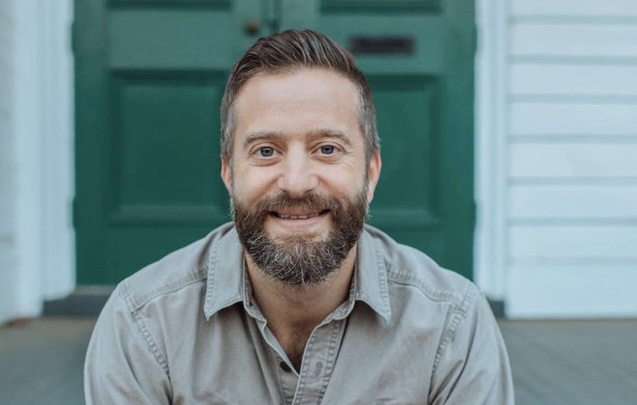
Episode Show Notes
What happens when your body starts telling a story your mind cannot ignore?
In this deep-dive episode of The Best of You, Dr. Alison sits down with author Justin Whitmel Earley to explore the connection between spiritual formation and the everyday rhythms of our bodies.
From the outside, Justin’s life looked stable and successful. But anxiety and panic began surfacing in ways he could no longer explain away. What followed was a deeper question many of us carry: what if our bodies are revealing something about how we are living?
Together, Alison and Justin explore the forgotten wisdom of embodied faith and how small daily practices shape the soul over time.
In this conversation, they explore:
- Why anxiety sometimes appears even when life “looks fine” on the surface
- The surprising ways your body may be revealing deeper patterns in your life
- What modern faith may have forgotten about the role of the body
- How simple daily rhythms can slowly reshape who we are becoming
This conversation is about learning to listen.
Because sometimes the path toward healing begins by paying attention to the wisdom already present in your body.
More Resources:
Connect with @justinwhitmelearley on Instagram
Order Justin’s latest book The Body Teaches the Soul.
Connect with @dralisoncook on Instagram
Join the 80,000+ soul menders in our email community and receive weekly reflections and gentle practices here.
If you liked this episode, then you’ll love:
Episode 186: Stuck in Overthinking? A Simple Practice to Interrupt Stress, Overwhelm, and Habit Loops
Episode 184: Stop Running From Anxiety - How to Tell Normal Stress from Unhealthy Anxiety and Find Peace Over Panic
📖 Find a full transcript and list of resources from this episode here
Don't forget to browse this week's sponsors, who make it possible for me to bring you these resources for free + provide you with additional discounts!
- Quince - How you dress affects your mood and you can trust that Quince has you covered in every day sustainable wardrobe staples. Go to Quince.com/bestofyou for 365-day returns, plus free shipping on your order!
- Aqua Tru - Join 98% of customers who have made their drinking water cleaner, safer, & healthier by visiting AquaTru.com and use promo code BESTOFYOU to get 20% off today!
- Cozy Earth - Cozy up in every day luxury bedding and their bamboo pajamas and physically feel your nervous system take a breath. Head to Cozyearth.com and use my code BESTOFYOU for up to 20% off.
- Remi - Start sleeping better with a Remi nightguard and use code BESTOFYOU and get 50% off your purchase. Go to ShopRemi.com/BESTOFYOU and use code BESTOFYOU.
*Some of the links above are Amazon affiliate links. If you choose to purchase through them, I may earn a small commission at no extra cost to you.
While Dr. Cook is a counselor, the content of this podcast and any of the products provided by Dr. Cook are not specific counseling advice nor are they a substitute for individual counseling. The content and products provided on this podcast are for informational purposes only.
© 2025 Alison Cook. ALL RIGHTS RESERVED. Please do not copy or share the contents of this webpage or transcript without permission from the author.
TRANSCRIPT
Beautiful office, important job. I'm getting paid more than I've ever gotten paid in my life. I
have a wife and... two children and everything is going right in my life if you look from the
outside but in my mind i was a house on fire everything is closing in everything is ending i justa
wish i knew that there were physical practices i could engage in that would calm that emotional
state if a doctor can get you to uh exercise be in friendship often throughout the week you know
take walks outside and eat right and not work too much and sleep eight hours like that is going to
be far better than any pill that could ever give you
Hey everyone, and welcome back to this week's episode of The Best of You. I'm Dr. Allison, and I'm
so glad you're here with us this week. If you're new here, I'm so glad you found us.
This is a space for anyone who's interested in a wiser way of being human, a place where we honor
the complexity of real human lives grounded in modern science and ancient wisdom. And this is our
Thursday Deep Dive episode, where we slow down and explore one topic more fully.
If you haven't already, I'd love for you to to join us each weekday. For the best of you every day,
this is a short eight-minute reflection rooted in scripture and shaped by psychology and spiritual
wisdom. And for those of you who are following along with the daily reflections, today's
conversation is meant to feel like a natural continuation of that path where we pause and take a
little more time to go deeper in conversation with other guests and experts and sometimes just me
to look at how that wisdom actually shapes our lived embodied lives.
Today's scripture is Genesis 2-7, and we'll touch on it in the episode today in a powerful way.
The scripture is, Then the Lord God formed a man from the dust of the ground and breathed into his
nostrils the breath of life, and the man became a living being. It's a verse...
of us know well, but we don't always think about in the context of what we're carrying right now.
Because what if this wisdom is physical? What does it mean that God gave us a body,
breath, and bones, rest, and rhythm? And that question sits at the heart of today's conversation.
Today we're talking about the body, not as something to manage, fix, or overcome, but as something
that teaches us. Many of us were formed to believe that wisdom lives primarily in the mind,
in right beliefs, right thinking, right theology. But what if wisdom also lives in breath, in
sleep? and rest in the rhythms we repeat every day without thinking.
My guest today is Justin Whitmull Early, and his story brings the question to life in a powerful
way. Justin is a lawyer, an author, a husband, and the father of four boys. He's the author of The
Common Rule, Habits of the Household, and his brand new book, The Body Teaches the Soul.
He's someone who deeply valued the life of the mind, faith, theology, vocation,
calling. And from the outside, his life looked really good and together. But in his early 30s,
his body began to tell a different story. That moment became the beginning of a long journey,
one that led him to ask a question many of us carry. How can I believe a gospel of peace and
goodness and yet live with a body ruled by anxiety? Justin's new book,
The Body Teaches the Soul, grows directly out of that question. It's not a self-help manual.
It's not a productivity guide, though it's incredibly practical. It's an invitation into wisdom,
the kind of wisdom scripture has always pointed toward that we talk about in these daily
devotionals where body and soul. connect. In the book, Justin explores how simple embodied habits
shape us spiritually over time. And he challenges the two errors many of us fall into when it comes
to the body. And he invites us to reclaim the body as something sacred, as a place where God's
wisdom meets our daily lives. I'm so thrilled to bring you my conversation with Justin Whitmull
Early.
thrilled you're here i i would love to dive in to our conversation where you dive in in the book
because it's so powerful you open in the er i think yes you're unfortunately yes yeah you're 48
hours without sleep you're in a full and panic mode um kind of in my words i would you know you're
you're there's a dissonance between what's going on in your mind and what's going on in your body.
Can you put us back in that moment? Tell us what was happening and how that led to this book that
you've gifted us with now. It was a moment I will never forget. It changed the course of my life.
It led to me writing.
When I was in that moment, I was about 30 years old. I had been a missionary in China for a couple
years of my 20s, almost five actually. So I was a serious Christian,
so to speak. My faith was really important to me. Law school had been an interesting time.
I had felt called actually to leave the mission field and go live and work missionally within
lawyering. So I had come at law school as a serious Christian again.
What I didn't realize during law school was that it, like the rest of the world,
is a... machine. It did not just teach me new information about how to be a lawyer.
It shaped a way of life that I was unaware of until it changed me,
until after the fact. And what law school did was encourage me to stay up later,
wake up earlier, fit more work in everywhere, be constantly tethered to my screen. The typical
stuff of modern working America, but For, you know, top law school students,
and for better or for worse, I was one of them at a top law school working towards a top lawyering
job. These were all blessings. These were good things. But the formation is pretty extreme there.
And so I came out as a 29-year-old turning 30 lawyer with a great head on my shoulders,
like great worldview. But the architecture of my habits at that time, the way I lived my life,
the formation that had occurred, and I didn't know about it, was just like everybody else's. And at
the age of 30, I wake up one night in full-on panic attack. And I didn't even know,
Allison, what a panic attack was at the time. I had no idea what was happening to me. That's why
I'm in the emergency room thinking I must have eaten something, something must have gone wrong. And
I was really scared because in my mind, I had never put my quote unquote identity in work.
In my mind, this was not the most important thing in life. In my mind, I was a calm, normal,
sincere Christian. But in my body, I had become wild.
I mean, I was totally, I now see the words like disintegration and dysregulation and all these
things would apply. I just didn't know those words that I had no idea was happening. Yeah. I
relate. My listeners, I've told this story and I've been telling it more very similarly.
And if it makes you feel better, I was in a psychology doctoral program having that kind of living
so much in my mind, thinking I could analyze health, analyze spiritual formation,
analyze my way into wholeness. only to find myself having extreme panic attacks.
So when I read that, a part of me was like, oh, I get it. There's that wonderful left brain kind of
mind-oriented part of us that, especially as Christians,
isn't bad. And it can be the part of us that's very theologically minded and doctrinally minded and
doing the right thing minded. But man, does it have to be brought. into relationship with the rest
of us. And so that's right. I just appreciate that story so much that you shared that as the
anchoring. And for me, I think it was particularly acute because as a former missionary,
sincere Christian and lawyer, and by the way, English literature major and aspiring writer,
I've always loved writing. I thought that's how life work. Like you believe the right things.
You get the words and the ideas right in your head and it will trickle down to your body. I never
would have said that because I never doubted it. I didn't need to say it. It was just assumed,
right? And so two things that happened to me in the wake of that, Allison, have been the most two
important changes in my life. And the first one was realizing that your head can go one way while
your habits go the other way and your heart will tend to follow the habits. That was a really
important realization. And that explains so much about life, why I don't just feel the way I say I
feel, but rather I often feel the way I practice myself into this emotional place.
Another way to put it would be you can't think your way out of a problem you didn't think your way
into. You practiced your way there, so you need to practice your way out. So this was really
important for me. in the context of formation in the spiritual disciplines so that's actually what
i went on to write about as i started to recover in my mid-30s but the second part of this that
came a little later and i realized oh my gosh this is just as important if not more was the whole
embodied part of that that you can't actually really talk about spiritual formation and habit
without talking seriously about embodiment because we're talking about dysregulation between what
you truly think you believe and what your body is trained to experience we're talking about the
difference between worldview and education upper and lower and that led me to an embodiment place
and i would say now oh my gosh this is not just a realm of spiritual disciplines this is a realm of
physical disciplines this is actually the question of what do you do on the daily with with your
body and why is everything you do physically far more spiritually important than you think,
and everything you do spiritually far more physically important than you think. Just one more way
to sum that up, kind of like I said earlier, is when your head goes this way and your habits go
that way, your heart tends to follow the habit, right? And I think another way to put that is when
your thoughts go one way. But your embodied practices go the other way. Your brain tends to be
formed by the embodied practices as much, if not more than the thought part, like it's a joint
effort. So I didn't realize that. So a lot of my practice and writing and life has become really
attentive to spiritual and physical discipline and how they're forming me emotionally and thought
wise and belief wise far more than I ever knew. I want to get the book is very practical and I want
to get into some of the practicality of that. But it sounds like. The mind part, because you talk
in the book about, you know, I'm a serious Christian, reciting scripture. Your mental habits,
for lack of a better word, were not bad. No. In that sense.
Yeah. I do say so myself. Yeah. Right. It still just wasn't enough to where it was also,
it was unintegrated. It was fragmented from the physical. Is that how we could put it? That's a
great way to put it. For example, I remember another iconic moment during that time where I was
sitting in my 18th floor office in my new law firm. I think I'm a second-year associate.
Beautiful office, important job. I'm getting paid more than I've ever gotten paid in my life. I
have a wife and two children. From the outside, everything should be great. I even remember it was
a beautiful day outside the window. I'm overlooking the river. It's incredible. Everything is going
right in my life if you look from the outside.
But in my mind, I was a house on fire. And I didn't know why.
Everything that I thought about my life, it's like, this is good. I've got a great job. I've got a
great family. I've got a great future. But my mind felt like,
my body, like my internal life felt like everything is closing in. Everything is ending.
And I didn't know the word for... then you know i didn't know the word for dysregulation i i now
realize i was having sort of constant panic attacks induced by insomnia induced by a hurried and
anxious way of life but i thought i was just losing my mind and like this was a one-way street
towards the insane asylum and and that really started to scare me and i just wish i knew then that
You know, the title of the book, The Body Teaches the Soul. I just wish I knew that there were
physical practices I could engage in that would calm that emotional state.
Because I kept trying to solve it with saying more Bible verses. The problem was I already believed
them. I just wasn't putting them into practice. And we were made to be this, you know,
divine union of... and physical, this divine union of head and body and heart. And that's why we
have so many words for it. I was disintegrated. And now I've learned so much more about how to
integrate it in daily life.
If you've been listening for a while, you know I've been using Remy Night Guards, and I'm genuinely
grateful to have Remy in my routine. I've always been someone who clenches at night, especially
during stressful seasons, and Remy has helped me protect my teeth while I sleep. If you're part of
the roughly 30% of Americans who grind or clench their teeth at night, your smile needs
protection. Remy's custom night guards are clinically tested and FDA cleared to help protect your
teeth from damage caused by grinding, reduce jaw tension and facial muscle strain, and improve
sleep quality. And you get the same professional quality and comfort as a night guard. from the
dentist, but Remy costs about 80% less and it's way more convenient. Here's how it works. Remy
sends an impression kit straight to your door. You follow their step-by-step instructions to get
your impression. Then Remy crafts and ships your custom fit night guard and you just start wearing
it at night to protect your teeth. And in addition to my Remy night guards, I recently tried their
ultrasonic cleaner and I love it. It makes keeping my night guard clean unbelievably easy. Start
the new year right and use code best of you to get 50% off your purchase of a new night guard.
That's 50% off at shop Remy. remi.com slash best of you with code best of you.
Thank you, Remy, for sponsoring this episode. Did you know that three out of four U.S. homes have
toxic chemicals in their tap water? Even when your water looks perfectly clear, it can still carry
contaminants that you don't want in your body or in that of your families. And here's what's
frustrating. Standard fridge and pitcher filters often don't remove most of what's actually in
question, and bottled water can come with microplastics. That's why I'm excited to tell you about
AquaTrue. It's a countertop water purifier that's tested and certified to remove 84 contaminants,
including chlorine, lead, forever chemicals, and microplastics. AquaTrue uses a patented four
-stage reverse asthma. system that goes way beyond ordinary filters, so you get clean, great
tasting water you can trust. And I love that there's no plumbing and no installation. You literally
set it on your counter and start using it. I use it all the time. I use it whenever I'm drinking
water, whether hot or cold. I use it for cooking. I use it in my humidifiers. It's so easy to use.
Aqua True has been featured in Business Insider and Popular Science, and it was named Best
Countertop Water Filter by Good Housekeeping. Plus, 98% of customers say their drinking water is
cleaner, safer, and healthier. Right now, go to To Aquatrue.com for 20% off your purifier with
promo code best of you. Aquatrue even comes with a 30-day best tasting water guarantee. That's
Aquatrue.com, A-Q-U-A-T-R-U.com, promo code best of you.
How did you, when you got out of that ER moment, you had to face the reality,
when you reached out for help, what did you find? How did you begin to put the pieces together?
And I like to ask this question for so many of my listeners. Sometimes you receive advice that's
not helpful. And I think that's helpful to name. So what was helpful and what wasn't helpful as you
started to realize, I've got to change something? Yeah. I think what wasn't helpful was that most
people around me had the same either myopic or one-sided view of my struggle that I did.
So far from blaming them. I just think we didn't know enough physically and spiritually.
at that time now this was only 10 years ago right but i do think we're kind of having a renaissance
and neurology and spiritual formation and understanding of how these two things go together i think
i grew up in a in an era i mean the 20th century is absolutely a gnostic era where where and we can
get more into this if you want but where people tend to over spiritualize the bible and
christianity and tend to minimize the physicality this actually happening secular culture as much
as christianity so a lot of people around me had the similar kind of problematic viewpoints so
practically speaking when i went to the emergency room they saw it strictly as a physical anxiety
problem here are some sleeping pills yes psychology did it too that's right they were like the
appeal wasn't just the religious community that's right they that was the best answer they could
give and i don't Don't necessarily blame them. When I went to a lot of my friends and even
counselors, they were like, you know, this is your identities and work and, you know,
you're believing the wrong things. And they weren't wrong. Again, it had become just not in the way
that we thought. I mean, again, with what hands did I pick up my heart and place it in the identity
of habit or in the identity of work? I think by habit. Right. So it wasn't a belief problem.
It was a habit problem. And all these things were.
Yeah, not super helpful. But let me say what was really helpful because I think this is also really
important. And I don't want to like dunk on culture or my friends or the counselors and just say,
you know, I already had it wrong and I finally figured it out. You know what was helpful is I
talked to a ton of people and a ton of people listened to me and a ton of people had empathy for me
and a ton of people wanted to pray for me and a ton of people wanted to help me. And in the
aggregate, the Lord used those conversations to start to put ends together that I had never put
before. which is why I went on to write about it.
Their presence was extraordinarily helpful. They didn't need to know all the right answers, and I
don't blame them for not. So I'm very grateful I had people to talk to. And if anybody's
experiencing something like this, you have to talk to people, therapists and friends included, even
though, as it turns out, a lot of them only had kind of one side of the answer. But you were about
to say something I noticed. So what were you going to interject with? You're saying so much good. I
want to... underline it for the listener that so often when there is that that divide between and I
love how you talk about it the the mind or the belief and the habits of the body it's not that some
I love how you're saying it it's not that Because if we leave it in the mind, it's all about I
should just have less idolatry or I should just be able to practice this,
take a pill, which sometimes does help and is sometimes necessary. But what we're missing, and you
used that word Gnosticism. Tell us a little bit more. I want to anchor this discussion.
That was a heresy in the early centuries that we fall into as Christians. And for the listener,
what happens is if you're dealing with anxiety, If the body isn't part of the healing conversation,
we're missing a huge piece of this. So tell us what you mean by functional Gnosticism and how that
actually, how we're kind of living that inadvertently in many ways in our faith communities,
also in therapeutic communities, but particularly sometimes in faith communities. Absolutely. And
this is the core of The Body Teaches the Soul. This is the theological foundation upon which all
the practices and habits are built. Genesis 2-7. lays out the view of a human person.
It says God created Adam out of the dust, that is physical stuff, and then breathed the spirit of
life into him. That is a spiritual miracle. And the combination of that physical and the spiritual
is a soul. The King James Version says a living soul was born.
And we could go a lot of different directions, but I'm going to keep this short and basic. That
means what Christianity has always believed and what the Bible teaches over and over is that a
human being is a divine combination of the spiritual and the physical. It is unlike anything else
in the universe. This is kind of why we are the image of God in a unique way.
We are just... wildly beautiful and wonderful and complicated and, by the way,
mysterious. We are a divine union of the physical and spiritual, and that's not really a math
equation. It's a spiritual reality that we're always digging deeper into. But it means you can make
two major heresies in the world, and it's been happening for thousands and thousands of years.
You can make a spiritual heresy and sort of say, essentially what we are is really,
at the end of the day, just spiritual. And we call that Gnosticism, also Manichaeism, lots of
different names. But it's recurrent. It happens all the time. It's happening now as much as it was
happening in the era that the New Testament was written. And lots of Paul's writings are actually
combating this. Lots of the early church fathers were combating this. They were like, no, you can't
just say Jesus was God and not actually a human body. He was human. This is really important.
Because they were combating this idolatry of the spiritual side of us. We also know there's another
side of that idolatry. you can say actually everything's material it's not spiritual and we see
this all over the 20 21st century um it actually started to really come about in the enlightenment
and darwinism this is not new but it's accelerated to a pretty wild extreme where you get people
literally saying i'm just the atoms um and the bible of course preaches against that like no no far
more than your body but you are your body you know and so where you you end up is you say we
christians can't make these errors we can't ignore the spiritual but nor can we idolize the
material we need to and you can picture a triangle here those two at the bottom like ends of the
extreme you want to picture a triangle up towards something that is different but combined and that
is we want to image god which means we're always going to be attentive to the spiritual and the
physical and if you are trying to solve your mental health crisis just by reading bible verses
you're probably ignoring the gift of the body that God gave you. And you're trying to solve your
mental health problem just by taking pills. You are ignoring the gift of the spiritual brain that
God gave you. And if you're trying to come at it as an integrated whole, okay, you're not just
doing something wise. You're doing something biblical because that's who you are. Oh,
that's such a word. You could even add only through talk therapy.
that yes you can't incorporate some component of the nervous system the body the breath yeah yes
actually you know and probably a lot of listeners will be familiar um reading the body keeps the
school which was actually originally the inspiration of my title.
I was trying to play on it a little bit by saying the body teaches the soul.
You get some great outlines there. I mean, people generally are starting to realize two things,
that the pill revolution is insufficient. If you're not doing real talk therapy,
addressing the truth claims in your upper brain and how they bear on the lower body.
then you're missing something. So increasingly, even though it's kind of a popular heresy, like,
oh, you just need a pill to solve your depression problem. What I found in all my research is that
no psychiatrist worth their salt really thinks that. They think,
oh, you absolutely need good talk therapy, which is another way of saying you need spiritual truth
claims. You need to be in touch with what reality actually is. But hopefully those same people
would realize that there are times when talk therapy is not enough. In fact,
if a doctor can get you to exercise, be in friendship often throughout the week,
take walks outside and eat right and not work too much and sleep eight hours, that is going to be
far better than any pill they could ever give you. They would much rather have you doing that than
almost taking any pill. They recognize those are more successful things. So people want this upper
-lower approach. And I think the great joy for me working on this book was realizing It's what the
Bible's prescribed for years. And all these things that we ought to do, sleep and exercise and
breathing, which I write about in the book, these are chapters, are dignified with the spiritual
gifts of God. Like, this is what we're doing. Yeah. I love that you're taking it all the way back
to how we were made in the beginning. That's so powerful. I had Dr.
Hilary McBride on the... podcast and we were talking about to your point in psychology i learned
the top down approaches and the bottom up approaches to healing and you and some therapists lean in
different directions and that it takes different forms of feeling but the top down is the let's
let's look at the cognitive let's look at the thoughts let's look at and you can apply this to
spirituality as well the top down is sort of the the thinking and the kind of what happens you know
in the in the in the upper part of our brain and then the bottom up is starting with the body
what's going on in the body and that's the part that yes was neglected yes and is now coming back
into your point and and i'll i will say that you know different people different people ask me i'll
all Sometimes you need one more than the other. In your case, you didn't need that.
You needed the bottom up. Same with me. My thoughts were good. That's right.
They were perfectly logical. They were just completely disconnected from my body. That's right.
And likewise, I meet plenty of people at my gym, for example, who are living a great,
healthy lifestyle. They're doing the right things. They know about this. And they are crumbling.
Yes. Because they think at the end of the day, they are a conglomeration of atoms and love in the
world is an illusion. Yeah. I mean, they're falling apart because they're trying to say, how do I
explain my love for my children? How do I explain the problems of my marriage? And I'm like, truth
claims, worldview, formation, Christian evangelism. This is back to the basics. But, you know,
sometimes people need that. But I find a lot of people in Christianity like me are doing okay on
the worldview. Yeah. That's a huge generalization. But I meet a lot of people like that, but
they've completely ignored their body. The part of their worldview that's not working is they're
kind of Gnostic in their worldview. So take us there, because that's where much of the focus of the
book is. Because even in psychology, we've kind of begun, like you said, there is this renaissance
these last several years in understanding this. But let's flip it to spiritual formation, where I
still think we're a little behind on that. We're not often going into...
church services. And again, I love how you said that, like we're all doing the best we can.
But for those listening, you have this metaphor of gardening the body.
And this is spiritual practice, right? This is not separate from your,
these habits are not separate from your spiritual habits. Talk us through what that looks like for
you and how you practice it. You bet. I'll give you the first. five, six chapters of the book,
and then I'll try to give a short example of one, and then you can decide which one you want to go
to next.
After all that introductory work that we just talked about, the book is very practical. Breathing,
thinking, eating, sleeping, exercise, sickness, sex.
Those are the first seven, if you will.
Breathing was huge for me. The book starts with breathing because breathing is the place where the
upper meets the lower in an extraordinarily unique way. And we could do an hour-long podcast just
about the miracle of breath, spirituality of breath in Genesis 2-7, the wild integration of the
upper and lower in breath. Breathing, of course, is the one vital life function that your upper
brain can take control of and then regulate your lower body through. And so I went from a place of
thinking breathing exercises. And breath prayers were kind of woo-woo and suspect and maybe
Eastern to realizing, oh my gosh, this is fully Christian. No wonder so many other people realize
the importance of breath. And breath prayers became, and still to this day,
you know, yesterday I was doing some breath prayers. It's just become an integral practice for me
because what's happening in a breath prayer, and I like to do box breathing where you sort of
breathe up for a couple seconds, inhale, hold for a couple seconds. Exhale for a couple seconds.
Hold for a couple seconds. Probably most of your listeners have heard of this. So that's a lower
body exercise, right? And I like to combine it with Psalm 23. The Lord is my shepherd on the
inhale. I shall not want on the exhale. And for me, that is not only effective.
It has saved me from so many panic attacks. It's helped me re-regulate to get back to my kids in
the house and out of angry moments. But it also... integrates the upper and the lower.
We're talking about bringing the spiritual truth to a lower body exercise. And I could talk about
it for a long time, but that's a great example of how just in one place of the body, this theology
is being applied into a spiritual physical discipline.
If you've been around here for a while, you know I talk often about becoming the best version of
yourself. Not the exhausted, burnt out, running on empty version of you, but the grounded, present,
emotionally regulated version. And one of the most overlooked foundations of that version of you is
rest. I love refreshing our bedding with Cozy Earth. And I'm not exaggerating when I say a good set
of Cozy can change how your body feels at the end of the day. Their sheets are so incredibly soft,
made from premium viscose from bamboo, and they have this breathable temperature. regulating
quality that genuinely helps your nervous system settle. It feels like a cue to my body. You're
safe and you can exhale. Cozy Earth has amazing matching bedding sets, sheets, duvet cover, quilt,
coverlet, because there's something about climbing into a beautifully made bed that signals
intentionality. When we talk about caring for the best of you, it's not indulgent, it's
foundational. Small, intentional steps like this can create rhythms of safety and restoration. Cozy
Earth also offers a 100-night sleep trial and a 10-year warranty, which tells me they stand
behind what they make. That kind of... matters. If becoming the best of you this year includes
honoring your need for rest, real restorative sleep, this is a beautiful place to start. Head to
CozyEarth.com and use my code BEST OF YOU for up to 20% off. And if you see the post-purchase
survey, let them know you heard about Cozy Earth here at The Best of You. Because sometimes
becoming the best version of yourself starts with something as simple and as powerful.
Did
it take you a while to learn to trust that?
It took me a while to trust the breath. Did it take you a while?
And I'm thinking of the listener who maybe has tried it and it initially can feel a little,
we're so used to being in our minds. I'm just curious how your journey was with that. It took me a
lot of practice. And if you think about it, this is going to make sense in every area of life.
If somebody says, hey, you should really exercise or sleep differently. If you understand right,
it's not going to be right the first time you go to the gym. You're going to need a lot of
practice. And this is kind of Allison where the gardening metaphor becomes so important. The
gardening metaphor runs throughout the book. And it's the idea that the best way to think about
your body. is a garden the original vocation in eden is you we were gardeners we still are and the
gardening metaphor helps you in a couple different ways one you know that no gardening work is fast
like nothing ever happens overnight nothing ever is automatic anything regarding your body is going
to be happening at the pace of a garden but we also know from working in gardens that there is real
change this is where the The difference of, I think you solve the agency problem when you take the
gardening metaphor. If you do nothing to your farm, you know what's going to happen. It's going to
become a desert or a jungle. A gardener knows that they have to act. And when it comes to our
bodies, if you want a different mental health outcome,
then you need to practice breathing. You need to practice sleeping. You need to work at the pace of
a garden. But importantly, gardeners also know something else. It's not autonomous.
You don't have complete control. You're dealing with the soil that you were given. You're dealing
with the weather patterns that you have. And that means you're dealing with the body that you're
given. We're different. Our bodies are different. And you've got to garden yours, not someone
else's. And you've got to realize, man, they have different soil here. They won the dopamine
lottery. I didn't. But that doesn't mean you stop gardening. That means, okay, what do I do with my
plot of land? And the Bible is full of parables talking exactly to this. How do you be faithful
with what you've given? How do you garden what you've been given? This is why Jesus talked in
farming so much, because spiritual growth, what do we call it? The fruits of the Spirit. It's
fruit. You stay connected to the vine. So think about gardening. You're working in conjunction with
God, and that means any practice like this is going to be slow. It's going to take practice,
but it's very real, and there's very real fruit. I love that. I love that.
It's a slower way. We say in Boundaries for Your Soul, it's a slower way to get to where you want
to be.
That's great. I love that. It's a slower way because if you don't do it,
you're never going to get to where you want to be. But it is patient work.
Before I let you go, I loved this chapter.
It's just a beautiful chapter on sickness and lament. But in particular, you talk about learning to
cry as a discipline. Yes. And I thought that was just really beautiful.
How tell us a little bit about that, what that was like for you. And I just I thought it was really
what a beautiful way to think of tears as a embodied spiritual practice.
Yeah. You know, I think I probably had a overdeveloped view of the fall before I realized the
goodness of the body. So I've always been kind of solid, so to speak, on, hey, we fall apart.
Our bodies are dying. There's tragedy in the world. Cancer happens.
And then as I started to realize, oh my gosh, but our bodies are beautiful. They're important.
They're given. God created us with bodies. He redeemed us through the body of his son. He's going
to resurrect us to new embodied life. Clearly he loves bodies. So a lot of the book is in that lane
of saying your body is a gift. It's good. You should be stewarding it, gardening it, eat
differently, sleep differently. But you don't want people to think about this. without really
wrestling with the other reality, that it is broken, it is fallen. And that needs to be squarely in
the middle of your embodied theology, which is why I put the chapter literally actually squarely in
the middle of the book, because if you don't understand the fall and how your body's broken, you
get all this wrong, right? And so it's not a chapter of answers. I mean,
this is the problem of... This is the problem of sickness and the problem of fall.
And better theologians and writers than me have not solved it, right? The best answers we have is
that, well, God is with you in the pain.
He's with you. And guess what? He cries just like you. One of the wildest verses in the Bible,
also the shortest. You learn it as a kid, Jesus wept. And that idea is at the core of the chapter,
that if we don't learn how to, like Jesus, go to the tomb of Lazarus.
And that means that, like Jesus, you walk to the dying body that you have. And your first response
is not, don't worry, it's going to be resurrected. Don't worry, we can do something about this. Oh,
we're going to fix this. First response is to be like, this is called suffering. This is called
pain. Let's cry. Let's cry. Let's weep over this. This is not how it's meant to be.
All answers are going to be hollow if you don't learn to cry like Jesus. And as it turns out, Your
body's meant to do it. It's kind of fascinating, right, that we cry externally at our eyes where
everybody's looking. It binds us to each other. It shows that we are hurting and other people
notice it. I mean, you know, every time I write about this or talk about it, even right now, I'm
like, I kind of want to cry because I need it. I need it. And you were meant to.
So everybody needs to learn it. Everybody needs to learn to lament. And then you need to get to the
work on gardening your body and hope for the resurrection. It is a softening and it's so
fascinating. It's a physical softening that leads to an emotional and kind of mental release
because it is that tears is that release of I can't I can't solve it. That's kind of the whole
point. Yes. I have to to grieve it. What would you say as we wind down here,
Justin, for the person listening who whose body is. tired or anxious or maybe numb,
what would you hope they most understand? You've given us so many gems,
but just speaking to that person now, what do you hope they most understand about how God meets us
through the body?
I like to sum it up like this, and I put it in every chapter in the book, that your habits won't
change God's love for you, but God's love for you should change your habits. And that's it.
And applied, that means right where you are right now and all your brokenness and all your struggle
and your suffering, God loves you. He's redeemed you. He has no questions in his mind about how
much he loves you, how carefully he made you, and what he's going to do with your future in life.
You have a lot of questions, but he doesn't. He loves you. And you can't change that. This is the
wonderful doctrine of grace, of justification by faith alone. saved by any of this but a real if
you believe that if you agree and amen with everything i just said you have something to do you
have something to do god's love for you should change your habits and that's the most hopeful non
-legalistic thing i could ever tell you because it's the reality the beautiful reality that god has
called you into agency over your body he's called you to garden it Which means you have the
delightful ability to get to work, to go do something. You are not stuck with the depression you
have right now. You're just not. If you think you are, you're actually believing a plain lie from
the enemy. And it might be a spiritual attack or it might be a doctor who told you, you know,
you're just like this. But you're not. God has built the grace of neuroplasticity into your brain,
which is kind of the coolest thing ever. You're not stuck with the patterns you have, the brain you
have, the addictions you have. He wants to change you, mind, body, soul. And that is such good
news. So I would just invite you, rooted in that love of God, to get to work,
start the gardening process. And the body teaches the soul is hopefully a really practical primer
on how to do that. It really is. And I love that you start with the breath because that is
literally the next, you know, that is something we can all. do. And it is so powerful.
It is such a practical book. It's just so well organized and structured and accessible and grounded
in biblical and theological wisdom, but just such practical takeaways.
Tell my listeners where they can find your work and this book in particular,
but also some of the other things you've put out into the world. They're all really, really great.
Oh, thank you. You can... Go one of two directions. You can go to my website,
which is justinwitmoreearly.com. Very Google-able. Justin Early, author, lawyer. We'll get you
there. And because, by the way, we didn't talk about this in the conversation. I still practice
law. Sitting in my law desk right now, taking a break between client meetings. But you can find my
website there. Join my email list if you kind of want to follow along, long form. And all my books
are listed on the website. I also do post on Instagram. So you're welcome to follow me at Justin
Wentmore Early. And I post a lot of short form habits for parenting, spiritual disciplines,
body teaches the soul stuff like we just talked about. I mentioned in my story that I wrote about
spiritual disciplines before I ever got to physical disciplines. So if you go on my website,
you can see earlier works on spiritual disciplines for everyday workers. Spiritual disciplines for
parents spiritual disciplines for friend groups But this one the body teaches the soul is really on
physical disciplines is particularly for mental health We were talking before we started recording
about being bivocational, and I really appreciate that because you work. I mean,
you're a dad and you're a full-time attorney, and you are living these truths that you write about
and speak about. They're really coming from, it's not like you're sitting around, you have to put
this into practice in very real circumstances. And it's a great gift to me.
I'm sitting here at my desk. I'm the CEO and one of the founding partners of our law firm. It's
called a vote illegal. If you want to go look it up, we do all kinds of law. And this is not an
advertisement, but we work with regular people. I help people buy and sell companies. I help people
write contracts. I'm a business lawyer. My partners do all kinds of litigation and employment law
and all this stuff. But that means I live in a realm where I'm not paid to go think about.
I don't know, having a quiet time for two or three hours. I'm not a missionary anymore in that
sense. You're in the real world. And that is no shade on anybody in full-time ministry.
We need you. We need your writings, and we need you to be spiritually healthy, so go do it. But I
sort of sit in a place where my readers are more or less like me. They're wrestling through how
hard it is to be a young parent. My boys are between 7 and 14 right now.
It's tiring. I wrestled through running a law firm and making payroll next month and getting
clients. And that's hard on your mental health. And so all of this stuff for me is born out of I
need to be a healthy human body and I need to be a healthy spiritual being,
which is to say I need to be a healthy soul. If I'm going to be a good CEO of Avoto Legal, if I'm
going to have anything worth writing about, I have to guard in my body and my mind to bring it to
the task. And lots of us. forget we think we'll give it all to our kids you know we'll serve them
and we're trying to do a good thing but your kids need a mentally healthy mom you know your kids
need a dad who's not a workaholic and by the way those are the two things i struggle with being
mentally unhealthy and being a workaholic so i i don't i don't write about anything i'm not deeply
struggling with so if you read my works you're going to read about the struggle not about the
idealized version of how this happens yeah it's just a really like you said we need all different
types of people but it is a really unique angle that you bring and um just such a grounded in in
like you said just a very full life um this is for everybody oh it's full my main struggle right
now is uh How to not live a super unhealthy life doing two jobs,
writing, lawyering, while writing about a healthy life. Oh, boy. The irony is not lost on my wife
and I. It's hard. But I do believe, and I told you this before we started recording,
Allison, I really do believe the Lord has called me to this because I think it's that place of
struggle. How do you do this well that gives me anything to write about in the first place? So if
anybody wants to follow along. I'll be posting on my website, and I'll be lawyering at a vote
illegal, and you can watch me in the struggle. But I'm going to speak to you out of the struggle,
not out of the perfection. I love it. That's the best we can do is just honor it. Honor it honestly
and openly and with our bodies, you know. Yes, yes, absolutely. For me,
the open hands is one of the most just reminding, oh, you know, it goes with the breath,
the open hands. It does. It really helps, the physicalization of that. I'll tack this one on right
to the end. I was always a little bit, I grew up Presbyterian. I was a little bit nervous to open
hands and lift hands because I was like, I don't know, it's performative, it's a fad. And then I
learned all this stuff about the body and how your mind changes. You're more open. You actually are
in posture of reception. You learn better. And I was like, oh, I need to get my body to the work of
worship. All right, let's put the hands up. It's really changed me. It's a good habit.
I really love that framing. It is. And by the way, that's chapter 9 in the book,
how you need to worship differently at church because of your body. Whoa, okay.
That's a good teaser. Well, thank you, Justin, for your time, and we wish you all the best as you
head back into the rest of your day. And pray that this conversation goes with you. And we're just
so grateful for what you're putting into the world. And we're glad to be here with you in
partnership in this work of soul mending and soul tending. Thank you, Allison. It's been a delight.
Thank you for joining me for this week's episode of The Best of You. It would mean so much if you
take a moment to subscribe. You can go to Apple, Spotify, YouTube, or wherever you listen to or
watch podcasts and click the plus or follow button. That'll ensure you don't miss an episode and it
helps get the word out to others. While you're there, I'd love it if you leave a five-star review.
And be sure to join us each weekday for the best of you every day, a brief daily reflection to help
you start your mornings with a steady dose of wisdom. Remember, as you become the best of who you
are, you honor God, you heal others, and you stay true to your God-given self.

Episode Show Notes
What do you do when the person who was supposed to nurture you becomes the source of your deepest wounds?
In this episode, Dr. Alison sits down with writer, speaker, and host of the Big Boo Cast, Melanie Shankle to explore the complicated terrain of mother wounds, emotional enmeshment, and the long road toward healing.
From the outside, it can look like “normal family tension.”
But in the body, something feels off.
Together, they explore:
- What happens when your nervous system knew something wasn’t safe before you had language for it
- The quiet impact of criticism, competitiveness, and emotional parentification
- How shame can keep you believing the problem is you
- The difference between honoring a parent and tolerating harm
- Why distance sometimes becomes part of healing
This is not a conversation about blame.
It’s a conversation about truth-telling.
About untangling enmeshment.
About breaking generational patterns.
About discovering what safety actually feels like.
If you’ve ever felt torn between loyalty and self-protection…
If you’ve wondered whether what you experienced “counts”…
If you’re learning to trust what your body has always known…
This episode is honest, nuanced, and ultimately hopeful.
Because healing one life can change a generation.
More Resources:
Connect with @melanieshankle on Instagram
Order Melanie’s latest book Here Be Dragons.
Connect with @dralisoncook on Instagram
Join the 80,000+ soul menders in our email community and receive weekly reflections and gentle practices here.
If you liked this episode, then you’ll love:
What Does It Mean to Honor Your Parents?
Episode 128: Generational Trauma—Overcoming Inherited Dysfunction & Legacy Burdens with therapist Gina Birkemeier
📖 Find a full transcript and list of resources from this episode here
Don't forget to browse this week's sponsors, who make it possible for me to bring you these resources for free + provide you with additional discounts!
- Quince - How you dress affects your mood and you can trust that Quince has you covered in every day sustainable wardrobe staples. Go to Quince.com/bestofyou for 365-day returns, plus free shipping on your order!
- AirDoctor - Eliminate 99.9% contaminants in your home with AirDoctor by visiting AirDoctorPro.com and use promo code BESTOFYOU to get UP TO $300 off today!
*Some of the links above are Amazon affiliate links. If you choose to purchase through them, I may earn a small commission at no extra cost to you.
While Dr. Cook is a counselor, the content of this podcast and any of the products provided by Dr. Cook are not specific counseling advice nor are they a substitute for individual counseling. The content and products provided on this podcast are for informational purposes only.
© 2025 Alison Cook. ALL RIGHTS RESERVED. Please do not copy or share the contents of this webpage or transcript without permission from the author.
TRANSCRIPT
So much of my self -image, so much of my self -doubt, so much of everything came
from the voice in my head, which was my mom's voice. She was the first person that
ever made me feel like I wasn't ever going to be good enough. I had lived so much
of my life in that self -hatred of if I could just do this, if I could just act
right, if I could just behave in a certain way. And so all of a sudden, the grace
to be like, no, I just accept you however you are. It's biblical. I mean, the
truth set me free. And so that changed the trajectory of my life.
Hey, everyone, and welcome back to this week's episode of The Best of You. I'm Dr.
Allison. I'm so glad you're here with me this week. If you're new here, I'm
especially glad you've joined us. This podcast is a space where we try to live
honestly, where psychology and faith aren't at odds, but always in conversation. We
care about the complexity of real human stories. We slow down, we name what's hard,
and we look for wisdom that is both grounded and compassionate. This is our weekly
deep dive episode where we take one topic and explore it more fully. Before we jump
into today's conversation, I want to briefly connect it to something we explored back
in January on The Best of You Every Day. These are the daily eight minute,
sometimes more devotionals where we anchor in scripture and reflect through the lens
of psychology. And in this episode in January, it's called What Does It Mean to
Honor Your Parents? We wrestled with Exodus 2012, which is the commandment of the
Ten Commandments to honor your mother and father. And we asked a really important
question. How do we approach harmful parenting without becoming reactive, without
becoming kind of the way our culture sometimes can right now, which is to cut off
too quickly, while still honoring the reality of harm? Because honoring doesn't mean
denying. And it doesn't mean tolerating harm. It means learning how to live
truthfully and wisely in the aftermath of what shaped us. Today's conversation lives
right in that tension. Today on the show, I'm talking with Melanie Schenkel. She's a
beloved writer, speaker, and the co -host of the Big Boo Cast podcast. And her book,
Here Be Dragons, Navigating Mean Girls, Motherhood, and Other Mysteries of Life was
an instant New York Times bestseller. From the very first page, you can feel it.
This is a story about facing what's been hidden, about looking honestly at family
dynamics that shaped you. even when they're painful, confusing, or layered with
moments of love. And as I was reading her book, I kept thinking, these are the
very themes we talk about on this podcast all the time. Prentification, enmeshment,
toxicity that often registers in the body before we understand what's happening with
our minds, and that complicated space where you love your family and yet something
isn't right. When someone isn't taking accountability and when distance becomes the
path. toward healing. One of the most striking parts of Melanie's story is how her
body knew something was off before her mind did. And so many of you tell me about
a similar experience. You talk about how not having the language for what happened
was so hard or feeling like I can't quite name it but my body feels anxious.
Melanie talks about how her nervous system was carrying signals long before she
consciously understood the pattern she was living inside of. We talk about what it
means to grow up taking care of a parent emotionally, to feel responsible for a
parent's feelings, to become the steady one, the good one, the one who manages the
room. And then... as adults, to realize you've internalized those patterns,
that you may have taken on some of your own mother's ways of coping, that you may
be repeating dynamics you swore you'd never repeat. There's so much compassion in
this conversation because healing isn't about laying blame, right? It's not about
laying shame on somebody. It's about becoming aware of the patterns that shaped us.
It's about telling the truth without turning cruel, but so that we can free our own
selves. It's about honoring reality in a way that brings healing not only to our
own souls, but to everyone who will face that truth with us.
And we talk also about something many of you wrestle with quietly. What do you do
when healing changes the shape of a relationship? At the end of our conversation,
we touch on Melanie's decision to stop having contact with her mom. And I want to
say this clearly. This decision is hard. It's painful. It's deeply nuanced.
There's grief involved. There's no one size fits all answer when it comes to contact
or distance with a parent who has harmed you. Some relationships can shift with
different boundaries. Some can soften with a little space. can change with healthy
conversations and even undergo seasons of repair and deep healing.
And some require limited contact. And for some people, this becomes the healthiest
path forward, especially where there has been sustained, prolonged harm. What I
appreciate so much about Melanie's story, both in the book and in our conversation,
is that she doesn't present it as simple or clean. It's layered. It's emotional.
It's costly. It's deeply personal. No matter what kind of family of origin you came
out of, whatever parenting you had, or whatever season of life you're in now,
there's something in it that rings true for all of us. If you've ever felt torn
between loyalty and self -protection, if you've ever wondered what honoring a parent
really means when harm is involved, if you've ever sensed in your body that
something wasn't right but didn't yet have words for it, this conversation is for
you. It's honest, it's brave, and ultimately it's hopeful because at the heart of
Melanie's story isn't just rupture, but healing. What happens when you stop denying
what your body already knows? What happens when you begin to untangle enmeshment?
What happens when you get into healthier relationships and start to realize how old
patterns have shaped you? What happens when you begin to live with clarity instead
of confusion? I'm so grateful that Melanie trusted us with her story. Please enjoy
my conversation. with Melanie Schenkel.
I am so thrilled to have this conversation with you, Melanie. For the listener,
we were just talking offline a little bit about this. It's such a sensitive topic
and it really touches on so many of us. I'm going to kind of call it the mother
wound. That's a loose category.
talk about it so beautifully in your book. And we'll get into why it's so
sensitive. But before we even get into our conversation, what I want to name, as
I'm reading this book, Here Be Dragons, your story in some ways,
not in all ways, is extreme in the sense of just the level of harm that was
ongoing. And also, so many of us can find elements of our stories in it.
yeah and also it's such a tender topic because that relationship is so sacred and
something that is so and you you illustrate this so beautifully and we're going to
get into it in the book it brings out so much in us we want to protect that
relationship so many of us are moms we're so aware of our own failings how we've
been so imperfect we're so scared you know what i mean it's yes it's so tender for
so many reasons i just want to start by saying thank you for being willing to
speak so honestly just It's such an honest book into this really delicate
relationship. Yeah, it's a really hard, and you know, you said offline and it's so
true, is I mean, I did not write this book until after my mother had passed away.
I don't think it's, I don't think I could have been this honest. had she still
been living. So there was a freedom in that because I think so many people are
still wrestling with it's still a struggle. You know, I'm still trying to figure out
how to navigate as a grown woman, as a mother yourself, how do you navigate your
relationship with your mom? And if anything, after writing this book, I'm like, wow,
there are a lot of us out there that are trying to. figure this out and do it
well you know. It is so true and we'll get into that it but especially I think in
our generation we're roughly the same age and then you can also say and you allude
to this in the book there are ways in which our generation has overcorrected. Yes,
for sure. Right? Yeah, for sure. And we're seeing some of the pendulum swing on
that, you know, with the over -parenting. So before we dive into the deep end,
because you can tell I'm chomping to get there, I want to set the context for my
listeners who haven't yet read your book, and I can't recommend it enough. You have
said that the first mean girl you ever encountered was your own mother. And so for
listeners... for whom, you know, this is new, take us back into that home
environment and help us understand what that dynamic actually looked like. Yeah,
you know, I tell the story in the book, but my parents got divorced when I when I
was eight years old is when they first separated for the first time, they didn't
get divorced until I was nine, 10. But It was the realization of and I think it
took it was almost you don't recognize what it is, because what I say is when
you're a kid, I think part of God's protection is that whatever you grow up in is
what you think is normal. Like you just assume this is the way all families work
and this is the dynamic. So it was almost before I got to college when I started
to look at other mothers and daughters and thought. they don't function the way my
mom and I function. And so I started to realize that so much of my self -image,
so much of my self -doubt, so much of everything came from the voice in my head,
which was my mom's voice that always told me, if you could just act better, then I
could be better. If you weren't such a disappointment, if you could be this thing
for me, if you could live up to this standard. And she was constantly... tearing me
down and there was a competitiveness there um in terms of looks and um and kind of
almost even my dad's affection even though they were divorced i think there was such
a resentment there because my dad and i were so close and so it almost took
watching my daughter in high school go through her mean girl stuff that she had to
deal with for me to put language to it and go, oh, that the first person that
ever did that to me was my mom. She was the first person that ever made me feel
like I wasn't ever going to be good enough. What a just vivid reality check.
And you're saying something so profound. And you talk about this in the book, that
there's a protection in the fact that we see our own families as normal. But also
there's a whole undoing that then later on in life, you have to go back and rewire
yourself from an attachment perspective of, oh, you describe in the book how this
wasn't safe. Well, what does that do to a nervous system that learned young,
this is what quote unquote safety is supposed to be. So why is it landing so funny
on my nervous system?
well put as a child, kind of feeling in your body that you wanted to get away
from your mom. Yeah. But not knowing why, right? That's that dissonance from such a,
it's like your body knew. Yes. Before your mind did. Can you tell us a little bit
about that? That's, you know, it's so funny, Allison, because there's, I tell the
story of the book, but there was, my mom used to always say, and kind of in a
resentful tone, that from the time I was like three, my mom's name was Suzanne, and
that I would walk in the kitchen and she said my eyes would kind of flash dark
and I would say, what doing, Suzanne? And I just thought that's such a metaphor for
kind of like the way that always was, because it was like, I think there was
always this question of like, what are you doing? Like something didn't seem. right
to me or seem safe. But as a kid, I couldn't, I couldn't name it. It was just,
it was this constant instability and a constant walking on eggshells. And so I look
back and I can remember that so clearly, just feeling that disconnect between what
felt true to me and what I was living in, which,
you know, how are you that perceptive as a kid? But there's just, I think, you
know, something is not right here. And to me, there's a beauty in God's design of
the nervous system that it's this registering this isn't safe, even though I'm being
told this is what safety is. Another thing I think that you said that was
interesting is you said you describe your childhood home as a house on fire that
you wouldn't realize you actually needed to escape until years later when you
realized it could destroy everything you actually wanted. to build yeah and I thought
again just that for my listeners we talk about trauma on the podcast but the way
you describe the visceral sense before the rational before the logical before you can
put names on things it just takes you into that because that's where shame enters
in right we yeah Yeah. And I think it's so funny. So my sister and I have been
going back through after my mom passed away. She got all these old VHS tapes of
like home movies of, you know, Christmas and holidays and things that my grandmother
recorded. And we've we've laughed, but it's. You can tell in every video, the
underlying theme is I'm so annoyed to be there. Like there's just a thing where my
body language is completely closed off. I'm rolling my eyes at everything that's
said. And I just remember this sense of, especially as I got into my high school
years and just started to know more where it was like, I just don't feel like I
belong here. This doesn't feel safe to me. I don't feel accepted here. I don't feel
loved here. I don't feel like my whole self is welcome here. And so it's been so
interesting. look back and go, everybody just thought I was a surly teenager. But I
was like, no, I was shutting down because of what I knew the response to my real
self was going to be. Here's what I wanted to ask you. So in the book, you're
telling us these experiences of,
for example, just how your mom made moments, especially as you were becoming a
teenager, that were really about you, about her there's one instance where you were
going through a really painful breakup and you just described like gosh you know i
i just gone through this really hard thing in my own life i think you were in
ninth grade and we were talking and then my mom started making it about her
boyfriend or her breakup is that am i yeah I mean,
it was always that, you know, I mean, she would come in and she would be like,
well, what's going on? And then she would start to tell me, well, you don't
understand what's going on with me. My boyfriend and I just broke up. She had this
on again, off again boyfriend all through high school. And there was just always
drama there. And she would bring me into it and treat me almost like a girlfriend,
but not in a healthy way. And just so I felt the burden of her emotional well
-being, which now I realize is. a mother your child should never feel the burden of
your emotional well -being and that's what as i'm listening i was like taking notes
i was like parentification emotional enmeshment um you know all these words that we
talk about all the time on the podcast you're describing so beautifully and the
confusion of and you say this again so well uh part of me is kind of mad But
part of me feels like I should take care of her. And I think that that's what's
so hard about that. Because I think I, as a kid, you want your mom to be okay.
And I loved her because she was my mom. So it was like, if I can just behave in
a way, if I can just give her what she needs, if I can just emotionally be there
for her, then she's going to be okay. And it's hard to separate that out. And you
think this was, you know, you can appreciate back in the 80s, there was not
language like enmeshment or attachment. We didn't know. any of this we had no
language around it and so i didn't know what i was feeling wasn't normal and so
that's what i yes so it's so well put i think for so many in our generation there
wasn't online social media where you could go and hear people talking on tick tock
for better or worse about what's happening to give it a name your muddle and so
again I'm guessing in hindsight you can put words on it, but in the moment,
was it just tremendous dissonance internally? Yes. Yes. It was just a constant.
And almost it felt like with her, sometimes the harder I tried, the more she would
sabotage and the more she would gaslight me. Like it almost, if I came in too
vulnerable, then she really took advantage of that. And I didn't understand what that
was. at the time or why that happened and so it would just make me and then there
was so much shame and guilt in me because all of this was and i bet there's
people that can relate to this all of this was masked in a lot of church language
too so i thought if i could just i just can't be a good enough christian if i
could just love jesus more than i could love her more or i could give her more of
what she needed and there again i look back and go that is never a child's
responsibility exactly in a parent's life
One of the things that I really respect your honesty. So we're talking about
patterns of constant criticism, parentification, where it's about her needs.
We're talking about a lot of competitiveness, like you're saying.
The minute you started comparing looks, the minute you started to have happiness.
sabotaging you. She also did it to herself. Even, you know, you talk about your
wedding day, you know, so many different really, that's what I mean by extreme.
Yeah. I think many of us can see moments, but pretty overt instances of just
undercutting you at every turn. You, Melanie,
you talk about how you in your own relationships, at least for a period of time,
adapted some of those same patterns in a way talk to us tell us a little bit
about that that was what was modeled for you so how in the world would you know
otherwise so how did that play out for you in your own relationships with women
during high school and college I mean, I think that I was raised in a way that
and I think when it comes into like to give you the backstory of my mom, my mom
was I say she was a high school beauty queen. She was beautiful. She was blonde.
She was blue eyed. She was the pride and joy of my grandmother. So she was always
I mean, when you look back at pictures of her, she was just immaculate. I mean,
she's like the 1960s dream, you know, with her baton twirler uniform and all the
stuff. And there's even a picture of me as a kid where I'm like, oh, for
Halloween, when I was eight years old. She basically dressed me as herself. I was
in a baton twirling uniform. I wore a mask with a blonde wig because obviously I'm
not blonde. I'm brunette. But that was the standard. And so and that vanity ran so
deep in that family line. So I was very much raised to believe that other women
were my competition, you know, where it was just who's prettier, who's better,
who can get this boy's attention. And so. I operated like that.
I mean, because that's what had been modeled for me. I just thought that's how
women were. And it was, you know, and now I look back and I was like, it was out
of my own insecurities that I felt like I didn't want anybody to be better than me
or I wanted to be the prettiest or I wanted to have, you know, all these boys
like me. And I would, you know, if a boy liked a friend, then I would try to go
after that guy, which was the very thing, you know, I was becoming a mean girl
because that's what I had learned. Of course, it makes sense. And the fact that you
connected those dots, I feel like it's going to be freeing to a lot of women who
then have shame about the patterns in their own lives. And it doesn't take away
responsibility, but it explains some of this learned behavior.
Yeah. And you and you look up and there is that you look back and go, oh, my
gosh, like, I can't believe that I was that person. And and I guess the gift is,
is like I've raised my daughter to be so different because, you know, this is so
harmful. And like women are always stronger when we're building each other up and
we're going to be a girl's girl. And there is no competition and all of us make
each other better. But. That has to be modeled for you. You know, you just whatever
you see in your home is what seems normal to you. That's right. And how your own
soul learns to live out of love versus out of scarcity. There's a lot in that I
resonated with. I want to. So I want the listener where I feel like I'm fast
tracking. It's it's such a powerful narrative that puts you in.
Those moments. And I think storytelling is a really powerful way to heal because
it's cathartic. You feel it with you. It's really beautifully written. Thank you.
And I'd love now to talk a little bit about where you are today and your own
healing journey. Yeah. If that's OK. Yeah. And I'd like to kind of cover a couple
of different fronts you touch on in the book as well as kind of.
how you're on the ongoing work of retraining your own soul. So if it's okay,
I noticed in the book, and I'd love for you to speak to each of these three, you
talk about meeting a healthy friend, reconnecting with Jesus, and then meeting your
now husband as three pillars of your own turning point toward healing.
Could you tell us a little bit about, and then I would say there's a fourth one,
which is, when you had kids of your own yeah and you actually then began to set
stronger boundaries with your mom yeah I, um,
yeah, I think for me first, I think in college, a huge turning point for me was I
met my best friend. She's still my best friend. Um, I call her Gully. That's her
maiden name. Um, her first name's really Amy, but, um, but we met in college. She
was also from divorced parents. Um, she also had hers was her father in her case
who, um, was an alcoholic and toxic. And so she and I just,
as we got to know each other, we kind of bonded. And it was that moment of, you
know, what does C .S. Lewis say, you know, friendship is when you're like, you're
not the only one. It was just all of a sudden, it's like I found this safe place.
And for the first time in a female friendship, I felt so safe and so seen and so
loved. Um, because we could identify it was the, she was the first person and now
there've been several, but she was the first person who was like, yes, I've
experienced some of these things too. And I get what you're saying, because I think
the hard part is up until that point, I really did always think the problem was
me. You know, I just hadn't got to the point of. Because I didn't know and nobody
tells you any differently and nobody sees what goes on inside the walls of your
home except for you. I mean, even when I wrote this book, my dad read it after
the fact and he was like, I didn't know all this was going on to this extent.
Because I didn't talk about it because I thought it's because something's wrong with
me. So to have that safe space and a friendship to have somebody say, I see this
and I see the value in you. And for me to look at her and see how lovable she
was made me realize that maybe I could be lovable too. So that was a real shift
for me. How old were you at that point? I was, we, we first met, I was 19.
So it was my sophomore year of college. And so that was a pivotal point.
The other thing that happened was towards the end of college. And I mean, I
continued. Listen, I made I made bad decisions. I mean, if there was a theme for
college, it was bad decisions. But after I had I had been engaged,
I had broken off that engagement because I realized it was I tended to go after.
guys that treated me the way my mom treated me. So that would say nice things,
but then tear me down and make me feel insecure and gaslight me. And that's what I
thought healthy looked like. So I was coming out of that engagement and another good
girlfriend at that time said to me, you need to go to this Bible study. It's
called Breakaway. It's at Texas A &M. They still have it to this day, but back then
it was really small. And I had grown up in church. I mean, that's the irony. I'd
grown up in church. I knew Jesus. I knew all of that. That was the first time
that I walked into a setting where my faith became real to me, where I really saw
Jesus for what he was and the healer that he is. And that it wasn't just about
salvation. You know, it wasn't just about, OK, you know, so you won't go to hell.
It was like, no, he's really here to heal and to make you whole and to and to
fix you where you've been broken and wounded, you know. And so that was I mean,
if there's any thread throughout my story, it's the goodness and grace of God to
meet me. where I was and to help me have grace for myself because I was able to
see myself maybe more fully the way God saw me. I want to pause there because you
already alluded to this, and I think you even use the word religious trauma in the
book. God had been used in a toxic manner through your mom,
whether explicitly through actions.
What was different? What was different about this group? How did God show up in a
different way that helped you, whether it was conscious? I think these things happen
in our bodies before they happen in our minds. We just feel something different. But
tell me how that felt different to you than what you had experienced before, even
if some of the same words were being used. You know, I think maybe it was a
maturity thing. Maybe it was a desperation thing. I think coming out of the
engagement, I very much had the whole, that's a whole other story. But I had had
this moment when I was making that decision where I was like, God, if you will
help me figure out how to get out of this, I will quit messing around and turn my
life over to you. I mean, it was kind of one of those desperate plea bargains that
you make, you know?
I really started a spiritual journey after that of trying to figure out what that
was going to look like. So I felt like walking into this group who I think it's
because it was people my age. It was led by college kids. So it was like people
who were in the same phase of life. Everybody was very honest and very vulnerable
and very real. And so it all felt sincere. And I think it's not that I when I
look back to my childhood church. I don't know that they didn't talk about grace. I
did not hear grace. And maybe that's because I had so much self -condemnation going
on that I just couldn't hear it. But I was met with such grace there. And I was
met with such love there. And so it felt like for the first sense of, I saw Jesus
as, I don't care what you've done. I don't care what you've become. You know, what
you've become, just come to me. And so that was the first time I had ever felt
that in that setting. So. And how did that create meaningful change in your life?
And maybe that leads to the third pillar meeting, meeting your now husband. But how
did that? Yeah. It I mean, it just it freed me up. I mean, all of a sudden,
you know, and it was still I mean, I'm still entangled with my mom. So there's
still you've still got that dynamic. So it's not like this, but it just I helped.
it helped me to see myself with more grace it helped me to see myself as somebody
who was i think there's such a difference of when you're walking in the spirit as
opposed to just trying to blindly figure out stuff on your own like it gave me a
level of kind of some wisdom and discernment about different relationships in my life
that i hadn't had before I think I surrounded myself with healthy people who
encouraged me and who called out the good things in me and made me realize that,
you know, your girlfriends aren't your competition and you can operate as a healthy
and whole person. So I just I think when Jesus starts to heal those places in you,
it affects every part of your life because all of a sudden I was making good
decisions again because I had the discernment to make those good decisions.
We kind of bumble along and we bump up against these pockets of goodness. And we
don't even really know yet how to put all the pieces together of what was broken
or what might still be broken. But we're just drawn. It kind of brings tears to my
eyes. We're just drawn to there's good here. And our souls kind of, you know,
go in that direction. And then there's more. And then there's more. And then maybe
at a certain point we start to put pieces together. But that's kind of what I hear
you saying, just the goodness of God. Just showing up and, and something in your
responding. Yeah. Yeah. And it was just, I think it was the grace of realizing I
was never going to be good enough and I didn't have to be perfect enough. And it
wasn't about that because I had lived so much of my life in that just. self -hatred
of if I could just do this if I could just act right if I could just behave in
a certain way and so all of a sudden the grace to be like no I just accept you
however you are just it's you know it's I mean it's it's biblical I mean the truth
set me free and so that changed the trajectory of my life and that's when I was
22 years old it's like God is we talk about God as a good father but when there's
that mother wound God is also a good mother
That grace of you're just gorgeous the way you are. You're just beautiful the way
you are. It's like, oh, that's what I've always needed. I just didn't have it.
Yeah, yeah. And it heals something in you. You know, I think it's I just read
something the other day that said that we look at the word salvation as salvation,
but salvation also means healing. And I'm like, that is isn't that what Jesus does
to us our whole lives is he heals the things that are broken because there are
going to be things in this world that are going to break us. Yeah. So then you
meet the guy who is your now husband. Is that right? Yeah. Tell us a little bit
about how that relationship, and right, this is right out of, you know, so the
therapist in me reading the book is like, this is attachment 101, right? We have
the attachment wounds. And then, and I mean, I'm literally like tracking it, like we
have the attachment wounds and then a friend comes in, right? There's an attachment
and then God comes in as this reparenting figure. And then we meet often our
significant other, which can be a huge. healing relationship for better and worse for
these old wounds and so it sounds like that was your experience again tell us a
little bit about how that that played out I you know when I met Perry it's we met
and we first started hanging out as just friends and I think God was so kind in
that because I had had such a um kind of skewed view of men um and just didn't
view them as like I never saw relationships. This can actually be a friendship. This
can actually be like, we just enjoy being together and not me trying to prove
something or to earn love or whatever.
Perry came in and was just, um, just the kindest, um, so fun,
you know, just amazing, um, man. And we just got to be good friends. And so there
was something in that too, where I was able to kind of, because we were just
friends at first, um, I kind of told him my whole story worth warts and all, I
wasn't trying to put, put on a face or be dateable because I didn't care at that
point. So, um, he just got the real story and so i told him a lot about my
childhood and the way i had grown up my mom had um i write about this more in
the book but my mom had really caused me to vilify my dad and my stepmom yeah um
and had painted them as the you know kind of the the malevolent characters in this
whole story. And so that's the viewpoint that I gave to Perry is because that's
what I had always been taught to believe. And then it was interesting because then
when he met them both, we got to the point in our relationship where we were
serious enough where he met my mom and then he met my dad and my stepmom. And he
was the first person to say to me because and now I see it because he's such a
his discernment is spot on like that. He just said, hey, I don't think the story
you've always been told is the right story.
Just, and it, you know, I tell that. It literally breaks tears to my eyes.
I don't, it's just the power of a witness. Yes. Yes. Someone to witness the reality
of your life. that's it. And I think even, you know, even the story of writing
this book and having people like you who, you know, you, you counsel people for a
living, even as I wrote it, I think there's so many things that are so entrenched
in you as normal that I was like, are people going to read this and be like, what
is she whining about? This isn't as bad as she thought, or this isn't, this is a
lot of drama over nothing. And so it's so validating to have somebody say,
yes. you aren't crazy this is this was not right this was not healthy and that's
and when perry said that to me he confirmed what had always been running through my
head where i was like it just doesn't add up because i knew who my dad was and
so The fact that she always wanted to make him into this bad guy, she wanted to
paint him as this man who had abandoned his family and left us. But I was like,
but he calls us every single night to check in. This is not it doesn't add up,
you know. So Perry saying that to me then freed me up.
At that point, I was 23, 24. And at that point. it freed me up for the first
time to have a conversation with my dad. And I'd always been scared to ask the
hard questions. And my dad had always been gracious enough that he was not going
to, he just let it ride. I mean, he wasn't going to put me in that position,
which now as a parent and an adult, I have so much respect for because that's a
lot of restraint to not want to defend yourself. He did the opposite of what your
mom did. He didn't throw her under the bus. And in fact, at that moment, you
learned that she had been lying. Very deceptive about the whole.
What's interesting to me, again, is your body knew. Your body knew that your dad
was safe. But you're being told this narrative. And how can a child make sense of
that? You cannot. That's it. no and if you argue against it if i ever questioned
anything there was so much rage from my mom that you learn you just go with it
like you you don't anger it because i would have to pay the the cost of that yeah
and and i lived under her roof and her rules and she had so much control you know
over my life that I just went along with it, but I knew. And so, you know,
when I had that conversation with my dad and he was able to kind of say, okay,
now I'll tell you, this is how this all really played out. It was, it was
astonishing. I mean, it was, it was life changing. Oh, I, I, yeah, it's a, and so
how from there. Tell us a little bit about how then, the more information you get,
the more truth you get. Your own life, I imagine, is your first priority. You're
starting to live your own new life in a new way. How did your relationship with
your mom evolve? You know, it was when I first got married, I felt like,
and I dreaded my wedding for, you know. all the reasons that I write about in the
book, because it was absolutely as bad as I thought she was going to make it. She
lived up to all of my worst case scenarios. So, but we got past that.
And then, you know, I finally had what I had always longed for was this is my own
family. This is my own fresh start. Like I'm not bound to her anymore. And she
doesn't have control over me. And so there was able to be some distance there. By
this point, she had remarried. She was like, in Oklahoma, so she was about eight
hours away. And so there was some freedom there, but I just started to realize that
every time the phone rang and it was her, I could feel everything in me. tense up.
And it was the same feeling of always waiting for the other shoe to drop. I never
knew when she was going to call and rage about something or tell me that I hadn't
done something or blame something on me or drop a bomb on me. I mean, I talk in
the book about, I mean, she dropped a major emotional bomb on me. I found out that
I had an older half sister that I didn't know I had. She dropped that on me in
my first couple of years of marriage and she had decided to go find this long lost
daughter. So there was just there was always a stirring up. And so the the longer
I was married, the more I was like, I just want distance from this. I don't want
to have to deal with this constant drama and toxic behavior in these words.
And I also now had a husband who was able to say, hey, this is not healthy like
this. Yeah, you should not feel this way. This is not normal. Yeah. So and and so,
Melanie, then you have. Girls of Your Own. You have one daughter. Is that right?
One daughter. One daughter. Okay. You have your own daughter. And the book,
which I think is really cool, is a little bit about the parallels of then learning.
Like you said, that was sort of your moment of awareness was that your daughter
started dealing with mean girls. And that was another breakthrough moment for you.
And I want the listener to hear it again. That's why I think the book is such a
valuable. the storytelling it shows how this is all healing is such a journey it's
all these different moments it doesn't happen all at once
Even after cleaning, my house still felt dusty and heavy, especially with our two
dogs. No matter how often I vacuumed or wiped things down, it felt like dust and
pet dander were always in the air, and I'd wake up feeling stuffy and irritated.
That's when I started using Air Doctor. I discovered it through research, and once I
turned it on, the difference was noticeable. The air feels cleaner and lighter, and
I've had fewer allergy -type symptoms. And I love the peace of mind, especially when
the air outside isn't great due to wildfire season. What sets Air Doctor apart is
its powerful three -stage filtration. which captures particles about 100 times smaller
than what typical air purifiers can remove. It helps capture airborne contaminants you
don't want to be breathing in, like dust, pollen, mold spores, pet dander, wildfire
smoke, bacteria, viruses, odors, smoke, ozone, and VOCs. It's also whisper quiet,
which matters to me, especially at night. The auto mode keeps the air optimized 24
-7, and the filter change reminders me no guesswork. And it's not just me. 98 % of
Air Doctor customers say their home's air feels cleaner, safer, and healthier. and
over 93 % noticed fewer allergy symptoms. Air Doctor also won Newsweek Reader's Choice
Award for Best Air Purifier. Head to airdoctorpro .com and use promo code BESTOVU to
get up to $300 off today. Air Doctor comes with a 30 -day money -back guarantee plus
a three -year warranty and $84 value free. Get this exclusive podcast -only offer now
at airdoctorpro .com, A -I -R -D -O -C -T -O -R -P -R -O .com using promo code BESTOVU.
So you do, at a certain point, decide to cut off contact with her. Can you tell
us a little bit about that decision? And I want to frame that because, as you
know, I'm sure this is such a sensitive issue right now in the media. Yes.
It's getting a lot of attention. I think there's a reason that Lindsay Gibson's
book, Adult Children of Emotionally Immature Parents, has been a New York Times
bestseller for, you know, there's a lot of interest in it. And then the no contact
conversation has got a lot of interest. And I want to say for the listener, this
is complicated. There are, it is so sensitive and there are not easy answers to
this question for anybody. If you are someone who has had to cut off contact as I
want you to talk to us about, it is, it is. a hard decision to arrive at.
And it is necessary if one arrives at that. That's not to say there are some
people who arrive at that and it's not exactly for the right reasons. That can also
happen. But for those for whom it is a real necessity, it is so deeply necessary
for healing and so sensitive in a culture, especially in Christian culture,
that doesn't always understand that. And I also want to say on the other side,
talking the best of you about the spectrum of toxicity, there are a lot of
situations where we can also find ways to reduce contact and establish boundaries.
And that might work for many people too. So there's no one size fit all for this.
But with that kind of larger contextualization for my listeners who I know are
coming at this from a lot of different angles. I also know I have parents listening
who are hurting from adult children, you know, suddenly setting boundaries with them
in ways that are confusing, right? So there's a reason this is so fraught. It's so
sensitive. It's so tender. With all of that being said, and I love how you speak
to this, will you share with us your story of realizing this is what I need to do
for my own healing, for my own daughter, for my own family, my own marriage, my
own health? Yeah, I'm so glad you framed it that way, because I think that's the
first thing is I would say to somebody is and I've had so many people that have
contacted me and I'm like, this is this is not a decision you make after one
heated conversation. This isn't a decision you make because maybe your political views
are different. This is a this is a deep emotional thing because I don't think it's.
at all what God intended for the parent child relationship to be in healthy context.
So for me, when I had my daughter, Caroline, I was 32 years old.
I talk about this at the beginning of the book, but it was a light bulb moment
for me when I held her, you know, the first or second night I had her home for
the hospital. And I just thought about, I was so overcome with love. You know,
you're just a hormonal, emotional, tired mess. And I just, in that moment, I thought
my mom never loved me like I love this baby. Like I just knew it. Like it was
like a puzzle piece finally like clicked. where I thought, because I was like, I
would sacrifice anything for this baby. I would do anything for her. And so that
was a big light bulb thing. The other thing about my mom that I will say is, as
the years went on, her behavior got gradually more and more chaotic. There again,
this was, by this point, we're probably, you know, Caroline was born in 2003. So
she, at this point, was older. So there had been probably almost 30 years of
prescription drug abuse. I mean, I talk about this some in the book. I think she
was self -medicating because she was bipolar. I think she had, you know, now that
I've read more, I think she even had like a borderline personality disorder. So this
wasn't just we don't agree on the same things. I mean, she was toxic.
She continually found ways to sabotage situations.
One of the things I write about in the book, I had started a blog that was the
beginning of my writing journey. And I wrote a post that was just a happy birthday
tribute to my dad. And my mom came on as an anonymous commenter,
but I knew it was her and left like three or four just vile, hate -filled comments
on that post. And at that point, Caroline was probably about three or four. And I
remember at that point, I wrote a long letter to her. Because I was like,
I'm going to cut off contact. I'm going to, I'm going to be done. And I wrote
this long letter and I just felt something in me. I just couldn't do it. Like I
just wasn't ready. And part of that process for me was, um, as I prayed about it,
as I asked God to give me wisdom and how to handle it. I knew that when I, when,
and if I made that decision, it couldn't be out of bitterness. It couldn't be out
of anger. It couldn't be out of unforgiveness. If it was, then I was going to
perpetuate the same cycle I was trying to break. Like it had to be out of a heart
that said, I forgive you and I love you because you're my mom, but I can't be a
part of this anymore. And, you know, when Caroline was six. And I and,
you know, Perry and I had these constant conversations because there also became this
thing of now I'm not just protecting myself. I'm protecting Caroline. And I thought,
what lies was she going to tell Caroline? What was she going to do to her? And
all of a sudden that carries a whole different weight than myself. A hundred
percent. You're that's a really good point. What just just before what was your
contact like with her up to that point? It was I mean,
we would talk on the phone every now and then, you know, we would we would have
conversations. You know, some would be good, some would be bad. That's what was so
hard about it. Because we would have these moments where I would be like, we're
good. We're in a great place. This feels really good. And then she would call two
weeks later. And she was infamous for, and my sister and I both agree, there's
still this phrase where she's like, remember when you said, and she would come back
and has totally twisted something. You describe that in the book. It's just a
dagger. It's just a dagger. Yeah. Thought was safe, then suddenly becomes a weapon.
Yeah. And I'm like, what? I don't even remember. That's that wasn't my intent.
That's not what I was trying to say. And all of a sudden I was defending myself
for something that I never. said or intended, but she would twist it and turn it.
And so there were different things like that. And then there was a moment that she
had offered me and I tell the story in the book, but she had offered me money to
go on this trip that I really wanted to go on. And this was, you know, my husband
and I, we were, you know, we were just starting off our new businesses. We had a
young child. We did not have the financial means. So she offered this money. Perry
said to me, he was like, I'm not going to tell you that you can't take that
money. He said, but you have to. think about what that's going to cost if you do.
And I knew he was right. You know, it's one of those things where you're like,
dang, why did you have to be right? That's so disappointing.
I wanted to do this. But when I called her to tell her, thank you so much.
And I dreaded that conversation because I knew in the back of my mind that that
was about her trying to regain some control. And so I was like, thank you so much.
I really appreciate it. I just don't think this is a good time for me to do this
trip. And at that point, she told me, she said, you have caused me more hurt than
anything in my life. You're a continual disappointment to me. And it was just, you
know, another.
And then a couple of months later, I was on a trip with my daughter. It was
supposed to be a fun trip. My mom called. She left me an awful voicemail message
because I didn't pick up the phone. And she basically ended. And this is after, I
mean, I'd been praying for years about, God, I don't know what to do. Show me what
to do. Let me know when and if I can walk away and still honor you because all
of that was so important to me. But she left a message and she ended it with,
if this is the end of our relationship, then so be it. And it just, when I heard
it, it was like, that's my door. Like, that's the door I've been looking for.
Okay. Yeah. I will honor your desire. Yeah.
Because I just, there again, because from the lens of being a mother, I thought I
would never say to my child. If this is the end of our relationship, then so be
it. And I thought for her to be able to say that just I was like, OK.
And so that really gave me the freedom. And what I will also say to anybody who
is thinking about that or debating that or struggling with that, you think that
that's going to feel amazing or it's going to feel really freeing or that that's
going to be the end of having to deal with it. And it's not. It just changes it.
But it never feels good to say, I don't speak to my mom. I mean,
that never feels, you continue to wrestle with that. And I continued for,
I mean, she lived 14 years after that decision and we did not speak again until
the last two weeks of her life. And I continued to pray about that decision.
all the time about God, if I'm supposed to reopen the store, if I'm supposed to go
back in, if I'm supposed to let her back into my life, I will do that. I just
need it to be really clear. And I do feel like God was really faithful to always
let me know that I was still on the right path. And part of that was my sister,
I have a younger sister, she maintained contact with my mom. And what my mom would
always say to my sister was, I can't think of one thing I've done that. would
cause Melanie to do this well and you know as a mom you I can sit right here and
go I can think of a million things I've done already so just the sheer you know
where I was like wow there's no ownership of I did this and I thought there's no
change there's no change and I kept thinking if at some point there was some change
and she was the hardest thing because you would hope for a spiritual change but she
had always been in church she was in bible studies she was in all these things so
I was like so where where is the change going to come from yeah um and there
again there was the mental illness component there was the drug component there were
a lot of things going on there so were you and your sister able to navigate that
making different decisions through that we were um it was it's been easier our
relationship's been easier obviously since my mom passed away yeah um but my sister
will and she's very gracious to recognize You know, and I think this happens a lot,
especially as I've read things about like borderline personality disorder. I think one
of the things they do is they pit their children against each other. Yeah. And so
one of the one of the things my mom did is my sister, Amy, was always the good
one. I would imagine. Yeah. And I was the bad one. And so she catered to Amy.
She really but Amy knew there was always an awareness of because she was so
volatile. So Amy experienced a lot of that, too. Yeah. She wasn't in denial. You
know, it's the reason I respected my decision. Yeah, because it's one of those
family roles that there's a golden child, usually a scapegoat often. It sounds like
you were more in the and that is it isn't. It's not healthy to be a golden child
either. That has its own set of issues. And often adult siblings do navigate the
boundaries differently. And it is warranted. But I'm grateful that there was an
ability to respect. the different boundaries. And that's just what's so toxic. And I
love, I know we're running up on time. Thank you for going along with me. I want
to honor your time. But this is just so the heart of what we do here on the
podcast. But it's why, and I love that you said this, and I want to highlight it,
that this isn't God's design. And that's why, but that was never your fault. You
were a casualty. in this toxic situation. So it was never your responsibility to
heal it, to improve it, to make pretend like it was okay. It was your
responsibility to tell the truth and to heal your own soul. And I love that you
said that it came to a point where it wasn't about retaliation. It wasn't about
revenge. It wasn't a shallow like. this is the best day of my life because I'm
free. It was, I'm going to tell the truth. And the truth is that I have to,
this isn't an actual mom in the way that God designed that role.
It is hurting me. It could hurt my daughter. And that is just, these are the cards
I was dealt. And I just, I really, I just appreciate your telling it,
your story. beautifully and honestly um it's it's a hard story i love that you said
it isn't there's still pain they're still healing yeah you're still rewiring your own
nervous system right for safety and health And I think that's what that's one of
the things you said that I so appreciate. And I'm learning because I think when I
started writing this book, I was writing it from this standpoint of like, oh, I am
healed. Like this story is this story. This whole thing is closed. My mom has
passed away. This chapter has ended. And as I started writing the book, all of a
sudden I was like. I think I have to go to therapy and talk about this. I mean,
all of a sudden I was like, I'm not as okay as I thought I was. And so I do
think healing is a continuous process that we do throughout our lives. As we grow
and know more, you start to realize other places where maybe you're not as healed
as you thought you were. A hundred percent. And that is our work that we do have
control over. We can't change this other person, but we can. um,
continue to lean into that. So I, there's so much more we could go into about
parenting and we'll have to have a part two. Um, but, uh,
tell, tell my listeners just who will, I know, want more of you and your wisdom,
where can they find you and your work? I know you've got a podcast and I do. So
I have a podcast called the big boo cast. Um, it is, as my dad calls it, it's a
podcast about nothing. It's just, I do it with my friend, Sophie. We talk about
hair, makeup, life. All the things. You can find me on Instagram is where I
typically post, you know, just updates and different things like that. And then I
just started a sub stack that I'm writing on a couple of times a week. And so you
can also find my writing on sub stack where I just share, you know, everything from
here's what I cook last night to here is what God is currently doing in my life.
And then here be dragons is available everywhere books are sold. The paperback just
came out and it includes they had that my publisher had. my daughter write an
afterword for it, kind of telling some of her side of the story. So I just,
I highly recommend that just because it, it made me weep. And just if you're
wondering if doing the work pays off in your own children, I will say that that
afterword made me. thinks this has all been worth it. I just, it's beautiful. I
just put a post up on social media, I don't know, last week or something, I said,
you know, healing, the healing of one person can change a generation. Yeah. And you
are, you're living evidence of that. It's all the grace of God, you know,
and I think it's, and what I would tell anybody is, I think God is so faithful to
give you the strength that you need to do the hard thing. And so, and it is the
hard thing. But I think, you know, you start by trying to set boundaries and,
and see if that, works. And, you know, then you just trust that God's going to
give you the wisdom to know the path that you need to walk with those difficult
relationships. Yeah, we'll link to lots of resources. There's some great thankfully
now we do have more resources out there about how to un -enmesh and disentangle and
find that kind of healthy, differentiated place that we're trying to raise our own.
I'll just say one last thing. I'm thinking about raising young adult women, right?
And I mean, I think the The best, most powerful example of is when my young adult
daughter can say, question me or say, why did you do this? Or why did this happen?
And I'm like, oh, my gosh, I guess there's enough safety that there's actually an
ongoing conversation because it sure isn't because I was perfect. That's right.
You know, and so there's so much humility in this whole dynamic.
mothers and daughters and daughters and mothers and yet just some necessary and
important naming and truth telling that we all need to be doing. So I'm so grateful
for your voice in this. Thank you. Well, I've loved talking to you today. So thank
you so much for having me. I'm so thankful for your voice. I mean, for giving
words to so many things that we're all trying to process. Oh, thank you. Thank you
for joining me for this week's episode of The Best of You. It would mean so much
if you take a moment to subscribe. You can go to Apple, Spotify, YouTube, or
wherever you listen to or watch podcasts and click the plus or follow button.
That'll ensure you don't miss an episode and it helps get the word out to others.
While you're there, I'd love it if you leave a five -star review. And be sure to
join us each weekday for the best of you every day, a brief daily reflection to
help you start your mornings with a steady dose of wisdom. Remember, as you become
the best of who you are, you honor God, you heal others, and you stay true to
your God -given self.

Have you ever wondered if there’s something spiritual happening beneath what you’re carrying?
You’re doing the work.
You’re praying.
You’re going to therapy.
You’re trying to take responsibility.
And still… something feels off.
In this episode, Dr. Alison sits down with Theologian Joel Muddamalle to explore spiritual warfare — not through fear or sensationalism, but through clarity and discernment.
Together, they examine:
- How the enemy works through systems, structures, and misaligned desires
- The difference between personal responsibility and spiritual opposition
- Why obsession with darkness is just as unhelpful as dismissing it
- How to stay grounded in Christ’s victory rather than panic
This conversation reframes spiritual warfare as something far more ordinary — and far more hopeful — than we often imagine.
Not demon hunting.
Not blame shifting.
But cultivating wholeness.
Because the center of the Christian story is not darkness.
It’s restoration.
If you’ve ever felt confused about this topic — or unsure how to integrate faith, mental health, and spiritual reality — this episode offers grounded wisdom for everyday life.
More Resources:
Follow Dr. Alison on Instagram @dralisoncook
Join the 80,000+ soul menders in our email community and receive weekly reflections and gentle practices here.
Learn more about Joel Muddamalle’s work.
Order The Unseen Battle.
If you liked this episode, then you’ll love:
Episode 144: Healing the Soul Through Encounters with Jesus Featuring John Eldredge
Episode 122: Navigating Anxiety, Therapy, and Spiritual Formation—Balancing Mental, Emotional, & Spiritual Health with John Mark Comer
📖 Find a full transcript and list of resources from this episode here
Don't forget to browse this week's sponsors, who make it possible for me to bring you these resources for free + provide you with additional discounts!
- Quince - How you dress affects your mood and you can trust that Quince has you covered in every day sustainable wardrobe staples. Go to Quince.com/bestofyou for 365-day returns, plus free shipping on your order!
- Cozy Earth - Cozy up in every day luxury bedding and their bamboo pajamas and physically feel your nervous system take a breath. Head to Cozyearth.com and use my code BESTOFYOU for up to 20% off.
*Some of the links above are Amazon affiliate links. If you choose to purchase through them, I may earn a small commission at no extra cost to you.
While Dr. Cook is a counselor, the content of this podcast and any of the products provided by Dr. Cook are not specific counseling advice nor are they a substitute for individual counseling. The content and products provided on this podcast are for informational purposes only.
© 2025 Alison Cook. ALL RIGHTS RESERVED. Please do not copy or share the contents of this webpage or transcript without permission from the author.
Transcript:
I actually want us to frame spiritual warfare within the context of household
rebellion, of household conflict, of dysfunction, and relationship challenges.
Enemy loves to work in systems and structures, loves to work through neutral things
that can become ultimate things in order to misalign your affections.
Hey everyone. And welcome back to this week's deep dive episode of the Best of You
podcast. I'm so glad you're here with me this week and every week. I love hearing
from you. I love getting your feedback. Today's episode came directly out of so many
questions I've heard from so many of you these past few years. Have you ever
wondered whether there's something spiritual going on underneath what you're carrying?
Like you're doing the work. You're praying, you're trying to take responsibility for
your choices, you're trying to regulate your nervous system, get enough sleep, have
the hard conversation, set boundaries, go to therapy. Maybe you're doing all the
right things and still something feels off. Maybe it's anxiety that spikes out of
nowhere. Maybe it's a pull toward isolation, like you just want to disappear. Maybe
it's discouragement that doesn't match the moment. Maybe it's a kind of internal fog
or oppression that makes it hard to access hope. And then you wonder, is this just
me? Is this my brain? Is this my body? Or is something else happening here?
Today, we're going to talk about something that can get sensationalized really fast
or sometimes dismissed. entirely. And that's spiritual warfare, what my guest today
calls the unseen battle. And I want to say this up front. My goal in this
conversation is not to make you afraid and it's not to make us hyper -focus on
darkness. That has never been my goal. If anything, I err toward the other extreme.
Because for many people, spiritual warfare has been taught in ways that create panic,
superstition, and shame. And for others, it's been dismissed so thoroughly that you
have no framework for naming the very real reality. of evil, whether it's relational,
whether it's systemic, whether it's spiritual and how it impacts our lives. So what
I'm aiming for today is clarity, groundedness, and discernment. We're not after demon
hunting, you know, where everything is a demon. We're not after this other extreme
that nothing is spiritual, right? We're looking for a wise middle. ground.
Together, we're going to approach some of the following questions. When is it helpful
to consider spiritual warfare as part of what you are facing? And when is it not
helpful? When does spiritual warfare language become a way to bypass grief or bypass
accountability or even bypass mental health care or even to blame shift like the
devil made me do it instead of owning our choices and doing the work that is ours
to do? And we're going to talk about practices that are simple. and biblical,
nothing weird, nothing performative, but ways to engage spiritual resilience that
actually help you on a Tuesday afternoon when your brain is spiraling and your heart
feels tired. One of the things I hope you'll hear throughout this conversation is
this. The center of the Christian story is not darkness. It's Jesus.
It's not fear. It's not obsession. It's not hype. It's the steady reality of
Christ's victory over death and the invitation to live from that place with wisdom
and courage. Now, I am so thrilled to introduce you to my guest today. It's Joel
Muddle Molly. He's a theologian, a Bible teacher, and the author of a new book
called The Unseen Battle, Spiritual Warfare, The Three Rebellions, and Christ's Victory
Over Dark Powers. Joel serves as the director of theology and research at Proverbs
31 Ministries, and he's also the theology in residence for Haven Place Ministries.
You can find him online. He's always giving really thoughtful and careful biblical
scholarship, and he helps Christians make sense of big theological questions in a way
that's accessible. and grounded. In The Unseen Battle, Joel offers a framework for
understanding spiritual warfare that's rooted in Scripture, tracing themes through
Genesis, Deuteronomy, and into the New Testament, while also cutting through the noise
of modern sensationalism. He talks about the spiritual story behind fragmentation and
division and why the Spirit of God relentlessly pursues. connection. And that piece
matters to me deeply because as you know, if you've been here for a while, so much
of my own work is about healing disconnection. Disconnection from ourselves,
disconnection from God, and disconnection from each other. And if there's an unseen
battle at all, one of the most consistent themes you'll see is that the forces of
darkness want to isolate you while God moves toward us in love through truth,
through connection, and through a steady invitation back into wholeness. So today,
we're going to explore spiritual warfare in a way that's biblical, responsible, and
emotionally honest. And it's also really practical. So if you've ever felt confused
about this topic, if you've ever been harmed by the way it was taught, if you've
ever wondered whether you're fighting the right battle, if you're simply trying to
make sense of evil and suffering without losing your grounding, this conversation has
something for you. I'm so thrilled to bring you my conversation with Joel Matamali.
I was just so thrilled that you wrote about this topic because A, you're so
biblically literate and so scholarly and yet so accessible.
So that's already hard. And then again, and you set the book up with the opening
quote with exactly what I think so many of us who want to talk about this topic
with what our concern is. And I want to read it to anchor our conversation because
it's a quote from C .S. Lewis. I think it's from the Screwtape Letters. Is that
right? It is. Yes. And it's exactly, I think, why this can be, it's such an
important topic to tackle, but why it can be hard because not that many people are
doing it well. So here's what Lewis says. There are two equal and opposite errors
into which our race can fall about the devils. One is to disbelieve in their
existence. The other is to believe and to feel an excessive and unhealthy interest
in them. They themselves are equally pleased by both errors. And I love this.
This is so classic Lewis. And hell, a materialist or a magician with the same
delight. Yeah. I mean, that's such a perfect. And then your book is really trying
to thread that needle. Yeah. Absolutely. It really is kind of, and what Lewis was
observing, I think we're seeing in full kind of fruition today, you know? And so
like, for me, it's like, wait a minute, there is at times this obsessive tendency
to be so consumed by the things of the supernatural realm and kind of hidden
knowledge and all of that. And then at other times, it's almost like, hey,
we're super great. with everything to do with the cosmic Christ, but we don't want
anything else beyond that. Any other parts of the mystery and the spiritual reality
of the Christian life is almost, the big technical term is demythologized. We want
to demythologize that, and yet I think we find ourselves in a place of
vulnerability, and that vulnerability is what is so terrifying, and the enemy loves.
absolutely loves both our obsession and our neglect. And so really, Allison, this
book was just kind of something that I felt it's a byproduct of my PhD
dissertation. So I spent, you know, six years really studying and researching, but
really a deep conviction that this is a topic that matters. It shouldn't be held
exclusively for the ivory towers of academia. This is something that matters for the
mom who is in the carpool. you know, um, for the dad who's trying to make sense
of, um, you know, I'm, I'm, this is my life. Like I've got teenage sons, you know,
and we're trying to navigate so much, uh, of just their life and their culture and
the music and, um, the things that, you know, they are drawn to and yet asking
this question. is this actually going to be good for your soul over the long haul?
It might be immediately pleasant for you, but if it's destructive over the long
haul, then we want to be aware of that. And so this book was kind of aimed at
both of those things, really to retrieve awareness and a healthy perspective of the
reality of a cosmic war that we're all a part of. So, Joel,
you're kind of touching on... That's immediately what I want to start off with. I
want to get in later in the episode into some practical ways we can delineate.
Because in my work, and I know you're very familiar with this, with your own work
on the Therapy and Theology podcast and in other veins, but sort of what's my
responsibility versus what's spiritual warfare? So we're going to get into that for
the listener. Because I think sometimes there's both two things going on.
I know that in my work as a therapist, especially in really traumatized populations
where there's just been incredible evil that is very overt,
right? That's where it's like you have to name something as evil. There's no
pretending, right? And I think that's something that some of my listeners,
a lot of the therapists who are listening, a lot of folks in ministry, like, no,
we... know, there's no kind of sugarcoating some of these realities,
right? And there is also a process of healing that requires human agency and human
choices that I have to make, right? It wasn't my fault, but it is now my
responsibility. That's kind of the needle I want to thread. But before we get into
those practicalities, what do you mean by spiritual warfare and what do you not
mean? Yeah, that's such a great question. I kind of am a story guy. So in my area
of kind of theological study, it's a study called biblical theology. And so I really
care deeply about the Old Testament and the New Testament, the relationship to each
other. And so I think it's a real tragedy when it's like, let's skip past the Old
Testament passages. Let's just get to the red letters of Jesus. And then it's like,
wait a minute, we do know that Jesus is actually reliving the story of Israel. of
the Old Testament throughout the, I mean, that's the whole point of the Gospels is
that Jesus is faithful in all the ways that Israel is faithless. And so like in
this vein of biblical theology, I think I want to start with what is the story of
Scripture? You know, like what is that kind of one sentence? And this is a quote
from Jim Cress, who we both know and, you know, are friends with. And Jim has this
idea that Something can be simplistic, but far from, something can be simple, but
far from simplistic. So this is a simple statement, but it's far from simplistic.
And so the story of scripture is simply about a good father who happens to be the
cosmic king of heaven and earth, who's determined to have his family back together.
A good dad, who's the king of heaven and earth. who's determined to have his family
back together. And then this is all the parts that are far from simplistic or far
from simple. It's like, okay, we've got a father who's also like a royal king of
the cosmos. And then how did the family get divided? Like how did the family first
get lost and separate from each other? And so in that, I actually want us to frame
spiritual warfare within the context of... rebellion, of household conflict,
of dysfunction, and relationship challenges. And so what we find throughout Scripture,
really, I think, is that spiritual warfare is presented in kind of three categories.
And this gets into a little bit of nerdy Greek and Hebrew stuff, but the term for
household in the Old Testament is bayith. And the term for it in the New Testament
is oikos. And Paul uses oikos terminology all the way throughout Ephesians to talk
about the household. And so this is Ephesians 2, 18 through 22. But both of these
words in the original languages have what's called three domains, kind of three
categories that they are working in. And it is one is a kingly idea that there's a
royal kingship and kingdom that's connected to it. Second is priestly.
It has to do with the temple. And third, the nuclear family. It has to do with
like moms and dads and children and extended family. Like in the West,
I think at times we can be a bit disconnected. from the concept of extended family.
I'm Indian. For us, the extended family is incredibly important. My first cousins,
I don't refer to them as first cousins. I refer to them as my siblings. They're my
younger brothers and my younger sisters. And that's kind of like the nuclear family
that we're thinking about. And what's so fascinating to me is that the enemy loves
to work in these three domains to create deception. in order to divide, which
ultimately leads us perfectly into a place of destruction. And oftentimes, it's self
-destruction. And so if you think about it, it's like our priestly vocation.
People who follow Jesus, what does it mean to be a church, you know, the part of
the church? And you think about it from a kingly standpoint, like our vocation and
responsibility on earth, you know, whether it be from a standpoint of what we do as
our jobs or how we engage with the community at large. And then from a nuclear
family standpoint, you know, like the amount of broken families, broken relationships,
deception, deceit, divorce, and we can go through all of it. These are all evidences
of a real enemy who's working in and through systems and structures to create chaos.
And my basic belief, Allison, is that the Bible has the most coherent answer to all
of these challenges that are present. Like there's a path not to avoid all of this,
but to get through it and really to recover wholeness. And you know this, the Greek
word therapio. It has in mind, and this is the word that's used of Jesus all
throughout the New Testament of his healing ministry. It has in mind recovering
wholeness. And what does it mean to be a whole human? I would categorize into kind
of three areas. It is your emotional well -being. It is your spiritual well -being
and it's your physical well -being. Your emotional, spiritual, and physical well -being.
And spiritual warfare often happens emotionally. It happens spiritually. That's right.
And it happens physically. And so that's why I think it's kind of important to have
a framework in kind of those categories to see how the enemy is kind of being
deceptive in those places. It flows throughout all of it.
This episode is sponsored by Cozy Earth. I wanna talk about something we don't
always connect to our healing journey. or sleep. If you've been around here for a
while, you know I talk often about becoming the best version of yourself. Not the
exhausted, burnt out, running on empty version of you, but the grounded, present,
emotionally regulated version. And one of the most overlooked foundations of that
version of you is rest. I love refreshing our bedding with Cozy Earth, and I'm not
exaggerating when I say a good set of cozy can change how your body feels at the
end of the day. Their sheets are so incredibly soft, made from premium viscose from
bamboo, and they have this breathable temperature. your regulating quality that
genuinely helps your nervous system settle. It feels like a cue to my body. You're
safe and you can exhale. Kaze Earth has amazing matching bedding sets, sheets, duvet
cover, quilt, coverlet, because there's something about climbing into a beautifully
made bed that signals intentionality. When we talk about caring for the best of you,
it's not indulgent, it's foundational. Small, intentional steps like this can create
rhythms of safety and restoration. Cozy Earth also offers a 100 -night sleep trial
and a 10 -year warranty, which tells me they stand behind what they make. That kind
of confidence matters. If becoming the best of you this year includes honoring your
need for rest, real, restorative sleep, this is a beautiful place to start. Head to
CozyEarth .com and use my code BESTOVY for up to 20%. if you see the post -purchase
survey, let them know you heard about Cozy Earth here at The Best of You. Because
sometimes becoming the best version of yourself starts with something as simple and
as powerful as better sheets and a better night's sleep.
As someone who firmly knows there is a spiritual battle,
there's spiritual warfare. And also as someone who spends a lot of time trying to
help people find their own responsibility within their challenges. What wisdom do you
have for us in terms of figuring out how we discern what is spiritual warfare?
Maybe, you know, what is spiritual warfare? What isn't? And what is helpful to me?
Because sort of one extreme is the there's a devil hiding around every corner.
There's a devil hovering over my kids at my marriage. And to put all of our
attention on that. back to the C .S. Lewis quote, to kind of be looking for the
devils everywhere, which can lead to a sort of paranoia, which can lead to stuff I
don't have control over, right? That can be not helpful, which can also lead,
and we'll get into this, to an abdication of my own responsibility. Maybe some of
this is I'm not taking care of my body or I'm not doing what I need to do,
right? All the way to the other extreme, which we also see in the materialistic,
scientific of... I see in psychology and what prompted me to kind of blend just,
just to your point, you and I are two sides of the same coin. I left a. a
secular psychology program and added a joint PhD with psychology and religion because
I was like, this is not all just science. Like this is not just all changing your
thoughts and becoming a better robot. Like there's other stuff going on here,
right? Two things can be true. And so, but so the other extreme being like, it's
all just reductive. It's all just behavior modification. It's all just changing our
thoughts. It's changing our patterns. Like what's the healthy middle ground as people
of faith who, understand there's a spiritual realm and also are increasingly
understanding, and I know you share this with me, that there's a lot of our own
kind of what we're learning about the nervous system and learning about how we care
for our own souls and how we tend to our own lives and our own families that is
ours to focus on. Does that make sense? Yeah, 100%. You know,
I'm a bit obsessed. We can blame our dear friend Lisa Turkers for this. I'm a bit
obsessed with the Eden story. And really, you know, this is an interesting thing,
Allison. I think that our anthropology has to have a starting spot. So anthropology
comes with the Greek word anthropos, which just means humanity. And so it's like,
where do we get our understanding of humanity? And in some kind of Christian
religious traditions, Often I think functionally what ends up happening is our
anthropology starts with Genesis 3, which is the fall, right? And I actually don't
think this is the right place to start. In fact, we should start where the Bible
starts. And the Bible starts in Genesis 1 and 2. It starts with the ideal of
humanity. It starts with the vocation of our first parents, Adam and Eve, and how
they were supposed to work and function and live in this Edenic garden. And then
when we understand the ideal of humanity, we can actually rightfully make sense of
the tragedy of what happens with the fall. And so I kind of... a little bit from
traditional systematic theologians when they refer to the image of God being broken
at the fall. I don't believe that the image of God was broken at the fall. I'm
following a theological bioethicist, a guy named Dr. John Kilner, who wrote a great
book on this. And what Kilner kind of suggests, which I follow, is this idea
that... the fall, the image of God is not broken. Humanity is broken. And the image
of God is a gracious gift that is bestowed upon us. And that gift comes with a
status and a standard. So the status is irrevocable. If you're a human,
if you're born, you have the status of an image bearer of God. That status requires
a standard that we are to live up to. Now, because humanity is broken, we can no
longer live up to that standard, which is why it's necessary for Jesus to come, the
empowerment of the Holy Spirit. This is the story that we're kind of being told. So
when we go back to the Garden of Eden and we look at Adam and Eve, who are made
in the likeness and the image of God, those two Hebrew words, likeness and image,
are demut and shalem, and they're used throughout ancient Near Eastern literature to
refer to children of royalty, which I think is such a fascinating... indication that
prior to adam and eve ever doing anything they receive a gracious gift from the
lord which is the image of god as an indication that they are royal children of
the great king of heaven and earth now how do we determine what is our own agency
versus spiritual warfare and all this it all actually all goes back to the garden
of eden in this god gives adam and eve the boundaries it's like you know a word
that we love like hey you can do everything, all of this, you can eat of all the
fruit, this one fruit you must not eat. And then, by the way, you're to have
creativity. I don't know if we've ever really thought about the vocation of Adam and
Eve in Eden. They were to be creative. They're supposed to not just build a
monastic society with walls. They're supposed to go out and into the world, spreading
the image of God out. And in light of all of this, They were to be aware.
This is where discernment comes involved, especially with spiritual warfare. They're to
be aware of what was given to them in a holy vocation to accomplish,
but then also to understand what was not within their control, what was not given
to them. And spiritual warfare often comes in the place of compromised discernment.
It is a suggestion that we have to take for ourselves. because of a deep -rooted
distrust that maybe God won't provide for us, or maybe the world is not going to
work out the way that we want it to, and so now I have to lean into my own
power, my own ambition, my own ability, and I have to take for myself.
This gets theological. In Genesis 3, 6, and elsewhere,
you find a repeated pattern, and the pattern is this.
desire, and take. In Hebrew, every time you see the two phrases of see desire,
which can sometimes be synonymous as one, combined with the verb to take, it's
almost always negative. It's almost always negative. Adam and Eve, see of the fruit,
they desire of the fruit, and they take. of the fruit. In Genesis 6,
you've got this odd passage of the sons of God who I believe were angelic beings.
And in the book, you can go through the three rebellions and I give the footnotes
and kind of all the reasons for that. But you have these sons of God that see the
daughters of men. They desire these women and they take them for themselves.
This is what produces these giant beings called the Nephilim, which is kind of
necessitates the flood and all this other stuff. And by the way, exact same phrase
that's used of King David. David sees Bathsheba. He desires Bathsheba.
And so he takes her for himself. And so really spiritual warfare in this context is
about a lot of what is already. What are you seeing? What are you desiring? And in
what ways are you being tempted to take for yourself versus being aware of what God
has given to you or what you have agency over? What is your area of responsibility
that you are to steward? And yet you're being invited to kind of transgress
boundaries in order to take and secure something for yourself that actually was not
given to you in the first place. Okay. So that is such... Great.
Teaching and examples. Because even if we look at that Genesis 3 moment,
when Eve... So it sounds like to me there's at least two things going on, maybe
three, where between agency and the work of the spiritual realm.
So the serpent shows her something that she could take.
Yep. That's sort of what's around us. Or if we apply this to our families, right?
You talked about being a dad. You know your boys. There's all sorts of stuff out
there that's going to allure them to take. The agency is on the taking. We don't
get to say, I don't get to say what Eve did, essentially, which is the serpent
made me do it or the serpent. I mean, I'm saying a lot of things here, but when
I think, let's go to the Genesis 3 story. I've thought a lot about that in the
context of blame shifting. I actually have a devotional coming up on that in the
daily podcast for my listeners. We're going to talk about blame shifting in the
context of Genesis 3, which is Adam says, she made me do it.
She says, the serpent made me do it. God gives consequences to all three of them.
That's right. The serpent gets consequences. Eve gets consequences. Adam. So in a
sense, it's not that technically they were right. You know, Eve presented the option
to Adam, the serpent presented, but they were each responsible for their own choices.
David, same thing, right? He was obviously held accountable for his own choice there
in a very vivid way. And also there was stuff going on around him that was trying
to tempt him. Am I hearing you correctly? A hundred percent. Now let's go back to
the Genesis three because I think the agency piece is so important. Agency is both
about what you do and what of your own volition and kind of moral compass,
ethical understanding you refrain from doing. So I think sometimes we think about
agencies like I've got to do, I've got to do, what can I do? I actually also
think, and you're the psychologist, so you tell me if I'm wrong on this, but I
think that agency also has to do about exercising your ability,
your right to also withdraw and to say I won't participate in this action. 100%.
So here's where I think in Genesis 3 is so fascinating. There's a little detail. In
Genesis chapter 3, that I think is not a throwaway sentence, it says that it was
routine for Yahweh to walk with Adam and Eve in the cool of the evening breeze.
So why the cool of the evening breeze? Because it's the end of the day. Now,
here's the thing. Adam and Eve have... stewardship responsibility there to work the
garden to keep the garden adam specifically we're told he's got a responsibility to
name the animals you know and i don't know about you allison like i am not a uh
walker for fun or a runner for no reason drives me crazy i just i play basketball
on tuesday nights and i can do that kind of running but the thought of just
running like for no like it just drives me crazy but my wife uh we've been here
for 16 years that girl she loves to walk for no reason she loves like that's just
her am, you know? So for 16, I've had to learn that I show my love to my wife
by just going on walks with her. Now, what's fascinating is when we go on a walk,
usually I have an idea of a destination. I'm like, we're going to do a couple laps
and be done because I honestly don't like going on walks. And typically we'll do
that and I'll look at her like, hey babe, are we done? And she'll look back at me
and she'll be like, no. And I'm confused and annoyed. I'm like, we've done what
we're supposed to do. We've done the two laps and we should be done. I'm like,
when are we done? And she'll be like, I don't know. And what's so fascinating about
that is that the aim and the ambition, for me, the goal of the walk is a
destination. But for her, the goal of the walk is not a destination. It's about the
quality of time and the relationship that's being developed from the starting point
to the end point. What's so fascinating about this idea of God walking in the cool
of the evening breeze with Adam and Eve is that that Hebrew word for walk, it has
no destination in mind. It is a leisurely walk. So now we're left wondering,
what would God do with his two children on a walk? Well,
what do you do with your friends on a walk? You talk. You process life. What was
interesting? What was creative? What was challenging? I think sometimes we think of
Eden as perfect. I don't think perfect is the right word for Eden. I know some
people are like, wait a minute, I've always thought about it. Perfection has in mind
completion. Eden is not complete. Eden is the perfect building blocks,
the material in order to get to completion. God sets them up for success, right? So
I always wonder here, when the serpent suggests to Eve and Adam,
who's right with her, hey, why don't you eat of the tree? What would have happened
if Eve exercised her agency, her wisdom, her discernment, her understanding and said,
You know what time it is? You feel that? Serpent, Nakash? It's the cool of the
evening breeze. Why don't we just wait around for God to come? We can ask him this
question. Right? What would have happened? I mean, the serpent's going to run for
its dang life. It's not going to stick around there. And yet this is part of
spiritual warfare. It's part of the deception. It is this sense that we can't be
patient. We can't wait. We've got to take. We've got to have it for ourselves. And
again, deeply rooted in that is distrust. And so when we're thinking about agency,
we're thinking about both. For me, what we do that we should do rightly, but also
what we with holy restraint withdraw from. And we say, like, actually, I'm not going
to participate in that because it's unbecoming of me. It actually diminishes my
dignity as an image bearer of God. Like, I don't want to participate in that. Yeah.
You know?
Yeah. I love that. I love that. I'm working on a project right now, an attachment.
And I love that idea, even with our kids. It's not that they have to go fight the
enemy in what you're saying there. It's almost like a... want to reconnect to what
is good. So I'm going to bow out to connect with my parent or with this healthy
thing that I know is bedrock. We don't always have to have in the moment the
perfect answer or the perfect resistance. It's just something in me, something in my
nervous system is saying, reconnect. before doing anything. And I love that image.
Let me go back to God because that's my source. I love what you're saying about
Eden. I know you've been deeply shaped by N .T. Wright, as I have, and I hear a
lot of that in kind of what he's saying with the new heavens. We will still be
working out our creativity, our vocation, our relationships. It will just be without
this contaminant. Is that... And that's kind of the essence of spiritual warfare is
that contaminant that is constantly trying to derail us. That's absolutely right.
I think it was N .T. Red who once said that sin is essentially undoing our humanity
in such a way that it is leading us into animalistic tendencies. Like sin wants us
to neglect, abdicate. our humanity in order to take up animalistic like desires.
I think this is what things like alcoholism, pornography, you know, even addiction to
things like the gym. Look, I don't know if you've ever thought about this. I've
always been so fascinated about like CrossFit culture and there's something good about
it. But then there's also this obsessiveness about it where I've had people like
they're like, man, I'm just so ugly or I'm so and I'm like. you got like a 12
pack. You're like, you're walking around with like 7 % body fat. Like this is wild
that, you know, and yet there is this. There is this self -perception that has been
deeply compromised because they don't see themselves as what God sees them. And they
think that if I can just achieve this particular look or whatever it might be,
then I can find fulfillment. All of this is spiritual warfare. It is to disconnect
you from the sufficiency of God. I like to talk about it in the context of an
exchange of dependency. It is to pursue self -dependency versus God -dependency. And to
be dependent on God does not abdicate your responsibility. It actually frames your
responsibility. Oh, that's good. Yeah. Yeah, like being dependent on God reminds us
of what we can do, what we can't do, right? It reminds us of what we ought to
do, what we should not do, you know? And back to like the spiritual warfare idea,
I think this is the obsessive nature of it. Sometimes people are like, oh, I gotta
be demon hunters now. We're looking for the demons across, right? Fascinating.
Throughout the New Testament, I mean, you have this one scene where Jesus tells his
disciples to kind of go out and to deal with the demonic reality. But this is very
much prior to the cross. And there's something else that's going on with that story.
After that, you never find any instance of any of the New Testament authors telling
us to be exorcists or to go out and be demon hunters or to go, right? Actually,
it's quite opposite. What the biblical passage and what Jesus himself says in the
Great Commission is, Go make disciples. Yeah. Go make disciples of all nations. Well,
why make disciples? To recover your humanity. To retrieve what it means to be
spiritually whole, emotionally whole, and physically whole. And guess what? When you
do that, you will absolutely encounter dark forces. Like,
you don't need to go after the dark force. This is Ephesians 6. Ephesians 6
presents us as passive participants of a divine action.
The Spirit of God strengthens us so that we might put on the full armor of God.
And to be able to withstand the fiery enemies, the fiery darts of the enemy.
Why? Because we advance the gospel. And as the gospel is advanced, the enemy is
going to absolutely fight back because the enemy hates the good news. Because the
good news is about the restoration of the nations back into the family of God. It
goes back to the household idea. Okay, this is so good. So a couple things I'm
hearing you say that I want to underscore. Number one, we don't have to go looking
for the spiritual warfare. It's everywhere. I mean, and even in, you're saying it in
a couple different ways, I think. Let me see, because the first thought when I was
thinking to myself, we don't have to go looking for it because literally we can
open up our Instagram app and find it. Literally, we can walk into, it's, we don't
have to fixate. And I know what you're saying about CrossFit. You could insert a
million other different things where anything that's pulling us to subtly replace our,
you know, as Augustine and Aquinas talked about, disordered loves, right? Even good
things, when they keep us from ordering our love first with God, are going to pull
us subtly. So it's there. We don't have to focus on it. And then I also...
I want to see if—I think you were kind of alluding to this, Joel, but I want to
see if I'm hearing you correctly. Our most important act of resistance is to align
ourselves with goodness, with truth, with the gospel, with, I think, I would argue
in my field as with healing, so -so, with the work of becoming whole.
Whole. That if I focus on that, sure, a byproduct of that will be, you know,
there will be some—
some members of the spiritual realm that won't be happy, but I am therefore then
aligning myself with God's goodness, God's truth, the spiritual armor. That's my best
and most fruitful act. In the book, you talk about... And I think this is what
we're getting at. You talk about focusing on Jesus's victory as the center versus an
obsession with darkness. And so I think that's some of what I'm hearing in you. The
practical thing we can do if we're worried about the spiritual realm is not to go
looking for it. It's to focus on what is good and focus on Jesus. Am I hearing
you correctly? And how do you talk about that? Yeah, absolutely. I would want to
also bring just some clarifications on what the enemy is and what the enemy isn't.
I think sometimes, you know, there's a famous poet, I think, who said, you know,
the... maybe it's a poet or it's Jim or Jim got this from a poet. I hate messing
up citations and footnotes, but it's from one of those people. The idea is like the
words we use build the worlds that we live in. I think it was a poet. The words
we use build the worlds that we live in. And so I think that we ought to care
deeply about the words that we use to kind of frame our reality. And so one of
the things that happens is we'll say stuff like, well, the enemy made me do it.
Yeah. The devil, like the devil did it or the, right. And I'm like, well, you
know, The enemy, dark forces, are not equivalent in like ontology,
in realness with God. God is the uncreated creator of all things. Everything starts
with God. God created it all. Dark spiritual beings that have gone into rebellion
are created beings, which means that the incommunicable attributes of God, these are
things like his omniscience. He knows all things, his omnipresence, he's in all
places, his omnipotence, he's all powerful, right? Those things are exclusive to God.
So we should not attribute those things to an enemy who is limited and finite.
Do they have deceptive powers? Absolutely. Can they work in spiritual ways?
Absolutely. But they are not on par with the Lord. And so in light of that, I
think we need to be aware of their schemes. They love to work in systems and
structures because they're all about mass -producing sin. They're all about scaling
sinful tendencies. This is Paul's language of the vices of the flesh,
right? And so, like, I think we ought to be serious about these things. I had a
conversation with somebody the other day. And we do these retreats called Haven Place
Retreats at Lisa's house. And they're like healing retreats. And Jim brings therapy.
I bring theology. Lisa brings such great biblical wisdom. And we're having this
conversation with somebody. And they talked about the transition between a single
glass of bourbon at night to becoming full -blown alcoholism.
And it started with a thought. And the thought was, I'm just taking the edge off
of it. It's a stressful day. Right. Like, like I deserve just a single glass of
bourbon until the single glass turned to multiple glasses, which turned into multiple
bottles, which turned into getting into credit card debt in order to get the
bottles, which then turned into full on lying about him, having bottles hidden in
different places, which ultimately led to a deal. I mean, you could go to go into
all these things and it's like, it was a singular thought. Right. And it was even
like, man, you know, is alcohol in and of itself bad, evil? No. Of course not.
But you can take anything that becomes an ultimate thing and that thing will become
an idolatrous thing. And so I think there's two parts to this. One, don't give the
enemy too much power. Don't give them too much ability. And also be very aware of
how the enemy loves to work. The enemy loves to work in systems and structures,
loves to work through neutral things that can become ultimate things in order to
misalign your affections. That's really helpful because I do think, I like that word
scale because I do think in our modern era, I'm sure this was true in different
eras of history, but it's always easiest to think of our own era. It does feel
like that scale word. There are things that almost feel like, man, I think about it
for our kids. I think about when I was growing up, The things that would tempt me
or entice me, they were bad, but there was almost an innocence to them compared to
what we see today. Even if you think about pornography, like you had to go buy a
magazine at a store. It's a little bit harder. There's some more barriers to entry.
It's harder to just get it mainlined into your system. Whereas today, it's just, and
it doesn't remove human. accountability and responsibility. We still have to, but boy,
I have so much compassion for folks. That's such a good way to put it,
that spiritual warfare at work, figuring out how to use systems to sort of make it
just super hard doesn't mean we're not still responsible. We still have to do our
part, but there's... There's a lot in what you're saying there of really, really all
the more needing to remember. First of all, God is ultimately powerful. These systems
will not overtake us. But yeah, they are potentially at the level at which maybe
let's use technology, for example, at the level at which it is scaling good in the
sense of cures for cancer, et cetera, et cetera. It's also scaling evil. Is that?
Yeah. So just a little vulnerable moment. I remember being,
gosh, how old was I? 11 or 12 and i used to ride a bike you know i'm at that
age now allison where they do those fun memes on instagram where it's like you're
this age and it's like blockbuster was around every corner or you told your parents
that you're going on a bike ride but you really like went to abandoned houses and
you probably did like 25 miles on your bike in a matter of four you know four
hours or whatever and it was like the good old days well i remember my kids get
so annoyed with me when i say stuff like that um i remember riding my bike to the
white hen pantry there's live in the chicagoland area there's a white hen pantry and
to your point i remember my first introduction to pornography was actually the family
member but after that it opened my eyes to the curiosity of this thing and i would
go to the white hen pantry and in the back corner they had the magazines but then
it would be like the you know the naughty ones or whatever the bad ones would be
hovered at the top kind of hidden but still there Right. And if you went back
there, you would have the owner of the white hand. If you were back there too far,
he would come. Hey, what are you guys doing? You know? And I remember just thinking
about that of like, there's something about the, even the moral fabric of our
society that recognized for an 11 year old to see that is inappropriate, not good.
That's at least like as a society, let's protect the innocence, you know, to now
it's like, man. none of that nothing like in fact intentional algorithms and ads
that are aimed in all of our spaces in order to compromise innocence of the least
of these you know the youngest in order to cultivate a mind to be prone to it,
you know? And so I think you're absolutely right about that. And again, there's
nothing new underneath the sun. This is why passages like Genesis 6, I think, are
really important. It's like, a lot of times it's like, man, how did evil spread
throughout the world? You know, what necessitated the flood? Well, there's a story in
Second Temple literature in a book called The Book of Enoch. And it's not canon.
It's not like you shouldn't view it that way. But it tells the background story of
the Genesis 6 verses 1 through 4 kind of story. And in it, angelic beings give
wisdom and knowledge. And it's kind of fascinating. Part of it is the cutting of
plants. The Greek word is pharmakeia, which is where we get pharmaceutical from
today. But what's interesting about it is, and you mentioned this already, you can
have the cutting of plants as a really good thing. It can heal wounds. It can be
disinfectant, right? But you can also use the cutting of plants in order to create
ayahuasca, DMT, some inebriative kind of elements in order to compromise your mind.
to intoxicate you, to actually move you away from agency, to make you lose your own
self -agency. And then another one is metallurgy. You know, of all the things that
are taught around this time period, the one thing that I think is fascinating is
that swords have a singular purpose, to kill. Swords have a singular purpose.
And so look at the mass kind of scaling of sin. It's like,
hey, you can take good things or neutral things and you can leverage them in ways
that are 100 % self -destructive. And this is the age -old strategy of the enemy,
but we just are seeing it now in really mass market movements. I want to ask a
practical question to close, but I have to ask you this question. And it's a little
bit of a Pandora's box right here at the end to shift gears a little bit. How do
you see, because I get this question a lot. So I'm going to ask you, I'm going to
take this opportunity. How do you see, we've talked a lot about. spiritual warfare
in the context of things that are like you're saying there there's some good but
also real opportunity for evil i don't think there's any good in pornography but but
right there's yeah there's um but they're that's acting on it pornography is a
perversion of the of the good right right it's a perversion of it so it's like
when did we get to like i can see a woman and say, oh, she's beautiful and move
on to then seeing a woman and saying, oh, that's an object for me to, right? Or
like, and I think that's like, it's a perversion of like, well, no, God wants us
to acknowledge beauty. Like we would eat something good. We would see a beautiful
piece of art, but it doesn't mean you can steal it. It doesn't mean you can take
it, you know? And yet, so I think that, you know, you're onto something with that.
Yeah, so we've got that category, and I want to circle back to that with just
everyday practices, but I want to just touch on this category of how are we to
think about spiritual warfare in the context of illness,
mental illness, and particularly the question I get is, because the field of modern
psychology and psychiatry and even medicine as it exists now is different than how
it was when Jesus walked the earth, how much of some of what he was dealing with
was, I'm going to use poor words here because this is your area of expertise, so
forgive me, I'm fumbling here, but was exclusively spiritual, such as possession,
and how much of it was what we might think of as today a mental illness that is
is biochemical, is biological, is even trauma -related, but we're labeling it
differently. How do you look at that, Joel, kind of both theologically, but also
then we can go to the practical of what's helpful? Yeah, 100%. So I think one of
the challenges that we have at times is we try to read into the Bible things that
the Bible itself or the biblical authors themselves are not keen on answering. Like
for instance, Genesis 1 through 3 is not aimed at answering our scientific questions.
We have a lot of science questions, right? And then we end up trying to force the
biblical text to say things that... They just weren't interested. Actually, Genesis 1
through 11, I like to add 12, it's a polemic. It's an argument against the creation
myths of the time that we're trying to deceive a whole bunch of people. You know,
it's like, no, this is the one true story. And so I would just give us a little
bit of a word of caution of like looking at the biblical passages in the New
Testament particularly and trying to create. A clear A plus B always equals C.
I love it. And so one of the things that Jesus does, actually, Jesus, in the
Gospel of Luke, he says it this way. He says, if by the hand of God demons are
cast out, then you know that the kingdom of God has arrived. Well, guess what Jesus
does? He's casting out demons. Why? Because the Gospels are all about reminding us
that the point of the incarnation is where the kingdom of God begins to come back,
right? It's the renewal. It's the restoration. It's new heavens and new earth. So
you have that part of it. And in it, I think there's some principles that we can
draw out, particularly with Jesus' interaction with demon exorcism, with the sick,
with those that have ailment. One, there's this one famous story.
It's like, hey, this individual, did their parents sin? Is this why? And Jesus is
like, no, none of that. It's so that the glory of God might be shown and then
heals the person. So I think we have to be careful of trying to... read into
things, read into the biblical text, something that's not there. Science is really
beautiful and it's really amazing. And a lot of times it actually affirms to us so
much of what in ancient people were struggling to make sense of. So once again,
can you have the presence of both demonic oppression and in the case of non
-believers possession? Absolutely. And do you have the presence of frail?
human bodies and sin that has actually messed up our brain neurology to create
actual disorders like schizophrenia or legitimate NPD,
narcissistic personality disorder, things like that? Absolutely. Should we view it as
a one -for -one every time that a person who's maybe... diagnosed with a mental
health illness that we then have to demand that there is some spiritual influence or
some demonic i would be like that's both unwise and unhelpful yeah you know now i
would do some diagnostics though along the way has the person opened themselves up
to um uh, windows of demonic activity, whether it's, uh, it'd be Wiccan practices or
Ouija boards. I mean, there's all kinds of things that you would want to look at
and say, Hey, is, could there be the presence of that? And it's like, well, okay,
great. You'd want to deal with those things and have a both and approach to it.
Like we would want the best medical help, um, that. God has given us in common
grace in order to deal with neurological imbalances. And we want to submit that
thing to prayer. Because while all human physicians are limited at some point with
their knowledge... The physician, the great physician, Jesus, is unlimited in his
ability. And it's not up to us to determine if he acts or if he doesn't.
It's up to us to pray and to trust the Lord in his decision -making with that.
And so people might be like, well, that feels like a circular answer. You're kind
of like saying yes and no. I'm like, yeah, I kind of am. And I think this is
part of the mystery. This is part of the human mind that wants just perfect
answers. And like I said, I think there is some diagnostics that you would want to
do with what you've opened yourself up to. I think there's paths to demonic
oppression. And oftentimes it is pornography. It is alcoholism. It is opioid
addictions. 1 Peter 5 .8 says, be sober -minded. That Greek word sober -minded has an
antonym, the opposite of that word. It's a well -known Greek word that was used in
the temples in the Greco -Roman world, the temple of Delphi, the oracles.
They would use plants and hallucinatives in order to intoxicate the mind,
which I think is fascinating. Where Peter's like, by the way, don't be like that.
Be sober -minded. Have sobriety of mind that you might rightly know who God is. And
so we'd want to be careful of those things. I appreciate that. By the way, I think
Jesus often answered questions very similarly to how you are, right, refusing the
false dichotomy. And what I hear and what you're saying is both and. And I love
the word diagnostic because I think about that way as a clinician. You know, if I
think about the diagnostic manual, right, with all the diagnostic criteria, I do
think, I mean, it's not right now because we have this bifurcation between the
spiritual and the scientific in our medical model. But I think if we were to
integrate them, which you and I are both hands of, you would have a diagnostic
category for, you know, and it could be a combination. It could be nothing to do
with anything spiritual. It's just a, you know, or there could be, and for what
it's worth, for those of you listening and just for your curiosity, Joel, it's
interesting. I'm trained in a model of therapy that is part of why I wrote
Boundaries for Your Soul. Kim and I integrated it with the Christian theology is
that it's a very spiritual model that is not Christian. And in that model, early on
in my training, I think they've changed this, but they accounted for what they
called unattached burdens, which are, you know, in the model, you're trying to find
the part of yourself that's wounded or broken or hurting and connect with that part
and heal that part. And in our adaptation of it, we invite... God to be with that
part, right? And there's a lot of neurobiology for this that is very, you know,
you're actually kind of, the body keeps the discourse of you're actually finding the
place in your body that's still embedded in your embodied world that maybe from
childhood that still lives there through memory and through consciousness and you're
actually kind of finding it. It's very profound and it works. But in this protocol,
apart from the Christian, the secular version of this, there is this idea that
sometimes you bump into a part that is not of you. Yeah. And I'm like,
and oftentimes they would say in those early trainings, they're called unattached
burdens, that these come in through things that you just named. They can come in
through ritual abuse. They can come in through, again, it's not your fault,
especially if you're the victim, right, in those cases. But there might have been
some exposure. It can come in through things we expose ourselves to. And they're
usually some of those big T traumatic things that just kind of...
is something going on there spiritually that evil, you know, and we're just naive to
not consider that in our own walks. Even to this day,
oftentimes, if I'm going through a hard time, I err. I think the psychologist in me
errs toward what's concrete, what's real, what can I see? But if I'm going through
a hard struggle or someone in my family is kind of running the diagnostic Rolodex,
I wonder what this is. Is this... They're not sleeping well. Is this, we're not
getting the right, you know, have I eaten horribly the last couple of weeks? Is
this something I'm not taking?
And is there something spiritual going on? That has nothing to do with us. We're
not doing anything. This isn't sin. This isn't, or this isn't, I'm, there's something
going on here. That is a diagnostic category that is important to consider. That's
my two cents on that. I want to, I guess now I want to flip it to you.
What are a few? simple, not kind of hokey, but biblical ways to engage spiritual
warfare, especially for people who don't lead us into either extreme of being overly
obsessed with it, but also not discounting it. What are some practical things we can
do? What do you do in your own family? How do we engage in a way that is not
naive, to use Jesus' words, where we're shrewd as a serpent, right? We're not naive,
but also innocent. Yeah, you know, I would just go back to that very first question
that you asked, Allison, of what is spiritual warfare? And it's this desire for God
to have his family back together. And so I would want to frame it in that way of
like, what are the things that we do? Well, I think Paul gives it to us in
Galatians chapter 5. And often I think we think of, I like to break it up into
what's normal. and non -normative and the non -normative things get the most highlight
reels, right? It's the demon exorcisms. It's the big, massive, you know, and power
encounters or deliverance ministries. And while I wouldn't say that those are wrong
by any means, I think that those are non -normative. Well, what is normative? Here
are the things that are normative. Galatians chapter five, the fruit of the spirit.
Love, joy, peace, patience, kindness, goodness, gentleness, and self -control. By the
way, we live in a world that does not want to buy into the beauty of the fruit
of the Spirit. They want to buy into the vices of the flesh. And there's a real
enemy who's, again, working in systems and structures in order to move us away from
the beauty of the kingdom of God into really the chaos of the kingdom of the world
and loves to use selfish ambition, vain conceit, all these things in order to
perpetuate that. And so a very practical thing that you and I get to do. is to
practice and cultivate the fruit of the Spirit in our lives, in our family, with
our loved ones, you know? I mean, so practical, but like on the road when somebody
cuts you off and you want to lose your mind, right? And like reminding yourself in
that moment, like I don't have to be led by my emotion. I'm feeling something, but
that feeling can be an indication that I got to return this feeling and this
emotion back to the foot of the cross, back to the Lord so that the Lord can
sanctify me and I can respond appropriately. And so I would just say, you know,
like the fruit of the spirit. And by the way, that is a winsome witness to the
world of the truth of who Jesus is. And when we get to participate in that,
and this is that whole. idea of communicating the truth of the gospel, both with
our words and with our works, this is all part of spiritual warfare. Our family
has, just the last year, we wrote up a family covenant, like, hey,
what do we believe as a family? Like, what do we stand for, you know? And where
in the Bible does it prove these things? Because we want to be like... say we're
Christians. We say we follow King Jesus. And so what does Jesus tell us to follow
these things out? And so it's like, hey, we're a family that's committed to the
Bible. We want to read the Bible together. We're committed to prayer. We're committed
to the fruit of the Spirit. We're committed to loving each other. We're committed to
forgiveness. We're going to forgive as quickly as we possibly can. We're committed to
our health. We want to be good stewards of the bodies that God has given us. And
so all of these things, I mean, some people are like, wait, I was not expecting
that at all for a conversation on spiritual warfare. And I'd be like, and that's
exactly why. Because the enemy wants you to not be thinking about any of that. But
a compromise spiritually, emotionally, and physically are perfect entry points for the
enemy to then snatch you up. I think often about Genesis 4,
Cain and Abel, and the Lord tells Cain, sin is crouching. At the door,
it's waiting to devour you. And I think about this enemy. This enemy is so patient
and so willing to wait for the perfect opportunity. And then the Lord says to Cain,
by the way, you must rule over it. You know, and there's a way out for this.
And so I think that that's why active participation in the fruit of the spirit,
in living out the truth of the gospel, and just like prayer, fasting,
loving Jesus, being a part of a community of faith, taking care of your mental
health, going to therapy, like using God's common grace given to us.
These are all acts of spiritual warfare because it's recovering holiness. That's a
word. That's great. Thank you. I love that. I love the, that's what we... can
control and it's good and it's powerful and it's not nothing. It's deep and true
and good. Tell us where, tell my listeners where they can find you and you're so
helpful online and this is a great book and you've got another book. Tell us a
little bit about where to find you and all that you're doing. Yeah. So I do a
bunch of my kind of conversations and stuff on Instagram. So it's just my last name
at Mudamali, M -U -D -D -A -M -A -L -L -E. Not many of us out there, so it should pop
up pretty quick. And then I do a lot. of my writing on Substack.
It's just called Humble Theology. If you look that up, that's a great place. The
book is available wherever books are sold. It's on discount right now on Amazon. And
then my first book I wrote is a book on humility. It's called The Hidden Peace.
And so I actually think these two books go really well together, you know,
cultivating humility, which is so necessary for the spiritual war that we find
ourselves in. And then if you are interested in like strange, weird, things about
the Bible. You're more interested about the Nephilim stuff and the sons of God.
We've got a podcast. podcast friend of ours, mine, Blurry Creatures and I,
we created a subset called Stranger Theology. And so Stranger Theology is like a
place to get like grounded theological scholarship and writing. But we talk about
weird stuff in the Bible. Like why in the world is Balaam's, you know, donkey? Like
what is going on with that? And is there a point to these stories? I love that. I
love that you have that outlet. Did you ever read the Madeline L 'Engle book called
Many Waters? No, I haven't. Do you know her work? Yeah. A little bit,
she's different, but some of her stuff kind of imaginative stuff. It's like science
fiction, but it's a little like Narnia. There's like spiritual undertones. And that
one is about the Nephilim. And I read it as a kid, and it just brought to life
that period of time that we don't often hear about, but it's part of the big story
that we always hear about. So she piqued my curiosity, so I love it that you're
bringing that up. You're bringing it back. Yeah, I am. Absolutely. Thanks for your
time, Joel. We went over today, but it's just so fascinating, so rich, and I so
appreciate you. Always. Appreciate you. Thank you for joining me for this week's
episode of The Best of You. It would mean so much if you take a moment to
subscribe. You can go to Apple, Spotify, YouTube, or wherever you listen to or watch
podcasts and click the plus or follow button. That'll ensure you don't miss an
episode and it helps get the word out to others. While you're there, I'd love it
if you leave a five -star review. And be sure to join us each weekday for the best
of you every day, a brief daily reflection to help you start your mornings with a
steady dose of wisdom. Remember, as you become the best of who you are, you honor
God, you heal others, and you stay true to your God -given self.

“A joyful heart is good medicine.”
But not the kind of joy you fake.
In this episode, Dr. Alison explores the difference between healthy humor and harmful humor — and why that distinction matters for your nervous system, your relationships, and your spiritual formation.
Humor can soothe.
It can bond.
It can bring relief.
But it can also deflect.
Minimize.
Or quietly wound.
You’ll learn:
- Why humor can feel safe for one person and threatening for another
- How teasing can create intimacy… or erode it
- What it looks like to practice discernment without shaming yourself
- Why “getting your joy back” is often a sign of real healing
This conversation is part of Pillar Three in Dr. Cook’s Four Pillars series: Joy & Delight — not as a personality trait or a passing mood, but as a practice of inner formation.
Because joy is not just an emotional expression.
It’s a signal.
When your nervous system begins to feel safe enough to soften, laughter shifts. Delight becomes accessible. Connection deepens.
And sometimes the kind of humor you practice reveals more about your healing than you realize.
More Resources:
Follow Dr. Alison on Instagram @dralisoncook
Join the 80,000+ soul menders in our email community and receive weekly reflections and gentle practices here.
If you liked this episode, then you’ll love:
Episode 191: The 5 Most Important Things I've Learned About Faith, Attachment, & The Inner Life
Episode 194: When Relationships Start to Drain You—Using Discernment to Stay Connected Without Losing Yourself
📖 Find a full transcript and list of resources from this episode here
Don't forget to browse this week's sponsors, who make it possible for me to bring you these resources for free + provide you with additional discounts!
- Quince - How you dress affects your mood and you can trust that Quince has you covered in every day sustainable wardrobe staples. Go to Quince.com/bestofyou for 365-day returns, plus free shipping on your order!
- MOSH - Fuel your brain and save 20% shipping plus FREE shipping on the Best sellers Trial Pack or the plant-based trial pack when you visit MoshLife.com/BESTOFYOU.
- Aqua Tru - Join 98% of customers who have made their drinking water cleaner, safer, & healthier by visiting AquaTru.com and use promo code BESTOFYOU to get 20% off today!
- Cozy Earth - Cozy up in every day luxury bedding and their bamboo pajamas and physically feel your nervous system take a breath. Head to Cozyearth.com and use my code BESTOFYOU for up to 20% off.
*Some of the links above are Amazon affiliate links. If you choose to purchase through them, I may earn a small commission at no extra cost to you.
While Dr. Cook is a counselor, the content of this podcast and any of the products provided by Dr. Cook are not specific counseling advice nor are they a substitute for individual counseling. The content and products provided on this podcast are for informational purposes only.
© 2025 Alison Cook. ALL RIGHTS RESERVED. Please do not copy or share the contents of this webpage or transcript without permission from the author.
TRANSCRIPT
A joyful heart is good. And I want to be clear here. It's not because a joyful
heart is something we put on or fake. It's because joy that bubbles up from the
inside can literally support the body. For me, humor has often felt safe.
It has felt like a connection. It felt like warmth. But that isn't always the case.
Sometimes that very same behavior, whether it comes out as teasing or joking or
practical pranks, can land as comfort for one nervous system like it does. but it
can land as chaos for another, and it all depends on the way it's being used.
Hey, everyone. Welcome back to this week's episode of The Best of You. I'm Dr.
Allison, and today in this deep dive episode, we're continuing a series I'm calling
The Four Pillars. These are four... areas of inner formation that I come back to
time and again because they show up in every season of life, in healing seasons,
in seasons of doubt and faith, and in our relational. well -being, right?
We've talked about pillar one, that's faith, attachment in the inner life, what forms
us from the inside out so that we can become whole people. And then we talked
about pillar two a couple of weeks ago on connection and discernment and how to
stay open in relationships without losing yourself. And today we're moving into pillar
three. I love this pillar. It's joy and delight. This isn't a fluffy add -on.
This isn't a sort of positive vibes detour. It's a serious part of becoming a whole
person. And I want to take maybe a surprisingly specific angle on this pillar
because I think it reveals so much about emotional maturity and spiritual health.
And that's humor. What I like to think of as... And it's the ability to laugh both
at ourselves and with one another in safe, loving relationships.
Because one of the clearest signs that someone is healing isn't just that we can
suddenly set healthier boundaries. It's that we begin to laugh again. I want to
anchor today's episode in scripture right from the start. The
Medicine. And I want to be clear here. It's not because a joyful heart is something
we put on or fake. It's because joy that bubbles up from the inside can literally
support the body and the nervous system. It can soften the places where we're
clenched or tense. It can say to the system, it's okay to breathe. It's okay to
come out of survival. It's okay to see the humor in this. Not everything is urgent.
Not everything has to be addressed or fixed. everything is a crisis. Sometimes it's
okay to laugh at the absurdity of what it means to be human. Humor is the capacity
to hold reality with enough safety that you can find release. It's not denying
reality, it's holding reality. Again, with enough steadiness internally that you can
find that moment of lift, that moment of relief. And it's such an important quality
that we bring not only to ourselves, the ability to kind of laugh at ourselves a
little bit, hold ourselves lightly, but also a quality that we bring into our
relationships with other people. If you've been married for a while, or if you have
children, or if you've had a good friend in your life for a long time, you know
that that ability to laugh together, not laughing at other people, not making fun of
each other, but laughing together at the absurdity of our humanness and even our
human frailties and foibles is a necessary ingredient to hold us together, to bond
us. It's sort of the counter to crying together, right? If you can cry together, if
you can grieve together, if you can mourn together with someone else, there's a real
depth and substance to that relationship. The same can be said for laughed. if we
can laugh together, if we can honor things with a little bit of lightness, it
really is the glue that holds our relationships together. So if you're listening,
many of us have different experiences with humor, especially in the context of family
relationships. And I want to tell you two stories. My own story is where humor
became a really beautiful part of my family. But I've also talked to a lot of
people where humor was misused in families. And so humor is sort of a Tricky thing
to navigate as an adult. In my family growing up, humor was a kind of love
language. We laughed a lot. My dad in particular has a gift, I would say, a
spiritual gift of humor. I talked about this with Annie F. Downs on the podcast
last year, the spiritual gift of humor. And my dad has that gift. And so
inevitably, he didn't use it to avoid what was hard. We dealt with hard stuff in
my family. But my dad had this knack for lightening a moment when it needed to be
lightened, right? And it eased the tensions. in a way that really kind of lifted
all of our spirits. And we would just start laughing at something absurd or
something in ourselves, often laughing at ourselves. I think that was the key
ingredient I saw in my dad is he was the first to laugh at himself, right? And I
saw that model, the beauty of that confident enough to be able to laugh at my own
foibles. And so for me, humor has often felt safe. It's felt connecting. It's felt
like warmth, but that isn't always the case. Sometimes that very same behavior,
whether it comes out as teasing or joking or practical pranks, can land as comfort
for one nervous system like it did mine, but it can land as chaos for another. And
it all depends on the way it's being used. I remember back in episode 111,
I had a great conversation with Beth McCord, who's an Enneagram expert and just a
brilliant woman and just so real in how she describes her own journey. And she
talked about how watching her husband tease and joke with their kids and how that
was at times activating for her. She could recognize that they were having a great
time. She could see that this was good and nurturing for them, but her body was
screaming, this has to stop. This is too much. Someone's about to get hurt. bad is
about to happen. As she unpacked that over time, she realized it connected to her
own story. She'd been teased a lot as a little girl in really painful ways. It
wasn't nurturing. It was painful and mean. And so teasing didn't register as playful
connection. It registered as we're on the edge of humiliation or harm. This is bad,
right? And so what I so appreciated about this conversation was how she described
learning to work. With her activation over time to honor it, she didn't shame
herself for it. Her experience was valid and it was real. But she also didn't want
to blame her family for the ways they were genuinely having fun. And so she learned
to practice discernment in real time. She'd have to ask herself, is something
unhealthy happening out there? Or is something tender happening in me?
And sometimes she could stay present and remind herself this is okay. And sometimes
she needed to step away. And sometimes she needed to ask her husband and kids,
especially as they became older, to pause, especially if she was in a vulnerable
place so her own system could settle. And that story is such a compassionate picture
of what this pillar is really about, how we reconnect with joy, with humor and
delight, not just in ourselves, but in our relationships. And how these aren't just
personality traits, right? Some people are funny and some people aren't. But how we
orient to joy is something we have to work out over time. These are nervous system
experiences. And for many of us, recovering joy means... over time to recognize what
feels safe, what feels activating, and how to care for ourselves without shutting
down our aliveness. So today we're going to talk about why playfulness isn't
immaturity, but often a sign of growth, why trauma can erase that sense of
playfulness and joy, not because we're broken, but because something in our bodies
learn to brace often when we're very young, and how joy often returns through safe
relationships and small intentional practices that welcome that inner child, the one
within, the one who maybe was hurt back then, but longs to come alive again,
to laugh, create. and wonder and delight without fear. So if you've been listening
along to the daily podcast with me, I've loved making these episodes for you and
with you. You'll notice I try each week to weave in at least one episode that
touches on joy or hope or delight through some small practice.
Savoring what's good, noticing beauty with intention, recovering a sense of meaning
and hope and purpose, practicing gratitude without denying. The reality of what's hard
are opening tiny, beautiful doorways to playfulness and aliveness. And the reason it's
so important for me to include joy and hope and playfulness and laughter, not only
in this deep dive episode, but also each week, is that research shows that emotions
like joy and curiosity don't just feel good in the moment when they strike. They
actually broaden our perspective and help us build longer -term inner resources like
resilience, creativity, and... relational openness. In other words, joy isn't just a
reward for people who have it all together. Joy is a part of how a nervous system
learns. I'm allowed to come out of survival. So when I return to this pillar again
and again, I'm doing it because I want to help you practice your way back into
aliveness, one small opening at a time.
The older I get, the more I want to live with intention, especially with the way I
eat and take care of my body. Because food isn't just fuel, it's part of how we
show up for our lives. That's why I've been loving Mosh Bars. You may have heard
about Mosh on Oprah's Favorite Things. They were founded by Maria Shriver and her
son, Patrick Schwarzenegger, with a mission to create a conversation about brain
health through food, education, and research. Maria's father suffered from Alzheimer's,
and their story is one of the reasons this mission is so meaningful. Mosh goes
beyond your average protein bar. with ingredients that have been shown to support
brain health. And Mosh is the first and only food brand boosted with Cognizant, a
premium nootropic that supplies the brain with a patented form of cetylcholine. And
honestly, I'm picky about protein bars and Mosh tastes amazing. I love their peanut
butter crunch, their cookie dough crunch, their PB chocolate crunch, their chocolate
brownie crunch, their lemon white chocolate crunch. They are all so...
Good. free shipping on either the Best Sellers Trial Pack or the Plant -Based Trial
Pack at moshlife .com slash best of you. Thank you,
Mosh, for sponsoring this episode. This episode is sponsored by Cozy Earth. I want
to talk about something we don't always connect to our healing journey. or sleep. If
you've been around here for a while, you know I talk often about becoming the best
version of yourself. Not the exhausted, burnt out, running on empty version of you,
but the grounded, present, emotionally regulated version. And one of the most
overlooked foundations of that version of you is rest. I love refreshing our bedding
with Cozy Earth. And I'm not exaggerating when I say a good set of Cozy can change
how your body feels at the end of the day. Their sheets are so incredibly soft,
made from premium viscose from bamboo, and they have this breathable temperature.
regulating quality that genuinely helps your nervous system settle. It feels like a
cue to my body. You're safe and you can exhale. Cozy Earth has amazing matching
bedding sets, sheets, duvet cover, quilt, coverlet, because there's something about
climbing into a beautifully made bed that signals intentionality. When we talk about
caring for the best of you, it's not indulgent, it's foundational. Small, intentional
steps like this can create rhythms of safety and restoration. Cozy Earth also offers
a 100 -night sleep trial and a 10 -year warranty, which tells me they stand behind
what they make. That kind of confidence matters. If becoming the best of you this
year includes honoring your need for rest, real restorative sleep, this is a
beautiful place to start. Head to CozyEarth .com and use my code best of you for up
to 20 % off. And if you see the post -purchase survey, let them know you heard
about Cozy Earth here at The Best of You. Because sometimes becoming the best
version of yourself starts with something as simple and as powerful as better sheets
and a better night's sleep.
There are two different things we often call joy. One is a performance joy, the
kind that denies reality, that insists that I'm fine, I'm grateful,
I'm blessed, look at how wonderful my life is. It can be sincere,
but it can also function as armor. The kind of joy I want us to talk about today
is embodied delight, the kind that shows up when your system softens enough to
receive. goodness. And embodied delight usually returns through ordinary human things.
That spontaneous laughter that comes when you see your kid doing something silly. It
comes through play when you just let go and stop planning and have a good time. It
comes through shared inside jokes. I'm going to talk about some of these in the
episode today where you just share humor with somebody. It comes through lightness
that doesn't deny heaviness, but that brings release in the midst of it. And it
comes with the ability to be fully yourself around someone else, right? Because the
best sort of humor honors our human foibles and our human frailties and even the
things we get wrong, right? The best kind of humor says, oh, I see that. And
there's a humorous edge in it because you see it and I see it. We're sharing it
together. And man, the best thing we can do in this moment is just laugh, right?
Oh my gosh, there it is again. And we laugh at ourselves with someone else and
it's healing. It's a beautiful moment of healing. This is why I love this pillar so
much. It's not theoretical. You can feel the difference in your body. So I want to
specifically now talk a little bit about humor as a form of joy for a moment
because humor is one of those human capacities that can either heal a relationship
or quietly harm it when it's misused. Some humor opens a window. It brings relief.
It softens the body. It helps us remember we're on the same team. We're all
muddling our way through. My husband and I years ago coined this. term that we use,
if we get into an argument or we start bickering, and it's really just because
we're both tired or hungry and we're not really arguing about anything that's
meaningful or that we really even need to get to the root of, we call it a
Seinfeld moment, right? So if you remember that show Seinfeld, they'd have a whole
episode and it was sort of about nothing and nonsense. And so we'll come back to
each other so quickly just by going, oh, we're having a Seinfeld moment. And then
we can laugh at ourselves because we're both just being ridiculous, right? We're both
tired. We're both cranky. There's nothing deep going on. We're not really needing to
hurt. other, overanalyze, right? What's going on? This is just a Seinfeld moment.
We're in a moment. Let's just laugh at ourselves and move on. When we have that
category to name some things in our relationships, it really helps sometimes grease
the skids, right? A friction that just happens in our day -to -day life. But in
other instances, humor can be used as armor. It can deflect intimacy. It can avoid
the... harder emotions like grief or even anger. It can mask contempt.
It can keep us from telling the truth, right? And you see this when humor is used
maybe to mock someone, even someone you love. They'll say something kind of mean and
they're trying to hurt you. They're trying to create a dig. It's sort of passive
aggressive or sarcastic. And then when you get your feelings hurt, they say, well, I
was just teasing. You should just be able to take a joke. Well, that's not humor
being used in a healing way. That's humor being used to hurt. And that doesn't
help. create intimacy. That doesn't help create safety. That harms it. We also can
use humor to deflect and not tell the truth, right? We can be overly self -effacing
in a humorous way that's not rooted in the confidence to be able to say, man, I
know who I am and I can laugh at myself because I just did something really dumb,
right? That's humor being used positively. It's like, oh, I did that thing again. I
can't believe I did it, but I'm confident enough to be able to kind of laugh at
myself about it, right? But then sometimes when we're not feeling secure. We don't
feel the confidence to speak up honestly. We can use humor to hide behind it, sort
of, right? We can make ourselves the butt of the jokes without really speaking up
and saying, hey, I actually need to say something here. I need to take something
seriously about myself here, right? So humor can be used both ways. Unhealthy humor
can become a form of spiritual bypassing. It's the laugh that changes the subject
when we're actually sad. It's the joke that keeps you from saying, hurt or I'm not
okay, right? You say I'm fine and you laugh at yourself when your body is clearly
not fine. Maybe it's humor used to avoid vulnerability so you never have to risk
needing anyone or being seen. In this case, humor isn't the problem.
Avoidance is the problem. Healthy humor brings release and then returns to presence.
Healthy humor honors reality. It's rooted in confidence. Bypassing humor keeps you
from presence. altogether. Many of us were never taught to distinguish that
difference. Here's a framework that can help psychology researchers who study humor
often describe different humor styles, some healthier, some unhealthier, and they land
very differently in the nervous system and in our relationships. The first is
affiliative humor. This is humor that builds connection and reduces tension. And then
there's a second kind that's called self -enhancing humor. It's humor that helps you
cope, find perspective, and stay resilient. These two are really healthy, right? But
then there's a third kind. call aggressive humor. This is sarcasm or humor that puts
someone else down. And then there's self -defeating humor. This is humor that
diminishes yourself to stay accepted. And those last two veer into that unhealthy
category. These distinctions are so important because again, not all humor is healthy
humor. And here's the deeper point that underlies all of this. To be able to find
the humor together in a healthy way, you need several important qualities. You need
a stable enough sense. of self to tolerate being imperfect. You need enough self
-compassion to stay kind even when you're not impressive and you're seeing the humor
in that. You need enough nervous system safety to interpret laughter as release.
rather than threat. And when you begin to grow those qualities in yourself and find
them in other people, it's really a joy to be in relationships. We can breathe with
someone. We can exhale. We can be human. We can laugh together, both with each
other and with our own selves. We're not making fun of each other. We're not hiding
from the rough edges of our personalities, but we're laughing together at the
absurdity of our humanity. It is, again, just as powerful as crying together in
those moments. It's physical embodied relief. And that's why often a really good
laugh with someone leads to tears. It's an emotional release for what is so often
just too much to hold alone. I remember one moment in particular in my late 20s
that taught me the value of this quality in a friendship. Taught me to see it in
myself and in someone else. I was single and I'd gone to visit a mutual friend, a
dear friend who was newly married. She lived far away and I was staying with her
in her apartment. And she was living this romantic dream that had felt so elusive
to me. It was Valentine's Day weekend, so it's good timing for this episode. There
were roses all over from her new husband, photos from their romantic honeymoon. They
were so in love. And I was in this incredibly tender, lonely season of my life.
And I wanted to be a good friend of my friend. but inside I was just dying. And
when I went home, I started telling my roommate, who was also a dear friend, about
what happened. I was kind of feeling sorry for myself, right? So I was kind of
complaining to her and just kind of starting to explain how this weekend had gone.
And she just... busted out in peals of laughter. She just started laughing so hard.
She wasn't laughing at me. I knew her well enough to know that. She was so safe.
She was laughing with me. Like the whole thing became absolutely hysterical. Like I
just kept thinking of all the different moments, you know, when my own loneliness
was just magnified by all this romantic joy happening in front of me. And the truth
is no one had done anything wrong. I loved my friend. I was truly happy for her.
I was also genuinely going through a hard season. I was lonely. I just a lot was
going on in my life. And just the juxtaposition of our lives were just real. There
was no denying it. And I had this other friend who could come in and just see the
humor in it, right? The absurdity of it in a way that honored. all of us. It was
just something we had to laugh at. And the laughter, let the whole complicated
reality be shared without shame. It let me release what I had felt without needing
to take it out on my friend when it wasn't her fault. And I realized in that
moment how crucial it is to have relationships where you can hold that both end.
You can hold the joy together. You can hold the sorrow together. Because you have a
friend that knows you and feels for you, you can also laugh together, even in the
face of some of your hard times. And I'll say something I've seen. over and over.
One of the quiet glues that keeps intimacy alive, whether in marriage and friendship
or in family, is a shared climate of playfulness. Not constant joking, not sarcasm,
not avoiding hard things, but enough lightness that love stays breathable. Playfulness
introduces flexibility. It helps us repair the tiny ruptures before they become
resentments. If you're listening and thinking, I used to laugh more. I used to be
lighter. I feel like I lost that. I want you to know that is not uncommon. These
realities don't mean we're too sensitive or something is wrong with us. It just
means a part of us has learned to protect against an old kind of pain, right?
And so we want to pay attention to that and notice that because our nervous systems
had to become vigilant to survive. Remember, play requires safety, and safety is
something that we build. It doesn't just happen. We have to tend and nurture a
sense of lightness, a sense of relief. And sometimes it often starts with repairing
where we've been hurt. Here's the thing. Often the work of repair starts inside of
us. We have to go back to that young part of us, the part of us that knows how
to play, that part of us that knows how to be silly and light and spontaneous and
curious, often that we've lost in our adult relationships. We have to go back to
that place inside of us, and that place is also vulnerable.
Did you know that three out of four U .S. homes have toxic chemicals in their tap
water? Even when your water looks perfectly clear, it can still carry contaminants
that you don't want in your body or in that of your family's. And here's what's
frustrating. Standard fridge and pitcher filters often don't remove most of what's
actually in question, and bottled water can come with microplastics. That's why I'm
excited to tell you about AquaTrue. It's a countertop water purifier that's tested
and certified. to remove 84 contaminants, including chlorine, lead, forever chemicals,
and microplastics. AquaTrue uses a patented four -stage reverse osmosis system that
goes way beyond ordinary filters, so you get clean, great tasting water you can
trust. And I love that there's no plumbing and no installation. You literally set it
on your counter and start using it. I use it all the time. I use it whenever I'm
drinking water, whether hot or cold. I use it for cooking. I use it in my
humidifiers. It's so easy to use. AquaTrue has been featured in Business Insider and
Popular Science, and it was named... Countertop Water Filter by Good Housekeeping.
Plus, 98 % of customers say their drinking water is cleaner, safer, and healthier.
Right now, go to Aquatrue .com for 20 % off your purifier with promo code BESTOVU.
Aquatrue even comes with a 30 -day best tasting water guarantee. That's Aquatrue .com,
A -Q -U -A -T -R -U .com, promo code BESTOVU.
This is where the work of repair, of healing, can get really tender and very
internal. Because the part of us that knows how to play, the part of us that knows
how to be silly and light and spontaneous, often isn't our adult, responsible, high
-capacity self. It's often young. A young part of us who learned early on that humor
is risky, sometimes even cruel, that it's childish, maybe we were shamed for being
silly, that it makes you vulnerable, that it might get you in trouble, that it
often gets taken away. And that part of us goes into hiding. And then as adults,
we get very skilled at being competent and productive and responsible and discerning
and mature. But we're not always as skilled at delight. And here's what I want you
to hear. It doesn't mean we're doing something wrong. It means our nervous systems
have learned to prioritize survival over aliveness. And I think of the words of
Jesus who asks us to become again like a little child. Because play and laughter
and aliveness requires a specific kind of safety. The kind of safety where your body
isn't scanning for what might go wrong. Your mind isn't bracing for criticism.
And your heart isn't preparing for humiliation or disappointment. And when I think of
Jesus saying those words, I think to myself, because Jesus ultimately is safe. And
as we learn to know his voice, that childlike sense of play and wonder can return.
So if you relate to that, there's a question I want you to consider. What did that
young child inside of you have to give up in order to stay safe? Maybe it was
laughter. Maybe it was creativity. Maybe it was spontaneity or curiosity. Maybe it
was the freedom to be a little ridiculous or a little silly or a little goofy. And
part of healing isn't only learning to regulate anxiety and work on our communication
and our boundaries. It's learning to welcome those playful, childlike, innocent parts
of you back home. Not forced, not performative, not I'm going to be fun now,
right, with clenched. fists and gritted teeth but gently through actual experiences of
recognizing that safety of a god who says become like a child because you are safe
with me and i want to name something true here for some of you the return of
laughter and play won't necessarily happen first in a relationship it might start
there but it might start in private just noticing something small in the presence of
the god who is always safe and who always honors and longs to see that childlike
sense of wonder in you. Maybe you practice watching something that makes you laugh
and just notice your body soften. Maybe you let yourself enjoy a moment without
immediately feeling guilty like you should be more productive. Maybe you do something
silly that you just want to do for the fun of it. These are not trivial practices.
These are formational. When you nurture that inner young one. of you.
You're not regressing. You're restoring something holy. As we close, I want to offer
three simple practices you can try this week. The first is just to ask yourself,
what kind of humor is this? Whenever humor shows up, maybe it's your own or someone
else's, ask, did this bring relief and connection and lightness or did it create
distance? Did it invite presence or did it cause us to avoid something vulnerable?
Do I feel more like myself or less like myself? Just kind of notice the different
kinds of humor that you see around you. What's mean -spirited and what is bringing
relief or joy or an honest release? And then number two, I like to call this the
one minute savor and smile. Once a day, choose a tiny...
and stay with it for just a few seconds maybe a minute this might be a warm drink
a funny text a meme a song a pet a memory let your body register this feels good
and if a smile comes let it come without explaining it away if a laugh comes start
laughing just the other night i was watching some silly show. I'll tell you what it
is because I find them hysterical. It's Carpool Karaoke with James Corden, these back
episodes. You can find them on YouTube and they just crack me up and I was just
over by myself cracking up and I think my husband thought I had lost it but I
just needed to laugh and they made me laugh and I let myself do it without feeling
like a fool, right? So just notice what makes you smile and let your body feel it.
Let yourself lean into the release. And then number three I like to call the repair
rehearsal. Because if you're someone for whom humor has been harmful, right, it's
really important to name that so you can distinguish humor that hurts from humor
that is life giving. So just choose one phrase that you practice saying out loud or
naming or writing in your journal. Maybe you say it with the other person if it's
safe. But most of all, this is for you to notice when humor is being misused to
say that landed wrong. That wasn't kind. or that isn't humor that helps or there
was cruel intent behind that sarcasm i don't laugh at that the more you can name
when humor is hurting the more you'll be able to distinguish wait a minute that was
funny i can laugh at myself here or that person loves me and they're teasing me
and i want to be able to take that joke i want to be able to laugh at that or
that comedian is actually being funny in a kind They're not being mean.
They're not trying to mock someone. They're actually just illuminating the humor in
this situation, right? This is such an important skill to be able to distinguish
between humor that harms and humor that heals, whether it's in the culture around us
or whether it's in our own relationships. And so the more you can delineate a name,
you... create repair in your own system. Your nervous system becomes more willing to
trust you when it is time to play, when it is time to laugh. You'll let loose.
You'll trust yourself to lean into the release of good humor, of healthy humor,
of kind humor, of humor that heals. And lastly, just a few questions to consider as
we move out into the day. Where has your life become all responsibility and no
delight? What does your system interpret as unsafe? about humor or play?
Who are the people with whom you can breathe where lightness feels possible and
real? What might it look like to practice joy as a form of formation?
May you find the courage to let delight return in small, honest ways. May you learn
to laugh again, not as escape, but as release. And may God meet you not only in
your striving, but in your play. in the holy healing gift of being fully alive.
Thank you for joining me for this week's episode of The Best of You. It would mean
so much if you take a moment to subscribe. You can go to Apple, Spotify, YouTube,
or wherever you listen to or watch podcasts and click the plus or follow button.
That'll ensure you don't miss an episode and it helps get the word out to others.
While you're there, I'd love it if you leave a five -star review. And be sure to
join us each weekday for the best of you every day, a brief daily reflection to
help you start your mornings with a steady dose of wisdom. Remember, as you become
the best of who you are, you honor God, you heal others, and you stay true to
your God -given self.

Have you ever felt exhausted — not because you don’t care, but because you’re carrying more than you can name?
Joined by therapist and author Nedra Glover Tawwab, Dr. Alison reflects on why caring deeply can sometimes leave us depleted — and why the answer isn’t trying harder or pulling away.
This conversation doesn’t offer quick fixes.
Instead, it invites you to pause and consider a different question—one that has less to do with effort and more to do with mutuality.
If you’ve been feeling tired, responsible, or overwhelmed while trying to do the right thing, this episode offers perspective and hope—without pressure or oversimplification.
More Resources:
📖 Read The Balancing Act by Nedra Tewaab
Find additional resources at nedratawwab.com
Follow Nedra Tawwab on Instagram @nedratawwab
Follow Dr. Alison on Instagram @dralisoncook
If you liked this episode, then you’ll love:
Episode 194: When the Relationship Starts to Drain You—Using Discernment to Stay Connected Without Losing Yourself
Don't forget to browse this week's sponsors, who makes it possible for me to bring you these resources for free + provide you with additional discounts!
- Quince - Refresh your wardrobe with my favorite, effortless, and sustainable capsule clothing essentials. Go to Quince.com/bestofyou for 365-day returns, plus free shipping on your order!
- Remi - Start sleeping better with a Remi nightguard and use code BESTOFYOU and get 50% off your purchase. Go to ShopRemi.com/BESTOFYOU and use code BESTOFYOU.
*Some of the links above are Amazon affiliate links. If you choose to purchase through them, I may earn a small commission at no extra cost to you.
While Dr. Cook is a counselor, the content of this podcast and any of the products provided by Dr. Cook are not specific counseling advice nor are they a substitute for individual counseling. The content and products provided on this podcast are for informational purposes only.
© 2025 Alison Cook. ALL RIGHTS RESERVED. Please do not copy or share the contents of this webpage or transcript without permission from the author.
TRANSCRIPT
We're living in a moment in a season where connection is deeply longed for and
needed and yet can be really confusing. We hear things about sort of setting
boundaries as cutting people off. There are divisions, there are polarizations, and so
often the quiet work of connectedness and what that really means can get lost.
Without discernment, connection can become unsafe. Without connection, discernment can
harden into isolation. A formed life, a deeply formed life emotionally and spiritually
always requires both. And that's what we're going to explore in today's episode.
Hey, everyone, and welcome back to this week's episode of The Best of You. I'm Dr.
Allison, and I'm so glad you're here with us this week. If you're new here, I'm so
glad you found your way. podcast is a space where we come together each week
faithfully for thoughtful conversations about inner formation, the slow,
often unseen work where emotional healing meets spiritual growth, right?
We bring together the emotional, the mental health, and the spiritual health in one
integrated place. We draw on attachment theory, parts work, scripture,
and lived experience to explore what it actually means to form a secure, the vibrant
inner life with God. This isn't a performative faith. This isn't a place for quick
fixes. This isn't a place where we spiritualize everything. This is a way of living
that is increasingly marked by safety, discernment, wisdom,
and grounded love, all the way from the inside out into our relationships with other
people. If you're joining us on YouTube, you might notice we're in a different space
today. I'm in Boston this week, where my family continues to spend a little bit of
our time each year. And it feels really fitting to be here in Boston as we talk
about place, presence, and connection. There's something grounding about New England
for my New England listeners, especially in the middle of winter. And it's not only
because of the Patriots, and that's my apologies to the rest of the country if
you're sick of the Patriots. But because of the way life settles in here,
even when it's cold outside, there's a rooted feeling here, a historical feeling
here. The trees are tall. The roots go deep. You have a sense of the history of
where we've come from in this place. And that's one of the reasons I love kind of
hunkering down here, even for a few weeks in the middle of winter. If you're
listening today, chances are you're someone who wants to grow. You want to heal.
You've been noticing some painful patterns. You want to love others, but not at the
cost of yourself any longer. You care deeply about relationships.
You want to stay open, loving, and faithful. And at the same time, you may be
realizing that being good or responsible or kind or the listening ear has sometimes
come with a quiet cost to your own clarity, peace, or sense of self. This podcast
exists for people who are asking these questions right now. Questions like, what does
wisdom? actually look like intense cultural moments? How do I stay connected to
myself without self -abandonment? How do I listen for God's voice, not just outside
of me, not just through other people, but within my own spirit? There's never been
a time where wisdom and discernment is more necessary when we're just flooded with
so much noise from all different kinds of people all around us, from social media,
from the news, from media, from our friends, from even people in our community.
Hopefully we're surrounded with wise voices with wisdom and discerning eyes and ears
but we also have to learn how to be discerning within our own selves Last month,
I spent some time talking with you about the deepest lessons I've learned about
formation and growth, what shapes us over time and how interchange really happens.
And moving forward, I want to be intentional about having some of these sort of
cornerstone conversations, these four core areas of growth we return to again and
again on the podcast because they show up in every season of the spiritual and
emotional life. As I've done this work and as I've been synthesizing so many ideas
these past few years on the podcast, I've identified four sort of cornerstone areas
that we do continue to return to time and again from different angles. These are
sort of the key areas of growth. First is safety and healing, where we learn to
feel anchored in our inner being. This is where we focus on nervous system repair,
trauma -informed healing, and the slow work of regulation, resilience, and integration.
Number two is connection and discernment. This is our topic today. we learn how to
stay open to others without losing ourselves. This is where we talk about relational
clarity, secure attachment, boundaries, mutuality, and repair when things rupture.
And then we get into hope, joy, and delight, rediscovering aliveness, not just
survival. This is where we practice what it means to thrive, not just survive.
We look for wonder, meaning, savoring, and the return of vitality,
beauty, and play. And then the last one is formation and growth. This is the slow,
often unseen daily work where we tend to our souls regularly because life is always
throwing things at us in the present moment every single day whether it's your kids
your spouse or friends something going on in the world around you right even after
we've healed there's still ongoing work of healing we've never fully arrived and so
this is where we name the patterns that have shaped us in the past and also are
aware of what's shaping us in the present so that we continue to move forward in
life with increasing clarity and wisdom and always grounded in a deeper and deeper
understanding and rest in God's love Over the coming months, I'm going to be sharing
a couple of longer solo episodes that take a deeper dive into one of these areas,
each one grounded in psychology, especially as it relates to attachment theory and
parts work and shaped by a spiritually formed imagination. And today we're going to
begin with connection and discernment, because this may be one of the most important
and most misunderstood skills of emotional and spiritual maturity. And we're living in
a moment in a season where connection is deeply longed for and needed and yet can
be really confusing. Many of us are aching for belonging, intimacy, and a sense of
meaningful community. And at the same time, there are so many mixed messages all
around us. We hear things about sort of setting boundaries as cutting people off.
There are divisions, there are polarizations, and so often the quiet work of
connectedness and what that really means can get lost. Many of you are recovering
from relationships that have left you feeling anxious, diminished, or quietly doubting
your own perceptions or your own sense of self. Some of you are carrying questions
like, why do I keep ending up in relationships that drain me? How do I stay open
to people? I want to be open to other people, but I'm afraid. I don't want to
lose myself again. I don't want to get hurt again. How do I know what's actually
safe or good or true? Because people are imperfect. I want to be gracious. And also
I want to know what actual safety really is. And at the heart of these questions
is attention where rare taught to hold. And that's connection and discernment.
It's two different things, connection and discernment. And this is an ongoing
practice. It's not one and done. It's not, this is a safe person. I never have to
think about them again, right? We know that's not true, especially in marriage,
especially with our kids, even in our closest relationships. Connection always comes
hand in hand with discernment. Even with the people we love most, it's never static.
We're always holding both. Without discernment, connection can become unsafe.
Without connection, discernment can harden into isolation. A formed life,
a deeply formed life, emotionally and spiritually, always requires both. And that's
what we're going to explore in today's episode. So why is discernment so hard for
so many of us? One of the reasons discernment is so difficult, number one, is that
it's rarely taught, right? We're rarely taught this skill of staying open, staying
discerning, this both and, right? We're taught to love others or we're taught to
protect yourself. We're never taught that the two often live side by side, right?
There's an art to this. Also, many of you listening are deeply relational,
deeply empathetic, caring, sincere people. And so you were taught, whether explicitly
or implicitly, to always give the benefit of the doubt,
endlessly, to always be patient, accommodating and understanding, to prioritize harmony
and service over clarity and wisdom. And this is not a bad thing,
right? I don't want you to change that aspect of who you are. I'm working on this
myself, right? I have to always hold both of these things in tension. We want to
be loving people. We want to be gracious. We want to be open to others. Many of
us learned that being loving meant tolerating discomfort or minimizing harm.
questioning someone's impact on our souls meant being critical or judgmental, that
setting limits meant being unkind. And if you grew up in environments where emotional
needs were dismissed or spiritualized or overridden, discernment may never have been
modeled for you, right? You didn't see a parent or an adult modeling wise
discernment, pulling back when there was harm or setting a boundary when it was
needed. We didn't see that happening, many of us in our homes, and so we just
didn't learn in our muscle memory what that looks like to be a kind person, to be
a loving person, and also to have wise, healthy boundaries around us. Add trauma to
the picture and discernment becomes even more complicated. Trauma can teach us to
confuse intensity with intimacy, familiarity with someone with safety,
chemistry. with trust right it can pull us toward what feels known rather than what
is actually good for us
Even after cleaning, my house still felt dusty and heavy, especially with our two
dogs. No matter how often I vacuumed or wiped things down, it felt like dust and
pet dander were always in the air, and I'd wake up feeling stuffy and irritated.
That's when I started using Air Doctor. I discovered it through research, and once I
turned it on, the difference was noticeable. The air feels cleaner and lighter, and
I've had fewer allergy -type symptoms. And I love the peace of mind, especially when
the air outside isn't great due to wildfire season. What sets Air Doctor apart is
its powerful three -stage filtration,
smaller than what typical air purifiers can remove. It helps capture airborne
contaminants you don't want to be breathing in, like dust, pollen, mold spores, pet
dander, wildfire smoke, bacteria, viruses, odors, smoke, ozone, and VOCs. It's also
whisper quiet, which matters to me, especially at night. The auto mode keeps the air
optimized 24 -7, and the filter change reminders me no guesswork. And it's not just
me. 98 % of Air Doctor customers say their home's air feels cleaner, safer, and
healthier. And over 93 % notice fewer allergies. Air Doctor also won Newsweek Reader's
Choice Award for Best Air Purifier. Head to airdoctorpro .com and use promo code
BESTOVU to get up to $300 off today. Air Doctor comes with a 30 -day money -back
guarantee plus a three -year warranty and $84 value free. Get this exclusive podcast
-only offer now at airdoctorpro .com, A -I -R -D -O -C -T -O -R -P -R -O .com using promo
code BESTOVU. If you've been listening for a while, you know I've been using Remy
Nightguards, and I'm genuinely grateful to have Remy in my room. I've always been
someone who clenches at night, especially during stressful seasons, and Remy has
helped me protect my teeth while I sleep. If you're part of the roughly 30 % of
Americans who grind or clench their teeth at night, your smile needs protection.
Remy's custom night guards are clinically tested and FDA cleared to help protect your
teeth from damage caused by grinding, reduce jaw tension and facial muscle strain,
and improve sleep quality. And you get the same professional quality and comfort as
a night guard from the dentist, but Remy costs about 80 % less and it's way more
convenient. Here's how it works. Remy sends an impression kit straight to your door.
You follow their step -by -step instructions to get your impression. Then Remy crafts
and ships your custom fit night guard and you just start wearing it at night to
protect your teeth. And in addition to my Remy night guards, I recently tried their
ultrasonic cleaner and I love it. It makes keeping my night guard clean unbelievably
easy. Start the new year right and use code best of you to get 50 % off your
purchase of a new night guard. That's 50 % off at shopremi .com slash best of you
with code best of you. Thank you Remy for sponsoring this. episode.
Think about someone you trust, a friend, a spouse, your own kids. You trust that
their intentions are good, but you don't turn your discernment off. You're still
noticing, paying attention, checking in. Discernment in a healthy relationship doesn't
sound like suspicion. It sounds like curiosity, like care. It sounds like I noticed
something seems off with you. You seem more weary or run down lately. You've felt a
little distant, so I just wanted to check in. That's not mistrust. That's pressure.
staying present to the ones you love. Discernment isn't about assuming the worst.
It's about staying connected to reality, inside yourself and between you and another
person. So one kind of discernment is just the everyday attentiveness inside a
relationship that's already safe, that we already trust, but it's what keeps that
relationship going. It's what keeps that relationship safe over time. Other times,
discernment is doing something a little bit different. Sometimes it's when you're not
sure when someone is. actually trustworthy, when the relationship feels confusing,
inconsistent, or even a little bit destabilizing. And this is where many of us get
stuck, especially those of us who are, again, empathetic and sincere. We want to
assume the best. We want to focus on intentions. We want to give one more chance.
But Jesus gives us a really practical way to discern trust in the big picture of
things. Jesus tells us that we recognize people not by their words, not by their
intentions, not by their spiritual language, but by their fruit, right? That's
important because Jesus doesn't say by how convincing they sound, by how sincere they
appear, by how charismatic or how popular they are. He says we'll know them by
their fruit. He says, look at what their life produces over time. And this is where
discernment often gets misunderstood. Fruit isn't about perfection. Everyone ruptures,
everyone misses the mark, everyone causes harm at times. The question isn't, do they
ever fail? The question is, what happens next? Healthy fruit includes the capacity
for rupture and repair, humility when confronted, accountability without collapse,
honesty. about limitations and growth over time. Discernment isn't about asking,
is this person flawless? Does this person always make me feel amazing? That's not
realistic. Discernment is asking what consistently grows in my life when I'm in
relationship with this other person. Do I feel clearer, more like the best version
of myself? Or do I feel more confused? Do I feel more grounded in general over
time? Or do I feel increasingly anxious? Do I feel more like myself? and wanting to
strive to be a better version of myself, or do I feel smaller or diminished? Fruit
shows up in ordinary moments, in the grocery store lines, in private conversations,
in how frustration or disappointment is handled, in whether repair is possible, or
whether you feel deceived or manipulated, right? Where you don't feel like someone's
being honest with you. Over time, do you feel safer, or do you... begin to doubt
yourself. This isn't a judgment on the other person. This is an observation about
impact on your own soul. And this is where Jesus steps in and invites us not to
condemn other people, but to tell the truth about patterns. What is the fruit that
this relationship bears in my life? It's primarily an account for my own soul. Am I
becoming more like the person I want to be here? Or am I becoming increasingly
anxious, diminished, stressed out, clinging, avoidant? Whatever the things are that you
notice, you notice that first and foremost within your own soul. Because again,
it might be a statement about the other person. But what you can notice for sure
when you're discerning is the fruit it's bearing within you. one of the reasons
discernment gets overridden is because we're taught to treat it as a purely cognitive
exercise we get in our heads about it right we override what our nervous systems
are telling us but discernment is embodied your nervous system is constantly tracking
safety predictability congruence character integrity long before your mind has language
for it your body is registering data this doesn't mean every uncomfortable sensation
is a red flag growth can be uncomfortable conflict, can be activating, repair,
takes effort. We have all of the data from our past that's influencing our nervous
systems perceived danger. Remember what I said at the beginning, our nervous systems
can sometimes register what is familiar as safe when what is familiar is actually
not healthy for us. It's just familiar. We recognize it from our past, right? So we
have to be careful when we're paying attention to the cues our body is giving us.
And again, we're always assessing what's happening in our own soul. We might always
say, even if we say, I don't think this other person is doing something wrong
necessarily, but what I know is it's activating my nervous system. And so I've got
to go on a journey to discern that, to figure that out. Why is that? How do I
match the facts of the situation, the data with what my nervous system is
registering? That's not getting up in my head about it. That's saying I'm aware of
two things simultaneously. My nervous system is activated here. That's just a fact.
anxious I feel disconnected I feel distant whatever the feeling is in the nervous
system I'm not sure yet what the facts and the data are that tell me what maybe
this person is actually being the best they can be they're not doing anything wrong
but however they are doesn't doesn't feel good to me and so I need to just pivot
and move in a different direction or maybe my nervous system is registering something
that's really unsafe maybe this person is really mistreating me and I need to Pay
attention to that because then I'm going to behave differently. And this is a lot
of what I was trying to teach you in my book, I Shouldn't Feel This Way, where we
have the name, frame, brave model. That framing model is that really important middle
step of discernment. It's saying I notice something. Naming is saying I notice
something in my nervous system. I'm naming it. And then you take that step of
framing to try to understand what are the facts? What's my past that might be?
influencing my present? What belongs to me? And what do I think belongs to this
other person? You do that framing step often inside your own soul before you even
take action with the other person. And that's that braving step, right? That's why
that framing step of the name, frame, brave model in I Shouldn't Feel This Way is
so important. It's the discernment step. It's the step we often want to skip over.
We want to get to the solution. We want to fix the problem. We want to have the
conversation. We want to set the boundary. taking time to go, what does this
actually mean? But that framing step means paying attention to the signals your
nervous system is giving you. Discernment is the capacity to stay present to what
consistently happens inside you around this other person without rushing to explain it
away, to act on it, to fix it, to solve it, to make a judgment, right? It's
staying present to what's confusing, what's unclear. That's actually what discernment
is. It sounds like I notice I feel uneasy. edge after spending time with them. I
notice I second guess myself more. I notice I feel smaller, quieter, less clear.
I wonder what that's about, right? That information is important and we need to
discern what's happening here. This is how growth happens is in this discernment
phase. And scripture never asks us to override those signals in the name of love.
Discernment isn't avoidance. It's also not rushing to fight, to fix, right? It's
grounded. awareness. It's staying present to what feels confusing,
and it's essential to maintaining healthy relationships over the long haul. One of
the hardest truths to accept is that discernment doesn't always lead to deeper
connection. It doesn't always lead to the nice bow -tied resolution that we long for.
Sometimes it leads to clarity, right? We get really clear that this person is really
trustworthy. I'm so glad I had this conversation with them. Sometimes it leads to
distance. Clarify that this isn't a relationship that's going to go deeper in a way
you maybe wished it would have. Sometimes it leads to grief. Like, oh my gosh,
this isn't what I thought it was. Right? And that's not punishment. That's not
rejection. That's not judgment. That's aligning your soul with the reality of what is
true. Distance isn't punishment. Boundaries aren't rejection. And stepping back isn't a
failure to love. Even Jesus didn't entrust himself to every single person. Jesus
showed healthy boundaries. He understood what he needed and he understood his mission
and his higher purpose. Discernment allows us to recognize when a relationship,
however meaningful to us, doesn't bear good fruit in its current form. And again,
that doesn't mean you're critical, judgmental, or unloving. It means you're honest. It
means you're wise. And that is the essential need for real love. You can love
someone and recognize this relationship isn't healthy in its current state because
you're loving that person enough to say, we need to shift. I need to shift. I need
to move in a different direction. And we'll see what happens. I'm not God. I can't
control the outcome. But what I can do is take steps to move toward good fruit,
health, wisdom in a loving way that honors the other person in the sense that it
also is an invitation for them to figure out where their soul needs to shift, where
their soul needs to grow. This is where maturity lives. Emotional maturity lives in
this tension between openness and clarity. Connection without discernment leads to self
-abandonment. Discernment without connection can lead to isolation and just no
relationships at all. A formed life, a deeply formed life holds both.
open and anchored, compassionate and truthful, present and boundaried. This is slow
work. This isn't quick fix, memeable, you know, shareable work. This is the slow day
-to -day work of learning to stay with yourself even as you stay present to other
people.
By February, a lot of New Year's resolutions have faded, but one thing I've actually
stuck with is cooking more meals at home. And honestly, using Caraway has made it
so much easier. When your cookware is beautiful, easy to clean, and doesn't stress
you out, you're way more likely to use it, and yes, actually do the dishes at
night. Winter can feel long, so I've been leaning into cozy cooking, simple roasted
vegetables, and easy one -pan meals. Caraway makes that kind of everyday cooking feel
enjoyable instead of like another chore. Their ceramic cookware has this naturally
slick surface, so I don't need much oil or butter, and cleanup is super cool. I
also really appreciate that their cookware is non -toxic. Their ceramic coating is
third -party tested and made without forever chemicals, which is so important to me
when I'm cooking daily meals for myself and my family. surprise that over 100 ,000
people have rated their Carraway Kitchen five stars. It's cookware that's clearly well
-loved. Carraway's cookware set is a favorite for a reason. It can save you up to
$190 versus buying the items individually. Plus, if you visit carrawayhome .com slash
best of you, you can take an additional 10 % off your next purchase. This deal is
exclusive for our listeners, so visit carrawayhome .com slash best of you or use code
best of you at checkout. Carraway, non -toxic kitchenware made modern.
As we close today, I want to offer you some words from the framing chapter, and I
shouldn't feel this way. I love this quote from the poet Rilke, who says, framing
is a time to be, quote unquote, patient toward all that is unsolved in your heart
and try to love the questions themselves. This place of discernment is a place where
you ask. questions. Sometimes questions you can't answer right away. It's a place
where you connect with the gentle whisper of God's spirit. And when you move into
the work of framing a challenging relationship or situation, you're trying to unearth
some of the following things. What is the actual problem here? It could be so many
different things. It could be that the other person is behaving in a toxic matter.
It could be that you're behaving in a toxic matter, right? It could be that your
own patterns are getting in the way. It could be that the dynamic between the two
of you is toxic, right? Where you're not bringing out the best of each other and
you need to disentangle that, which is actually going to be better for both of you,
right? So often, if you look on social media, it's sort of like they are the
problem or you know, often inside our own souls, we blame ourselves. I am the
problem. When a lot of times there's a dynamic at play that isn't quite healthy and
God is in the business of healing. He's in the business of getting in the weeds
and rooting out those things to bring health, right? So we want to be discerning
what is the actual problem here? What's my part in it? What is not my part in it?
What is absolutely not my part in it? What are the obstacles that are real? It
could be long distance. It could be. communication styles. It could be that the
other person is going through something in their lives and they just can't be
available in the way that I would like, right? We need to look at the realities
and the obstacles. What has to be faced that can't be changed, right?
What can't be changed? is what it is, as they say, what are the resources available
to me? This is all part of framing, right? It's all part of staying with the
questions themselves. And I give you an acronym, and I shouldn't feel this way,
that's called FRAME, right? Because this is the framing step. This is that... in
between where we've named something, something isn't working here. Something doesn't
feel right. My nervous system is stirred up in this relationship or in this specific
situation, right? Braving is that third step of I'm going to do something about it,
right? I'm either going to speak up, I'm going to set a boundary, I'm going to
initiate a conversation, I'm going to get out of the relationship. That's the
braving. We want to get there. But this framing step is all about this discernment
and it's so crucial. So here's the acronym. You can get it for free.
We'll link to the show notes how you can get this acronym for free. But it's
something you can work through in your time alone when you are reflecting, taking a
walk, when you take the music or the podcast out of your ear and you're kind of
paying attention, you're attuning to what's going on in your own soul prayerfully
with God's Spirit. The F in frame is facts. What are the different facts of the
situation to help you gain objectivity? And sometimes this is just so clarifying to
lay it out. What are the facts? You know, this person is working really hard right
now. A lot of pressure is being put on this person in other contexts so they can't
be available for me. Or this person lives far away and we just can't see each
other enough. And so that's... stress or pressure on the relationship. These are
examples of facts, right? That are just facts. They're just realities. The R is for
roots, right? What are the deeper things going on there? What are my own attachment
wounds from the past that might be coming into the present relationship? It doesn't
mean they're wrong. It's just helpful to name them. You know, I'm someone who, when
I don't hear back from someone over text for a couple of days, I... abandoned,
is a part of that from my own past, right? And I know this person, I know
sometimes they're just slow to respond, but that's hard for me, right? That's holding
two things together, right? I don't think this person is being a jerk, but that's
hard for me because this is something I've dealt with in the past. So how do I
hold those two things at once, right? So roots is what we bring in, right, from
our past that we need to be honest about and aware of. And then A in frame is an
audit, right? review strategies you've tried in the past when I feel this way,
right? Am I the one that always pursues, right? I always initiate the conversation
and how has that gone for me? Or am I the person that has always tended to avoid
and how has that gone for me, right? You're kind of auditing. What have I tried in
the past when I felt this way? What's worked and what? hasn't worked and again
you're just taking inventory inside your own soul this is all toward discernment and
then m are the messages what are the messages i'm telling myself this is crucial
because so often when we're in that confusing space of discernment we're guilt
tripping ourselves we're shaming ourselves what's wrong with me why can't i just
figure this out why can't i just leave why can't i just be braver or we're or why
can't i just not care right we're so often giving ourselves messages that don't
really help. And so when you look at your messages, just take a minute to notice
them. This is what I'm telling myself and see if you can get some space from those
messages. To just look at the facts of the situation. Shaming yourself, guilt
-tripping yourself, belittling yourself, criticizing yourself doesn't work. It doesn't
lead to healthy discernment. And then lastly, the E in frame is to expand.
Expand your understanding through research, through expert opinions, through listening
to this podcast, right? Or maybe bringing in a trusted friend to say, hey, here's
what's going on. I'm confused. Can you help me kind of... Get the big picture here.
You know, you know this other person. Again, you're not gossiping. You're not
venting. You're not triangulating. These are real trusted people when you pull them
in, right? Because you're saying, I hear the truths as I see them. Do you see them
similarly? Am I missing something, right? You're trying to expand your knowledge, not
to vent again, not to gossip, but to gain greater clarity, right?
That's the difference. You're trying to gain greater clarity so that you can see the
situation more clearly because we all have blind spots. We all have blind spots when
it comes to challenging relationships. And I just want to close with this story I
share and I shouldn't feel this way. And it's kind of a silly story, but it really
illustrates why this discernment is so important. Imagine you live in a house with
someone. It could be a roommate. It could be you're a newlywed. It could be even
one of your kids, right? You've got a roommate and you keep coming home day after
day after day after work or whatever. And you come in and the kitchen's a mess and
they've used all your stuff and they've been in your space and you're just... know,
you're just like, my nervous system is like, I can't do this. This isn't okay,
right? So right there, we could immediately place a judgment. What a jerk this other
person is, right? What a jerk, right? That could be an easy judgment to place. When
I look at that situation, what I've learned from years of hearing stories like this
is there's usually three things going on. One of three things. And we won't know
which one it is until we do this work of discernment, this work of framing, right?
Option one is it's two people who've never communicated. One person, this is how
they live. It doesn't bother them. You could be in their space. You could be trash
in their room. They wouldn't care. They don't know because you've never told them
you don't like this. This doesn't work. you so that's option one is you haven't
figured out how to say this isn't working for me I need to have a conversation
about this I need something to be different will you come alongside me that's option
one option two is you've tried repeatedly repeatedly repeatedly to say this isn't
working for me I can't do it this way and they're just overruling you. They don't
care. They might be giving you lip service, but they keep doing the behaviors. They
might even be gaslighting you. You're crazy. Why does this bother you? You're too
sensitive, right? That's toxic, right? That's toxic. But we don't know that until
we... Go deeper into framing. Option three is there's a variable that you don't have
control over, right? Maybe there's something going on with this other person in their
life where they really do mean well, but they're not keeping it together very well.
Maybe there's a diagnosis. Maybe it's a child who's going through a season where
they're just having a hard time holding it together, right? And so there's a third
path through that. There's a negotiation. that is needed that accounts for an outside
variable, right? They can't trash your stuff. They can't use your space. But maybe
they do need a space where they can be really messy, right, in this situation. And
so I talk about it and I shouldn't feel this way as often there's these three
options. One is I need to leave the situation because it's toxic. Two is I need to
fight for change because I haven't used my voice. I haven't spoken up. And I don't
think this person is a bad person, but I need to say, hey, this isn't working for
me. and see what happens. And then that third option that's trickier and more
complicated, but often the reality for some situations is I've got to figure out how
to suffer it wisely, meaning I can't get exactly what I need met here,
but I can put other kind of boundaries and other parameters in place that are
enough, where I can stay in relationship with this person, honoring what's hard for
them right now. And I can also equip myself in other ways so that I can stay
healthy in this moment. It's not ideal, but I can suffer it wisely, right?
Those are those three options. It is so crucial to work through this discernment.
So that we don't impose an option onto that situation that isn't the right fit.
So as we close today, I want to just ask you to sit with this challenging
situation that you might be experiencing in a relationship right now. You know, where
do you need to speak up? Where do you need to sit with something that's not quite
right, but you don't yet understand why, right? And you don't wanna jeopardize
something without fully understanding what's happening. And where do you need to
figure out the reality that this is the best it can be? And therefore I have to
work to support myself in other ways and reduce my expectations. of this person,
right? This is the heart of discernment where we stay connected to what we want and
also connected to reality. And here's the biggest thing. You don't have to decide
everything right away, right? A big part of discernment and connection is growing
that tolerance for that in -between place. Awareness is the beginning of freedom and
learning to sit with it even in the discomfort is what will eventually lead to far
wiser, braver decision -making. Today, may you grow in the wisdom to stay open to
others without losing yourself. May you learn to trust the patterns over time,
over words and promises. And may your relationships be shaped by honesty,
clarity, and love. And may you become increasingly rooted in what bears good fruit
over time. Thank you for joining me for this week's episode of The Best of You. It
would mean so much if you take a moment to subscribe. You can go to Apple,
Spotify, YouTube, or wherever you listen to or watch podcasts and click the plus or
follow button. That'll ensure you don't miss an episode and it helps get the word
out to others. While you're there, I'd love it if you leave a five -star review.
And be sure to join us each weekday for The Best of You Every Day, a brief daily
reflection to help you start your mornings with a steady dose of wisdom. Remember,
as you become the best of who you are, You honor God, you heal others, and you
stay true to your God -given self.

Stay connected all week long
The Best of You Every Day offers short, daily reflections on Scripture through the lens of emotional health—helping you stay steady, connected, and rooted in love.
